
Access Cabling · ICRA Healthcare Infrastructure
ICRA Healthcare Cabling & HEPA Containment
ICRA means Infection Control Risk Assessment. Our infection-control certified team coordinates ICRA precautions, HEPA cart containment and hospital network installation around your facility’s patient-care requirements.
Licensed C-7 / C-10 contractor · CSLB 992009 · California & nationwide projects
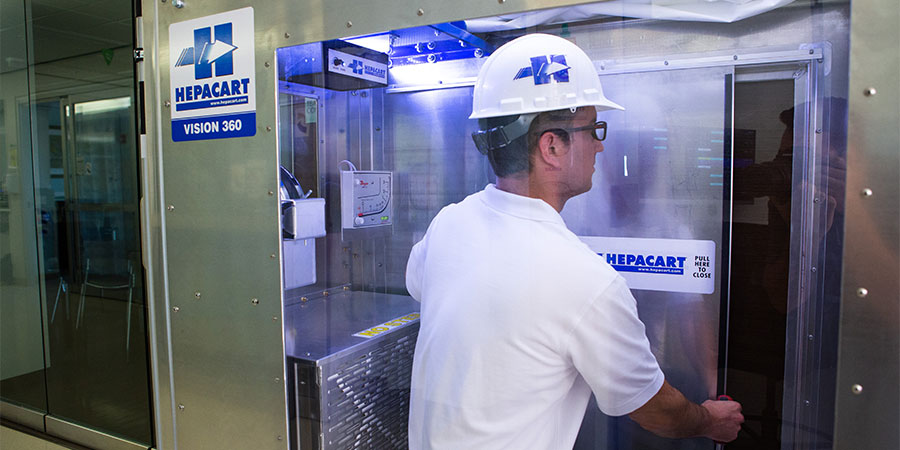
Equipment example photo: HEPACART. Not an Access Cabling project photo or endorsement.
ICRA · Infection Control Risk Assessment
ICRA-focused installation in occupied hospitals
Access Cabling is infection-control certified and understands the precautions involved in working in hospitals, clinics and occupied healthcare facilities. Opening a ceiling, drilling an access point or pulling cable can disturb dust near patients and staff.
ICRA (Infection Control Risk Assessment) is the facility-led process for assessing construction activity, patient risk and the precautions needed before work begins. We coordinate the scope with your Facilities, Infection Prevention and IT teams. The approved ICRA, containment plan and work permits guide how the installation is performed.
Ask us to review applicable certification documentation and site-specific training requirements during project planning.
- HEPA-filtered containment carts for localized work
- Facility-approved ICRA precautions and work access
- Dust and debris control around occupied patient-care areas
- Coordination with Facilities, Infection Prevention and IT
- Planned installation windows and documented turnover
ICRA controls · HEPA carts & containment
HEPA containment for ICRA-controlled work
HEPA carts provide a controlled enclosure for suitable localized tasks such as ceiling access and cable installation. We use them as part of the hospital’s approved work plan—not as a one-size-fits-all replacement for containment.
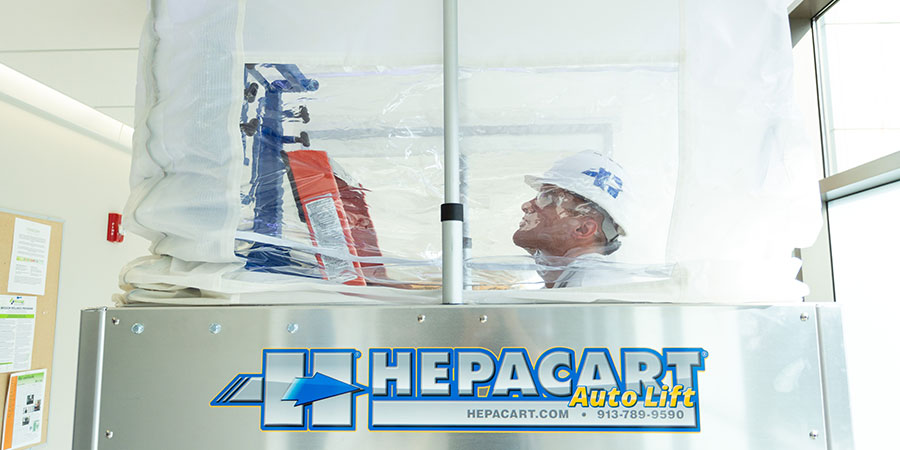
Manufacturer equipment examples illustrate ICRA containment practices; they do not depict Access Cabling crews or establish a manufacturer affiliation.
Plan the containment
Confirm the task, patient-risk area, access route, required barriers and facility approvals before disturbing the ceiling or building materials.
Set up filtered extraction
Use the appropriate enclosure and HEPA equipment. Verify seals and required airflow or negative pressure under the approved facility protocol.
Clean and release the area
Control debris during the work, clean tools and the enclosure, manage waste removal, and coordinate inspection before the work area returns to service.
ICRA-aware hospital network installation
The infrastructure behind hospital wireless, security and clinical connectivity
Healthcare wireless installations
Wireless site surveys, access-point locations and mounting, PoE cabling and post-installation validation coordinated with hospital IT. Coverage, roaming and device requirements are reviewed for the specific applications—not assumed from general Wi-Fi availability.
Complete low-voltage network infrastructure
Cat6/Cat6A cabling, fiber backbones, MDF/IDF rooms, racks, patch panels and labeled connections for access points, cameras, access control and other approved systems. Tested links and as-built documentation support a clear handoff.
For life-safety or clinical applications, we coordinate infrastructure requirements with the facility’s engineering team and equipment vendors. A wireless installation alone does not establish life-safety compliance or clinical-device approval.
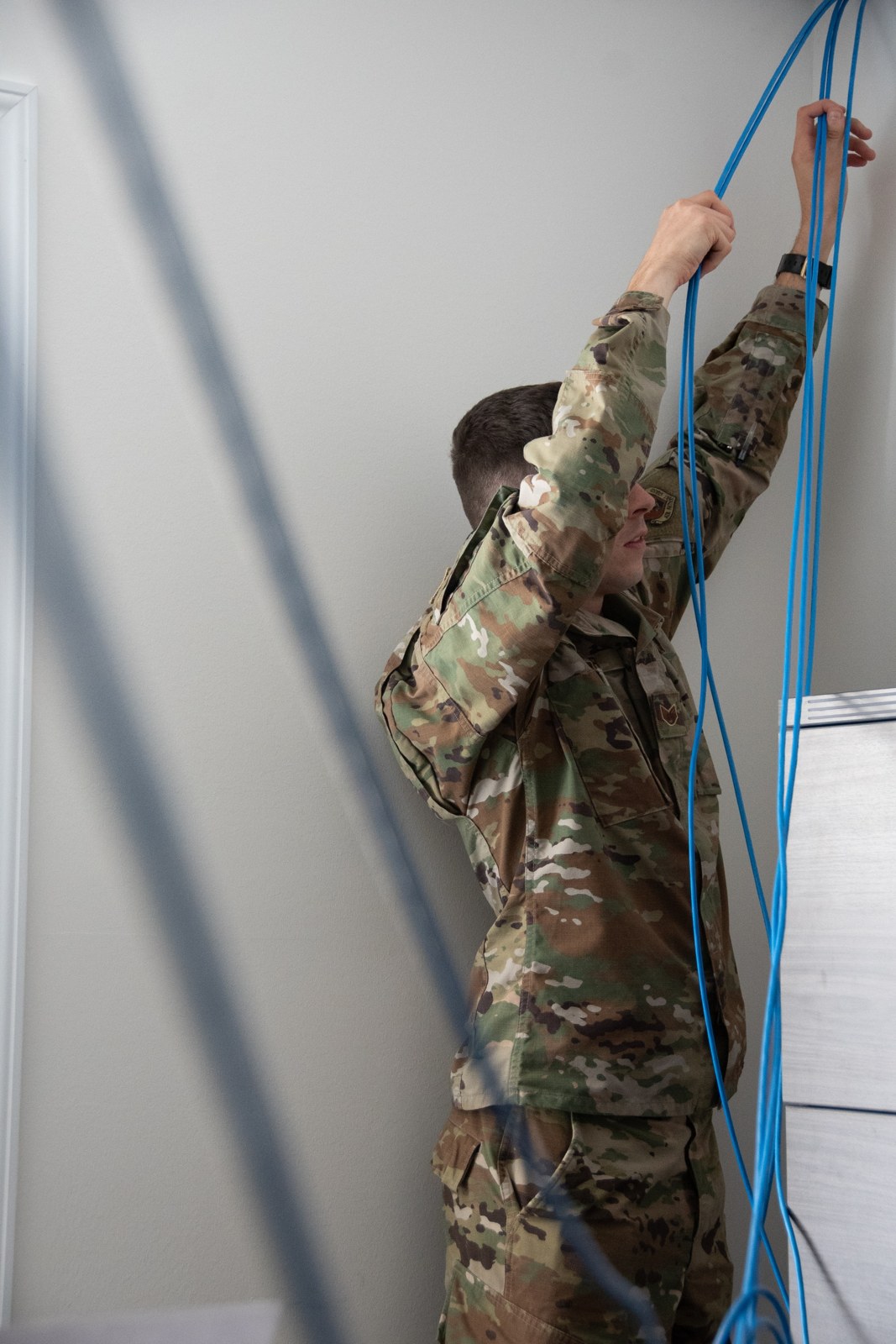
Healthcare network cabling in practice
Cat6 cable installation in a new Tribal Health IT building during Operation Walking Shield. This public-domain photograph illustrates healthcare infrastructure work; it is not an Access Cabling project and does not depict ICRA containment.
U.S. Air Force photo by Airman Kylie Davidson. Original photograph and project details.
ICRA installation workflow
ICRA coordination from site walk to handoff
- 01
Survey & scope
Review the network needs, ceiling conditions, patient-care areas, cable pathways and operational constraints with Facilities and IT.
- 02
ICRA & approvals
Coordinate the facility’s risk assessment, contractor access, containment plan, work permits and approved installation windows.
- 03
Contain & install
Set up the approved dust controls, perform the low-voltage work, maintain barriers and coordinate any planned outages.
- 04
Test & close out
Test and label installed links, review wireless validation needs, clean the work area and provide test reports and as-built documentation.
Standards & project requirements
ICRA, NFPA and FGI: coordinated—not assumed
Healthcare work must account for infection prevention, life safety, fire-rated assemblies and facility requirements. Applicable NFPA provisions, adopted codes and FGI Guidelines depend on the project and jurisdiction. We coordinate pathway selection, firestopping and infrastructure installation with the project design team and authority having jurisdiction.
The CDC’s environmental infection-control guidance describes construction risk assessment, dust containment and air-control precautions. Your hospital determines the measures required for each work area.
CDC healthcare environmental infection-control guidanceStandards references do not imply certification by CDC, NFPA or FGI, or an affiliation with the webinar sponsor.
ICRA & hospital installation questions
How does Access Cabling support ICRA (Infection Control Risk Assessment)?+
Access Cabling is infection-control certified and experienced with HEPA carts and hospital work. We coordinate ICRA (Infection Control Risk Assessment) precautions with your facility’s Infection Prevention and Facilities teams. Ask our project manager to review the applicable training documentation and your facility’s contractor requirements before work begins.
How do HEPA containment carts support an ICRA work plan?+
A mobile containment cart can enclose ceiling-access or other localized work and use HEPA-filtered air extraction to help control dust. Its setup, pressure requirements, cleaning and permitted use must follow the hospital-approved infection-control plan. A cart is not a substitute for the required ICRA or larger containment when the scope requires it.
Who determines the ICRA precautions for hospital installation work?+
The hospital’s Infection Prevention and Facilities teams determine the applicable ICRA precautions and approvals for each work area. We coordinate access, risk assessment, containment requirements, work hours and turnover with those teams.
Can you install hospital wireless access points and the supporting network?+
We install access-point cabling, fiber backbones, racks, patch panels and supporting network infrastructure, and coordinate wireless surveys and validation around the facility’s requirements. Clinical devices, security systems and life-safety applications must be reviewed with the hospital’s IT and engineering teams and the applicable equipment vendors.
Does using HEPA equipment make an installation code compliant?+
No. Infection-control precautions are one part of a healthcare project. Applicable NFPA requirements, adopted building codes, FGI Guidelines and facility standards depend on the project and jurisdiction. Design review, permits, firestopping and required inspections must still be addressed with the facility and authority having jurisdiction.
Plan your ICRA healthcare project
Tell us about the work area and network scope
Share your facility location, occupied departments, proposed cabling or wireless work, timeline and infection-control requirements. We will review the scope and coordinate next steps with your team.
Request an ICRA Healthcare Site Survey
Discuss your ICRA requirements, HEPA containment, cabling and wireless scope.