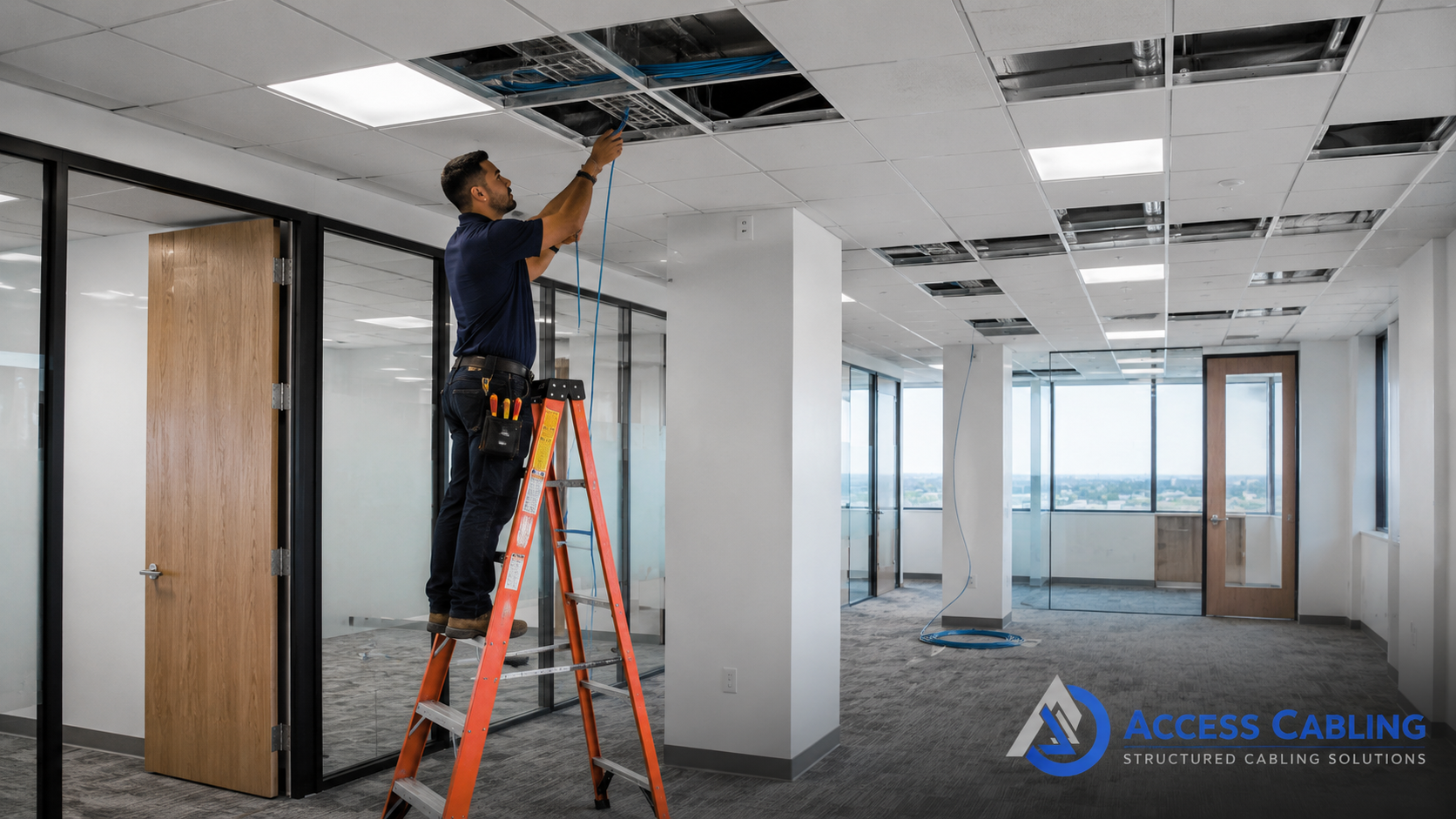
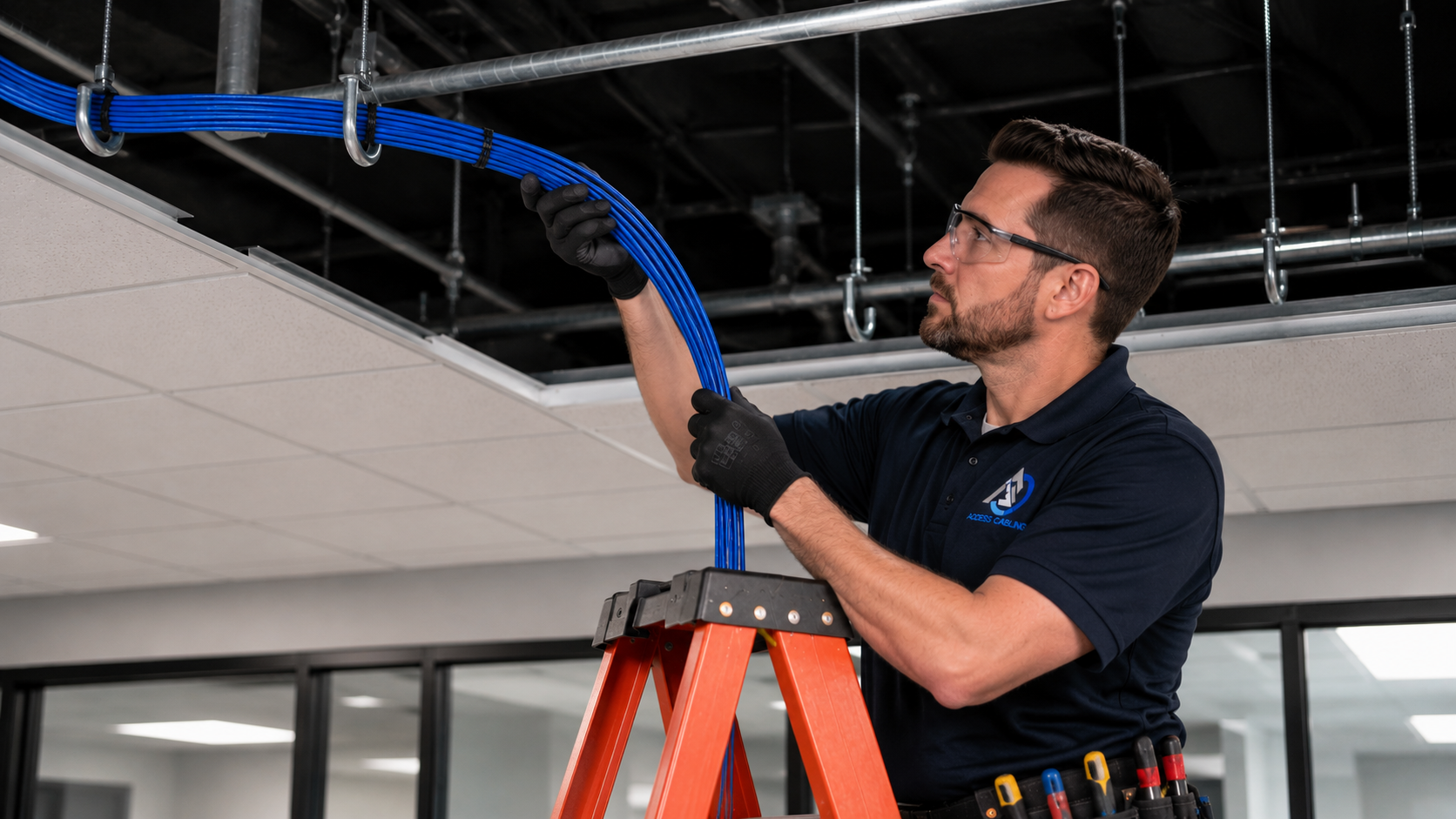
Developing a robust, scalable, and resilient network infrastructure begins with a meticulously engineered structured cabling system. As a foundational element for all voice, data, video, and building automation systems, structured cabling directly impacts operational efficiency and long-term TCO. Access Cabling specializes in the design, installation, and management of standards-compliant structured cabling solutions, built to TIA-568 series for commercial premises and TIA-942 for data centers. Our approach moves beyond mere cable runs; we integrate deep technical expertise with a comprehensive understanding of evolving network demands, ensuring your physical layer supports current and future enterprise requirements. We partner with IT directors, facilities managers, and general contractors to deliver turn-key solutions, leveraging preferred manufacturer partnerships to guarantee performance, reliability, and investment protection for mission-critical operations across California and nationwide.
Defining Standards-Compliant Structured Cabling Systems
Structured cabling is the unified, organized infrastructure that supports all low-voltage systems within a building or campus. Rather than a disconnected series of point-to-point connections, a structured cabling system adheres to a hierarchical design defined primarily by the TIA-568 series of standards, specifically TIA-568.0-D, TIA-568.1-D, TIA-568.2-D, and TIA-568.3-E. These standards specify generic cabling topologies, distances, fiber and copper media types (e.g., Cat6, Cat6A, OS2, OM3, OM4, OM5), connector performance (e.g., RJ45, LC, SC, MPO), and installation practices. Adherence to these standards ensures interoperability between different vendors' equipment, supports future upgrades, simplifies troubleshooting and maintenance, and provides a predictable performance baseline. For data center environments, TIA-942-B extends these principles, detailing specific requirements for cabling pathways, spaces, TAPs (telecommunications access points), and environmental controls within various tiers of data center reliability. Access Cabling's C-10/C-7 licensed technicians are proficient in interpreting and applying these complex standards, translating theoretical requirements into practical, high-performance physical layer implementations.
Strategic Design & Engineering for Enterprise Networks
Effective structured cabling begins with comprehensive design and engineering, not simply pulling wires. This phase involves detailed site surveys, requirements analysis, and the creation of detailed architectural and engineering (A&E) drawings. Key considerations include present and future bandwidth demands, pathway and space availability, power over Ethernet (PoE) requirements for devices like IP cameras and access points, and the physical security of the cabling infrastructure. We utilize BICSI methodologies and design principles to plan out the Telecommunications Room (TR), Equipment Room (ER), Main Distribution Area (MDA), Horizontal Distribution Area (HDA), and Zone Distribution Area (ZDA) layouts. Our engineers consider factors such as horizontal cabling run lengths to stay within the 90-meter TIA-568 limit, appropriate service loops, separation from EMI sources, and cooling requirements for active equipment. This meticulous planning phase, frequently leveraging CAD and BIM tools, minimizes costly rework, ensures optimal performance, and provides a robust foundation for years of reliable operation, anticipating growth and technological shifts.
Premium Components and Media Selection for Performance
The longevity and performance of a structured cabling system are directly tied to the quality of its components. Access Cabling specifies and installs only industry-leading materials from manufacturers like CommScope (SYSTIMAX, NETCONNECT), Panduit (TX6A-SD, Opticom), Belden (10GX, FiberExpress), Leviton, and Corning (ClearCurve). For copper infrastructure, this includes Category 6 (Cat6) UTP and F/UTP cable for Gigabit Ethernet, or Category 6A (Cat6A) for 10 Gigabit Ethernet (10GBASE-T) over longer distances or where higher PoE levels are required. Our fiber optic solutions encompass OS2 singlemode for long-haul and data center backbone applications, and OM3, OM4, or OM5 multimode fiber for backbone and horizontal data center links, supporting 10/40/100/400 Gigabit Ethernet. We deploy high-performance patch panels, modular jacks, cable managers, and cabinet solutions designed to optimize airflow, bend radius (e.g., avoiding kinked cables exceeding TIA bend radius limits), and cable density. This commitment to premium, standards-compliant components ensures a robust physical layer that meets or exceeds specified performance parameters under load, validated by manufacturer warranties and our own service guarantees.
Precision Installation & Pathway Management
Our installation methodology for structured cabling is rooted in precision and adherence to CSLB, NEC, and TIA/BICSI standards. This includes proper cable handling to prevent damage (e.g., respecting maximum pulling tension and bend radius), meticulous termination techniques for optimal electrical and optical performance (e.g., T568A/B crimping, fusion splicing for fiber), and efficient pathway management. Cable pathways, including conduit, cable tray, J-hooks, and basket tray, are carefully planned and installed according to NEC Article 800 and local codes, ensuring proper fill ratios, firestopping compliance, and segregation from power lines. All cables are labeled clearly at both ends according to a defined scheme (e.g., TIA-606-C) for easy identification and maintenance. Our technicians are trained to execute installations with minimal disruption to ongoing operations, maintaining clean and organized work sites. This disciplined approach ensures not only a visually aesthetic installation but also one that is easily serviceable, scalable, and compliant with all relevant safety and performance regulations.
Rigorous Testing & Certification for Performance Assurance
Post-installation, Access Cabling performs comprehensive testing and certification to guarantee that the structured cabling system meets or exceeds TIA performance specifications. For copper cabling (Cat6, Cat6A), we utilize Fluke Networks DSX-8000 Versiv Cable Analyzers to test parameters such as Near-End Crosstalk (NEXT), Far-End Crosstalk (FEXT), Return Loss, Insertion Loss, ACR-N, ACR-F, and Propagation Delay. This certifies compliance with ISO/IEC 11801 and TIA-568.2-D standards. For fiber optic cabling, testing includes Tier 1 certification (attenuation/loss testing using an Optical Loss Test Set – OLTS, per TIA-568.3-E and TIA-526-14A/7A) and optionally Tier 2 certification (Optical Time Domain Reflectometer – OTDR testing, per TIA-568.3-E and TIA-598-C) to identify splices, connectors, and cable length issues. All test results are documented and provided to the client in electronic format, validating the installed system's performance and supporting manufacturer warranties. This rigorous certification process eliminates potential bottlenecks at the physical layer, providing irrefutable proof that the infrastructure is ready for deployment of active networking equipment.
Diverse Applications & Enterprise Use Cases
Structured cabling is the common denominator across virtually all commercial low-voltage infrastructure needs, providing the backbone for a vast array of applications. In corporate offices, it supports VoIP telephony, video conferencing, desktop PCs, wireless access points, and building management systems. For data centers and server rooms, structured cabling forms the critical inter-cabinet and intra-cabinet links for servers, storage arrays (DAS, NAS, SAN), and network switches, often employing high-density fiber solutions and pre-terminated trunk cables. In industrial settings, our robust cabling solutions accommodate harsh environments and power-over-Ethernet (PoE) demands for automation, surveillance, and access control. Within healthcare facilities, it enables critical systems including patient monitoring, secure data transmission, and telehealth services. From educational campuses requiring high-speed connectivity for classrooms and dorms to retail environments utilizing IoT devices and POS systems, a well-designed structured cabling system is indispensable for reliable and scalable operations. Access Cabling engineers solutions tailored to these diverse demands, ensuring optimal performance and future adaptability.
Compliance, Safety, and Long-Term Scalability
Beyond performance, structured cabling installations must adhere to a complex matrix of regulatory compliance and safety standards. Our C-10/C-7 licensing ensures all work is performed in accordance with California Contractors State License Board regulations and local building codes. Crucially, all installations meet National Electrical Code (NEC) requirements, particularly Articles 770 (Optical Fiber Cables), 800 (Communications Circuits), and relevant sections on firestopping (e.g., using UL-listed fire-rated assemblies). Safety protocols for working in ceiling plenums, risers, and data center environments are strictly followed, including proper handling of tools and equipment, and adherence to Lockout/Tagout procedures when necessary. We also emphasize physical and logical security considerations in our designs, such as securing telecommunications rooms and preventing unauthorized access to cabling infrastructure. By integrating robust design with regulatory compliance and a focus on physical layer security, Access Cabling delivers systems that are not only high-performing and scalable but also safe, maintainable, and fully compliant, protecting your organizational assets and ensuring business continuity.
The Access Cabling Differentiated Approach
Access Cabling distinguishes itself through a blend of deep technical expertise, unwavering commitment to standards, and a client-centric project management philosophy. Our 28+ years of experience in the low-voltage sector, coupled with our C-10 and C-7 licenses (CSLB 992009), mean we possess the institutional knowledge and regulatory expertise to handle complex structured cabling projects nationwide. We don't offer 'cookie-cutter' solutions; instead, we engage in thorough consultative planning, translating your specific business objectives and technical requirements into precisely engineered designs. Our technical staff holds relevant manufacturer and industry certifications (e.g., BICSI RCDD, Fluke CCTT), ensuring best practices are applied at every stage, from media selection to final certification. Furthermore, our robust project management methodology ensures transparent communication, on-time delivery, and adherence to budget, minimizing disruption to your operations. This integrated approach, prioritizing quality components, meticulous installation, and stringent testing, results in a structured cabling infrastructure that is a reliable business asset, not a recurrent operational challenge.
Advanced OSP Integration: Bridging Campus & Building Infrastructure
Structured cabling extends beyond the confines of a single building, encompassing the crucial integration of Outside Plant (OSP) infrastructure to create cohesive campus-wide or multi-building networks. This involves meticulously planned trenching, conduit systems, direct-buried cable installations, and aerial deployments, all designed to safeguard fiber optic and copper backbone cabling from environmental stressors, physical damage, and electromagnetic interference. Our approach prioritizes robust pathway diversity and redundancy, often employing geographically separated routes for critical inter-building links to mitigate single points of failure. For instance, we may specify Schedule 80 PVC or rigid galvanized steel conduits for underground runs, mandated at specific burial depths per ANSI/TIA-758-B guidelines, considering soil composition, frost lines, and existing utility easements. Furthermore, the selection of OSP-rated cabling is paramount; loose-tube fiber optic cables with water-blocking gel or dry-block technology are standard for direct burial or conduit applications, providing superior moisture resistance and tensile strength compared to indoor-rated equivalents. For copper OSP, gel-filled PIC (Polyethylene Insulated Conductor) cables protect against water ingress, maintaining signal integrity over extended distances. Careful planning also encompasses lightning protection and grounding systems at building entry points, adhering to NFPA 70 (NEC) articles concerning communications circuits, to prevent surge damage to connected active equipment. The logistical complexities of coordinating with civil engineers, utility companies for locate services (e.g., Dig Safe in the US), and local permitting authorities define the initial project phases, ensuring compliance with municipal codes and minimizing disruption to site operations. This comprehensive OSP strategy ensures a resilient and scalable foundation for the entire campus network, supporting future expansions and emergent bandwidth demands without necessitating costly re-trenching or re-cabling.
Lifecycle Management & Total Cost of Ownership Optimization
Optimizing the Total Cost of Ownership (TCO) for a structured cabling infrastructure goes beyond the initial capital expenditure, encompassing ongoing operational costs, maintenance, upgrades, and effective lifecycle management. Our methodology focuses on designing systems with inherent longevity and adaptability, significantly reducing the frequency and cost of future interventions. This includes specifying high-performance components that exceed current bandwidth requirements (e.g., deploying Category 6A or even Category 8 copper, or OS2 and OM5 fiber, where applicable), thereby extending the refresh cycle for the physical layer. Documentation, often overlooked, plays a critical role in TCO; our comprehensive as-built documentation, labeling schematics, port assignments, and test results provide an invaluable asset for diagnostics, MAC (Moves, Adds, Changes) work, and capacity planning. This precise data minimizes technician time spent on fault isolation and facilitates efficient network upgrades. Furthermore, we advise on strategies for managing dark fiber or spare capacity within backbone pathways, providing a cost-effective reserve for future growth without immediate activation. Energy efficiency is also a TCO consideration; properly designed cable pathways and distribution frames reduce congestion, improving airflow for active equipment cooling and potentially lowering HVAC expenditures in server rooms and telecommunications closets. We also factor in depreciation schedules and end-of-life considerations for cabling infrastructure, offering guidance on responsible decommissioning and recycling of materials in accordance with environmental regulations. This holistic lifecycle perspective ensures that the structured cabling system remains a strategic asset contributing to operational efficiency and long-term financial viability, rather than becoming a recurring expense burden.
Mitigating Common Failure Modes: Design, Implementation & Maintenance
Structured cabling systems, despite their passive nature, are susceptible to various failure modes that can severely impact network performance and uptime. Our engineering and installation protocols are specifically designed to proactively mitigate these risks. One common failure mode in copper cabling is Alien Crosstalk (AXT) in high-bandwidth applications (e.g., 10GBASE-T over Category 6A), where electromagnetic interference from adjacent cables degrades signal quality. We counter this by adhering strictly to recommended cable separation, proper grounding and bonding, and using shielded (F/UTP or S/FTP) cabling in high-density environments when appropriate, ensuring each cable run passes rigorous AXT testing per ANSI/TIA-568.3-D standards. Fiber optic cabling often suffers from signal loss due to improper termination, tight bends (macro-bending loss), or contamination of end-faces. Our technicians utilize fusion splicing for robust, low-loss connections and employ specialized cleaning tools (e.g., fiber optic cleaners with lint-free wipes and alcohol-based solvents) and inspection microscopes to guarantee pristine end-face quality before connection. Furthermore, bend radius management within patch panels and cable trays prevents irreversible damage to fiber strands. Physical damage, such as accidental cuts or crushing in pathways, is addressed through robust conduit selection, protected routing zones, and clear labeling indicating the presence of critical infrastructure. Environmental factors, including extreme temperatures or humidity, are mitigated by specifying appropriate indoor/outdoor ratings for cables and enclosures, especially in uncontrolled environments like attics, basements, or outdoor cabinets. Power surges, particularly in OSP applications, are handled by deploying surge protectors and implementing proper grounding and bonding at building entry points, protecting connected equipment. By identifying and addressing these critical failure vectors throughout the design, installation, and ongoing maintenance phases, we ensure a resilient and high-performing network infrastructure that minimizes unexpected downtime and operational disruptions.
Integration with Physical Security & Building Automation Systems
Contemporary building intelligence increasingly relies on a unified physical layer to support diverse low-voltage systems beyond traditional data and voice. Structured cabling forms the backbone for integrating critical physical security and building automation systems (BAS), enabling streamlined deployment, centralized management, and enhanced situational awareness. For security applications, this includes IP-based surveillance cameras (CCTV), access control systems (ACS) utilizing PoE-powered card readers and door locks, intrusion detection systems, and intercoms. Our design considerations involve strategically deploying dedicated pathways and patch fields for these systems, often segregating them logically or physically from general data traffic to enhance security and simplify troubleshooting. For instance, edge devices like IP cameras can be powered directly via Power over Ethernet (PoE/PoE+/4PPoE) over Category 5e/6/6A cabling, eliminating the need for local power outlets and simplifying installation. The cabling design must accommodate the specific power requirements (e.g., 802.3bt Type 4 for high-power devices) and distance limitations of PoE. For building automation, structured cabling supports systems such as intelligent lighting (e.g., DALI, Power over Ethernet lighting), HVAC controls, environmental sensors, and energy management platforms, often leveraging IP connectivity for real-time monitoring and control. This convergence necessitates careful consideration of network segmentation (e.g., VLANs) to ensure optimal performance, security, and addressability for each system. Our expertise extends to planning conduit capacities for future device additions, selecting appropriate plenum-rated or riser-rated cabling suitable for the building's fire safety requirements, and ensuring proper grounding and shielding to prevent interference between disparate systems. The integrated approach simplifies infrastructure management, reduces installation costs by consolidating pathways, and provides a scalable, future-proof platform for intelligent building operations and enhanced occupant safety.