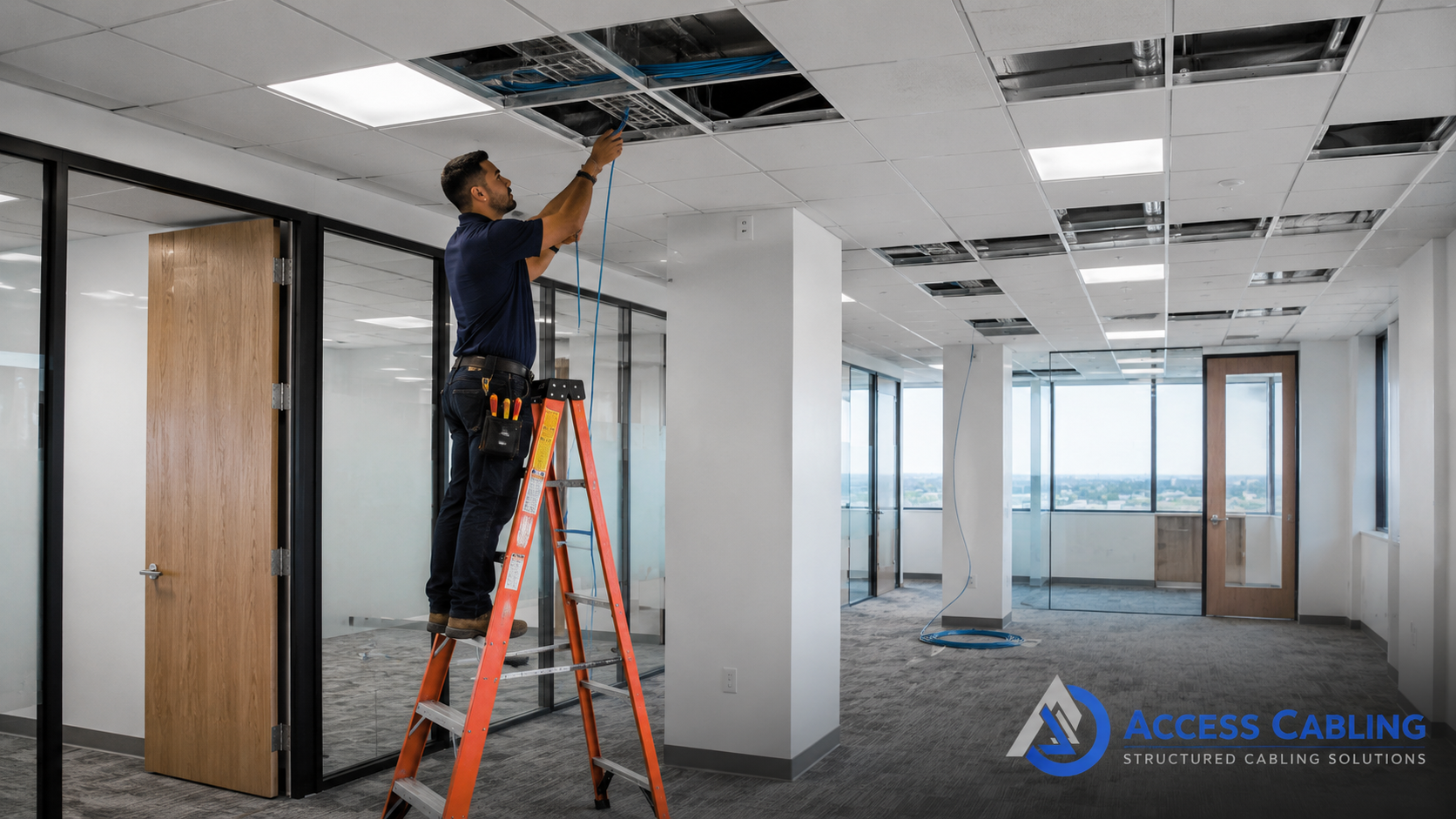
For commercial enterprises planning new construction, facility upgrades, or significant tenant improvements, a robust and future-proof communication infrastructure begins with standards-based structured wiring. This foundational system is not merely a collection of cables; it's a meticulously engineered framework designed for longevity, performance, and adaptability across voice, data, and video applications. Access Cabling specializes in the design, installation, and certification of high-performance structured wiring systems for IT directors, facilities managers, and general contractors who demand predictable performance, simplified management, and adherence to the most stringent industry standards. Unlike general electrical contractors, our C-10/C-7 licensing and 28+ years of dedicated low-voltage expertise ensure every structured wiring deployment is optimized for your current operational needs and scalable for future technological advancements, minimizing downtime and maximizing ROI.
Defining Standards-Based Structured Wiring Systems
Structured wiring, or structured cabling, is a comprehensive telecommunications infrastructure comprising a set of standardized elements. This refers to the entire physical layer infrastructure—cabling and associated hardware—which provides universal connectivity to support a wide range of applications, including voice, data, video, and various building management systems (BMS). The core principle is organizing the infrastructure into easily manageable sections from the equipment room to the work area outlets. Key standards underpinning this architecture include TIA/EIA-568 (Commercial Building Telecommunications Cabling Standard), TIA-569 (Telecommunications Pathways and Spaces), TIA-606 (Administration Standard for Telecommunications Infrastructure), and TIA-607 (Grounding and Bonding Requirements). Adherence to these TIA/EIA standards ensures interoperability, simplifies troubleshooting, and provides a clear upgrade path. Our methodology strictly follows these guidelines, specifying components such as horizontal cabling (e.g., Cat6A, Cat8, OM4, OS2 fiber), backbone cabling, patch panels, connecting hardware, and telecommunications enclosures (TRs/ERs). This systematic approach contrasts sharply with point-to-point wiring, which lacks organization and scalability, making it a critical consideration for any modern commercial environment seeking reliability and long-term cost efficiency.
Comprehensive Design and Engineering for Optimal Performance
The engineering phase of a structured wiring project is paramount for ensuring a robust, scalable, and compliant infrastructure. Our process begins with a detailed site survey and consultation to understand current and future network requirements, facility layout, and existing infrastructure. We meticulously account for environmental factors such as EMI (Electromagnetic Interference) sources, plenum spaces, and thermal considerations, which directly impact cable selection and routing. Design specifications include detailed schematics for telecommunications rooms (TRs) and equipment rooms (ERs), backbone and horizontal cable pathways, and work area outlet placements. We plan for sufficient conduit fill ratios (e.g., NEC Article 300.17 for conduit fill and TIA-569-D for pathway sizing) to accommodate future expansion without requiring costly re-cabling. Our designs prioritize segment lengths to remain within TIA-568-D specified limits (e.g., 90 meters for horizontal cabling permanent link, plus 10 meters for patch cords), ensuring maximum channel performance. We utilize advanced CAD tools and BICSI-certified RCDDs (Registered Communications Distribution Designers) to develop comprehensive design packages that cover cable types (e.g., unshielded twisted pair [UTP], shielded twisted pair [STP], multimode fiber [MMF], singlemode fiber [SMF]), cable pathways, firestopping requirements (NEC Article 770 for optical fiber, NEC Article 800 for communications circuits), and equipment rack layouts. This meticulous engineering prevents common deployment issues, guarantees compliance with codes, and delivers a foundation capable of supporting 10, 40, and even 100 Gigabit Ethernet, or higher, depending on the specified cable plant.
Advanced Materials and Component System Integration
The longevity and performance of a structured wiring system are directly tied to the quality and compatibility of its components. Access Cabling exclusively utilizes high-grade, enterprise-class products from industry-leading manufacturers such as Panduit, CommScope, Leviton, Belden, and Corning. This includes everything from copper cabling (e.g., Cat6A F/UTP for 10GBASE-T, Cat8 for 25/40GBASE-T) and fiber optic cabling (e.g., OM4 for 100GbE up to 150m, OS2 for long-haul 100GbE+), to patch panels, modular jacks, fiber enclosures, and cable management solutions. We specify complete end-to-end component systems from a single manufacturer where appropriate, ensuring certified channel performance warranties. For instance, deploying a CommScope Systimax or Panduit PanZone system guarantees that all interoperating components are designed and tested together, eliminating potential performance bottlenecks from mixed manufacturer deployments. Our material selection considers environmental factors, such as plenum-rated (CMP) or riser-rated (CMR) jackets for fire safety compliance as per NEC Articles 770 and 800, and shielded cabling for environments susceptible to EMI. The choice of fiber connector types (LC, SC, MPO) and polishing (UPC, APC) is meticulously matched to application requirements and existing infrastructure. This rigorous material selection and system integration strategy ensures high bandwidth capabilities, minimal insertion loss, and maximum return loss across the entire installed channel.
Precision Installation Methods and Strict Adherence to Standards
The physical installation of structured wiring is a critical phase where adherence to TIA/EIA, BICSI, and NEC standards directly impacts performance and reliability. Our C-10/C-7 licensed technicians are trained in manufacturer-specific installation procedures, including proper cable dressing, bend radius control, and termination practices. We ensure that copper cables maintain their specified twist rates right up to the point of termination, preventing crosstalk and maintaining impedance. For Category cables, we strictly adhere to TIA-568-C.2 termination schemes (T568A or T568B) consistently throughout the project. Optical fiber installation includes meticulous handling to prevent micro-bends and macro-bends, which can drastically increase attenuation. Fusion splicing for fiber backbone connections is performed with precision, yielding low-loss connections well within TIA/EIA-568 specifications. Every cable pathway, whether conduit, cable tray, or J-hook, is sized and implemented according to TIA-569 and NEC to prevent overfilling and ensure future scalability while preventing cable damage. Proper grounding and bonding of metallic pathways and equipment, following TIA-607-C guidelines, is fundamental to mitigate electromagnetic interference and ensure personnel safety. We implement stringent quality control checks throughout the installation process, culminating in a fault-free, high-performance infrastructure.
Rigorous Testing and Certification for Guaranteed Performance
Upon completion of physical installation, every structured wiring system undergoes stringent testing and certification to guarantee performance and compliance as per TIA/EIA standards. For copper cabling, we utilize Fluke DSX CableAnalyzers to perform Level IIIe or Level IV field certification tests, measuring critical parameters such as Near-End Crosstalk (NEXT), Far-End Crosstalk (FEXT), Insertion Loss, Return Loss, ACR-F (Attenuation-to-Crosstalk Ratio, Far-End), PSR-NEXT (Power Sum Return Loss), and propagation delay on every installed channel. These tests verify that the installed cabling meets or exceeds the specified Category (e.g., Cat6A, Cat8) minimum performance requirements. For fiber optic cabling, we perform Tier 1 (Loss/Length) certification using Optical Loss Test Sets (OLTS) and Tier 2 (OTDR) certification, as specified by TIA-568.3-D, to measure end-to-end attenuation, verify link length, and identify any anomalies or poor splices/connectors within the fiber link. Each certified link receives a comprehensive test report, providing objective proof of compliance and performance. This certification process is not merely a formality; it is an essential step that provides our clients with verifiable assurance, supports manufacturer warranty claims, and is critical for troubleshooting future network issues, solidifying the long-term reliability of their investment.
Key Applications and Commercial Use Cases
Structured wiring provides the essential physical layer for a diverse range of commercial applications, encompassing virtually every sector requiring reliable data and voice communications. In office environments, it supports everything from VoIP telephony and desktop PCs to wireless access points (WAPs) and intelligent building systems, delivering gigabit and multi-gigabit connectivity to every workstation. For data centers and server rooms, structured wiring forms the high-speed backbone connecting servers, storage area networks (SANs), and network switches, utilizing high-density fiber optic solutions (e.g., MPO/MTP connectivity) for optimal rack space utilization and future 400GbE readiness. In healthcare facilities, it enables critical EMR systems, imaging equipment, and patient monitoring, often requiring redundant pathways and specialized plenum-rated cabling for life safety compliance. For educational institutions, it facilitates campus-wide connectivity for classrooms, labs, and administrative offices, supporting e-learning platforms and high-bandwidth multimedia applications. Retail and hospitality sectors leverage structured wiring for Point-of-Sale (POS) systems, digital signage, security cameras, and guest Wi-Fi, demanding robust and scalable infrastructure to handle peak usage. Our structured wiring solutions are custom-tailored to the specific demands of each industry, ensuring the underlying network reliably supports current operational needs and is ready for emerging technologies like IoT and AI-driven applications.
Regulatory Compliance and Safety Considerations
Adherence to regulatory compliance and safety standards is non-negotiable in structured wiring deployments, particularly within commercial and industrial settings. Access Cabling operates under CSLB license 992009, signifying our qualification and commitment to legal and industry best practices. We strictly comply with the National Electrical Code (NEC, NFPA 70), specifically Articles 770 (Optical Fiber Cables), 800 (Communications Circuits), and 725 (Class 1, Class 2, and Class 3 Remote-Control, Signaling, and Power-Limited Circuits), which dictate essential requirements for cable types, firestopping, grounding, and pathway installations to prevent fire hazards and ensure electrical safety. Additionally, local building codes and fire safety regulations are meticulously incorporated into every design and installation. Our technicians are trained on OSHA safety protocols, including LOTO (Lockout/Tagout) procedures, working at heights, and proper use of PPE. We prioritize proper grounding and bonding techniques according to TIA-607-C to protect personnel and equipment from electrical surges and to minimize noise. By integrating these critical compliance and safety measures throughout the project lifecycle, Access Cabling delivers installations that are not only high-performing but also fully code-compliant, safe for occupants, and minimize operational risk for the client.
Access Cabling's Differentiated Structured Wiring Approach
Access Cabling's approach to structured wiring stands apart through a combination of deep technical expertise, unwavering commitment to standards, and a client-centric project management methodology. With 28 years dedicated solely to low-voltage infrastructure, our experience transcends basic cabling; we provide strategic network foundation planning. Our C-10/C-7 licensing and BICSI-certified RCDDs ensure that every design is technically sound, compliant, and optimized for both immediate and future technological demands. We differentiate ourselves by offering manufacturer-backed extended warranties (e.g., 25-year Panduit PanZone, CommScope SYSTIMAX, or Leviton Atlas programs) which are only possible through certified installation methods and adherence to stringent component compatibility. We don't just pull cable; we engineer and certify robust ecosystems. Our project managers provide transparent communication, detailed documentation, and lifecycle support, from initial consultation through final certification and beyond. We proactively identify potential issues, propose innovative solutions (such as converged infrastructure or passive optical LAN architectures where appropriate), and ensure minimal disruption to your operations. Choosing Access Cabling means partnering with a proven expert who delivers predictable performance, long-term reliability, and a meticulously documented infrastructure ready for whatever technology advances may emerge.
Ensuring Seamless Integration with Core Network Infrastructure
A structured cabling system, particularly structured wiring, is the foundational physical layer for all subsequent network infrastructure. Its effective integration is paramount to overall network performance and reliability. This integration extends beyond simply connecting patch panels to active equipment; it encompasses strategic infrastructure planning from the onset. We meticulously assess existing or planned core network components, including routers, switches (managed and unmanaged, PoE-enabled), firewalls, and server racks. This assessment dictates specific port density requirements, uplink speeds (e.g., 10GbE, 40GbE, 100GbE), and power over Ethernet (PoE) budget considerations. For instance, high-density Wi-Fi deployments, IP surveillance systems, and VoIP telephony demand robust PoE capabilities, necessitating proper cable selection (e.g., Cat6A for 10GBASE-T alongside PoE++) and adequate power distribution within telecommunications rooms (TRs). We also consider future-proofing for technologies like software-defined networking (SDN) and Network Function Virtualization (NFV) which, while software-centric, still rely on a resilient physical infrastructure. Coordination with IT departments is critical to align the structured wiring design with network architecture diagrams, VLAN segmentation plans, and overall IP addressing schemes. Discrepancies can lead to performance bottlenecks, dropped packets, and increased latency across the network. Our approach considers not just physical connectivity but also logical mapping, ensuring horizontal cabling, backbone cabling, and inter-building fiber optic runs support the prescribed network topology, adhering to standards such as TIA-942 for data center infrastructure where applicable, and TIA-1005 for industrial premises.
Advanced Documentation and Lifecycle Management for Maintainability
Effective management of a structured wiring system throughout its lifecycle hinges on comprehensive, accurate, and accessible documentation. This goes beyond mere as-built drawings. Our documentation suite for structured wiring includes detailed floor plans with explicit cable pathways, rack elevations, port maps, fiber strand assignments, and labeling schematics that rigorously adhere to TIA/EIA-606-D administration standards. Each cable run is uniquely identified, detailing its origination and termination points, cable type (e.g., Cat6, OS2 fiber), length, and associated testing results (e.g., Fluke Versiv LinkWare Live reports). Furthermore, we provide detailed patch panel schedules, including port assignments for active equipment and end devices, facilitating rapid troubleshooting and moves, adds, and changes (MACs). Our documentation strategy also incorporates a digital twin approach where possible, leveraging CAD drawings and even Building Information Modeling (BIM) for large-scale projects, allowing for hierarchical views and queryable data sets. This meticulous approach mitigates common operational pitfalls such as orphaned cables, undocumented outages, and prolonged diagnostic times. Lifecycle management extends to providing recommendations for future upgrades, technological refresh cycles, and capacity planning based on observed usage patterns and industry trends. This includes maintaining a historical record of all modifications and maintenance activities, ensuring that the structured wiring system's integrity and performance are preserved over its entire operational lifespan, and supporting compliance with various regulatory frameworks that demand traceable infrastructure records.
Addressing Environmental and Physical Layer Security Concerns
The physical layer of a structured wiring system presents unique vulnerabilities that require dedicated security considerations, extending beyond typical cybersecurity protocols. Environmental factors can significantly degrade performance or even compromise data integrity. This includes protection against electromagnetic interference (EMI) and radio frequency interference (RFI) for twisted-pair cabling, often mitigated through proper grounding, shielding (e.g., F/UTP, S/FTP), and careful routing away from power lines or high-power machinery. Temperature extremes and humidity also necessitate appropriate cable jacket ratings (e.g., plenum, riser, outdoor-rated) and proper ventilation within telecommunications rooms and equipment closets to prevent component degradation or network outages. Physical access control to all telecommunication spaces (MDFs, IDFs, TRs) is non-negotiable; this involves secure entry systems (biometric, keycard) and continuous surveillance, preventing unauthorized manipulation of patching or active equipment. Furthermore, deliberate physical attacks such as cable cutting or tapping must be considered. While fiber optic cable is inherently more difficult to tap than copper, robust conduit systems, armoured cabling, and alarm systems on critical pathways provide additional layers of protection. We implement cable management practices that reduce the opportunity for accidental damage, such as proper bundling, dressing, and strain relief. Our designs also account for vibration and seismic activity in relevant regions, utilizing earthquake-rated racks and bracing. The integration of environmental monitoring sensors (temperature, humidity, water detection) within critical wiring closets provides real-time alerts, allowing for proactive mitigation of potential threats to the structured wiring infrastructure, thereby safeguarding the entire IT ecosystem it supports.
Mitigating Future Obsolescence and Ensuring Long-Term Value
Investing in a structured wiring system represents a significant capital expenditure, making long-term value and obsolescence mitigation critical design facets. Our approach considers the anticipated technology roadmap and industry standards evolution to ensure the installed infrastructure remains relevant for decades. This involves selecting cable types and connectivity hardware that exceed current minimum requirements where justified by cost-benefit analysis. For example, deploying Category 6A UTP or F/UTP for horizontal cabling, even if current active equipment only requires 1GbE, provides a seamless migration path to 10GbE without infrastructure overhaul. Similarly, utilizing single-mode fiber optic cabling (OS2) for backbone applications between distribution frames, instead of multi-mode fiber in certain scenarios, provides superior reach and bandwidth scalability for future 40GbE, 100GbE, and beyond, significantly reducing the total cost of ownership (TCO) over the system's lifespan. We also advocate for sufficient pathway and space provisioning within conduit systems, cable trays, and telecommunications rooms. Over-provisioning capacity by 20-30% in terms of spare ports and conduit fill ratios allows for future expansion (e.g., accommodating increased device density, new technologies like IoT deployments, or convergence of traditionally separate networks) without disruptive and costly re-cabling projects. Furthermore, we design patch panel and equipment rack layouts with modularity in mind, facilitating easy upgrades and component replacements as technology evolves. Our recommendations often include vendor-agnostic components that adhere strictly to industry standards, avoiding proprietary solutions that could lock clients into single vendors and limit future choices. This forward-looking design philosophy ensures that the structured wiring system not only meets today's demands but also provides a resilient and adaptable foundation for technological advancements for 15-20 years or more.