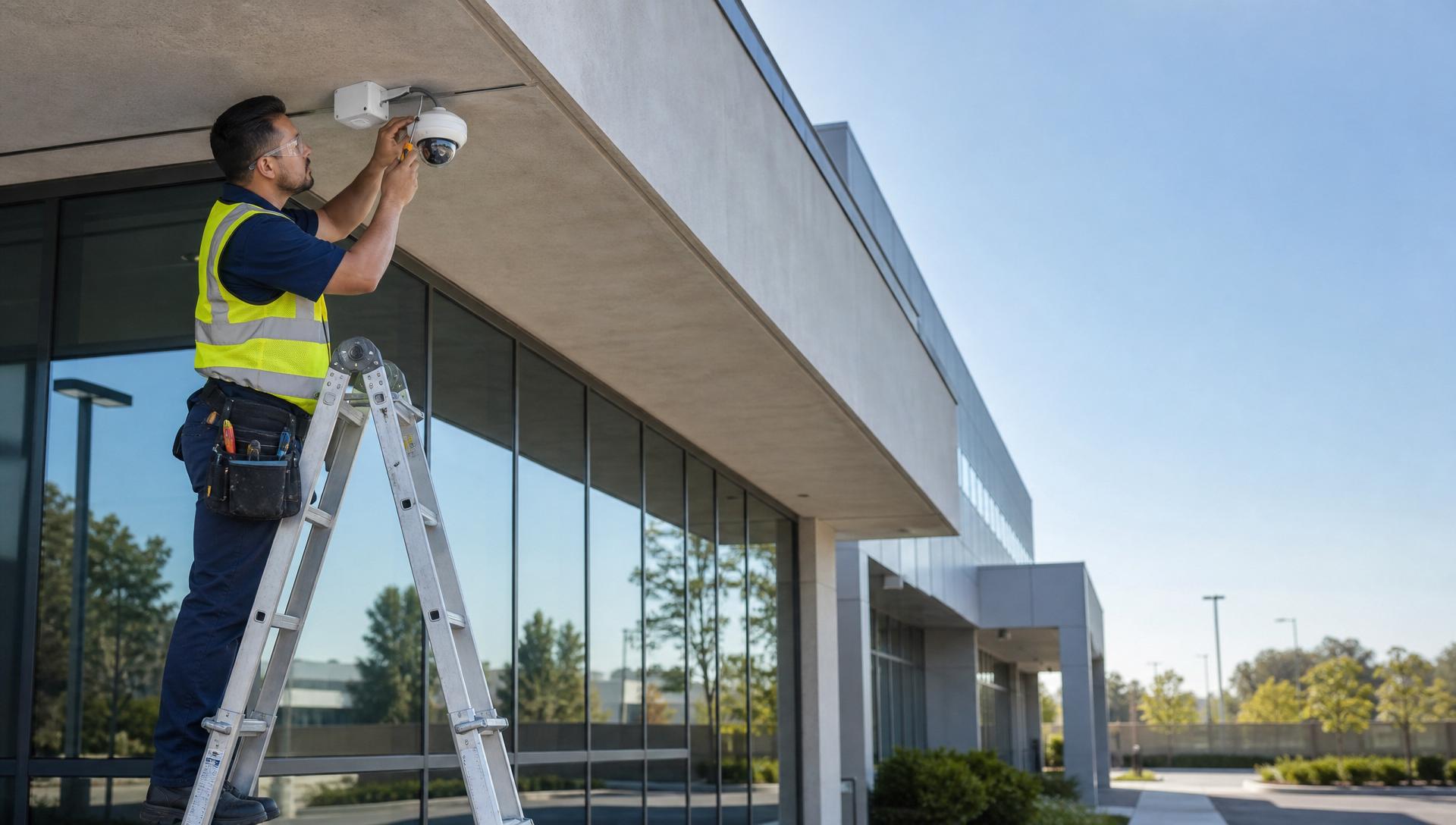
Access Cabling technician installing a commercial IP dome security camera under the eave of a modern commercial building.
Commercial · Low Voltage

Security Camera Installation Services

IP security camera installation with PoE cabling and NVR integration.

28+ Years Experience
C-10 / C-7 Contractor
CSLB: 992009
Licensed Commercial Contractor
5 California Offices
California & Nationwide Service

Request a Security Camera Installation site survey

Free, no-obligation walkthrough. Licensed C-10 / C-7 (CSLB #992009). 28+ years, California & nationwide.

Request a site survey
Commercial Service Overview

Enterprise-grade security camera installation engineered for commercial buildings.

Security Camera Installation from Access Cabling delivers enterprise-grade security camera installation engineered by a licensed low-voltage contractor with 28+ years serving California and nationwide clients. Our BICSI-trained technicians design, install, terminate, test and certify every run to TIA/EIA standards so your infrastructure supports current bandwidth demands and future growth.

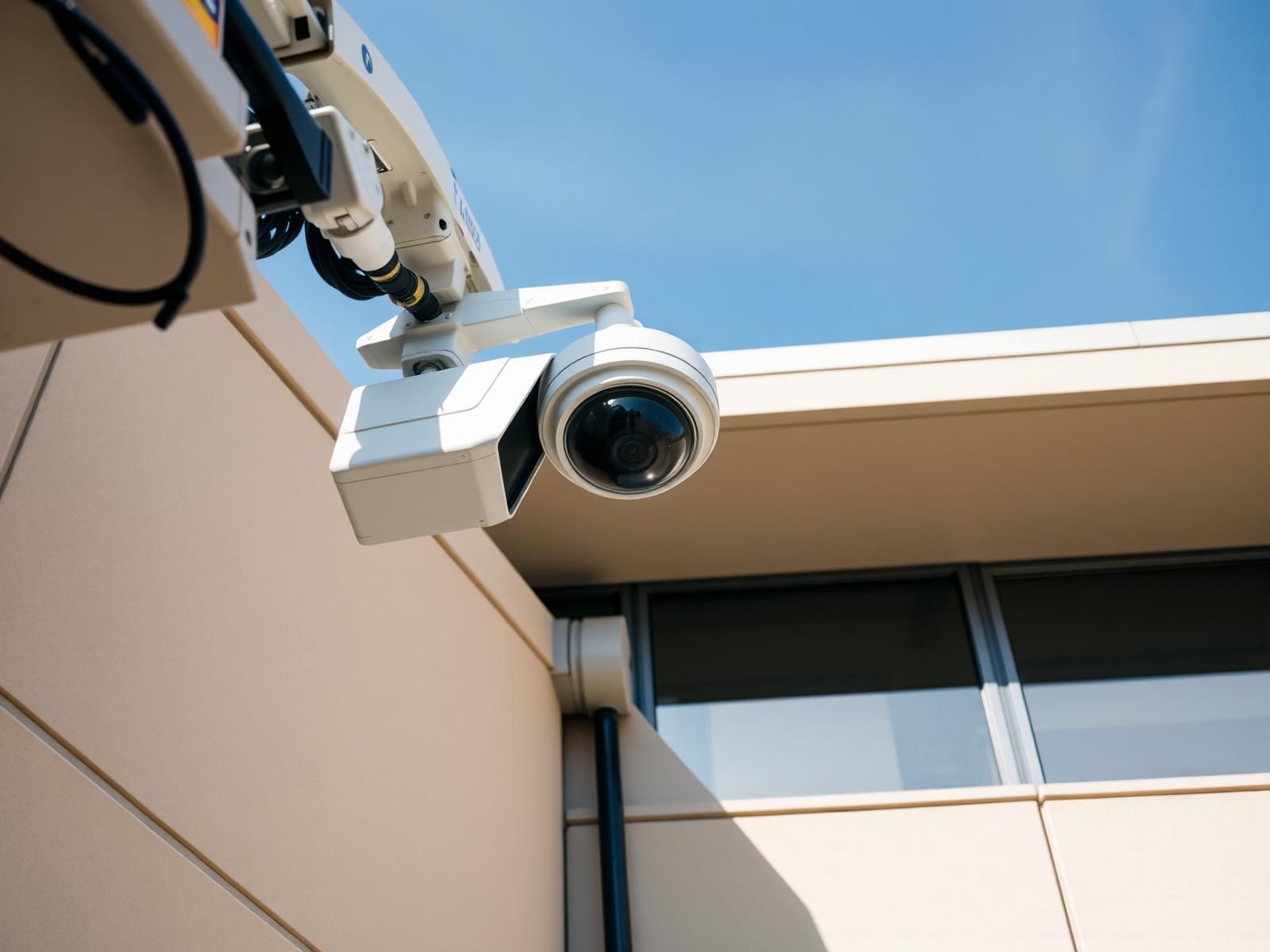
Exterior IP dome camera install under the eave of a commercial building from a boom lift.
Key Benefits

Why security camera installation from Access Cabling

Commercial-grade installation, certified performance, and infrastructure built to last 25+ years.

Certified installation by BICSI-trained technicians
Manufacturer warranties up to 25 years on structured cabling
Fluke DSX certification reports on every project
Licensed C-10 / C-7 low-voltage contractor
24/7 emergency response and MAC services
Nationwide coverage with California headquarters
Installation Process

Our proven commercial cabling process

A repeatable, engineered process — refined over 28 years and thousands of sites.

  1. Step 1

    Free on-site survey and needs assessment

  2. Step 2

    Engineered design with rack elevations and pathway plans

  3. Step 3

    Scheduled installation with minimal business disruption

  4. Step 4

    Termination, testing, labeling and documentation

  5. Step 5

    Fluke certification and as-built drawings delivered

Technical Standards & Testing

TIA-compliant. Fluke-certified. Fully documented.

Every security camera installation installation follows TIA-568, TIA-606 labeling, NEC 800 and applicable manufacturer specifications. Fluke DSX Versiv certification and full as-built documentation are delivered at project close.

  • TIA-568 structured cabling standards
  • TIA-606 labeling and administration
  • TIA-942 data center infrastructure
  • Fluke DSX-8000 channel and link certification
  • Manufacturer certified installer for Panduit, CommScope, Leviton
Access Cabling technician installing a commercial IP dome security camera under the eave of a modern commercial building.
Industries Served

Security Camera Installation for every commercial environment

28+
Years
5
CA Offices
50
States
12M+
Feet Installed
Local Service Area

Security Camera Installation across California & nationwide

Local crews dispatched daily from five California offices. Multi-site rollouts across all 50 states.

In Depth

A closer look at security camera installation

Effective facility oversight requires robust, reliable IP security camera installation. For IT directors and facilities managers navigating complex infrastructure projects, deploying a cohesive surveillance system involves more than mounting cameras; it demands a deep understanding of network architecture, power delivery, and data management. Access Cabling specializes in designing, installing, and integrating high-performance IP camera systems leveraging Power over Ethernet (PoE) technology and Network Video Recorder (NVR) solutions. Our approach ensures optimal camera placement, compliant cabling pathways, and seamless network integration, mitigating common issues like bandwidth saturation, power fluctuations, and data security vulnerabilities. We provide end-to-end project execution, from initial site surveys and system design to meticulous cabling, device configuration, and comprehensive testing, delivering a scalable and resilient video surveillance infrastructure tailored to your operational demands and regulatory requirements. Our C-10/C-7 licensing and 28+ years of experience underpin our capability to deliver mission-critical low-voltage solutions.

IP Surveillance System Design & Standards Compliance

The foundation of a functional IP security camera deployment lies in meticulous design adhering to industry standards. Access Cabling initiates projects with a comprehensive site assessment to determine strategic camera coverage, optimal field of view, and environmental factors impacting performance. We specify camera types—such as dome, bullet, PTZ (Pan-Tilt-Zoom), or thermal—based on specific use cases, whether it's license plate recognition, facial detection, or general area monitoring. System design considers resolution requirements (e.g., 2MP, 4K), frame rates, and compression codecs (H.264, H.265) to balance video quality with network bandwidth and storage capacity. Our designs align with TIA/EIA cabling standards (e.g., TIA-568.C.2 for balanced twisted-pair cabling), BICSI TDMM guidelines for telecommunications distribution, and NEC (NFPA 70) articles pertaining to low-voltage wiring, ensuring not only performance but also safety and future-proofing. We meticulously document cable runs, switch port assignments, and NVR locations, providing a clear blueprint for installation and subsequent maintenance.

Power over Ethernet (PoE) Infrastructure Deployment

Power over Ethernet is critical for streamlining IP security camera installations, eliminating the need for separate power outlets at each device location. Access Cabling implements PoE solutions across various standards: IEEE 802.3af (PoE, up to 15.4W), IEEE 802.3at (PoE+, up to 30W), and IEEE 802.3bt (PoE++, Type 3 up to 60W, Type 4 up to 100W). Camera power requirements often dictate the class of PoE switch or midspan Injector required. We utilize enterprise-grade PoE switches from manufacturers like Cisco, Aruba, or Ubiquiti, ensuring sufficient power budgets per port and aggregate for all connected cameras. Cable performance is paramount for PoE; we primarily employ Category 6A or higher-rated shielded or unshielded twisted-pair copper cabling (e.g., Belden 10GX, CommScope Systimax GigaSPEED XL) to minimize power loss over distance and prevent alien crosstalk, especially in high-density environments. Proper cable dressing, bend radius adherence, and termination practices are strictly followed to maintain signal integrity and maximize UTP link performance, as verified by Fluke DSX CableAnalyzer series testing. This meticulous approach addresses potential voltage drop issues and ensures reliable power delivery to each camera, preventing intermittent operation or failure.

Network Video Recorder (NVR) Integration & Storage

The Network Video Recorder serves as the central hub for video acquisition, storage, and management. Access Cabling integrates NVRs, whether appliance-based or server-based with specialized VMS (Video Management Software) like Milestone, Genetec, or Avigilon. NVR selection is based on camera count, resolution, retention policy, and desired analytics features. We engineer storage solutions considering RAID configurations (e.g., RAID 5, RAID 6) for data redundancy and specify enterprise-grade hard drives designed for continuous video write cycles (e.g., Western Digital Purple, Seagate SkyHawk AI). Network bandwidth planning is crucial for NVR performance, ensuring the aggregate video stream from all cameras does not overwhelm the NVR's network interface or the facility's local area network (LAN). We configure dedicated VLANs for surveillance traffic to segregate it from general data, enhancing security and preventing network congestion. This integrated approach optimizes NVR performance, ensures reliable data capture, and simplifies video retrieval for forensic purposes.

Precision Cabling and Low-Voltage Infrastructure for Cameras

The physical layer cabling for security cameras demands precision and adherence to low-voltage standards. Access Cabling employs certified technicians for all aspects of cable pathway installation, including conduit (EMT, PVC), cable trays, and J-hooks. We select appropriate jacket types—Plenum (CMP) for air plenums, Riser (CMR) for vertical shafts, and LSZH (Low Smoke Zero Halogen) for environments requiring reduced smoke and toxic fume emissions—in accordance with NEC Article 725 and local fire codes. Termination at both the camera location (RJ45 jack or direct IP connector) and the patch panel in the telecommunications room (TR) is performed using TIA-568-B wiring schemes (T568B or T568A) to maintain pair integrity. All cabling is neatly dressed, labeled according to TIA/EIA 606-B standards, and pathways are sealed to prevent dust, moisture, and pests. This disciplined approach to cabling ensures maximum system uptime and simplifies future maintenance or troubleshooting, which is critical for continuous surveillance operations.

System Testing, Certification & Documentation

Post-installation, Access Cabling performs rigorous testing and certification of the entire IP security camera system. Each copper cable link is certified to TIA-568 Category 6A or higher standards using Fluke Networks DSX-8000 CableAnalyzers, verifying parameters such as insertion loss, return loss, near-end crosstalk (NEXT), far-end crosstalk (FEXT), and alien crosstalk. This ensures each PoE connection can reliably deliver both data and power. We conduct comprehensive operational testing of each camera, confirming correct network connectivity, video streaming, focus, field of view, and motion detection capabilities. NVR functionality, including recording schedules, storage allocation, and remote access, is verified. Upon project completion, we provide detailed as-built documentation, including floor plans showing camera locations, cable pathways, connectivity schematics, and test reports. This thorough documentation package is invaluable for system management, regulatory compliance, and any future expansions or modifications, underscoring our commitment to transparency and long-term support.

Integrated Surveillance & Access Control Solutions

Modern security demands an integrated approach, often combining IP video surveillance with access control systems. Access Cabling possesses the expertise to design and implement converged low-voltage solutions where these systems communicate seamlessly. For instance, an access control event, such as a forced door, can trigger specific camera recordings, alert monitoring personnel, and even initiate automated responses. We work with leading manufacturers like HID Global, LenelS2, and Software House to integrate their access control platforms with IP VMS solutions, creating a unified security dashboard. This integration optimizes operational efficiency, enhances incident response capabilities, and provides a holistic view of facility security. Our ability to manage both cabling infrastructures and system configurations ensures a cohesive deployment, minimizing compatibility issues and maximizing the security posture of the entire premise.

Scalability, Maintenance, & Future-Proofing for Surveillance

Organizations require surveillance systems that can adapt to evolving security needs and technological advancements. Access Cabling designs IP security camera solutions with inherent scalability, leveraging modular NVR platforms, open-standard VMS, and structured cabling capable of supporting higher bandwidths. Our choice of enterprise-grade network hardware and adherence to industry best practices ensures that the physical infrastructure can accommodate future camera additions or upgrades to higher-resolution devices without costly overhauls. We also discuss long-term maintenance strategies, including software updates, firmware management for cameras and NVRs, and cyclical inspections of cabling and power components to ensure system longevity and consistent performance. This forward-thinking approach protects your investment, reducing total cost of ownership by extending the useful life of the surveillance infrastructure and simplifying future technology migrations.

Advanced Video Analytics and AI Integration for Proactive Security

Access Cabling specializes in the strategic deployment and configuration of advanced video analytics, transforming passive surveillance into proactive security intelligence. Our solutions leverage onboard camera processing and dedicated edge or server-based AI platforms to implement features like object detection (e.g., human vs. vehicle), facial recognition for access verification, license plate recognition (LPR) for vehicle management, and behavioral analytics such as loitering detection, crowd density analysis, and abandoned object alerts. We meticulously select and integrate cameras with robust System-on-Chip (SoC) capabilities, ensuring sufficient processing power for real-time analysis, often preferring leading manufacturers like Axis Communications, Hanwha Vision, and Ubiquiti for their powerful analytics suites and open APIs. The deployment process involves precise calibration of surveillance zones, setting of detection rules, and fine-tuning sensitivity thresholds to minimize false positives, a critical consideration in operational efficacy. This includes establishing baselines for 'normal' activity and defining anomaly detection parameters. Furthermore, we implement sophisticated data privacy filters and anonymization techniques where required by regulations, ensuring compliance (e.g., GDPR, CCPA) without compromising security objectives. Our engineers design the analytical workflow from capture to alert, integrating with alarm monitoring systems and providing actionable intelligence to security personnel, significantly reducing response times and improving incident resolution.

Environmental Hardening and Specialty Camera Deployments

Deploying security cameras in challenging environmental conditions demands meticulous planning and specialized equipment. Access Cabling excels in specifying and installing environmentally hardened cameras designed to withstand extreme temperatures, corrosive atmospheres, high-humidity environments, and vibrational stress, typical in industrial plants, marine facilities, or outdoor perimeters. This includes NEMA 4X, IP66, IP67, and IP68 rated enclosures, often constructed from stainless steel or marine-grade aluminum, offering superior resistance to dust, water ingress, and chemical agents. For hazardous locations, we deploy explosion-proof (ATEX/IECEx certified) cameras, carefully selected to prevent ignition in environments containing flammable gases, vapors, mists, or dust. Our installations incorporate specialized mounting hardware that mitigates vibration, prevents tampering, and ensures structural integrity against high wind loads or impacts. We also address specific optical challenges, deploying thermal cameras for low-light or obscured visibility scenarios (fog, smoke), long-range PTZ (Pan-Tilt-Zoom) cameras with powerful optical zoom and adaptive IR illumination for expansive areas, and multi-sensor panoramic cameras to cover wide fields of view with fewer devices. Power and data transmission in these harsh environments utilize armored fiber optic cables, industrial-grade Ethernet cabling (e.g., shielded Cat6A with gel-filled jackets), and robust surge protection devices at all network points to safeguard against transient voltage spikes and ground loops, ensuring uninterrupted operation and extended system longevity under extreme duress. Critical considerations include material compatibility with ambient chemicals, UV resistance for outdoor plastics, and the thermal management within sealed enclosures to prevent sensor degradation.

Cybersecurity Posture for Enterprise Surveillance Systems

The integration of IP-based surveillance systems introduces critical cybersecurity considerations that Access Cabling addresses proactively from the design phase. Our deployments adhere to a stringent 'security by design' philosophy, implementing robust measures to protect against unauthorized access, data breaches, and system manipulation. This begins with network segmentation, isolating surveillance infrastructure on a dedicated VLAN or physically separate network to minimize attack surfaces and contain potential breaches. We enforce strong authentication protocols, requiring complex passwords and multi-factor authentication (MFA) for all system access, including NVRs, cameras, and management software. All camera communications are encrypted using industry-standard protocols such as TLS 1.2 or higher, securing video streams and control signals. Firmware updates for all devices are meticulously managed and deployed only after rigorous testing, ensuring patches address vulnerabilities without introducing new instabilities. We implement strict access control lists (ACLs) on network devices, restricting communication to only authorized IP addresses and ports. Furthermore, our solutions incorporate regular vulnerability scanning and penetration testing recommendations to identify and remediate weaknesses. We configure event logging and auditing across the entire surveillance infrastructure, integrating with Security Information and Event Management (SIEM) systems for centralized logging and real-time threat detection. This comprehensive approach mandates secure configurations, disables unnecessary services, changes default credentials, and hardens operating systems on NVRs and management servers in accordance with NIST cybersecurity guidelines and industry best practices for IoT security to maintain the integrity, confidentiality, and availability of sensitive video data.

Regulatory Compliance and Data Retention Strategies

Access Cabling's approach to security camera installation inherently incorporates a robust framework for regulatory compliance and strategic data retention, critical for legal defensibility and operational efficacy. We meticulously assess local, state, and federal regulations impacting surveillance, including privacy laws (e.g., HIPAA for healthcare, CCPA for consumer data, GDPR for global operations), PCI DSS for environments handling payment card data, and occupational safety standards (e.g., OSHA, C-TPAT). This involves understanding precise requirements regarding signage, data capture consent, monitoring scope limitations, and the permitted duration and method of video data storage. For data retention, we design NVR/storage solutions balancing legal mandates, business requirements, and budgetary constraints. This often includes tiered storage architectures, where high-resolution, critical footage is retained on primary storage (e.g., enterprise-grade RAID arrays with specific drive types like WD Purple or Seagate SkyHawk for surveillance workloads) for a defined period, then potentially archived to secondary, more cost-effective cold storage (e.g., NAS with LTO tape backups or cloud-based object storage) for extended durations, or automatically purged based on established policies. Our systems incorporate robust chain-of-custody logging for evidential integrity, ensuring any extracted footage is admissible in legal proceedings, complete with timestamps, metadata, and non-repudiation features. We also implement secure export functionalities and audit trails for all data access and modifications. Precise documentation of camera placement, field-of-view, retention policies, and access controls are deliverables that ensure our clients meet their compliance obligations and are prepared for potential audits or legal inquiries, providing a complete and auditable record of their surveillance operations.

Related Topics
  • PoE Network Design
  • Structured Cabling Standards
  • NVR Storage Solutions
  • Access Control Systems Integration
  • Fiber Optic Backbones
  • Telecommunications Room Build-outs
  • Low-Voltage Pathway Systems
  • Building Automation System Cabling
FAQ

Frequently asked questions

What specific cabling types do you use for outdoor IP cameras in harsh environments?+

For outdoor IP cameras, we primarily utilize UV-resistant, outdoor-rated Category 6A or higher STP (Shielded Twisted Pair) copper cabling. This protects against environmental degradation, such as direct sunlight and extreme temperatures. Where necessary, we encapsulate terminations in IP67-rated enclosures to prevent moisture ingress. Conduit, either rigid metal or PVC, is routinely deployed to provide mechanical protection against physical damage and to defend against rodent intrusion, especially for long outdoor runs or buried pathways. Manufacturer-specific direct burial or aerial-grade options are chosen based on the specific installation environment and local code requirements.

How do you manage bandwidth requirements for large-scale IP camera deployments with high-resolution streams?+

Managing bandwidth for large IP camera deployments involves a multi-faceted approach. We segment surveillance traffic onto dedicated VLANs to isolate it from general network traffic and use QoS (Quality of Service) policies to prioritize video streams. We carefully calculate the aggregate bandwidth required based on camera count, resolution, frame rate, and compression codecs (H.265 is preferred over H.264 for efficiency). For NVRs, we specify multiple Gigabit Ethernet interfaces and often deploy 10 Gigabit Ethernet uplinks where the volume of data necessitates it. Edge switches with sufficient backplane capacity and non-blocking architecture are selected to prevent bottlenecks, ensuring smooth, uninterrupted video recording and viewing.

What role does cybersecurity play in your IP security camera installations?+

Cybersecurity is integral to our IP security camera installations. We implement best practices such as segmenting surveillance networks via dedicated VLANs, using strong, unique passwords for all devices, and disabling unnecessary network protocols or services. Firmware updates are performed to patch known vulnerabilities. We configure network firewalls to restrict access to surveillance systems and enforce VPN connections for remote access. Our NVRs and VMS solutions are selected for their robust security features, including encryption of video data in transit and at rest, and role-based access control to prevent unauthorized viewing or tampering. Adherence to NIST cybersecurity frameworks is often incorporated into design for high-security environments.

Can you integrate new IP cameras with our existing analog CCTV infrastructure?+

Yes, integrating new IP cameras with existing analog CCTV infrastructure is often achievable, though it requires specific conversion components. This process typically involves using video encoders (also known as IP encoders or video servers) which convert analog video signals from existing CCTV cameras into IP-based digital streams. These streams can then be managed by a modern NVR or VMS alongside new native IP cameras. While this allows for a phased upgrade, it is important to note that the image quality of analog cameras will not improve to IP standards, and future scalability might still necessitate a full IP conversion. We conduct a thorough assessment to determine the most cost-effective and performance-optimal hybrid solution.

What are the common failure points in IP camera systems that you proactively address?+

Common failure points include inadequate PoE power delivery, network congestion, cable damage, and NVR storage limitations. We proactively address these by performing accurate power budget calculations and selecting appropriate PoE switches, segmenting network traffic using VLANs and QoS, employing durable outdoor-rated cabling with protective conduit where exposed, and designing NVR storage with sufficient capacity and redundancy (e.g., RAID configurations). Environmental factors like extreme temperatures or voltage fluctuations are mitigated through appropriate equipment selection and surge protection. Our pre-installation site surveys and post-installation testing are designed to identify and eliminate these risks before they become operational issues.

How do you ensure proper camera placement and field of view for optimal coverage?+

Proper camera placement and field of view are critical design elements. We use specialized software tools and perform on-site walkthroughs to simulate camera coverage, considering factors like desired observation distance, light conditions, potential obstructions, and surveillance objectives (e.g., general awareness, identification, recognition, or verification). Our technicians account for sun glare, shadows, and reflective surfaces, and recommend specific lens types (fixed, vari-focal, or motorized zoom) to achieve the required field of view. We also consider mounting height to deter tampering and comply with relevant privacy regulations by defining precise zones of coverage.

What type of ongoing maintenance or support do you offer for installed security camera systems?+

Beyond installation, Access Cabling can provide options for ongoing support and maintenance. This often includes regular inspection of physical infrastructure (cabling, mountings), verification of camera functionality and network connectivity, and review of NVR health and storage capacity. We can also assist with firmware updates for cameras and NVRs, VMS software upgrades, and configuration adjustments to optimize performance. While not a monitoring service, our maintenance support ensures the deployed system remains operational, secure, and aligned with your evolving surveillance requirements.

Do you provide solutions for integrating security cameras with building management systems (BMS) or alarm systems?+

Yes, we design and implement integrations between IP security camera systems and building management systems (BMS) or alarm panels. This integration often leverages open API protocols (Application Programming Interfaces) or specialized VMS modules. For example, an alarm from a fire panel or a motion sensor detected by the BMS can trigger specific camera presets, initiate recording, and send alerts to designated security personnel, often displaying the relevant camera feed within the BMS interface. This level of convergence creates a more responsive and efficient security ecosystem, providing comprehensive situational awareness from a single platform, an increasingly vital component in modern facility management.

How much does security camera installation cost?+

Security Camera Installation pricing depends on drop count, cable type, pathway complexity, and building conditions. Most commercial projects range from $150 to $350 per drop installed. Request a free site survey for an itemized quote.

Do you provide security camera installation nationwide?+

Yes. Access Cabling is headquartered in California with a nationwide technician network for multi-site rollouts across all 50 states.

Is security camera installation certified and warrantied?+

Every installation is Fluke-tested and certified. Structured cabling installs carry manufacturer warranties of up to 25 years through our Panduit, CommScope, Leviton and Belden partner relationships.

Related Services

Related commercial cabling services

Get Started

Build the commercial network your business actually deserves.

28 years, thousands of sites, one accountable contractor. Get a free site survey and an itemized quote in 48 hours.

Call Local Office(650) 212-1544