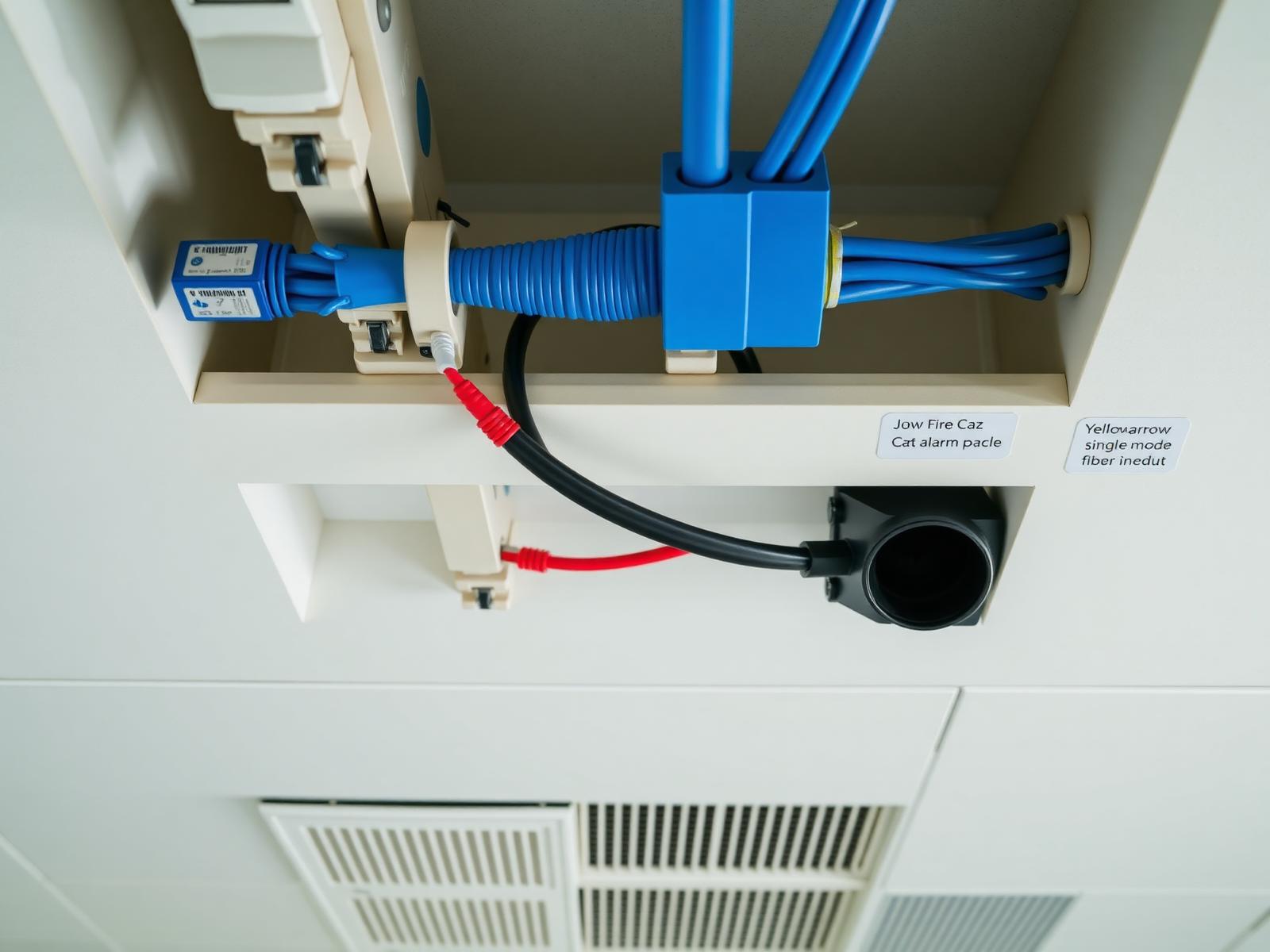
Effective communication across large facilities, whether for routine announcements, emergency notifications, or security directives, hinges on robust and reliable paging systems. For IT directors, facilities managers, and general contractors overseeing complex commercial environments, the implementation of a distributed audio infrastructure demands expert planning, precise cabling, and adherence to performance standards. Access Cabling specializes in the design, installation, and certification of enterprise-grade overhead paging and mass notification cabling solutions. Unlike integrators who prioritize equipment sales, our focus is on building the foundational physical layer—ensuring optimal signal integrity, scalability, and long-term reliability for your chosen audio platform. We navigate the intricacies of acoustic coverage, system architecture, and regulatory compliance, delivering a predictable and high-performing communication backbone that supports critical operations across diverse industries and building types.
Comprehensive Paging System Design and Standards Compliance
The successful deployment of a commercial paging system begins with a meticulous design phase that synthesizes acoustic requirements, facility layout, and operational objectives. Access Cabling engineers develop comprehensive system architectures, specifying appropriate cable types, distribution methods, and termination points to optimize audio intelligibility and coverage. We adhere strictly to industry standards, including TIA/EIA-568 series for balanced twisted-pair cabling, TIA-751-B for Wideband Communications Cabling, and relevant sections of BICSI’s Telecommunications Distribution Methods Manual (TDMM) for pathway and space considerations. For voice evacuation and life safety applications, compliance with NFPA 72 (National Fire Alarm and Signaling Code) and local AHJ (Authority Having Jurisdiction) requirements, including UL 2572 for Mass Notification Systems, is paramount. Our designs account for impedance matching, signal loss over distance, and potential electromagnetic interference (EMI) to ensure crystal-clear audio delivery from the headend to every loudspeaker.
Material Selection for Optimal Audio Fidelity and Longevity
The performance and longevity of a paging system are directly tied to the quality of its components, particularly cabling. Access Cabling exclusively deploys materials from leading manufacturers like Belden, CommScope, and West Penn Wire, known for their performance and adherence to specifications. For traditional 70V/100V constant voltage systems, we utilize plenum-rated, low-loss, shielded or unshielded multi-conductor speaker wire (e.g., 18 AWG, 16 AWG, 14 AWG) based on power requirements and cable run distances, minimizing insertion loss and maximizing power transfer. For IP-based paging solutions utilizing Voice over IP (VoIP) or Session Initiation Protocol (SIP), we deploy ANSI/TIA-568 compliant Category 5e, Category 6, or Category 6A UTP/F/FTP cabling, ensuring bandwidth for voice traffic and Power over Ethernet (PoE) delivery to IP speakers. All cabling and connectivity components, including conductor type, jacket rating (Plenum, Riser), and fire resistance, are selected to meet specific building codes and environmental conditions, guaranteeing system integrity and safety over decades of operation.
Precision Installation and Pathway Management
Installation of paging system cabling requires precision and adherence to best practices to prevent signal degradation and maintain system reliability. Our C-10 licensed technicians meticulously install and route all cabling according to design specifications, ensuring proper bend radius, secure fastening, and separation from high-voltage conduit as dictated by NEC articles 800 (Communications Circuits) and 770 (Optical Fiber Cables). We employ structured cabling methodologies, utilizing appropriate pathways such as conduit, cable trays, and J-hooks to protect cables, facilitate future maintenance, and comply with safety regulations. Termination at speakers, amplifiers, and network switches is performed with manufacturer-specific tools and techniques, ensuring proper polarity, clean connections, and accurate wire seating. Labeling of all cables and termination points is comprehensive, following TIA-606-C administration standards, which is critical for future troubleshooting and system expansion.
Advanced Testing, Certification, and Commissioning
Upon completion of cabling installation, Access Cabling performs rigorous testing and certification to validate the physical layer infrastructure. For low-impedance and 70V/100V systems, this includes continuity testing, short-circuit detection, and phase verification using specialized audio test equipment to identify wiring faults and ensure proper speaker operation. For IP-based paging, we utilize Fluke DSX-8000 CableAnalyzers to certify Category 5e/6/6A copper infrastructure to TIA-568 standards, verifying permanent link and channel performance against parameters such as near-end crosstalk (NEXT), return loss, insertion loss, and Power over Ethernet (PoE) capacity. We also conduct end-to-end system tests, verifying audio path integrity, amplifier output, and speaker coverage patterns. Commissioning includes adjusting speaker tap settings, verifying zone amplification, and confirming integration with existing telephony or building management systems (BMS), providing detailed test reports and as-built documentation for full transparency and operational assurance.
Optimizing Acoustic Coverage Across Diverse Environments
Achieving optimal acoustic coverage is a critical, yet often overlooked, aspect of paging system implementation. Different environments present unique challenges; for instance, high-ceiling warehouses require high-output horn speakers for projection, while office spaces benefit from distributed ceiling speakers for even sound dispersion. Manufacturing floors demand solutions that cut through ambient noise, often requiring specialized industrial speakers or sound masking integration. Our design process incorporates an analysis of room acoustics, ambient noise levels, and desired sound pressure levels (SPL) to strategically place and select appropriate speaker types and power tap settings. We consider factors like reverberation time in expansive areas (e.g., gymnasiums, cafeterias) and speech intelligibility requirements in critical zones (e.g., emergency assembly points) to ensure every message is delivered with clarity and impact, enhancing both routine communications and critical emergency response capabilities.
Integrating Paging with Mass Notification and Life Safety Systems
Modern commercial paging systems often serve a dual role, functioning both for daily announcements and as a critical component of mass notification and emergency communication systems (ECS). Access Cabling specializes in integrating these functionalities, ensuring seamless activation and reliable message delivery during critical events. This involves careful consideration of interfaces with fire alarm control panels (FACP), building management systems (BMS), security systems, and telephony platforms. We ensure the cabling infrastructure supports the necessary control signaling and audio transmission paths for prioritized communication. Adherence to UL 2572 (Standard for Mass Notification Systems) outlines critical requirements for initiating devices, supervisory signals, and system reliability, particularly in environments where public address systems are used for emergency voice evacuation. Our expertise ensures that your paging infrastructure is not just an announcement system, but a life-safety-compliant platform.
Access Cabling's Commitment to Engineered Paging Solutions
Choosing Access Cabling for your paging system infrastructure means partnering with a C-10/C-7 licensed low-voltage contractor with 28+ years of specialized experience. Our differentiator is a deep-seated commitment to engineering excellence, not just installation. We don't push proprietary solutions; instead, we build vendor-agnostic physical layers that support your preferred audio products from manufacturers like AtlasIED, Bogen, Valcom, or Algo Communications. Our approach minimizes future capital expenditures by creating a durable, standards-compliant cabling plant that can adapt to evolving technology. We provide comprehensive project management, from initial site survey and needs assessment to post-installation support, ensuring precise execution and predictable outcomes for projects spanning single-floor build-outs to multi-building corporate campuses nationwide. Our documentation package, including as-built drawings and test reports, provides a transparent record, empowering your IT and facilities teams with a clear understanding of their communication backbone.
Leveraging Digital Signal Processing for Enhanced Audio Clarity
Modern paging system efficacy is fundamentally tied to the judicious application of Digital Signal Processing (DSP) techniques. Beyond mere amplification, DSP platforms enable intricate audio manipulation that directly addresses common acoustic challenges in diverse environments. For instance, in large, reverberant spaces like warehouses or transportation hubs, DSP algorithms employing adaptive feedback suppression and echo cancellation are crucial. These technologies analyze the acoustic environment in real-time, identifying and mitigating common failure modes such as 'howl' or unintelligible, overlapping announcements. Parametric equalization, another cornerstone of DSP, allows for precise frequency response shaping to compensate for architectural absorption or reflection characteristics, ensuring vocal clarity rather than just volume. Furthermore, dynamic range compression and automatic gain control (AGC) are essential for maintaining consistent audibility across varying background noise levels, a frequent issue in manufacturing facilities or educational campuses. AGC, by dynamically adjusting output levels, prevents listener fatigue while ensuring critical messages cut through ambient sound. Our approach integrates industry-leading DSP matrices, often from manufacturers like Biamp, QSC, or BSS, which offer robust programming environments to implement these advanced functions. This enables us to configure scene-based audio presets, optimizing the system's performance for different operational modes—e.g., routine announcements versus emergency broadcasts—and ensuring fail-safe redundancy within the DSP architecture itself, often via Dante or AVB network audio protocols that provide low-latency, high-channel-count transmission for critical audio paths. The strategic selection and configuration of these DSP components are not merely value-adds but essential elements that dictate the overall intelligibility and operational integrity of the paging system, translating directly into enhanced safety and communication efficiency, and minimizing the Total Cost of Ownership (TCO) by reducing the need for manual adjustments and troubleshooting.
Strategic Phased Migration and Cutover Methodologies
Implementing a new paging system, especially within active operational environments like hospitals, manufacturing plants, or large corporate campuses, necessitates a meticulously planned phased migration and cutover strategy to minimize disruption and ensure continuity of critical communications. Our methodology begins with a comprehensive assessment of the existing infrastructure, identifying legacy system components, cabling pathways, and potential interdependencies. This includes a detailed analysis of existing speaker zones, amplifier configurations, and integration points with fire alarm or security panels, often leveraging as-built documentation or conducting thorough site surveys where such records are absent. We then develop a multi-stage deployment plan. Phase one typically involves the installation of new backbone infrastructure, including fiber optic or Category-rated cabling for network audio (e.g., Dante, AES67) and control, often deployed in parallel with the existing system. This 'dark' installation minimizes immediate impact. Phase two focuses on the strategic deployment of endpoint devices—speakers, paging stations, amplifiers—in new zones or as direct replacements, often leveraging 'hot swap' techniques where new components are pre-configured offline and quickly integrated during scheduled maintenance windows. The cutover itself is orchestrated with precision, involving temporary parallel operation of old and new systems in critical zones, followed by incremental transition. Rigorous testing protocols, including A/B intelligibility comparisons and latency checks, are conducted at each stage to validate performance before full migration. Detailed communication plans are concurrently developed and disseminated to end-users and stakeholders, outlining the transition timeline and expected changes. The final cutover often occurs during off-peak hours or weekend shutdowns to mitigate operational risks, with dedicated on-site support available for immediate post-cutover verification and troubleshooting, ensuring a seamless and fully functional transition that avoids communication vacuums and maintains life-safety compliance.
Environmental Resiliency and Code-Compliant Enclosures
For paging systems deployed in challenging environments, such as industrial facilities, outdoor public spaces, or cleanrooms, proper environmental resiliency and code-compliant enclosure selection are paramount to ensuring system reliability and longevity. Our engineering process meticulously evaluates the operating conditions, which typically include temperature extremes, humidity levels, airborne particulates, potential for chemical exposure, and risk of physical impact. Based on this assessment, we specify equipment with appropriate Ingress Protection (IP) ratings, a standard defined by IEC 60529. For example, in environments prone to dust and water spray, IP65-rated loudspeakers and enclosures are chosen, ensuring protection against total dust ingress and low-pressure water jets from any direction. For areas requiring submersion resistance, such as marine environments or wash-down facilities, IP67 or IP68 ratings would be essential. Beyond IP ratings, material science plays a critical role; stainless steel or fiberglass reinforced polyester (FRP) enclosures are often selected over painted steel for corrosive atmospheres, extending product lifespan and reducing maintenance cycles. For hazardous locations (HazLoc), components must comply with specific classifications, such as intrinsically safe (IS) or explosion-proof ratings, as defined by standards like NFPA 70 (National Electrical Code) Article 500, to prevent ignition of flammable gases or dusts. This often translates to UL-listed or ATEX-certified equipment. Acoustically, outdoor speakers require specific horn designs and driver materials to withstand UV degradation and moisture while maintaining intelligibility over long distances. Furthermore, conduit and cabling pathways must also adhere to these environmental considerations, using appropriate raceway types (e.g., rigid metallic conduit, PVC-coated conduit) and cable jackets (e.g., plenum-rated, outdoor-rated, chemically resistant) to ensure structural integrity and signal transmission without degradation. The thorough specification of these resilient components is not merely a best practice; it's a critical engineering requirement that prevents premature system failure, ensures compliance with safety regulations, and safeguards the client's investment against the specific environmental stressors of their operational context while considering the long-term TCO impact of component durability.
Interoperability with Building Management and IoT Platforms
The modern paging system transcends its traditional role as a standalone announcement mechanism, increasingly integrating with broader Building Management Systems (BMS) and Internet of Things (IoT) platforms to create a more intelligent, responsive, and automated facility. Our designs prioritize open-standard protocols such as BACnet, Modbus, or more recently, RESTful APIs and MQTT, to facilitate seamless data exchange. This interoperability allows the paging system to receive triggers and convey status information in real-time, enhancing operational efficiency and safety. For instance, temperature sensors or HVAC system alarms within the BMS can automatically trigger pre-recorded paging announcements warning of environmental anomalies in sensitive areas. Similarly, integration with security systems can enable automated lockdown procedures, initiating specific paging messages and directives to occupants during an emergency, coordinated with access control systems to secure entry points. On the IoT front, integration with occupancy sensors can dynamically adjust speaker volume or activation zones based on real-time population density, optimizing audio coverage and conserving energy. Furthermore, data analytics derived from paging system usage (e.g., frequency of announcements, zone activation patterns) can be fed into a centralized IoT dashboard, providing facility managers with actionable insights into communication effectiveness and potential areas for operational improvement. This level of interconnectivity not only streamlines emergency response but also enhances daily operations by automating routine announcements, scheduling facility-wide notifications, and even integrating with visitor management systems for personalized greetings. The complexity lies in ensuring robust communication pathways, cybersecurity protocols for data integrity and system isolation, and meticulous mapping of data points between disparate systems, often requiring custom API development or middleware solutions to achieve true bidirectional functionality and leverage the full potential of a 'smart' building ecosystem.