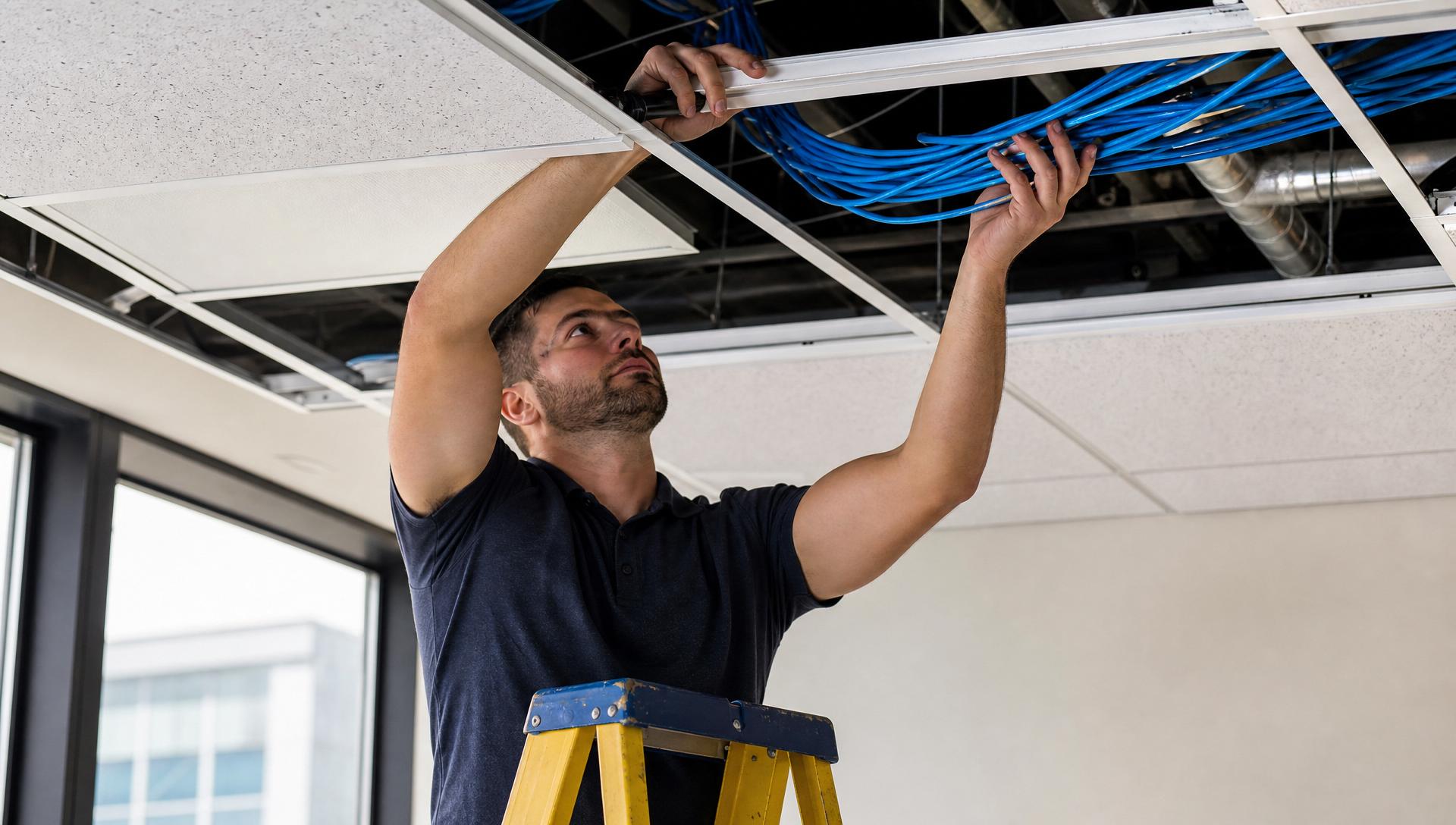
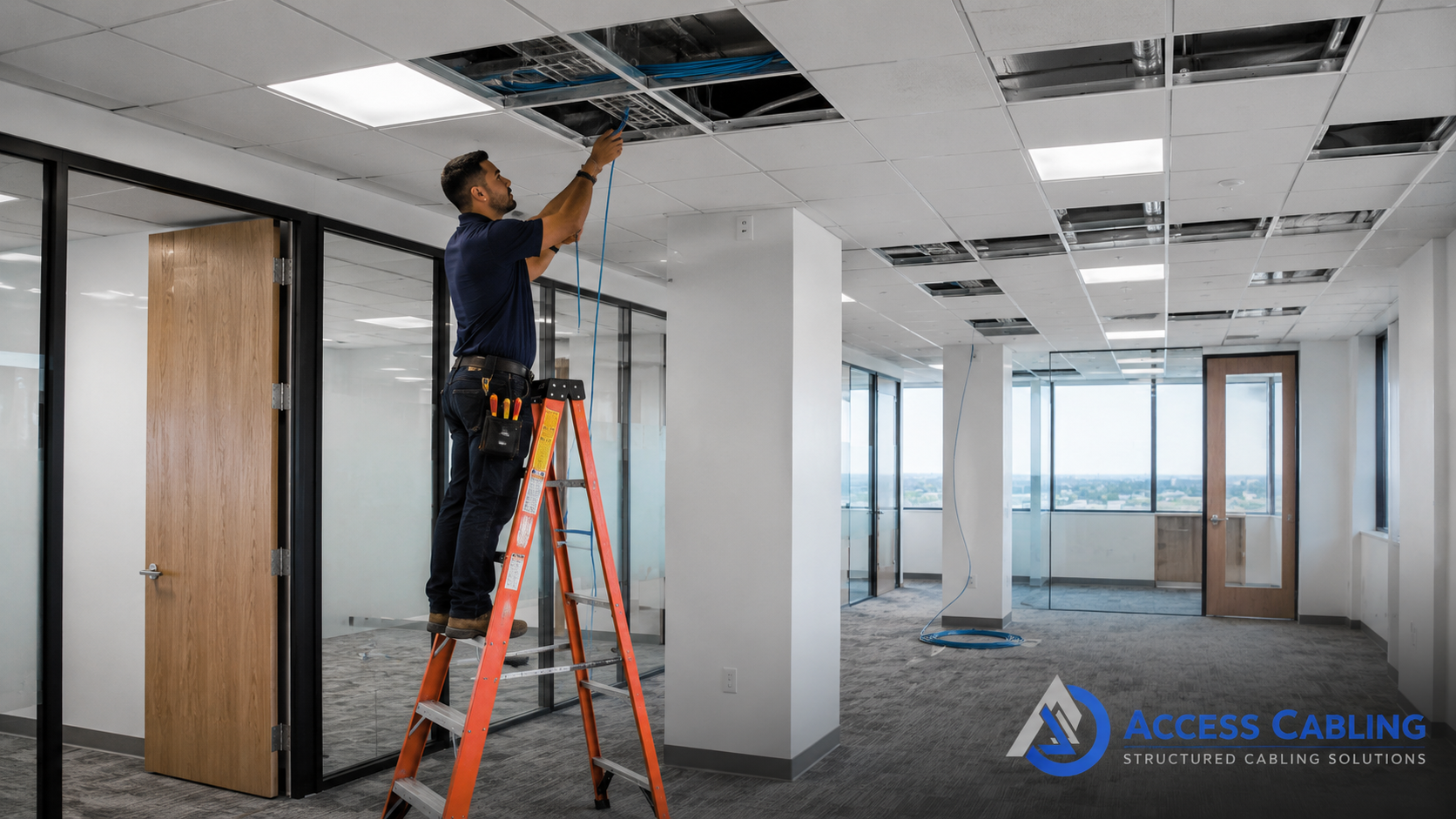
For enterprises requiring robust, scalable, and compliant network infrastructure, selecting a qualified low-voltage contractor is not merely a vendor selection, but a foundational decision impacting operational continuity and long-term TCO. Access Cabling, leveraging 28 years of specialized experience as a C-10 / C-7 licensed low-voltage contractor in California and nationwide, delivers integrated cabling solutions that transcend basic connectivity. We specialize in designing, deploying, and maintaining high-performance physical layers, understanding that each fiber or copper strand contributes to your critical data path. Our methodology prioritizes TIA/EIA and BICSI-compliant architectures, ensuring future-proof functionality and seamless integration with complex active equipment. We provide end-to-end responsibility, from initial site surveys and system design to meticulous installation, Fluke DSX certification, and ongoing support, guaranteeing an infrastructure that meets current demands and anticipates future technological advancements.
Defining the Scope: Low-Voltage System Integration
A low-voltage contractor's primary role extends beyond simply running cable; it encompasses the complete planning, installation, and verification of any electrical system operating at 50 volts (AC) or less. This includes structured cabling (Category 6A, Category 8, single-mode, multi-mode fiber optic), access control, CCTV/IP surveillance, Wi-Fi access points, building automation systems (BAS), sound masking, and distributed antenna systems (DAS). Our expertise ensures that these diverse systems are not only installed correctly but are also designed to coexist and interoperate efficiently within a cohesive infrastructure. Adherence to NEC (National Electrical Code) Article 725 for Class 2 and Class 3 circuits, TIA standards for telecommunications infrastructure, and BICSI methodology is paramount to delivering a reliable and safe low-voltage ecosystem.
Strategic Design & Engineering for Optimal Performance
Effective low-voltage infrastructure begins with strategic design and engineering. This involves detailed site surveys, assessing current and projected bandwidth requirements, identifying environmental constraints (e.g., plenum spaces, EMI/RFI interference), and planning conduit pathways. Our engineering team utilizes CAD tools for comprehensive pathway, space, and cable routing plans, ensuring compliance with TIA-568 series for commercial building telecommunications cabling and TIA-569 for pathways and spaces. We factor in considerations such as cable lengths to avoid signal degradation, properBend radius for fiber optics to prevent attenuation, and optimal placement of telecom rooms (TRs) and main distribution areas (MDAs) to minimize cross-connects and maximize manageability, which directly impacts overall system performance and ease of future upgrades. This meticulous pre-installation planning is critical for preventing costly retrofits and ensuring infrastructure longevity.
Component Selection: Ensuring System Longevity and Reliability
The longevity and performance of a low-voltage system are directly tied to the quality of its components. We specify and integrate materials from industry-leading manufacturers such as Panduit, CommScope, Leviton, Belden, Corning, and Legrand. This includes choosing the appropriate cable type (e.g., plenum-rated for air handling spaces, shielded for high-interference environments, OS2 single-mode fiber for long-haul backbones, OM3/OM4 multi-mode for data center interconnects), robust patch panels, high-density fiber enclosures, and reliable connectivity hardware (jacks, plugs, connectors). Our selection process adheres to TIA-942 for data center infrastructure and other applicable standards, ensuring that every component contributes to a high-performing, standards-compliant, and manufacturer-warrantied system. We understand that the weakest link determines overall performance, and we mitigate this through a rigorous material specification process.
Installation Methodologies and Quality Assurance
Our installation process adheres to the strictest industry best practices, ensuring a meticulously managed deployment. This includes proper cable management for airflow and easy MACs (Moves, Adds, Changes), precise termination techniques for both copper (T568-B standard) and fiber optic (fusion splicing for minimal loss), and detailed labeling per TIA-606-C administration standard. All cable pulls are executed with appropriate tension limits to prevent damage, especially critical for fiber optic cables. Our technicians are BICSI-certified RCDDs (Registered Communications Distribution Designers) and Installers, guaranteeing that every segment of the infrastructure is installed with precision and in full compliance with manufacturer specifications and industry standards. This methodical approach minimizes post-installation issues and maximizes the operational life of the cabling plant.
Rigorous Testing, Certification, and Documentation
Upon completion of installation, every cable drop and fiber link undergoes rigorous testing and certification. We utilize Fluke Networks DSX-8000 Versiv Cable Analyzers for comprehensive copper certification (Category 6A, Category 8) against TIA-568-C.2 or TIA-568.2-D standards, measuring parameters such as Near-End Crosstalk (NEXT), Return Loss, Insertion Loss, and Wiremap. For fiber optic circuits, we conduct Tier 1 (Loss/Length) and Tier 2 (OTDR trace) testing using Fluke CertiFiber Pro and OptiFiber Pro, measuring insertion loss, optical return loss (ORL), and identifying events like splices and connectors, all compliant with TIA-558 fiber optic test procedures. Detailed test reports are provided as a complete record, essential for troubleshooting, warranty validation, and ensuring the physical layer performs to its rated specifications. This comprehensive documentation package provides irrefutable proof of quality and compliance.
Compliance, Safety, and Regulatory Adherence
As a licensed C-10 (Electrical) and C-7 (Low Voltage) contractor, Access Cabling operates with strict adherence to all local, state, and federal regulations. This includes the National Electrical Code (NEC), California Building Standards Code, and relevant OSHA safety guidelines. All installations comply with fire safety codes (e.g., use of plenum-rated cable in air-handling spaces), grounding and bonding requirements (TIA-607-C), and seismic bracing standards where applicable. Our internal safety protocols are rigorous, extending from daily toolbox talks to comprehensive hazard assessments. Ensuring compliance not only protects our clients from potential liabilities and fines but also guarantees the operational safety and reliability of the low-voltage systems we deploy, which is paramount in critical environments like data centers, healthcare facilities, and educational institutions.
Future-Proof Infrastructure: Beyond Current Demands
Access Cabling's approach to low-voltage contracting extends beyond merely meeting immediate requirements; we engineer infrastructures designed for future scalability and technological evolution. This involves strategic planning for higher bandwidth demands (e.g., considering Category 8 or fiber deeper into the network), accommodating emerging technologies like IoT and Wi-Fi 6E/7, and ensuring pathways and spaces can support future expansions without disruptive overhauls. We design modular systems that allow for seamless upgrades and integration of new applications, such as converged IP networks, smart building technologies, and advanced security platforms. By anticipating future needs and building in resilience and adaptability, we provide our clients with a physical layer that serves as a long-term strategic asset, protecting their technology investments over a decades-long lifecycle.
Coordinating with MEP Trades for Seamless Integration
Effective project execution for low-voltage systems hinges critically on meticulous coordination with Mechanical, Electrical, and Plumbing (MEP) trades. Our approach involves early and continuous engagement, typically commencing during the design development phase, utilizing Building Information Modeling (BIM) for clash detection and spatial conflict resolution. For instance, the routing of conduit for fiber optic backbone distribution (e.g., OM4 or OS2 LC-LC plenums) must navigate around HVAC ductwork, fire suppression lines, and electrical busways. We employ federated BIM models to proactively identify potential infringements on prescribed bend radii for optical fiber, clearance requirements for copper conduit fills (e.g., 60% fill ratio for Cat6A cables to mitigate heat buildup and crosstalk), and accessible pathways for future maintenance or upgrades. This preemptive identification minimizes costly on-site rework, reduces material waste, and prevents delays in critical path activities. Furthermore, coordination extends to power requirements (e.g., dedicated circuits for PoE switches, UPS systems for network racks), grounding and bonding schema (adhering to TIA-607-C), and environmental controls within telecommunications rooms (TRs) or data centers to ensure optimal operating conditions for active equipment. Our project managers facilitate regular inter-trade meetings, leveraging detailed Gantt charts and critical chain methodologies to synchronize installation schedules, define responsibility matrices (e.g., who provides seismic bracing for overhead cable trays versus a ceiling grid contractor), and establish clear communication protocols for issue escalation and resolution. This holistic coordination guarantees not only physical installation integrity but also operational harmony across all building systems, mitigating common pitfalls such as inadequate pathways, power supply discrepancies, or thermal management challenges that can compromise low-voltage system performance over its lifecycle.
Ensuring Data Security and Network Resilience
Beyond physical connectivity, robust low-voltage infrastructure is the bedrock for comprehensive data security and network resilience. Our design philosophy incorporates security considerations from the ground up, moving beyond merely 'hardening' existing systems. This involves strategic placement of network access points, implementation of logical and physical segmentation through VLANs (Virtual Local Area Networks) and dedicated conduits, and the secure termination of all cabling. For instance, in sensitive environments, we specify shielded twisted pair (STP) cabling for Cat6A or Cat7 to enhance electromagnetic interference (EMI) resistance, crucial for preventing data exfiltration via side-channel attacks or maintaining signal integrity in electrically noisy environments. Physical security measures include the deployment of secure cable pathways (e.g., locked pathway systems, tamper-evident conduit), controlled access to telecommunications rooms (TRs) with biometric or card reader systems, and the strategic positioning of surveillance cameras to monitor critical infrastructure points. For network resilience, we design redundant pathways and equipment where uptime is paramount, such as dual uplinks to core switches, diverse fiber routes (e.g., ring topologies), and geographically separated data centers. We implement standards-compliant grounding and bonding (e.g., according to TIA-607-C) to protect against transient voltages and lightning strikes, crucial for preventing single points of failure. Additionally, our documentation includes detailed network diagrams (logical and physical), asset inventories, and incident response plans for the low-voltage layer, enabling rapid fault isolation and mitigation. We validate these security and resilience measures through post-installation network penetration testing and simulated failure scenarios, ensuring the installed infrastructure can withstand both malicious attacks and environmental stressors, thereby protecting critical data assets and maintaining operational continuity for our clients.
Lifecycle Management and Obsolescence Planning
A critical, yet often overlooked, aspect of low-voltage infrastructure deployment is comprehensive lifecycle management and obsolescence planning. Our services extend beyond initial installation to include strategic guidance on maintaining peak system performance and facilitating future upgrades. We understand that technology evolves rapidly, and today's cutting-edge solution can become tomorrow's legacy bottleneck. Therefore, our design incorporates expandability and modularity where feasible. For example, instead of immediately fully populating cable trays, we design for future cable growth (e.g., maintaining 20-30% spare capacity) to accommodate additional drops, higher bandwidth requirements, or new technologies without needing costly overhauls. We advocate for structured cabling systems (e.g., TIA-568-C compliant) that offer a long operational lifespan (typically 10-20 years), with patch panels and pathways designed for easy re-termination and re-configuration rather than wholesale replacement. Our documentation suite includes not just 'as-built' drawings but also a technology roadmap outlining anticipated upgrade cycles for key components like fiber optic transceivers (e.g., transitioning from 10G to 40G or 100G Ethernet), active network equipment, and even cabling types (e.g., potential migration from Cat6A to Cat8 for 25/40GBASE-T). We provide clients with Total Cost of Ownership (TCO) analyses that factor in not only initial capital expenditure but also ongoing maintenance, potential repair costs, and projected upgrade expenses. Furthermore, our maintenance agreements can include proactive monitoring of infrastructure health (e.g., fiber loss budgets, copper cable performance metrics), detailed asset tracking for end-of-life management, and a formalized refresh strategy that outlines trigger points for technology migrations. This proactive approach to obsolescence planning minimizes unexpected expenditures, mitigates service disruptions during upgrades, and ensures the low-voltage infrastructure remains a strategic asset supporting organizational goals for its entire useful life, avoiding common pitfalls such as stranded assets or forced, reactive system replacements due to unforeseen incompatibility or capacity limits.
Navigating Code Compliance and Evolving Standards
Strict adherence to a complex array of local, national, and industry-specific codes and standards is paramount for any low-voltage installation, impacting not just legality but also safety, performance, and insurance validity. Our expertise encompasses a detailed understanding and application of governing bodies such as the National Electric Code (NEC, specifically Articles 725, 760, 770, and 800), TIA/EIA standards (e.g., TIA-568-C for commercial building cabling, TIA-606-C for administration standards), BICSI best practices, and applicable local building codes. For instance, the NEC dictates specific requirements for plenum-rated cabling (e.g., CMP classification for fire resistance) in air-handling spaces to prevent the spread of smoke and toxic fumes, contrasting with riser (CMR) or general-purpose (CM) cables. Our design engineers meticulously specify appropriate cable jackets, conduit materials, and firestopping methods (e.g., using UL-listed firestop sealants for penetrations) to meet these life safety considerations. We also navigate evolving standards, such as the increasing emphasis on Power over Ethernet (PoE) installations (e.g., PoE++, 802.3bt), which introduce new considerations for cable bundle sizes and thermal management to prevent overheating and performance degradation. Our teams are continuously trained on the latest revisions of these codes and standards, and we integrate them into every phase of a project, from initial design reviews to final installation inspections. This includes documenting compliance through detailed permit applications, inspection reports, and as-built drawings that clearly indicate adherence to pathway fill ratios, bend radii, grounding configurations, and labeling schema. Non-compliance can lead to significant financial penalties, project delays, insurance claim invalidation, and, most critically, safety hazards. We proactively engage with Authority Having Jurisdiction (AHJ) officials and building inspectors throughout the project lifecycle to ensure all system components and installation methodologies meet or exceed mandated requirements, guaranteeing a legally compliant, safe, and robust low-voltage infrastructure.