
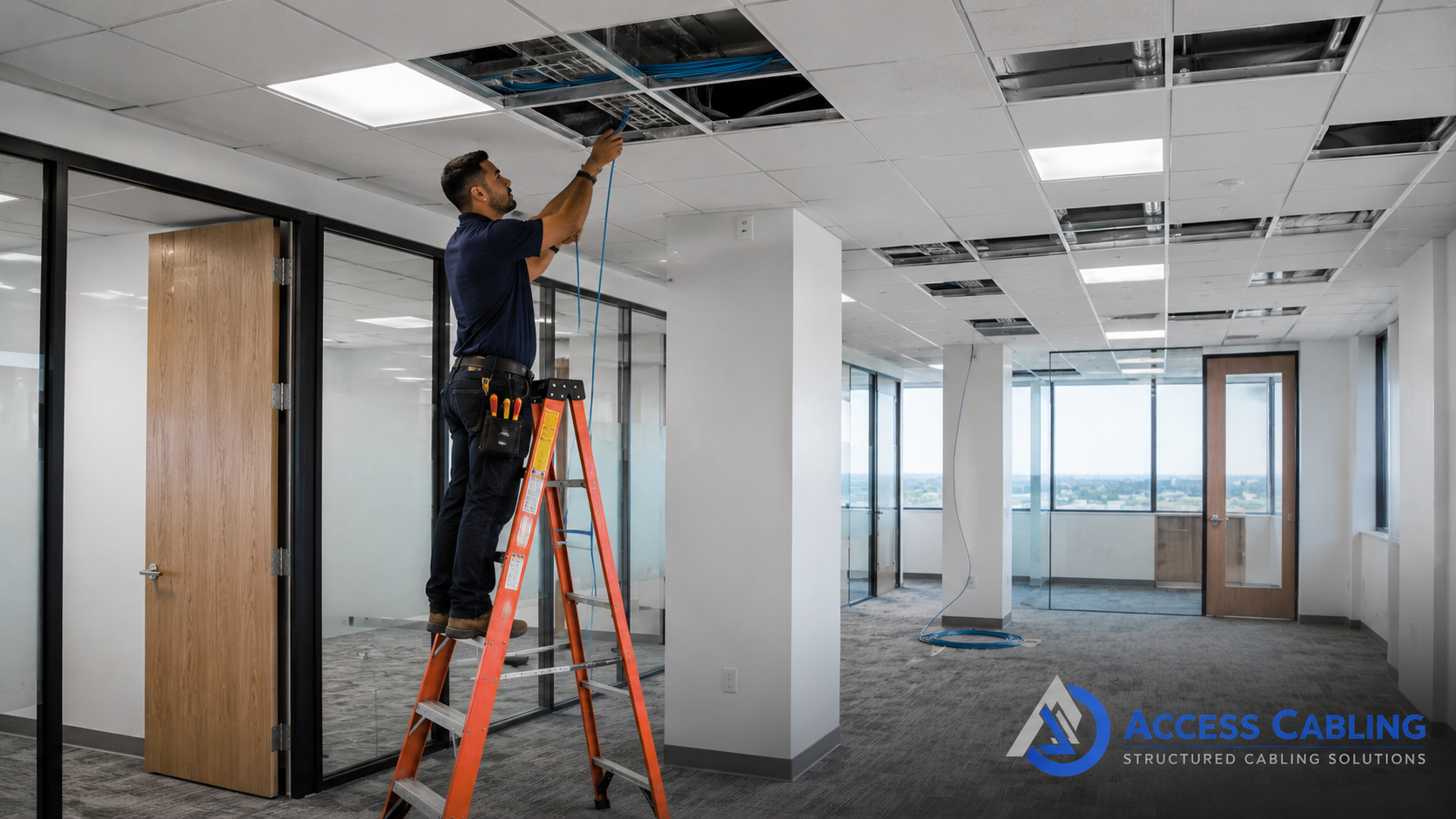
Access Cabling technician terminating blue CAT6A cable onto a patch panel in a commercial IDF cabinet.
Commercial · Copper Cabling

CAT6A Installation Services

CAT6A shielded and unshielded cabling for full 10 Gbps to 100 m.

28+ Years Experience
C-10 / C-7 Contractor
CSLB: 992009
Licensed Commercial Contractor
5 California Offices
California & Nationwide Service

Request a CAT6A Installation site survey

Free, no-obligation walkthrough. Licensed C-10 / C-7 (CSLB #992009). 28+ years, California & nationwide.

Request a site survey
Commercial Service Overview

Enterprise-grade cat6a installation engineered for commercial buildings.

CAT6A Installation from Access Cabling delivers enterprise-grade CAT6A installation engineered by a licensed low-voltage contractor with 28+ years serving California and nationwide clients. Our BICSI-trained technicians design, install, terminate, test and certify every run to TIA/EIA standards so your infrastructure supports current bandwidth demands and future growth.
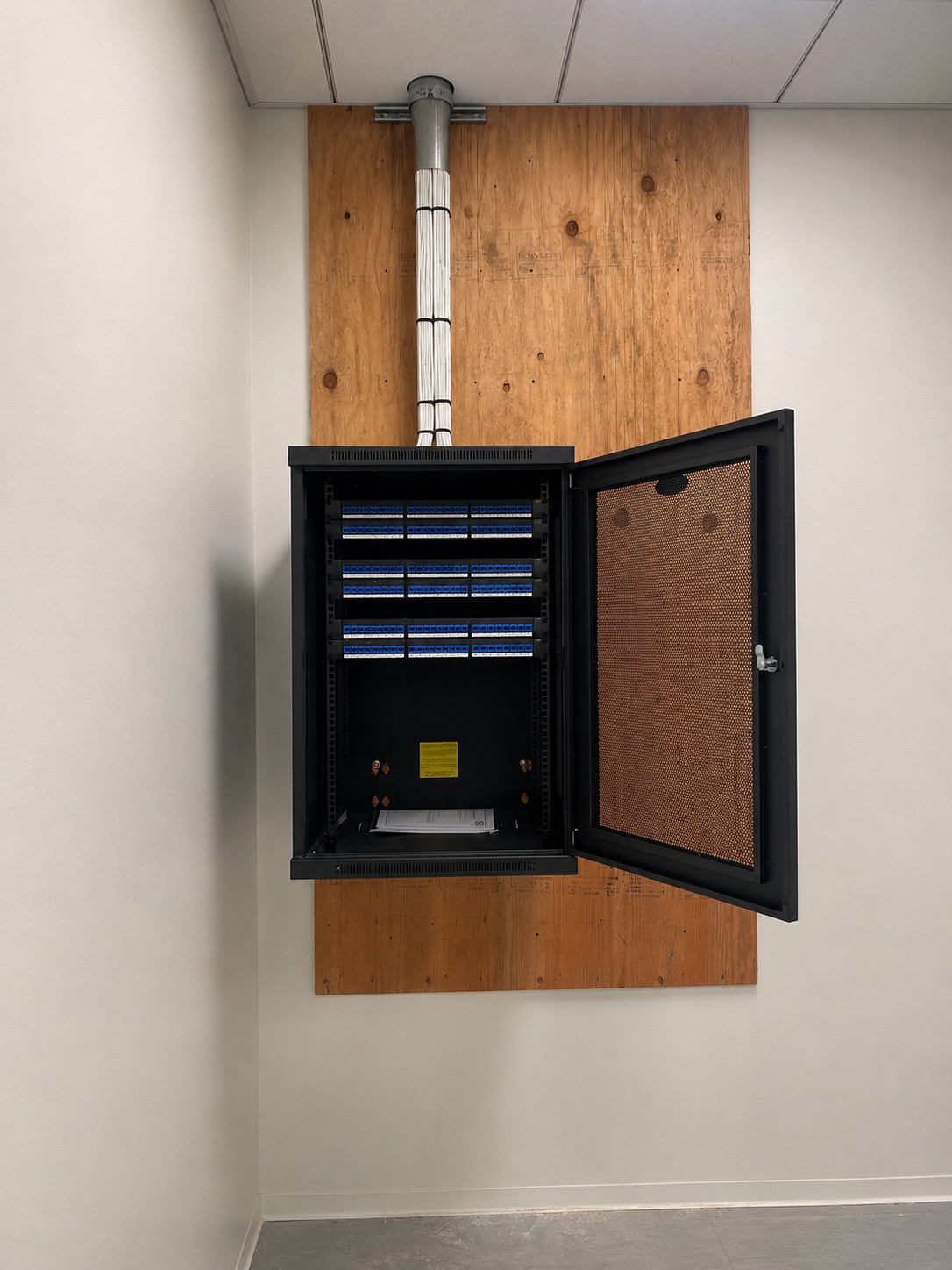
Enterprise server room aisle with shielded Cat6A trunk bundles routed on overhead ladder rack.
Key Benefits

Why cat6a installation from Access Cabling

Commercial-grade installation, certified performance, and infrastructure built to last 25+ years.

Certified installation by BICSI-trained technicians
Manufacturer warranties up to 25 years on structured cabling
Fluke DSX certification reports on every project
Licensed C-10 / C-7 low-voltage contractor
24/7 emergency response and MAC services
Nationwide coverage with California headquarters
Installation Process

Our proven commercial cabling process

A repeatable, engineered process — refined over 28 years and thousands of sites.

  1. Step 1

    Free on-site survey and needs assessment

  2. Step 2

    Engineered design with rack elevations and pathway plans

  3. Step 3

    Scheduled installation with minimal business disruption

  4. Step 4

    Termination, testing, labeling and documentation

  5. Step 5

    Fluke certification and as-built drawings delivered

Technical Standards & Testing

TIA-compliant. Fluke-certified. Fully documented.

Every cat6a installation installation follows TIA-568, TIA-606 labeling, NEC 800 and applicable manufacturer specifications. Fluke DSX Versiv certification and full as-built documentation are delivered at project close.

  • TIA-568 structured cabling standards
  • TIA-606 labeling and administration
  • TIA-942 data center infrastructure
  • Fluke DSX-8000 channel and link certification
  • Manufacturer certified installer for Panduit, CommScope, Leviton
Access Cabling technician terminating blue CAT6A cable onto a patch panel in a commercial IDF cabinet.
Industries Served

CAT6A Installation for every commercial environment

28+
Years
5
CA Offices
50
States
12M+
Feet Installed
Local Service Area

CAT6A Installation across California & nationwide

Local crews dispatched daily from five California offices. Multi-site rollouts across all 50 states.

In Depth

A closer look at cat6a installation

For organizations requiring robust, future-ready network infrastructure capable of supporting current and emerging high-bandwidth applications, CAT6A installation is a critical investment. Unlike CAT5e or standard CAT6, Augment Category 6 (CAT6A) copper cabling is engineered to reliably deliver 10 Gigabit Ethernet (10GbE) over twisted-pair copper for distances up to 100 meters, eliminating the need for fiber in many horizontal distribution scenarios. This makes it an ideal solution for data centers experiencing growth, large enterprise campuses, healthcare facilities deploying advanced imaging, and manufacturing plants integrating IoT and automation. Access Cabling specializes in the meticulous design, deployment, and certification of CAT6A systems, adhering strictly to TIA/EIA, BICSI, and NEC standards. Our approach prioritizes signal integrity through expert mitigation of Alien Crosstalk (AXT) and precise termination techniques, ensuring your 10GbE network operates at peak performance, now and for years to come.

Defining CAT6A Performance and Standards

CAT6A cabling represents a significant advancement over previous generations, specifically designed to support 10 Gigabit Ethernet at frequencies up to 500 MHz, double that of standard CAT6. The key differentiating factor is its enhanced performance regarding Alien Crosstalk (AXT), which is external noise coupling from adjacent cables. To combat AXT effectively in 10GbE environments, CAT6A cables are manufactured with tighter twists, larger overall diameters, and often employ improved shielding or internal separation elements. The TIA-568-C.2 and ISO/IEC 11801 Class EA standards govern CAT6A performance parameters, specifying critical metrics such as insertion loss, return loss, near-end crosstalk (NEXT), far-end crosstalk (FEXT), and PSELFEXT (Power Sum Equal Level Far-End Crosstalk). Adherence to these standards is paramount for ensuring a certified 10GbE channel, as even minor deviations in cable quality or installation technique can compromise the entire link's performance and negate the investment in high-speed networking hardware. Access Cabling exclusively utilizes TIA-compliant components from leading manufacturers like Panduit, CommScope, and Berk-Tek, ensuring a robust physical layer foundation for your network.

Strategic Design and Engineering for 10GbE Reliability

Effective CAT6A installation begins with a comprehensive design and engineering phase that considers the unique environmental and operational requirements of the deployment. Unlike lower-speed cabling, CAT6A's sensitivity to AXT and its larger cable diameter necessitate careful planning of cable pathways, bundle sizes, and separation from EMI sources. Our engineers utilize site surveys, architectural drawings, and detailed discussions with IT and facilities teams to develop a precise bill of materials (BOM) and installation plan. This includes determining optimal conduit fill ratios, tray capacities, and appropriate grounding schemas for shielded CAT6A (F/UTP, U/FTP) systems. We also account for future expansion, thermal management within pathways, and accessibility for maintenance. The design documentation explicitly outlines cable routing, termination points, and equipment rack layouts, ensuring that the physical infrastructure supports the logical network architecture efficiently. For data centers, particular attention is given to hot/cold aisle containment and strategic cabling within cabinets to prevent airflow obstruction.

Selecting Optimal CAT6A Media and Connectivity Components

The choice of CAT6A cable and connectivity components significantly impacts network performance and longevity. Access Cabling works with both unshielded (U/UTP) and shielded (F/UTP or U/FTP) CAT6A solutions, selecting based on the specific application environment and noise considerations. While U/UTP CAT6A can achieve 10GbE, it requires careful AXT mitigation through proper installation techniques, especially when bundling cables. Shielded CAT6A provides superior noise immunity, making it ideal for environments with high electromagnetic interference (EMI), such as industrial settings or areas near high-power electrical equipment. For connectivity, we specify TIA-568-D compliant keystone jacks, patch panels, and patch cords from manufacturers like Leviton, Corning, and Belden. These components are designed with specific internal geometries and conductor separation to maintain signal integrity and minimize AXT at the termination points. The connectors feature robust wire retention and ensure consistent pair impedance across all connections, a critical factor for maintaining the 100-ohm characteristic impedance required for CAT6A channels. Our material selection process prioritizes tested interoperability between cable and connector to guarantee a cohesive, high-performance system.

Precision Installation Techniques for AXT Mitigation

The installation of CAT6A cabling demands meticulous attention to detail to ensure full 10GbE performance, particularly in managing Alien Crosstalk (AXT). Our certified technicians adhere to stringent BICSI installation practices, which are critical for CAT6A. This includes maintaining specific separation distances from other cable bundles, power lines, and EMI sources. We avoid tight cable ties, which can deform cable geometry and degrade performance, instead opting for hook-and-loop fasteners or appropriate cable management devices. Bend radius guidelines are strictly followed to prevent micro-bends that cause signal reflection and impedance mismatches. Termination techniques are equally critical; our installers are trained to consistently untwist pairs no more than 0.5 inches (1.25 cm) at the point of termination, whether for keystone jacks or patch panels, as excessive untwisting introduces crosstalk. Each termination is performed using manufacturer-specified tools and methods to ensure optimal conductor seating and reliable electrical contact, which is essential for minimizing insertion loss and maximizing return loss performance across the 100-meter channel. These precise practices are fundamental to achieving a certified 10GbE link.

Rigorous Testing and Certification for Assured Performance

Upon completion of the physical installation, every CAT6A link undergoes comprehensive testing and certification to verify adherence to TIA-568-C.2 or ISO/IEC 11801 Class EA standards. Access Cabling utilizes industry-leading, calibrated network certification tools, such as the Fluke Networks DSX-8000 CableAnalyzer, to perform critical channel and permanent link tests. These tests measure parameters including wire map, length, propagation delay, delay skew, insertion loss, return loss, Near-End Crosstalk (NEXT), Power Sum NEXT (PSNEXT), Alien Near-End Crosstalk (ANEXT), Attenuation-to-Crosstalk Ratio Far-End (ACRF), Power Sum ACRF (PSACRF), and most critically, Alien Far-End Crosstalk (AFEXT) and Power Sum AFEXT (PSAFEXT). Successful completion of these tests provides a detailed certification report for each link, confirming its ability to support 10 Gigabit Ethernet over the full 100-meter distance. This rigorous certification process is not merely a formality; it is a vital step that guarantees the installed infrastructure meets the demanding performance requirements of 10GbE applications, providing tangible proof of system integrity and minimizing future troubleshooting efforts for our clients.

Applications and Future-Proofing with CAT6A

CAT6A cabling is rapidly becoming the baseline for new commercial network deployments due to its robust support for present and future high-bandwidth demands. Common applications include connecting 10GbE switches to servers and storage arrays in data centers, providing high-speed backbone connections between wiring closets in large campus networks, and supporting bandwidth-intensive devices such as multi-gigabit wireless access points (Wi-Fi 6/6E), advanced IP cameras, and converged IoT platforms. Its capability to deliver 10GbE over copper for 100 meters makes it a cost-effective alternative to fiber optic cabling for horizontal runs, simplifying infrastructure and reducing transceiving equipment costs. Furthermore, CAT6A offers excellent Power over Ethernet (PoE/PoE+/PoE++) performance, minimizing thermal degradation when delivering power to devices like VoIP phones, security cameras, and LED lighting. By installing CAT6A today, organizations future-proof their physical layer against evolving bandwidth demands for at least the next decade, ensuring their network infrastructure can scale with technological advancements without a costly rip-and-replace scenario.

Ensuring Compliance and Safety in Installation

Compliance with relevant codes and safety standards is non-negotiable for all Access Cabling projects, particularly with CAT6A installations where cable bulk and power delivery considerations are more pronounced. Our installations strictly adhere to National Electrical Code (NEC) articles, including those pertaining to plenum and riser ratings (e.g., CMP, CMR) for fire safety, grounding and bonding requirements, and proper cable support to prevent damage and maintain pathway integrity. For instance, cables installed in plenum spaces must be CMP-rated to limit flame propagation and smoke generation. All work is performed by licensed C-10/C-7 low-voltage technicians, ensuring that installations meet both performance and safety benchmarks. We maintain detailed documentation, including as-built drawings and test reports, which are crucial for audits and ongoing facility management. This commitment to compliance not only protects the network investment but also ensures the safety of personnel and the structural integrity of the building, providing a secure and reliable operational environment.

Access Cabling's Differentiated CAT6A Expertise

What sets Access Cabling apart in the CAT6A installation landscape is our comprehensive, manufacturer-agnostic expertise combined with a steadfast commitment to transparent, standards-compliant project execution. With 28+ years of experience, we don't just pull cable; we engineer structured cabling systems. Our team holds BICSI RCDD and Installer certifications, signifying a deep understanding of industry best practices and design principles. We leverage partnerships with top-tier manufacturers like Panduit, CommScope, Belden, Leviton, and Corning, allowing us to specify and install the optimal CAT6A components tailored to your specific performance requirements and budget without vendor lock-in. Our meticulous attention to AXT mitigation, precision termination, and rigorous Fluke DSX certification ensures every link delivers its promised 10GbE capability. We provide comprehensive documentation packages, including detailed test results and as-built drawings, offering complete transparency and auditability for your investment. Choosing Access Cabling means partnering with a proven expert dedicated to delivering a high-performance, future-ready physical network infrastructure.

Streamlining Project Management for Large-Scale CAT6A Deployments

Successful deployment of extensive CAT6A infrastructure in complex commercial or industrial environments necessitates a highly structured project management approach, extending beyond typical IT installations. Access Cabling utilizes a dedicated project manager for every large-scale CAT6A engagement, acting as the central nexus for all project stakeholders – from client IT and facilities teams to architectural firms, general contractors, and specialized MEP (Mechanical, Electrical, and Plumbing) trades. Our methodology integrates a comprehensive Gantt chart-based timeline, detailing critical path activities such as conduit installation, firestopping requirements, cable pathway clearances, and inter-trade coordination for penetration sealing and equipment placement. Weekly progress meetings, formalized change control procedures, and a robust communication matrix are standard practice to mitigate risks inherent in multi-phase projects. Particular attention is given to coordinating with electrical contractors for power requirements of active equipment and HVAC technicians for appropriate environmental controls within telecommunications rooms (TRs) and data centers, ensuring that the physical environment is conducive to optimal CAT6A performance and longevity. This proactive coordination minimizes costly rework, schedule delays, and ensures adherence to the master construction schedule, particularly crucial in new building constructions or significant facility renovations where cabling is a foundational, yet often understated, component of overall project success. Our project managers possess a deep understanding of not just cabling standards but also general construction sequencing and safety protocols, bridging the gap between networking requirements and physical infrastructure realities.

Ensuring Regulatory Adherence and Code Compliance in CAT6A Backbones

The installation of CAT6A cabling isn't merely about data transfer; it's intricately tied to strict regulatory and building code compliance, particularly concerning fire safety, environmental impact, and electrical separation. Access Cabling meticulously adheres to all relevant codes and standards, including but not limited to NFPA 70 (National Electrical Code - NEC) Articles 770 and 800, TIA-568.C specifications, and local building codes for plenum and riser-rated cable usage. For instance, the selection of LSZH (Low Smoke Zero Halogen) cable jackets is critical in facilities with specific environmental directives or in enclosed spaces where smoke and toxic fumes from PVC cables could pose a significant hazard. Furthermore, proper grounding and bonding practices, as stipulated by BICSI and NEC, are paramount for electrical safety and EMC (Electromagnetic Compatibility) performance, mitigating risks of ground loops and transient voltage issues that can degrade signal integrity. Our technicians are trained in firestopping techniques using UL-listed materials and methods (e.g., intumescent sealants, firestop blocks) to maintain the fire-resistance rating of walls and floors where cable penetrations occur, a non-negotiable aspect for life safety and code enforcement. Every CAT6A installation includes comprehensive documentation detailing cable pathways, firestopping locations, cable types, and as-built drawings, which are essential for regulatory audits, insurance purposes, and future facility modifications. Ignorance of these codes not only poses legal liabilities but can also lead to project rejection during final inspections, incurring significant penalties and remediation costs. Our commitment extends to staying current with evolving codes and standards, ensuring every installation is robust, safe, and legally compliant from conception to completion.

Forecasting Longevity: CAT6A's Role in Future Network Architecture

Investing in CAT6A infrastructure is a strategic decision for future-proofing network capabilities, serving as a robust foundation for evolving technological demands beyond current 10GbE requirements. While fiber optics often come to mind for high-bandwidth needs, CAT6A offers a cost-effective and versatile solution for horizontal runs and even short backbone segments, directly supporting emerging Power over Ethernet (PoE) standards such as IEEE 802.3bt Type 3 (60W) and Type 4 (100W). The enhanced thermal dissipation characteristics of properly installed CAT6A, particularly with adequate cable fill ratios and separation, become critical for sustained high-power PoE applications without exceeding temperature limits that degrade cable performance and lifecycle. Access Cabling designs CAT6A deployments with considerations for migration paths to higher speeds like 25GbE or even 40GbE over copper, leveraging advancements in short-reach copper technologies like NBASE-T (2.5G/5GBASE-T) and future standards that may extend copper's viability over shorter distances. Our consultation process includes a technology roadmap assessment for clients, evaluating their projected data growth, application requirements (e.g., high-resolution video, IoT device density, distributed computing), and potential refresh cycles of active equipment. By selecting robust CAT6A components with high Mean Time Between Failures (MTBF) and ensuring installation practices that maximize cable life and minimize degradation (e.g., proper bend radius, avoiding excessive tension), we extend the effective service life of the cabling plant, significantly reducing Total Cost of Ownership (TCO). This foresight prevents premature and costly re-cabling projects, allowing organizations to allocate resources to innovation rather than infrastructure remediation.

Mitigating Common Failure Modes and Ensuring Operational Resilience

Operational resilience of a CAT6A network hinges not only on correct installation but also on understanding and actively mitigating common failure modes throughout its lifecycle. Beyond obvious physical damage, subtle installation flaws can introduce intermittent or chronic performance degradation. A significant pitfall is the improper termination of IDC (Insulation Displacement Connector) pairs where untwisting exceeds industry standards (typically 0.5 inches for CAT6A), leading to increased alien crosstalk and return loss, critically impacting 10GbE performance. Access Cabling's technicians utilize precision termination tools and perform visual inspections during termination, followed by Level 2G or higher field certification with calibrated test equipment (e.g., Fluke DSX-8000), to identify and rectify such issues immediately. Another prevalent failure mode arises from cable pathway congestion, where excessive bundle sizes or tight bends induce pressure, distorting cable geometry and altering impedance characteristics, leading to signal attenuation and crosstalk. Our designs incorporate ample conduit fill ratios (typically maximum 40% for future expansion), use appropriate cable supports (J-hooks, trays) that maintain bend radius, and ensure proper dressing to prevent crushing or pinching. Moreover, ensuring adequate grounding and bonding for all rack, cabinet, and pathway components is critical; absent or poorly implemented grounding can create EMI/RFI issues, manifested as intermittent data corruption or link instability. We conduct thorough grounding impedance checks and visually verify connections to the building's main grounding busbar. By proactively addressing these and other potential failure points—such as environmental factors like extreme temperature fluctuations or moisture ingress—Access Cabling designs and installs CAT6A infrastructure with inherent resilience, minimizing downtime and maximizing operational continuity for critical business applications. Our post-installation documentation also includes a 'lessons learned' section from the field, contributing to a continuous improvement cycle in our deployment methodologies.

Related Topics
  • 10 Gigabit Ethernet (10GbE) over Copper
  • Alien Crosstalk (AXT) Mitigation
  • Structured Cabling Standards (TIA/EIA-568-C.2)
  • Power over Ethernet (PoE++) over CAT6A
  • Data Center Cabling Architectures
  • Network Infrastructure Upgrades
  • Single-Mode Fiber Optic Cabling
  • Enterprise Network Design
FAQ

Frequently asked questions

What unique challenges does CAT6A pose compared to CAT6 during installation?+

CAT6A's primary installation challenges stem from its larger cable diameter and increased sensitivity to Alien Crosstalk (AXT). The thicker cable requires more space in conduits and trays, demanding careful pathway planning to avoid exceeding fill ratios and proper cable management. AXT mitigation mandates stricter adherence to untwist limits during termination (less than 0.5 inches), consistent bend radius maintenance (typically 4x cable diameter), and wider separation of CAT6A bundles from each other and other EMI sources. These factors make precision and expertise more critical for achieving certified 10GbE performance than with standard CAT6.

When should we choose shielded CAT6A (F/UTP) over unshielded CAT6A (U/UTP)?+

The decision between shielded (F/UTP or U/FTP) and unshielded (U/UTP) CAT6A depends on the environmental noise profile. Shielded CAT6A is recommended in environments with high electromagnetic interference (EMI), such as industrial facilities, healthcare settings with diagnostic equipment, or areas near fluorescent lighting ballasts. The shielding provides superior immunity to external noise, including AXT, ensuring stable 10GbE performance. Unshielded CAT6A is sufficient for most office environments where EMI is minimal, provided proper installation techniques are followed to manage AXT. Considerations for shielded cable also include proper grounding and bonding, which add to installation complexity.

How does CAT6A support advanced PoE (Power over Ethernet) applications?+

CAT6A cabling is highly suitable for advanced PoE applications (PoE+, PoE++ or 802.3bt Type 3 and 4) which deliver up to 100W of power over twisted-pair copper. While delivering power, cable temperature can rise, which can degrade transmission performance (insertion loss). CAT6A's larger conductor gauge (typically 23 AWG) and sometimes larger overall diameter help dissipate heat more effectively than smaller gauge cables like CAT5e or CAT6, mitigating insertion loss degradation due to temperature rise. This makes CAT6A a robust choice for powering devices like high-definition pan-tilt-zoom cameras, Wi-Fi 6/6E access points, and LED lighting in a PoE-enabled network without compromising 10GbE data performance.

What is Alien Crosstalk (AXT) and why is it so critical for CAT6A?+

Alien Crosstalk (AXT) is the undesirable electromagnetic coupling that occurs between adjacent cables in a bundle or pathway, where signals from one cable induce noise onto another. It is particularly critical for CAT6A because 10 Gigabit Ethernet (10GbE) operates at much higher frequencies (up to 500 MHz) than 1GbE, making it significantly more susceptible to external noise. If AXT is not adequately mitigated through proper cable design and installation techniques (e.g., specific cable spacing, careful bundling), it can severely degrade the signal-to-noise ratio, leading to data errors, retransmissions, or a complete inability to maintain a 10GbE link, even if individual cable links pass basic tests.

How do you ensure proper bend radius and untwist limits during CAT6A termination?+

Maintaining proper bend radius and untwist limits is fundamental to CAT6A performance. Our technicians are trained to adhere to manufacturer and TIA/BICSI guidelines, which typically specify a minimum bend radius of four times the cable's outside diameter when under tension and eight times when not under tension. For untwisting pairs during termination, the absolute maximum is 0.5 inches (1.25 cm). We employ specialized termination tools and visual inspection protocols to enforce these limits on every port, ensuring that the cable's internal geometry and impedance characteristics are preserved at the most critical points of the link. Exceeding these limits dramatically increases crosstalk and return loss.

What are common pitfalls clients encounter when opting for cheaper, non-certified CAT6A installations?+

Opting for cheap, non-certified CAT6A installations often leads to significant performance issues and future costs. Common pitfalls include using substandard, non-TIA compliant cable or connectivity components that fail to meet 500 MHz bandwidth requirements or properly mitigate AXT. Poor installation practices, such as excessive untwisting of pairs, tight cable ties, exceeding bend radii, or inadequate separation from noise sources, result in a network that cannot reliably support 10GbE, even if it's labeled CAT6A. This typically manifests as intermittent network performance, dropped packets, slow data transfers, and ultimately, the need for costly rework or a complete re-pull of the infrastructure, outweighing any initial savings.

Can existing conduit and cable trays handle the larger diameter of CAT6A?+

The larger outside diameter (O.D.) of CAT6A cables compared to CAT5e or CAT6 is a critical design consideration. While CAT5e might have an O.D. of 0.20 inches, CAT6A often ranges from 0.29 to 0.35 inches, particularly for shielded versions. This means existing conduits and cable trays may have reached their maximum fill capacity, or new ones might be required. Overfilling pathways can lead to cable damage, excessive heat buildup (especially with PoE), and make future maintenance or additions extremely difficult. Our design phase includes calculating conduit fill ratios based on NEC guidelines and cable O.D. to ensure adequate capacity and maintain proper airflow for thermal management.

What is the typical lifespan and warranty for a professional CAT6A installation?+

A professionally installed CAT6A cabling system, utilizing high-quality, TIA/ISO compliant components, is designed for a lifespan of 15-20 years, often exceeding current equipment lifecycles. Access Cabling provides comprehensive manufacturer warranties, typically 20-25 years, covering the performance of the entire link – cable, connectors, and patch panels – as a system. This system warranty is only possible when all components are from a single qualified manufacturer (e.g., Panduit, CommScope, Leviton) and installed by certified technicians according to their specifications. This level of warranty provides assurance that the infrastructure will reliably support 10GbE and future applications for its expected service life.

How much does CAT6A installation cost?+

CAT6A Installation pricing depends on drop count, cable type, pathway complexity, and building conditions. Most commercial projects range from $150 to $350 per drop installed. Request a free site survey for an itemized quote.

Do you provide CAT6A installation nationwide?+

Yes. Access Cabling is headquartered in California with a nationwide technician network for multi-site rollouts across all 50 states.

Is CAT6A installation certified and warrantied?+

Every installation is Fluke-tested and certified. Structured cabling installs carry manufacturer warranties of up to 25 years through our Panduit, CommScope, Leviton and Belden partner relationships.

Related Services

Related commercial cabling services

Get Started

Build the commercial network your business actually deserves.

28 years, thousands of sites, one accountable contractor. Get a free site survey and an itemized quote in 48 hours.

Call Local Office(650) 212-1544