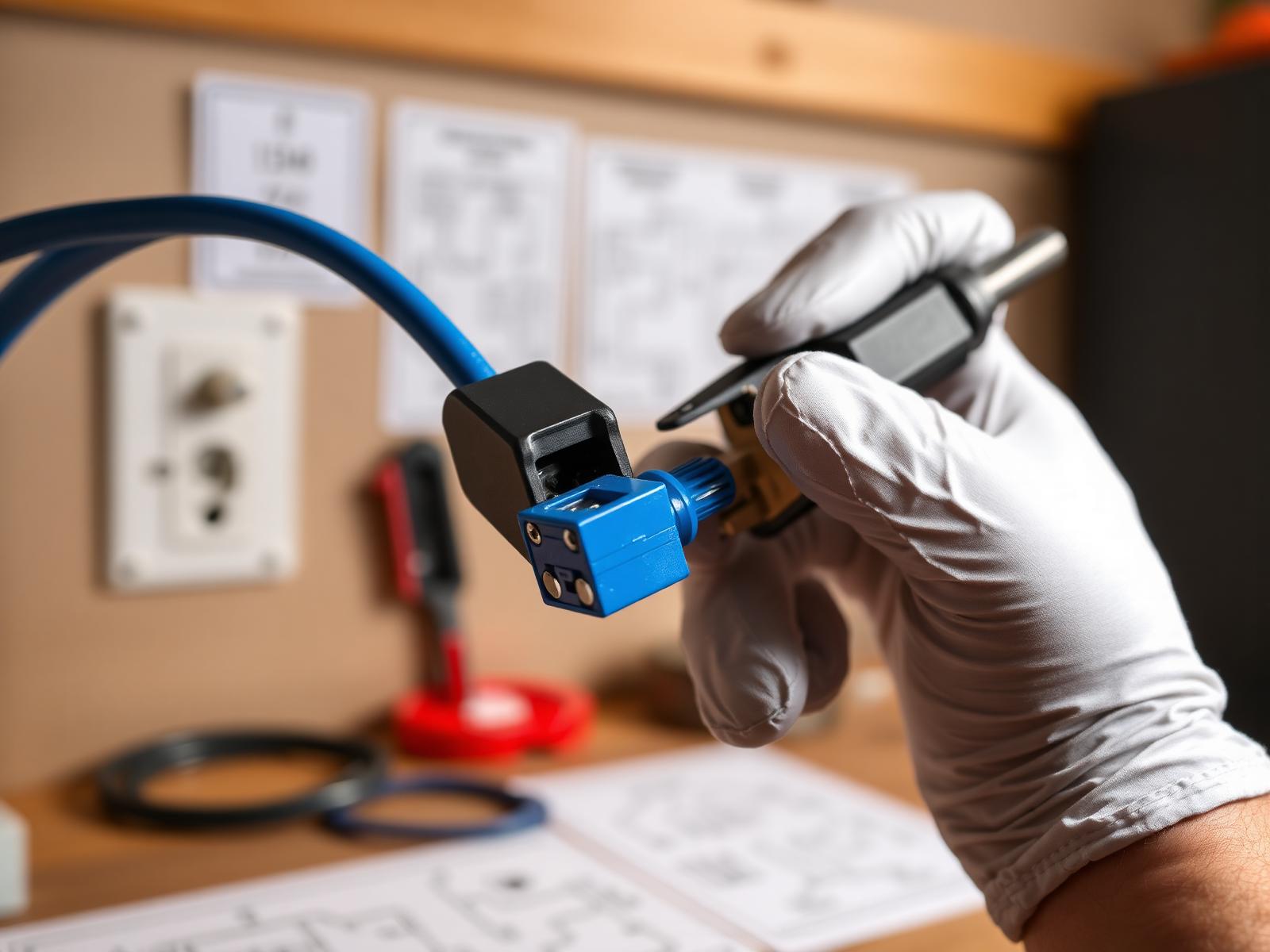
Close-up of Access Cabling technician terminating a Cat6 keystone jack with a punch-down tool.
Commercial · Copper Cabling

CAT6 Installation Services

CAT6 cabling supporting 1 Gbps and 10GBASE-T to 55 meters.

28+ Years Experience
C-10 / C-7 Contractor
CSLB: 992009
Licensed Commercial Contractor
5 California Offices
California & Nationwide Service

Request a CAT6 Installation site survey

Free, no-obligation walkthrough. Licensed C-10 / C-7 (CSLB #992009). 28+ years, California & nationwide.

Request a site survey
Commercial Service Overview

Enterprise-grade cat6 installation engineered for commercial buildings.

CAT6 Installation from Access Cabling delivers enterprise-grade CAT6 installation engineered by a licensed low-voltage contractor with 28+ years serving California and nationwide clients. Our BICSI-trained technicians design, install, terminate, test and certify every run to TIA/EIA standards so your infrastructure supports current bandwidth demands and future growth.

Macro of gloved hands terminating blue Cat6 with a 110-style punchdown tool.
Key Benefits

Why cat6 installation from Access Cabling

Commercial-grade installation, certified performance, and infrastructure built to last 25+ years.

Certified installation by BICSI-trained technicians
Manufacturer warranties up to 25 years on structured cabling
Fluke DSX certification reports on every project
Licensed C-10 / C-7 low-voltage contractor
24/7 emergency response and MAC services
Nationwide coverage with California headquarters
Installation Process

Our proven commercial cabling process

A repeatable, engineered process — refined over 28 years and thousands of sites.

  1. Step 1

    Free on-site survey and needs assessment

  2. Step 2

    Engineered design with rack elevations and pathway plans

  3. Step 3

    Scheduled installation with minimal business disruption

  4. Step 4

    Termination, testing, labeling and documentation

  5. Step 5

    Fluke certification and as-built drawings delivered

Technical Standards & Testing

TIA-compliant. Fluke-certified. Fully documented.

Every cat6 installation installation follows TIA-568, TIA-606 labeling, NEC 800 and applicable manufacturer specifications. Fluke DSX Versiv certification and full as-built documentation are delivered at project close.

  • TIA-568 structured cabling standards
  • TIA-606 labeling and administration
  • TIA-942 data center infrastructure
  • Fluke DSX-8000 channel and link certification
  • Manufacturer certified installer for Panduit, CommScope, Leviton
Close-up of Access Cabling technician terminating a Cat6 keystone jack with a punch-down tool.
Industries Served

CAT6 Installation for every commercial environment

28+
Years
5
CA Offices
50
States
12M+
Feet Installed
Local Service Area

CAT6 Installation across California & nationwide

Local crews dispatched daily from five California offices. Multi-site rollouts across all 50 states.

In Depth

A closer look at cat6 installation

Reliable network infrastructure begins with precise cable plant deployment. For organizations requiring robust 1 Gigabit Ethernet (1GbE) performance or considering future-proofing within a 55-meter reach for 10 Gigabit Ethernet (10GbE) applications, Category 6 (CAT6) cabling delivers a proven, cost-effective solution. Access Cabling specializes in the design, installation, and certification of high-performance CAT6 systems, ensuring your network backbone supports current operational demands while providing a defined upgrade path. Our C-10/C-7 licensure (CSLB 992009) and 28+ years of expertise spanning California and nationwide projects position us as a trusted partner that understands the critical interplay between cable specifications, industry standards, and real-world enterprise requirements. We don't just pull cable; we engineer a foundation for your digital operations.

CAT6 Specifications and Standards Compliance

Category 6 cabling is TIA/EIA-568-C.2 and ISO/IEC 11801 Class E compliant, designed to reliably transmit data at speeds up to 1 Gigabit per second (Gbps) over 100 meters. Crucially, CAT6 also supports 10 Gigabit Ethernet (10GBASE-T) for distances up to 55 meters, making it a viable and often more economical option than CAT6A for shorter runs within data centers, telecommunications rooms, or between adjacent office spaces. The distinguishing factor in CAT6’s performance over Cat5e lies in its tighter twists, larger conductor size (typically 23 AWG to 24 AWG), and improved crosstalk specifications, particularly Alien Crosstalk (AXT) mitigation, although not to the same degree as CAT6A.

System Design and Engineering Considerations for CAT6

Effective CAT6 installation begins with meticulous system design that accounts for current network demands, future expansion, and adherence to BICSI best practices. Our engineers analyze floor plans, equipment layouts, and projected growth to determine optimal pathway and space requirements, including sizing of cable trays, j-hooks, and conduits to prevent cable stress and maintain bend radius. We collaborate with IT directors and facility managers to map out telecommunications rooms (TRs) or intermediate distribution frames (IDFs), ensuring adequate power, cooling, and grounding. A fundamental design consideration for CAT6 is understanding the 10GBASE-T distance limitation; precise measurement and documentation are critical for any segment expected to carry 10GbE traffic, as exceeding 55 meters will necessitate CAT6A or fiber optic infrastructure. This upfront planning prevents costly rework and performance degradation in the future.

Selection of CAT6 Components and Materials

The performance of a CAT6 system is only as strong as its weakest link, requiring careful material selection from leading manufacturers such as Panduit, CommScope, Leviton, and Belden. We specify shielded (F/UTP or S/FTP) or unshielded twisted pair (UTP) CAT6 cable based on the electromagnetic interference (EMI) environment and application. Connectors, including RJ45 modular jacks and patch panels, are chosen to match the cable’s performance category, ensuring proper termination and minimizing insertion loss and return loss. Our procurement process prioritizes components that are UL listed, ETL verified, and meet TIA and ISO standards for component-level performance, which is critical for pass/fail certification. This includes using rated patch cords that maintain the channel’s integrity from the workstation to the active equipment.

Professional CAT6 Installation Methodologies

Our installation methodology adheres strictly to TIA/EIA-568 standards for pulling, routing, and terminating CAT6 cable. Technicians are trained in proper cable handling techniques, including maintaining the specified bend radius – typically four times the cable diameter – to prevent micro-cracks in the conductor insulation and impedance mismatches. Cable runs are meticulously planned to minimize heat sources and potential EMI. Terminations at patch panels and wall plates follow the T568B wiring standard (or T568A if mandated), with consistent punch-downs using calibrated tools. Each cable is labeled with unique identifiers at both ends, facilitating future troubleshooting and network management. We emphasize structured cabling principles, separating voice, data, and video signals where appropriate, and ensuring proper firestopping in compliance with NEC and local building codes for all cable penetrations.

Advanced Testing and TIA/ISO Certification Protocols

Post-installation, every CAT6 link undergoes rigorous testing and certification using industry-leading Fluke DSX series cable certifiers. We perform full channel and permanent link testing, verifying critical parameters such as wiremap, length, propagation delay, delay skew, near-end crosstalk (NEXT), power sum near-end crosstalk (PSNEXT), attenuation, and return loss. For CAT6 10GBASE-T applications, we ensure compliance with alien crosstalk (AXT) test limits, a common challenge in higher-speed copper deployments. All test results are compiled into a comprehensive report, including pass/fail status for each tested parameter, graphical representations, and date/time stamps. This documentation serves as a verifiable guarantee that your CAT6 infrastructure meets or exceeds TIA-568 performance specifications and provides a baseline for future network diagnostics.

Key Applications and Use Cases for CAT6 Cabling

CAT6 cabling remains a versatile and cost-effective backbone for a wide range of commercial applications. It is ideally suited for supporting Voice over IP (VoIP) systems, ensuring clear voice communication with minimal latency and jitter. For standard office environments, CAT6 provides ample bandwidth for desktop computers, printers, and general network access, supporting typical 1GbE requirements with significant headroom. In environments where 10GBASE-T is critical over shorter distances, such as connecting servers to switches within a rack or between adjacent racks in a smaller data center, CAT6 provides a cost-contained solution compared to fiber optics or CAT6A. It is also an excellent choice for powering security cameras (IP cameras) and wireless access points (WAPs) when PoE (Power over Ethernet) requirements are within its capabilities, providing both data and power over a single cable run.

Regulatory Compliance and Safety in CAT6 Deployments

All Access Cabling installations strictly adhere to the National Electrical Code (NEC) articles relevant to low-voltage cabling, including Article 800 for Communications Circuits and Article 725 for Class 2 and Class 3 Remote-Control, Signaling, and Power-Limited Circuits. We ensure proper cable jacket ratings are utilized for the environment, specifying plenum-rated (CMP) cable for air-handling spaces to meet fire safety codes, and riser-rated (CMR) cable for vertical pathways. Grounding and bonding of all metal components, including racks, patch panels, and shielded cabling systems, are performed in accordance with BICSI and NEC requirements to prevent electrical hazards and mitigate potential EMI. Our comprehensive approach to compliance minimizes client liability and ensures the safety and longevity of the entire cabling plant, protecting both personnel and critical IT assets.

Access Cabling’s Distinctive Approach to CAT6 Solutions

What sets Access Cabling apart in the CAT6 installation domain is our holistic, vendor-agnostic methodology backed by decades of concentrated expertise. We don't push a single manufacturer; instead, we engineer solutions using the optimal combination of components from industry leaders like CommScope, Panduit, Leviton, Belden, and Corning. Our C-10/C-7 licensing and status as a trusted Fluke Networks partner for DSX certification underscore our commitment to verifiable quality and adherence to regulatory mandates. We proactively address potential challenges, from complex pathway routing in existing structures to coordinating with multiple trades on new construction projects. Our detailed documentation, including as-built drawings and comprehensive test reports, provides clients with a transparent and maintainable infrastructure, ensuring their CAT6 investment delivers sustained performance and value. We are not just installers; we are long-term infrastructure partners.

Optimizing CAT6 Infrastructure for Future Network Demands

Deploying a CAT6 infrastructure necessitates a forward-looking perspective, acknowledging the rapid evolution of network technologies. While CAT6 is currently robust for Gigabit Ethernet (1000BASE-T) over its full 100-meter channel and can support 10 Gigabit Ethernet (10GBASE-T) for shorter distances (typically up to 55 meters depending on alien crosstalk performance), our design philosophy extends beyond immediate requirements. We consider the inevitable shift towards increased bandwidth and lower latency applications. This involves strategic placement of consolidation points (CPs) and careful planning of backbone pathways to facilitate future fiber optic overlay or upgrades to CAT6A or higher categories, minimizing rip-and-replace costs. For instance, in data center environments or high-density office spaces, we might recommend conduit sizing that can accommodate additional cable runs or larger diameter fiber optic cables. Furthermore, understanding the client's technology roadmap – whether it includes extensive IoT deployments, augmented reality applications, or cloud-centric network architectures – informs our cable plant design. This ensures the CAT6 system isn't merely functional today but remains a foundational asset capable of supporting evolving operational demands, postponing the need for significant capital expenditure on recabling.

Our approach integrates an assessment of potential signal degradation due to alien crosstalk, particularly crucial when considering future 10GBASE-T applications over CAT6. While CAT6 is not formally specified for 10GBASE-T at 100 meters, proper installation techniques, including maintaining adequate separation from other cabling and power lines, can extend its viable distance in certain scenarios. Access Cabling evaluates electromagnetic interference (EMI) sources and RF environments during the site survey to anticipate and mitigate signal integrity issues. We prioritize a structured cabling design that provides headroom above TIA/EIA-568-C.2 or ISO/IEC 11801 Class E compliance, recognizing that marginal installations can quickly become bottlenecks. This proactive analysis includes considerations for power over Ethernet (PoE) roadmap, as higher power PoE standards (e.g., PoE++ Type 3/4) generate greater heat within cable bundles, potentially impacting insertion loss and long-term cable performance. Our engineers calculate bundle sizes and fill ratios within pathways to ensure thermal management and prevent derating effects, safeguarding the longevity and performance of the CAT6 investment.

Rigorous Project Management and Cross-Trade Coordination

Successful CAT6 installation, especially in new construction or significant renovation projects, hinges on meticulous project management and seamless collaboration with other trades. Access Cabling's project managers are adept at integrating cabling timelines and dependencies into the broader construction schedule, understanding that cabling often represents a critical path item. This includes coordinating with general contractors, electricians for conduit and power requirements, HVAC contractors for pathway clearance and environmental controls, and even furniture vendors for exact outlet placement. Our process involves regular communication through formal progress meetings, shared digital project platforms, and detailed Gantt charts that map out each phase from cable pulling to termination, testing, and labeling. Anticipating potential conflicts, such as shared plenum spaces or access restrictions, allows for proactive problem-solving and minimizes costly reworks or delays. We provide comprehensive documentation, including detailed floor plans with cable runs, termination diagrams, and as-built drawings, ensuring all stakeholders have a clear understanding of the infrastructure.

Beyond internal coordination, our teams are proficient in navigating the intricacies of local building codes and industry-specific regulations that dictate cabling practices. This extends to fire-stopping requirements for penetrations through fire-rated walls and floors, ensuring all installations comply with NFPA 70 (National Electrical Code) and local amendments. We work closely with inspectors to ensure that our installations not only meet performance standards but also adhere to all safety and structural regulations. For instance, specifying plenum-rated (CMP) or riser-rated (CMR) cable based on architectural drawings and local code ordinances is a critical early step, preventing non-compliance issues during final inspections. Our project managers possess a deep understanding of these regulatory landscapes, mitigating risks associated with code violations and ensuring project delivery within legal and safety frameworks. We also establish clear change order protocols to manage scope creep gracefully, maintaining budget and schedule integrity.

Comprehensive Deliverables and Operational Handover Documentation

The culmination of a CAT6 installation project extends far beyond physical cabling; it encompasses delivering a robust suite of documentation essential for ongoing network operations, maintenance, and future expansion. Access Cabling provides a detailed cabling infrastructure documentation package, which is critical for the client's IT and facilities management teams. This package includes, but is not limited to, comprehensive as-built drawings depicting exact cable routes, outlet locations (with corresponding port numbers), and patch panel layouts. Each cable run is uniquely identified with a specific alphanumeric designator adhering to industry best practices (e.g., TIA/EIA 606-B), facilitating rapid troubleshooting and inventory management. Furthermore, our documentation includes detailed test reports for every installed link, demonstrating compliance with TIA/EIA-568-C.2 or ISO/IEC 11801 Class E Channel or Permanent Link specifications, confirming parameters such as insertion loss, return loss, near-end crosstalk (NEXT), power sum NEXT (PSNEXT), far-end crosstalk (FEXT), attenuation-to-crosstalk ratio (ACR), and propagation delay.

Our handover includes a structured cabling database, often in a digital, searchable format, that cross-references cable IDs with switch ports, workstation locations, and device types. This meticulous record-keeping is invaluable for IT teams performing MACs (Moves, Adds, Changes), accelerating problem isolation, and streamlining network audits. We also provide manufacturer warranty certificates for all installed components (cables, connectors, patch panels) and outline the warranty terms, typically 20-25 years for certified systems. Operational training for the client's IT staff on the newly installed infrastructure, including patch panel management and basic troubleshooting, can also be provided upon request. This holistic approach ensures that once our teams demobilize, the client possesses all necessary information and assurances to maximize the lifespan and efficiency of their new CAT6 cabling system, minimizing total cost of ownership by simplifying future maintenance and upgrades.

Mitigating Common Failure Modes in CAT6 Deployments

While CAT6 offers robust performance, its efficacy can be undermined by specific installation pitfalls that lead to common failure modes. A primary concern is poor termination practices. Improper stripping of cable jackets, untwisting pairs excessively (exceeding 0.5 inches at the termination point), and incorrect conductor seating in keystone jacks or patch panels are frequent culprits. These errors introduce impedance mismatches and excessive crosstalk, leading to failed test results (e.g., FEXT, NEXT) and compromised network performance. Access Cabling technicians employ precision termination tools and adhere strictly to manufacturer specifications for connectorization, minimizing untwist and maintaining pair geometry right up to the IDC (Insulation Displacement Connector) tower, which is crucial for preserving the cable's electrical characteristics across its operational frequency range. We also emphasize proper bend radius compliance; exceeding the minimum bend radius (typically 4 times the cable diameter for horizontal cable) during pulling or dressing can deform the cable's internal geometry, leading to increased return loss and insertion loss.

Another significant failure mode stems from alien crosstalk, particularly in high-density bundles or environments with existing legacy cabling. Although CAT6 is less susceptible than unshielded CAT5e, the cumulative effect of electromagnetic coupling between adjacent cables can degrade performance, especially when considering future 10GBASE-T applications. Our installations incorporate best practices for cable management, including maintaining physical separation between different cable categories or power lines where possible, and utilizing appropriate cable management hardware to prevent over-cinching or crushing of cables. Furthermore, improper grounding and bonding of shielded CAT6 (CAT6 FTP/STP) systems, if deployed, can introduce ground loops or act as antennas for EMI, paradoxically worsening performance. Our engineers ensure compliant grounding schemes for shielded installations, adhering to TIA TSB-158-A guidelines for proper earthing. Thorough pre-installation site surveys identify potential sources of EMI, allowing for route planning that avoids high-noise environments, thereby pre-empting these common, yet often overlooked, failure mechanisms.

Related Topics
  • CAT6A Cabling Installation
  • Fiber Optic Cabling Solutions
  • Data Center Cabling
  • PoE for IP Devices
  • Structured Cabling Design
  • Network Infrastructure Testing
  • Telecommunications Room Build-Outs
  • Copper Cabling Standards (TIA/EIA)
FAQ

Frequently asked questions

What is the true maximum distance for 10 Gigabit Ethernet over CAT6 cabling?+

CAT6 cabling reliably supports 10GBASE-T up to 55 meters (180 feet). Beyond this distance, signal attenuation and alien crosstalk become significant, requiring either Category 6A (CAT6A) cabling for runs up to 100 meters or fiber optic infrastructure for longer distances and higher bandwidths. It's crucial for design and installation to account for this specific limitation to guarantee intended performance.

When should I choose CAT6 over CAT5e or CAT6A cabling?+

Choose CAT6 when your primary requirement is 1 Gigabit Ethernet over 100 meters, but you also need the capability to support 10 Gigabit Ethernet for shorter runs (up to 55 meters). It's a cost-effective upgrade from CAT5e, offering better performance margins, especially for PoE applications. Opt for CAT6A if all runs require 10GBASE-T over 100 meters, or if alien crosstalk mitigation is a critical concern in high-density installations. CAT5e is generally sufficient only for older 100 Mbps or basic 1 Gbps applications without future 10G considerations.

Can CAT6 handle Power over Ethernet (PoE) applications effectively?+

Yes, CAT6 cabling is well-suited for Power over Ethernet (PoE) applications, including PoE/PoE+/PoE++ (IEEE 802.3af/at/bt types 1, 2, 3, and 4). Its larger conductor gauge (typically 23 AWG) compared to CAT5e helps to better dissipate heat generated by higher power delivery, reducing temperature rise within cable bundles. Proper cable managing and bundling practices are still essential, as excess heat can degrade cable performance and impact length limitations for data transmission.

What are the common mistake to avoid during CAT6 installation?+

Frequent installation errors include exceeding the cable's bend radius, which can damage internal wire pairs and impair signal integrity. Over-tightening cable ties can also deform the cable jacket and alter impedance. Improper termination practices, such as untwisting wire pairs excessively before punching down, introduce crosstalk. Lastly, failing to certify every single link with an approved cable certifier leaves the network vulnerable to unidentifiable performance issues. Access Cabling technicians are trained to prevent these common pitfalls.

Does Access Cabling provide documentation for CAT6 installations?+

Absolutely. Following every CAT6 installation, Access Cabling provides comprehensive documentation. This includes detailed as-built drawings illustrating cable pathways, outlet locations, and patch panel layouts. Crucially, we supply a complete certification report from our Fluke DSX cable certifiers for every single data drop, verifying TIA/EIA performance parameters. This documentation is vital for network management, troubleshooting, and future upgrades.

How does CAT6 installation impact network security?+

While copper cabling primarily deals with the physical layer, a professionally installed CAT6 system contributes to network security by establishing a robust, interference-free physical backbone. Properly terminated and tested cables minimize opportunities for passive eavesdropping via electromagnetic emissions and prevent network instability that could be exploited. Additionally, adhering to physical security best practices, like securing cable pathways and telecommunications rooms, complements the cable plant's integrity.

What is the typical lifespan one can expect from a professionally installed CAT6 system?+

A professionally installed CAT6 cabling system, utilizing quality components and adhering to TIA/EIA and BICSI standards, can have a service life of 15 to 20 years or more. While data transmission speeds may evolve, the physical infrastructure often outlives the active network equipment connected to it. Factors like environmental conditions, proper maintenance, and initial installation quality heavily influence this longevity. Our installations are designed for maximum durability.

Can CAT6 cabling be deployed across multiple disconnected sites nationwide?+

Yes, Access Cabling has extensive experience managing and executing multi-site CAT6 cabling rollouts across disparate geographic locations nationwide. Our project management team ensures consistent design standards, material procurement, and installation quality across all sites, providing a unified and reliable network infrastructure for your distributed enterprise. We coordinate with local teams and manage logistics to deliver seamless, standardized deployments.

How much does CAT6 installation cost?+

CAT6 Installation pricing depends on drop count, cable type, pathway complexity, and building conditions. Most commercial projects range from $150 to $350 per drop installed. Request a free site survey for an itemized quote.

Do you provide CAT6 installation nationwide?+

Yes. Access Cabling is headquartered in California with a nationwide technician network for multi-site rollouts across all 50 states.

Is CAT6 installation certified and warrantied?+

Every installation is Fluke-tested and certified. Structured cabling installs carry manufacturer warranties of up to 25 years through our Panduit, CommScope, Leviton and Belden partner relationships.

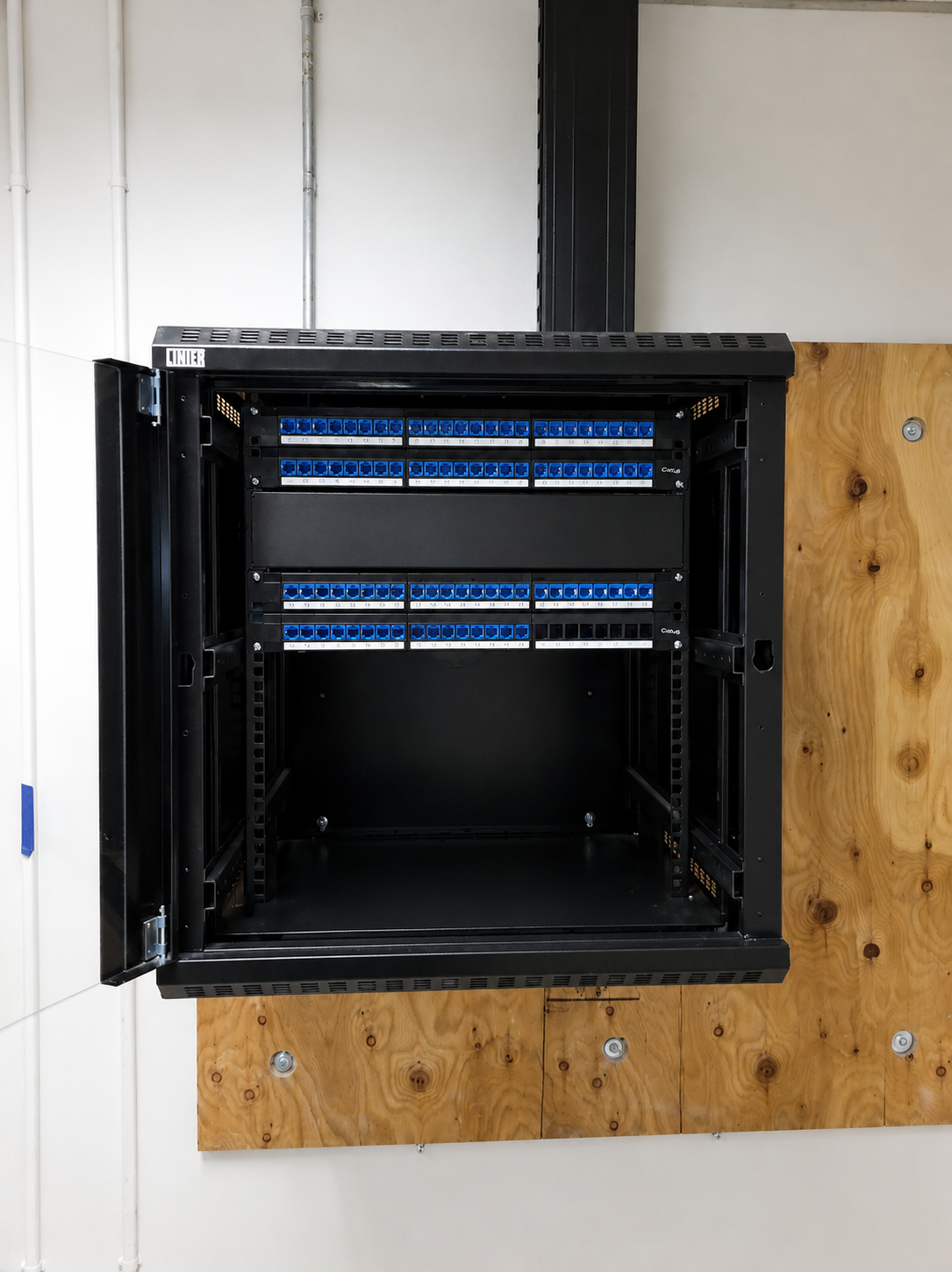
Related Services

Related commercial cabling services

Get Started

Build the commercial network your business actually deserves.

28 years, thousands of sites, one accountable contractor. Get a free site survey and an itemized quote in 48 hours.

Call Local Office(650) 212-1544