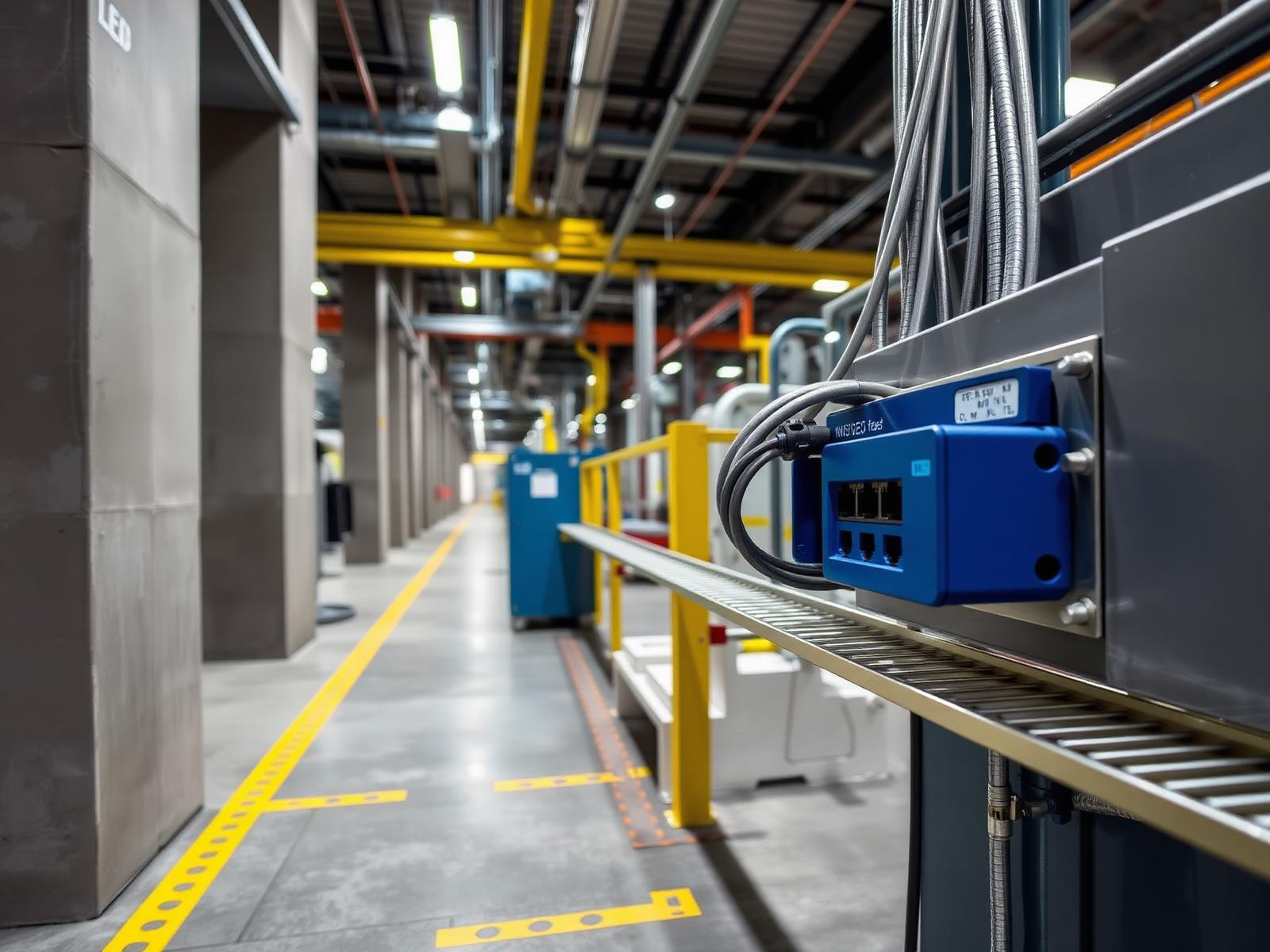
For enterprises operating in electrically noisy environments or those requiring future-proofed structured cabling infrastructure capable of supporting 10 Gigabit Ethernet (10GbE) and beyond over extended distances, Category 7 (CAT7) shielded twisted pair (S/FTP) installation presents a robust solution. Access Cabling specializes in the design, deployment, and certification of high-performance CAT7 cabling systems, offering superior noise immunity and bandwidth headroom compared to unshielded or lower-category alternatives. This service is critical for IT directors, facilities managers, and general contractors overseeing data centers, industrial facilities, healthcare campuses, or any environment where electromagnetic interference (EMI) is a concern or where 40GbE and 100GbE upgrades are on the horizon without immediate fiber deployment. Our approach integrates meticulous planning, adherence to ISO/IEC 11801 Class F specifications, and utilization of premium components to deliver a resilient and future-ready network foundation, ensuring maximum uptime and data integrity for your critical operations.
CAT7 Cabling Foundations: Bandwidth and Shielding Standards
Category 7 (CAT7), standardized by ISO/IEC 11801 as Class F, is engineered to support frequencies up to 600 MHz, significantly exceeding the 250 MHz of CAT6 and 500 MHz of CAT6A. This extended frequency range translates directly into higher potential data rates, making it suitable for 10 Gigabit Ethernet (10GbE) and providing a robust pathway for emerging 40GbE applications over copper. The defining characteristic of CAT7 is its complete shielding: individual wire pairs are foiled (FTP) and then the entire cable bundle is braided shielded (overall braid screen), resulting in an S/FTP (Screened/Foiled Twisted Pair) construction. This comprehensive shielding is paramount for its exceptional alien crosstalk (AXT) suppression and resistance to electromagnetic interference (EMI) and radio frequency interference (RFI), which is critical in environments like manufacturing plants, medical imaging suites, and broadcasting studios.
Engineering Robust CAT7 Systems: Design Considerations
Designing a CAT7 network infrastructure demands a thorough understanding of the intended application, environmental factors, and future scalability. Key design considerations include pathway and space planning to accommodate the larger bend radius and stiffer nature of shielded cables, proper grounding and bonding methodologies, and selection of compatible shielded keystone jacks, patch panels, and patch cords to maintain end-to-end shielding integrity. We meticulously analyze active equipment specifications, power over Ethernet (PoE) demands, and potential sources of EMI. Our engineering process integrates site surveys, TIA/EIA-568-C compliance, and careful consideration of cable routing to prevent kinks or excessive tension that could degrade performance. The design must account for the specific requirements of ISO/IEC 11801 Class F permanent links, ensuring the installed channels meet or exceed the specified performance parameters for insertion loss, return loss, near-end crosstalk (NEXT), far-end crosstalk (FEXT), and alien crosstalk.
Premium Components: Shielded Cable, Connectivity, and Grounding
The performance of a CAT7 system is directly tied to the quality of its components. Access Cabling exclusively sources high-grade S/FTP cable from trusted manufacturers like Belden (e.g., 10GX Shielded), CommScope, and Panduit, ensuring each cable meets or exceeds ISO/IEC 11801 Class F specifications. Connectivity components, including shielded RJ45 or GG45/TERA connectors, keystone jacks, and patch panels (e.g., Panduit DP891 Series or CommScope MGS400), are selected for their secure mechanical fit, robust shielding, and electrical performance. Crucially, a shielded cabling system is only as effective as its grounding scheme. We specify and install dedicated grounding busbars (GBBs) and ensure proper earth bonding for all shielded components, including racks, cabinets, and patch panels, in accordance with NEC articles 250 and 800. This meticulous component selection and grounding integration prevent ground loops and ensure the shielding effectively dissipates noise. For high-density applications, we also consider solutions such as Panduit's QuickNet Shielded Cassettes and Patch Panels for streamlined installation and consistent performance.
Precision CAT7 Installation Protocols for Shielded Infrastructure
CAT7 installation requires a higher degree of precision and adherence to manufacturer guidelines than unshielded systems due to the criticality of maintaining shield continuity. Our certified technicians are experienced in managing the larger diameter and stiffer nature of S/FTP cables, utilizing appropriate pulling tension (never exceeding 25 lbf for copper) and respecting bend radius limitations (typically 8x cable diameter during installation, 4x after). Termination procedures are paramount; proper stripping of the cable jacket and foil, correct pair separation, and precise seating into shielded connectors are performed with specialized tooling to ensure shield contact and prevent 'birdcaging' of conductors. For instance, TERA connectors, though less common than RJ45, offer superior performance for CAT7/7A due to their individual shielding of conductor pairs at the interface. All installations rigorously adhere to BICSI's Telecommunications Distribution Methods Manual (TDMM) standards for structured cabling, ensuring proper cable support, firestopping, and pathway management.
Comprehensive CAT7 Link Certification and Performance Verification
After installation, rigorous testing and certification are mandated to validate the performance of the CAT7 cabling system. Access Cabling utilizes industry-leading certifiers such as the Fluke DSX CableAnalyzer series (e.g., DSX-8000) equipped with shielded test adapters to perform Level 2G or Level IIIe accuracy measurements. Each permanent link and channel is tested for compliance with ISO/IEC 11801 Class F limits across a full range of parameters including insertion loss, return loss, near-end crosstalk (NEXT), power sum NEXT (PSNEXT), equal-level far-end crosstalk (ELFEXT), power sum ELFEXT (PSELFEXT), and crucially, alien crosstalk (AXT). For shielded systems, continuity of the screen is also verified. Detailed test reports, showing pass/fail status for every parameter on each tested link, are documented and provided to the client as proof of performance. This certification provides an auditable record and is essential for manufacturer warranty validation, guaranteeing the system's capability to support its intended applications.
Optimal Use Cases for CAT7 in Demanding Environments
CAT7 cabling is particularly well-suited for environments where conventional unshielded or even shielded CAT6A may fall short. Primary applications include data center backbone infrastructure, connecting servers, storage area networks (SANs), and high-bandwidth switches where EMI from power lines, server racks, or adjacent cabling could degrade performance. In industrial settings, such as manufacturing plants or automated warehouses, where heavy machinery, motors, and variable frequency drives (VFDs) generate significant electrical noise, CAT7's superior shielding provides the necessary data integrity for industrial Ethernet and control systems. Healthcare facilities, especially those with MRI machines or X-ray equipment, benefit from CAT7's immunity to medical device interference. Furthermore, for future-proofing premises cabling in large enterprises requiring high data throughput now and anticipating 25GbE/40GbE over copper in the future, CAT7 provides a foundational infrastructure that minimizes the need for costly rip-and-replace scenarios.
Regulatory Compliance and Safety for Shielded Cabling Systems
Compliance with relevant codes and safety standards is non-negotiable for any cabling installation, and especially for shielded systems which introduce specific grounding requirements. Access Cabling ensures all CAT7 installations adhere to the National Electrical Code (NEC), specifically Articles 250 (Grounding and Bonding) and 800 (Communications Circuits) to prevent electrical hazards and ensure proper EMI mitigation. All firestopping materials and methodologies utilized for cable penetrations through fire-rated barriers comply with local building codes and NFPA standards to maintain the passive fire protection rating of the structure. Our technicians are trained on OSHA safety protocols, ensuring safe work practices throughout the project lifecycle. Furthermore, adherence to ISO/IEC 11801 Class F specifications and BICSI best practices guarantees a resilient, high-performing, and compliant structured cabling system. This comprehensive approach minimizes risk, ensures operational continuity, and provides a safe working environment.
Access Cabling's Differentiated Expertise in CAT7 Deployments
With 28 years of nationwide experience and a CSLB 992009 license, Access Cabling stands apart in our specialized expertise for complex CAT7 deployments. Our distinction lies in our deep understanding of electromagnetic compatibility (EMC) principles and precision required for shielded infrastructure. We go beyond basic installation, offering comprehensive consultation from the initial conceptual design through post-installation support. Our in-house RCDDs (Registered Communications Distribution Designers) meticulously engineer systems, anticipating potential challenges such as ground loops or signal degradation from improper shield termination. We collaborate closely with clients to understand their specific operational context and future growth projections, delivering a tailored, cost-effective solution that maximizes ROI. Unlike less experienced providers, Access Cabling guarantees end-to-end performance verification with Fluke DSX certification, providing transparent test reports and ensuring your CAT7 investment yields its full performance potential, backed by manufacturer warranties.
Advanced Testing Regime for CAT7: Ensuring Future-Proof Performance
The certification of a CAT7 installation transcends basic link testing; it demands a sophisticated regimen to validate its extended frequency support and enhanced alien crosstalk mitigation. Post-installation, our technicians perform Level IV/V field tests utilizing instruments like the Fluke DSX-8000 Versiv CableAnalyzer or VIAVI Certifier40G, programmed for TIA-568-C.2 Cat 7A or ISO/IEC 11801 Class F/Fa limits. This includes comprehensive sweeps across the full 600 MHz to 1000 MHz bandwidth for permanent links and channel links, far exceeding the 250 MHz of Cat6A. Critical parameters such as Return Loss (RL), Near-End Crosstalk (NEXT), Far-End Crosstalk (FEXT), Power Sum Alien Near-End Crosstalk (PSANEXT), and Power Sum Alien Far-End Crosstalk (PSAFEXT) are rigorously assessed. Specific attention is given to Equal Level Transverse Conversion Loss (ELTCTL) and Transverse Conversion Transfer Loss (TCTL) to quantifiably measure noise immunity in electrically noisy environments, a key differentiator for CAT7’s fully shielded architecture. We also verify screen continuity end-to-end to ensure optimal electromagnetic interference (EMI) rejection. Any deviation from these stringent performance thresholds necessitates immediate fault isolation, which can range from re-terminating compromised connectors to identifying and replacing segments with manufacturing defects, reinforcing our commitment to delivering a verified and robust infrastructure capable of supporting 10 Gigabit Ethernet and future applications up to 100 Gigabit Ethernet over shorter distances.
Integrated Project Management and Inter-Trade Coordination
Successful CAT7 deployment, particularly in complex commercial or industrial environments, hinges upon meticulous project management and seamless collaboration with other building trades. Access Cabling employs PRINCE2-certified project managers who develop detailed Gantt charts outlining critical path activities, resource allocation, and dependency mapping. This includes early engagement with MEP (Mechanical, Electrical, and Plumbing) contractors to strategically plan cable pathways, identify potential sources of EMI, and ensure adequate clearance and segregation from high-voltage conduits, motors, and lighting fixtures. Coordinated efforts are essential for penetration sealing through fire-rated barriers, ensuring that the integrity of the fire compartmentation is maintained, and often requiring firestopping materials conforming to UL 1479 or ASTM E814 standards. Furthermore, integration with security system installers is crucial for camera and access control systems often leveraging CAT7 infrastructure, preventing conflicts in conduit sizing, tray capacity, and power delivery. Weekly progress meetings, site-specific safety briefings, and proactive coordination mitigate risks, prevent costly rework, and ensure the timely delivery of a fully integrated, high-performance cabling ecosystem, all while adhering to local building codes like NFPA 70 (National Electrical Code) and best practices for structured cabling installation.
Long-Term Operational Viability: Documentation and Maintenance
The longevity and operational efficiency of a CAT7 infrastructure are profoundly influenced by comprehensive 'as-built' documentation and a proactive maintenance strategy. Our handover documentation package is a critical deliverable, comprising detailed floor plans with precise cable routing, rack elevations illustrating patch panel configurations and equipment placement, and port-level connectivity tables linking logical network assignments to physical jack locations. Each cable run is uniquely identified and cross-referenced in these documents, including termination details (e.g., T568A/B pinouts for GG45 or TERA connectors) and individual test reports generated during certification. This meticulous documentation, often delivered in both PDF and editable CAD formats, is indispensable for future troubleshooting, moves, adds, and changes (MACs), and network upgrades, drastically reducing mean time to repair (MTTR). For sustained optimal performance, we recommend scheduled infrastructure audits, including visual inspection for physical damage, re-verification of grounding and bonding systems, and periodic re-testing of critical links, especially in dynamic environments. Our commitment extends to providing ongoing support contracts, which can include emergency response services and managed cabling solutions, ensuring that the initial investment in a high-grade CAT7 system translates into enduring operational reliability and performance across its projected lifespan, typically 20-25 years.
Mitigating Common Failure Modes: Design to Deployment
While CAT7 offers robust performance, its shielded nature introduces specific failure modes that require expertise to mitigate from design to deployment. A primary concern is inadequate or improper grounding and bonding, which can transform the shield into an antenna, attracting rather than repelling EMI. Our designs adhere strictly to ANSI/TIA-607-C (Generic Telecommunications Bonding and Grounding) and ISO/IEC 30129 standards, ensuring all racks, cabinets, and metallic pathways are bonded to the Telecommunications Main Grounding Busbar (TMGB) and grounded effectively. Another common issue is damage to the cable shield during installation, such as kinking that compromises the foil or braid, or over-tightening of cable ties that deforms the cable’s cross-sectional geometry, leading to increased Alien Crosstalk (AXT) or Return Loss (RL). Our installers are trained in careful cable handling practices, utilizing wide-grip cable management accessories and adhering to minimum bend radii specified by standards like ANSI/TIA-568. Termination errors are equally critical; incomplete contact with the shield element at the connector, or incorrect wiring of the GG45 or TERA interface, will result in complete link failure or severe performance degradation. We utilize specialized termination tools and visual inspection protocols to confirm every shielded connection’s integrity. Furthermore, ensuring that all components within a channel (cables, outlets, patch panels, patch cords) are of the same or higher performance class and are shielded is paramount. Mixing unshielded components or lower-grade shielded components within a CAT7 channel will negate the performance benefits and introduce impedance discontinuities, leading to reflective losses and reduced bandwidth. Addressing these potential weak points proactively ensures the delivered CAT7 infrastructure performs to its full potential.