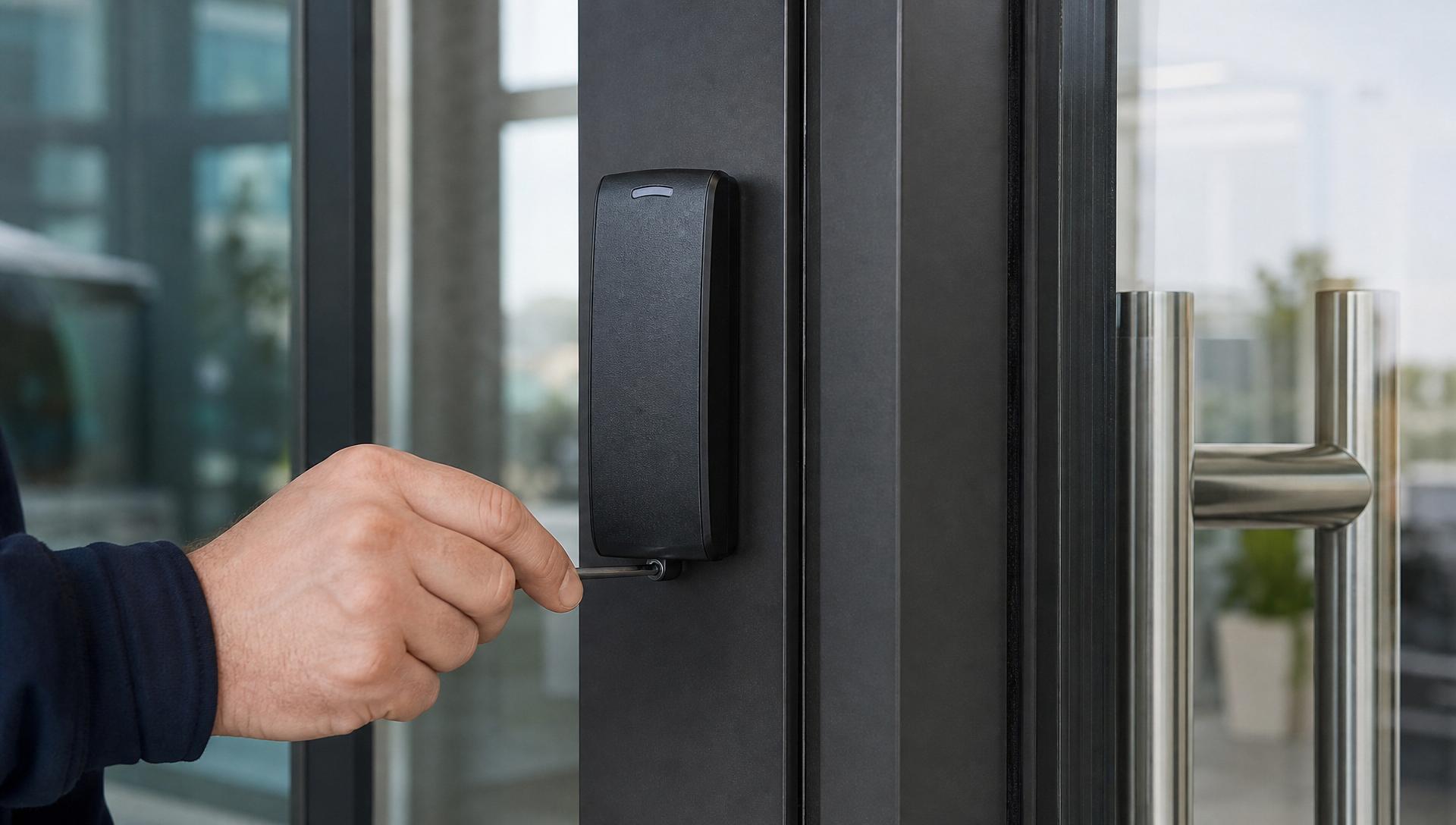
Reliable physical security hinges on robust, purpose-built access control cabling infrastructure. For IT Directors, Facilities Managers, and General Contractors tasked with securing commercial properties, selecting a qualified low-voltage contractor for access control systems is not merely a procurement decision—it's a critical assurance of operational integrity and personnel safety. Access Cabling specializes in the design, installation, and certification of structured cabling pathways specifically engineered for access control components such as card readers, electromagnetic locks, strike plates, request-to-exit (REX) devices, and controllers. Unlike general electrical contractors, our 28 years of experience as a C-10/C-7 licensed low-voltage contractor (CSLB 992009) means we understand the intricate nuances of power limitations, data transmission requirements, and secure pathway implementation dictated by industry standards (e.g., TIA-1005-A, NEC Article 725, BICSI). We deliver meticulously installed and documented access control cabling systems that perform reliably from day one, ensuring seamless integration with your chosen security platforms and minimizing costly downtime or security vulnerabilities.
Access Control Cabling: Standards and Components
Effective access control cabling fundamentally involves deploying the correct cable types and adhering to specific installation methodologies to support system devices. Common cable requirements include 18 AWG / 2 conductor (18/2) shielded or unshielded for power to electronic strikes and mag locks, 22 AWG / 4 conductor (22/4) or 18 AWG / 4 conductor (18/4) for card readers and REX buttons, often with an overall foil shield to mitigate EMI/RFI interference. Ethernet cabling (Cat 5e, Cat 6, or Cat 6A) is paramount for IP-enabled controllers, PoE-powered readers, and network connectivity, demanding adherence to TIA-568.C standards for termination and performance. We strictly follow NEC Article 725 for Class 2 and Class 3 circuits, ensuring proper circuit protection and separation from higher voltage wiring to prevent induction and ensure safety. Our technicians are proficient with components from leading manufacturers like ASSA ABLOY (for HID readers), Allegion (for Schlage locks), and Mercury Security controllers, understanding their specific power and data requirements to inform cable selection and pathway design.
System Design and Pathway Engineering
The design phase for access control cabling is pivotal, involving a detailed assessment of the facility's security requirements, floor plans, and existing infrastructure. This includes identifying optimal locations for controllers, readers, door contacts, and auxiliary devices, considering factors like door swing, wall construction, and environmental conditions. Our engineers plan dedicated pathways, utilizing EMT, rigid conduit, cable trays, or J-hooks, ensuring compliance with NEC requirements for physical protection and separation from power cabling. We meticulously calculate voltage drop over cable runs for power-hungry devices like electromagnetic locks, which often require dedicated, heavier gauge conductors to prevent performance degradation. The design also incorporates future scalability, allowing for easy expansion or modification of the access control system without necessitating a complete re-cabling effort, a principle guided by BICSI TDMM best practices for pathway and space management within TRs/ERs.
Material Specification and Procurement
Selecting the right materials is non-negotiable for system longevity and reliability. For horizontal runs supporting readers and REX buttons, plenum-rated (CMP) or riser-rated (CMR) cable is chosen based on building fire codes, typically manufactured by Belden or CommScope for consistent impedance and jacket integrity. For door hardware, shielded multi-conductor cables from reputable brands like Anixter or Prysmian are critical to prevent inadvertent actuation or communication errors. All connectors, such as IDC blocks for controllers or RJ45 jacks for IP devices, are specified to match cable categories and meet TIA-568.C.2 performance requirements. We partner directly with leading low-voltage distributors to source high-quality, authentic materials, ensuring traceability and avoiding counterfeit products that compromise system performance and compliance. This focus on premium components, from Panduit patch panels to CommScope fiber optic backbones (where applicable for extended distances), underpins the reliability of every system we deploy.
Precise Installation for Reliable Functionality
Access control cabling installation demands exacting precision, particularly at the door hardware interface. Our licensed technicians meticulously pull cables through existing or newly installed conduits, observing proper bend radius to prevent signal degradation and avoiding kinks or excessive tension. Termination at door frames requires specialized knowledge to connect to reader pigtails, door contacts, door position switches (DPS), and electric strike/magnetic lock wiring within often confined spaces. We ensure all low-voltage connections adhere to manufacturer specifications, employing proper stripping techniques and ensuring secure, insulated connections to prevent shorts or intermittent faults. At the controller end, cables are neatly dressed, labeled, and terminated onto specified punch-down blocks or terminal strips, ensuring logical and traceable connections for future troubleshooting and system maintenance, following BICSI cabling standards for aesthetic and functional integrity within telecom rooms and closets.
Comprehensive Testing and Certification
Upon completion of physical installation, Access Cabling performs rigorous testing of every circuit and data link within the access control system. For Ethernet-based connections to IP controllers or PoE readers, we utilize Fluke DSX CableAnalyzer series testers to certify network performance against TIA-568.C.2 standards for Cat 5e, Cat 6, or Cat 6A, measuring parameters like insertion loss, return loss, near-end crosstalk (NEXT), and propagation delay. For power and dry contact circuits, continuity, resistance, and voltage drop measurements are taken using calibrated multimeters to verify current flow to devices and prevent performance issues. Complete documentation, including as-built drawings, test results, and cable schedules, is provided to the client, forming a crucial reference for system management and enabling efficient fault isolation and resolution. This certification process provides an objective, verifiable guarantee of the physical layer's operational integrity.
Compliance and System Interoperability
Navigating the complex landscape of regulatory compliance and ensuring interoperability with diverse security platforms is a cornerstone of our service. Our installations adhere not only to NEC and local building codes but also to industry-specific guidelines relevant to the client's sector (e.g., HIPAA for healthcare, PCI DSS for financial). We specify cable pathways and grounding practices that satisfy fire safety regulations and electromagnetic compatibility (EMC) standards, preventing interference between systems. Our expertise extends to facilitating seamless integration with various Access Control as a Service (ACaaS) platforms or on-premise systems from vendors like LenelS2, Genetec, CCure 9000, and Open Options. We understand the specific communication protocols and power requirements for these systems, ensuring the underlying cabling infrastructure enables their full functionality and scalability, mitigating common interoperability challenges faced by facilities managing multi-vendor security ecosystems.
Access Cabling's Differentiated Expertise
What sets Access Cabling apart in the specialized field of access control cabling is our holistic approach driven by decades of dedicated low-voltage experience, not simply general electrical work. Our C-10/C-7 licensing and unblemished CSLB record (992009) underscore our deep understanding of the unique demands of low-voltage systems. We possess manufacturer-specific training and a nuanced understanding of components from HID Global, Mercury Security, CDVI, and other industry leaders, translating to installations that leverage each product's full capabilities. Our design-build capabilities mean we can engineer solutions from conception to completion, mitigating potential integration headaches between cabling and security software. We prioritize rigorous testing with Fluke DSX units and thorough documentation, providing an auditable and reliable infrastructure. This comprehensive expertise guarantees a future-proof, secure, and compliant access control infrastructure that performs reliably for the life of your facility, ensuring your security investments are maximized and operational disruptions minimized. We don't just pull wire; we build intelligent, secure pathways for critical control systems.
Advanced Power over Ethernet (PoE) for Access Control Devices
The widespread adoption of IP-enabled access control devices, including readers, door strikes, and controllers, necessitates a robust understanding of Power over Ethernet (PoE) methodologies. Traditional access control systems often relied on separate power circuits and low-voltage signal wiring, leading to increased installation complexity and material costs. Modern PoE standards, specifically IEEE 802.3at (PoE+) and 802.3bt (PoE++), offer significant advantages by consolidating power and data transmission over a single Ethernet cable. For instance, a typical electromagnetic lock requiring 0.5A at 12V DC consumes 6W, well within the 802.3af (PoE) 15.4W per port delivery. However, more power-intensive devices like heated outdoor card readers or IP intercoms with integrated cameras often demand power exceeding the 13W available to the Powered Device (PD) under 802.3af, making 802.3at (up to 25.5W available to PD) or 802.3bt (up to 71.3W available to PD) essential for reliable operation. Careful consideration must be given to cable gauge (e.g., Cat6A for extended runs to mitigate voltage drop), switch port density, and the overall power budget of the network infrastructure. Over-reliance on a single PoE switch for critical access points without redundant power supplies or UPS integration introduces a single point of failure that can compromise an entire access zone. Moreover, the thermal dissipation characteristics of high-density PoE switches and cable bundles within pathways must be assessed to prevent performance degradation or premature equipment failure, particularly in constrained conduit or cable tray environments. Access Cabling designs leverage predictive voltage drop calculations and thermal analysis tools during the planning phase to ensure optimal device performance and system longevity, preventing common pitfalls such as intermittent device operation or reduced lock holding force due to insufficient power delivery.
Integration with Building Management Systems (BMS) and IoT
The contemporary landscape of building infrastructure increasingly demands synergistic integration between disparate systems, with access control playing a pivotal role alongside Building Management Systems (BMS) and the broader Internet of Things (IoT) ecosystem. Effective integration extends beyond simple alarm forwarding; it encompasses bidirectional data exchange for enhanced situational awareness, automated responses, and operational efficiencies. For example, linking access control events to a BMS can trigger HVAC adjustments (e.g., unoccupied zones enter setback mode), lighting changes, or even emergency lockdown procedures based on predefined security protocols. This requires careful consideration of communication protocols and Application Programming Interfaces (APIs). Common integration methods include BACnet/IP for building automation, Modbus TCP for industrial control, and increasingly, RESTful APIs or MQTT for cloud-based or IoT platforms. The cabling infrastructure must support these diverse protocol requirements, often necessitating dedicated network segments, VLAN configurations, and robust switch capabilities to ensure data integrity and real-time responsiveness. Challenges arise in translating proprietary access control data formats into universally understood messages for the BMS, often requiring middleware or specialized integration engines. Furthermore, the security implications of integrating operational technology (OT) with traditional IT networks are substantial. Access Cabling implements strict network segmentation, firewall rules, and robust authentication mechanisms to prevent unauthorized access or data exfiltration across integrated platforms. Our designs prioritize secure API endpoints, encrypted data channels (e.g., TLS 1.2+), and rigorous change management protocols to maintain system integrity and prevent common vulnerabilities associated with multi-vendor system interoperability, such as unpatched middleware or insecure default credentials.
Lifecycle Management and Future-Proofing Cabling Infrastructure
Investment in access control cabling extends beyond initial deployment; it constitutes a critical component of a building's long-term security and operational infrastructure. A key consideration is the lifecycle management of the cabling plant itself, focusing on scalability, maintainability, and adaptability to future technological advancements. Cabling infrastructure, unlike active network equipment, has a significantly longer operational lifespan, often exceeding 15-20 years. Therefore, 'future-proofing' involves selecting cable types and installation methodologies that can accommodate evolving bandwidth demands and power requirements. While Cat5e may suffice for today's standard card readers, specifying Cat6A as a minimum for all new access control runs provides overhead for higher-bandwidth IP cameras integrated into reader units, biometrics, or video analytics at the edge. Furthermore, the use of modular connectivity (patch panels, keystone jacks) instead of direct termination facilitates easier troubleshooting, upgrades, and changes without disrupting entire cable runs. Proper labeling and comprehensive as-built documentation, including detailed pathway diagrams, cable routing plans, and termination schedules, are paramount for efficient maintenance and future modifications. The total cost of ownership (TCO) for access control cabling is heavily influenced by these factors. A seemingly lower upfront cost for inadequate cabling can lead to significant expenditures down the line, including costly re-cabling projects, extended downtime during system upgrades, or the inability to leverage new, more efficient access control technologies. Access Cabling's approach integrates a long-term perspective, budgeting not just for current requirements but also anticipating the technology roadmap, ensuring that the installed physical layer can support multiple generations of access control hardware with minimal disruption.
Rigorous Post-Installation Validation and Maintenance Protocol
The successful deployment of an access control cabling system does not conclude with physical installation; it necessitates a rigorous post-installation validation and an ongoing maintenance protocol to ensure sustained performance and reliability. Beyond basic continuity testing, our validation processes include comprehensive performance testing tailored to the specific demands of access control devices. This involves verifying Power over Ethernet (PoE) voltage and current delivery at the device end under simulated load conditions, using tools such as Fluke LinkIQ or equivalent certifiers, to confirm that sufficient power reaches critical components like electric strikes, magnetic locks, and biometric readers, particularly over longer cable runs where voltage drop is a significant factor. Furthermore, network interface testing is performed for IP-based devices to confirm stable connectivity, IP address resolution, and proper communication with the access control server. This includes verifying latency, packet loss, and throughput for devices that transmit data-intensive streams, such as IP intercoms or door-mounted cameras. Documentation of these test results forms a critical part of the project handover, providing a baseline for future troubleshooting. Post-installation, Access Cabling recommends and implements structured maintenance protocols. This includes scheduled visual inspections of cable pathways, terminations, and connections to identify potential issues such as physical damage, environmental degradation (e.g., moisture ingress in outdoor enclosures), or unauthorized tampering. Regular firmware updates for network switches and PoE injectors, when applicable, are also part of our managed services to address security vulnerabilities and improve performance. Proactive maintenance, including re-testing critical links at predefined intervals and reviewing system logs for anomalous events, significantly reduces the likelihood of system failures, extends the operational life of the infrastructure, and minimizes costly reactive repairs, underscoring our commitment to the long-term reliability and security of our clients' access control systems.