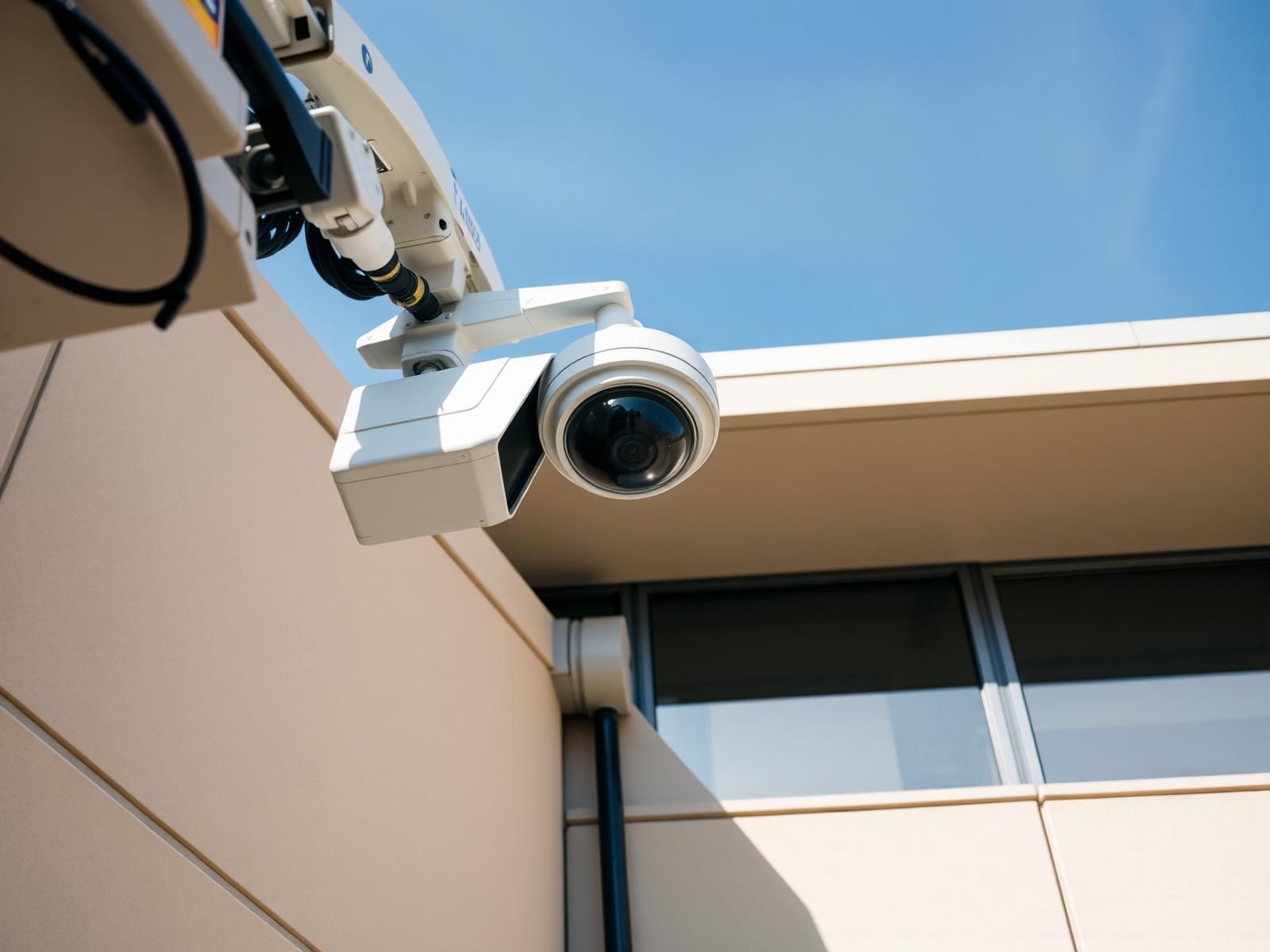
Reliable security and operational visibility depend on a robust, future-proof camera cabling infrastructure. For enterprises, institutions, and industrial facilities, a poorly designed or installed surveillance network translates directly into downtime, compromised data integrity, and potential security gaps. Access Cabling specializes in the engineering, installation, and certification of high-performance Power over Ethernet (PoE) camera cabling systems for Internet Protocol (IP) and Closed-Circuit Television (CCTV) surveillance. Our approach emphasizes TIA/EIA standards compliance, meticulous pathway management, and the selection of enterprise-grade components from manufacturers like Belden, CommScope, and Panduit. We address the unique demands of camera deployments, ensuring optimal signal transmission, stable power delivery, and scalability, distinguishing us from generalist installers who may overlook critical low-voltage infrastructure nuances.
Defining Structured Camera Cabling for IP Surveillance
Structured camera cabling for IP surveillance involves more than just running wire; it’s the establishment of a robust, standards-compliant physical layer designed to support high-bandwidth video streams and reliable PoE power delivery. Unlike legacy analog CCTV systems that relied on coaxial cable for video and separate low-voltage conductors for power, modern IP cameras leverage Category-rated twisted-pair copper cabling, typically Cat5e, Cat6, or Cat6A, to transmit both data and power over a single cable according to IEEE 802.3af (PoE), 802.3at (PoE+), or 802.3bt (PoE++) standards. This convergence reduces installation complexity, material costs, and maintenance while providing greater flexibility and scalability. Our design principles prioritize adherence to TIA/EIA-568-D standards for commercial building cabling, ensuring proper cable type selection, segment lengths, termination practices, and pathway management to mitigate signal degradation, electromagnetic interference (EMI), and power loss over distance, critical for uninterrupted surveillance feed quality.
Strategic Design and Engineering for Optimal Performance
Effective camera cabling begins with comprehensive design and engineering, considering environmental factors, camera types, and future expansion. Access Cabling's process involves detailed site surveys, reviewing architectural blueprints, and collaborating with IT and security teams. We assess factors such as average power consumption of IP cameras (e.g., 802.3bt Type 4 cameras can draw up to 90W), anticipated data rates, and the required length of each cable run to determine the appropriate cable grade and pathway. For example, in outdoor environments or industrial settings exposed to harsh conditions, we specify UV-resistant, outdoor-rated, or even armored plenum/riser rated cables from manufacturers like Belden (e.g., MediaFlex, DataTuff) or CommScope (e.g., Systimax) to withstand temperature extremes, moisture, chemical exposure, or physical abrasion. We also meticulously plan for conduit fill ratios, firestopping compliance per NEC articles 770 and 800, and ensure proper separation from high-voltage electrical circuits to prevent induced noise and comply with local AHJ (Authority Having Jurisdiction) requirements.
Critical Components: Cable Selection and Connectivity Hardware
The longevity and performance of your camera system are directly tied to the quality of chosen components. For camera cabling, we exclusively use premium, ANSI/TIA-568-D compliant twisted-pair cabling from leading manufacturers. This includes Cat6 or Cat6A for most new IP camera deployments, especially for cameras requiring higher bandwidth (e.g., 4K streams) or those deployed in environments prone to alien crosstalk. For longer runs or specific applications, we may specify fiber optic cabling with media converters for immunity to EMI and extended distances beyond copper's 100-meter limitation. Connectivity hardware, such as patch panels, modular jacks (RJ45), and patch cords, are equally critical. We utilize factory-terminated, shielded components where electromagnetic interference is a concern, or unshielded twisted pair (UTP) systems for typical office environments, ensuring end-to-end component compatibility for channel performance. Our installations feature high-quality products from Panduit (e.g., TX6A-SD 10Gig), Leviton (e.g., eXtreme Category 6+), and CommScope (e.g., SYSTIMAX GigaSPEED XL) to guarantee robust, reliable connections.
Precision Installation Methods for Mission-Critical Surveillance
Our installation methodology for camera cabling adheres strictly to BICSI Telecommunications Distribution Methods Manual (TDMM) best practices and NEC article requirements. This includes proper cable handling to maintain bend radius compliance (e.g., 4x cable diameter for 4-pair UTP), preventing microbends that degrade signal integrity, and avoiding over-pulling during pathways installation, which can damage cable jacket and internal conductor twists. We employ specialized low-voltage cable pulling lubricants and techniques to minimize stress on cables. Termination at both the camera location (usually via a pre-terminated pigtail or field-terminated RJ45 connector) and the network closet (to a patch panel) is performed by certified technicians using manufacturer-specific tools for consistent, reliable connections. Conduit sizing, J-hook or cable tray installation, and firestopping are executed with precision, ensuring a professional, compliant, and easily maintainable infrastructure. All camera drops are clearly labeled at both ends in accordance with TIA-606-C administration standards for simplified troubleshooting and future macs (moves, adds, changes).
Rigorous Testing and Fluke DSX Certification
Post-installation, comprehensive testing and certification are paramount to validate the physical layer’s performance and adherence to TIA/EIA standards. Access Cabling utilizes industry-leading solutions, specifically the Fluke Networks DSX CableAnalyzer series, for all copper camera cabling deployments. Each installed permanent link or channel is meticulously tested for critical parameters including wire map, length, propagation delay, delay skew, insertion loss, return loss, Near-End Crosstalk (NEXT), Power Sum NEXT (PSNEXT), Alien Crosstalk (AXT) for Cat6A, and Power over Ethernet (PoE) functionality validation (e.g., voltage and wattage delivery). Fiber optic runs are tested for insertion loss using OLTS (Optical Loss Test Set) or OTDR (Optical Time Domain Reflectometer) methods, certifying against industry standards. This rigorous testing ensures that the infrastructure meets or exceeds performance requirements, guarantees sufficient power delivery to PoE cameras, and provides a manufacturer-backed warranty-eligible installation, delivering verifiable performance data to our clients.
Ensuring Compliance, Security, and Scalability
Compliance and security are integral to our camera cabling solutions. Beyond TIA/EIA and BICSI standards, we ensure installations meet relevant National Electrical Code (NEC) articles, particularly regarding grounding, bonding, and firestopping. Pathways are designed to secure cables, preventing unauthorized access or tampering, while adhering to local building codes. Our robust cabling foundation directly contributes to the cybersecurity posture of the surveillance system; a stable physical layer reduces packet loss and latency, minimizing vulnerabilities that could be exploited by network disruptions. Furthermore, by implementing structured cabling principles with ample overhead and proper documentation, we future-proof your investment, allowing for seamless integration of higher-resolution cameras, additional sensors, or other IP-enabled devices as your security needs evolve without requiring expensive rework of the underlying infrastructure. This forward-thinking approach minimizes total cost of ownership and maximizes operational flexibility.
Access Cabling's Differentiated Expertise in Surveillance Infrastructure
Access Cabling offers a distinct advantage in camera cabling projects due to our deep specialization, proven track record, and technical acumen. Unlike general electricians or IT contractors, our C-10/C-7 low-voltage licensing (CSLB 992009) signifies an advanced understanding of telecommunications infrastructure, specifically. We approach camera cabling not as a standalone task but as an integrated component of your overall network architecture. Our 28+ years of experience translate into meticulous planning that anticipates common pitfalls, from environmental challenges in industrial settings to complex routing in multi-story commercial buildings. We utilize manufacturer-direct relationships to acquire optimal materials and stay current with evolving PoE standards and higher bandwidth requirements, ensuring that your surveillance system operates at peak efficiency and remains scalable for decades. Our commitment is to deliver a certified, high-performance, and resilient camera cabling infrastructure that acts as the unshakeable foundation for your critical security operations.
Addressing PoE and Power Budgeting for IP Camera Networks
The transition to IP surveillance heavily relies on Power over Ethernet (PoE) for streamlined deployment and power delivery. Planning for PoE in camera cabling infrastructure demands a meticulous approach to power budgeting, extending beyond simple wattage calculations. Each surveillance camera type – ranging from fixed dome cameras to pan-tilt-zoom (PTZ) units with integrated heaters or wipers – has distinct power draw characteristics, often fluctuating based on operational demands and environmental conditions. Our design methodology incorporates industry standards such as IEEE 802.3af (PoE), 802.3at (PoE+), and 802.3bt (4PPoE/PoE++) to accurately assess power requirements per device. This assessment is critical not only for selecting appropriate PoE-enabled network switches but also for determining the maximum cable run lengths without experiencing unacceptable voltage drop, which can lead to intermittent camera operation or complete failure. We rigorously analyze the cumulative power draw across an entire subnet, considering peak load scenarios to prevent switch oversubscription and ensure stable power delivery. Furthermore, the thermal implications of bundled PoE cables are a significant, often overlooked, factor. Excessive heat generated within cable bundles can degrade cable performance, increase insertion loss, and reduce the overall lifespan of the cabling plant. Access Cabling adheres to TIA TSB-184-A guidelines for power delivery over twisted-pair cabling, employing strategies such as derating factors for bundle size and utilizing higher-gauge (e.g., 23 AWG vs. 24 AWG) Category 6A or even Class 4 compliant UTP/STP cables when significant PoE power delivery is required, especially in high-density installations. Our approach also considers future scalability, often designing with a surplus power headroom to accommodate next-generation cameras with potentially higher power demands or the addition of edge analytics devices.
Integration with Building Management and Physical Security Systems
Modern IP surveillance infrastructure is rarely a standalone system; its true value is unlocked through seamless integration with an organization's broader Building Management Systems (BMS) and Physical Security Information Management (PSIM) platforms. This integration requires a deep understanding of communication protocols, API functionalities, and data interoperability across disparate systems. Our cabling designs are not merely about connecting cameras to NVRs; they are conceptualized as foundational elements enabling a converged security ecosystem. For example, cabling infrastructure must be robust enough to support real-time data feeds for video analytics engines, where low latency and high bandwidth are paramount. Consider a scenario where an access control system detects an unauthorized entry; the surveillance system must be capable of automatically cueing relevant camera feeds to the security operations center (SOC) in milliseconds. This dictates meticulous planning for network segmentation, QoS (Quality of Service) configurations for video traffic prioritization, and redundant network paths to ensure unimpeded data flow. We work closely with IT and security stakeholders to define the data flows, integration points, and required network services, such as dedicated VLANs for video traffic, robust IP addressing schemes, and secure VPN tunnels for remote access. Our documentation deliverables include detailed network diagrams outlining these logical and physical integrations, ensuring all stakeholders have a clear understanding of how the camera cabling infrastructure supports the overarching security and operational objectives. This foresight into integration requirements mitigates costly rework, optimizes system performance, and enhances the overall return on investment for the entire security infrastructure.
Mitigating Electromagnetic Interference (EMI) for Clear Video Transmission
In industrial complexes, healthcare facilities, or environments with heavy machinery, Electromagnetic Interference (EMI) poses a significant threat to the integrity of video signals transmitted over copper cabling. EMI can manifest as noise, picture distortion, or even complete signal loss, directly impacting the effectiveness of surveillance. Our cabling strategies explicitly address EMI mitigation through a multi-faceted approach. This begins with strategic cable routing, meticulously avoiding proximity to high-voltage power lines, fluorescent lighting ballasts, electric motors, and other known sources of electromagnetic radiation. Where avoidance is impractical, we deploy shielded twisted-pair (STP) or foiled twisted-pair (FTP) cabling, particularly Category 6A F/UTP or S/FTP, which incorporate metallic shielding to dissipate or reflect external electromagnetic fields. Proper grounding and bonding of these shielded cables are paramount; an improperly grounded shield can exacerbate EMI issues rather than mitigate them. We adhere to TIA-606-C and BICSI best practices for grounding infrastructure, ensuring a low-impedance path for noise to drain safely. Furthermore, we consider the use of optical fiber cabling for long runs or in extremely noisy environments where copper's susceptibility to EMI becomes a limiting factor. Fiber optic cables, being immune to electromagnetic interference, offer a robust alternative for mission-critical links, albeit with different installation and termination requirements. Our technical assessment includes detailed site surveys utilizing spectrum analyzers to identify potential EMI sources and quantify their impact, allowing us to specify the most effective and cost-efficient mitigation techniques for each unique deployment scenario, safeguarding the reliability and clarity of surveillance footage.
Lifecycle Management and Future-Proofing for Surveillance Infrastructure Investment
Investing in a comprehensive camera cabling infrastructure is a long-term commitment, requiring a strategic perspective on its lifecycle management and inherent future-proofing. Our approach extends beyond initial installation to ensure the cabling plant remains viable and adaptable to evolving technological landscapes and business needs. A key aspect of future-proofing involves selecting cabling exceeding current minimum requirements, such as deploying Category 6A for gigabit and higher PoE applications, even if current cameras only demand Category 5e. This provides a crucial buffer for future upgrades to 2.5GBASE-T, 5GBASE-T, or even 10GBASE-T IP cameras, without requiring a complete re-cabling effort, which represents the most significant cost in a network refresh. Furthermore, our designs emphasize modularity and scalability. We anticipate growth by allocating additional conduit space, pathways, and patch panel ports during the initial build-out, minimizing disruption and cost for future expansions. Robust, detailed 'as-built' documentation, including rack elevations, cable schedules, and logical port assignments, is an essential deliverable, facilitating efficient troubleshooting, maintenance, and future modifications. This documentation is digitally archived and made readily accessible. We also advise on maintenance schedules and environmental considerations, such as proper cable management to prevent kinks and tight bends that degrade performance over time, and regular inspection of outdoor or industrial cabling for environmental damage. By considering total cost of ownership (TCO) over a 10-15 year projected lifespan, factoring in potential technology shifts and operational efficiencies, Access Cabling delivers an infrastructure that not only meets immediate surveillance demands but also serves as a resilient, adaptable foundation for future security innovations.