Access Cabling commercial structured cabling infrastructure
Commercial · Low Voltage

IP Camera Installation Services

Enterprise IP camera installation and PoE cable plant.

28+ Years Experience
C-10 / C-7 Contractor
CSLB: 992009
Licensed Commercial Contractor
5 California Offices
California & Nationwide Service

Request a IP Camera Installation site survey

Free, no-obligation walkthrough. Licensed C-10 / C-7 (CSLB #992009). 28+ years, California & nationwide.

Request a site survey
Commercial Service Overview

Enterprise-grade ip camera installation engineered for commercial buildings.

IP Camera Installation from Access Cabling delivers enterprise-grade IP camera installation engineered by a licensed low-voltage contractor with 28+ years serving California and nationwide clients. Our BICSI-trained technicians design, install, terminate, test and certify every run to TIA/EIA standards so your infrastructure supports current bandwidth demands and future growth.

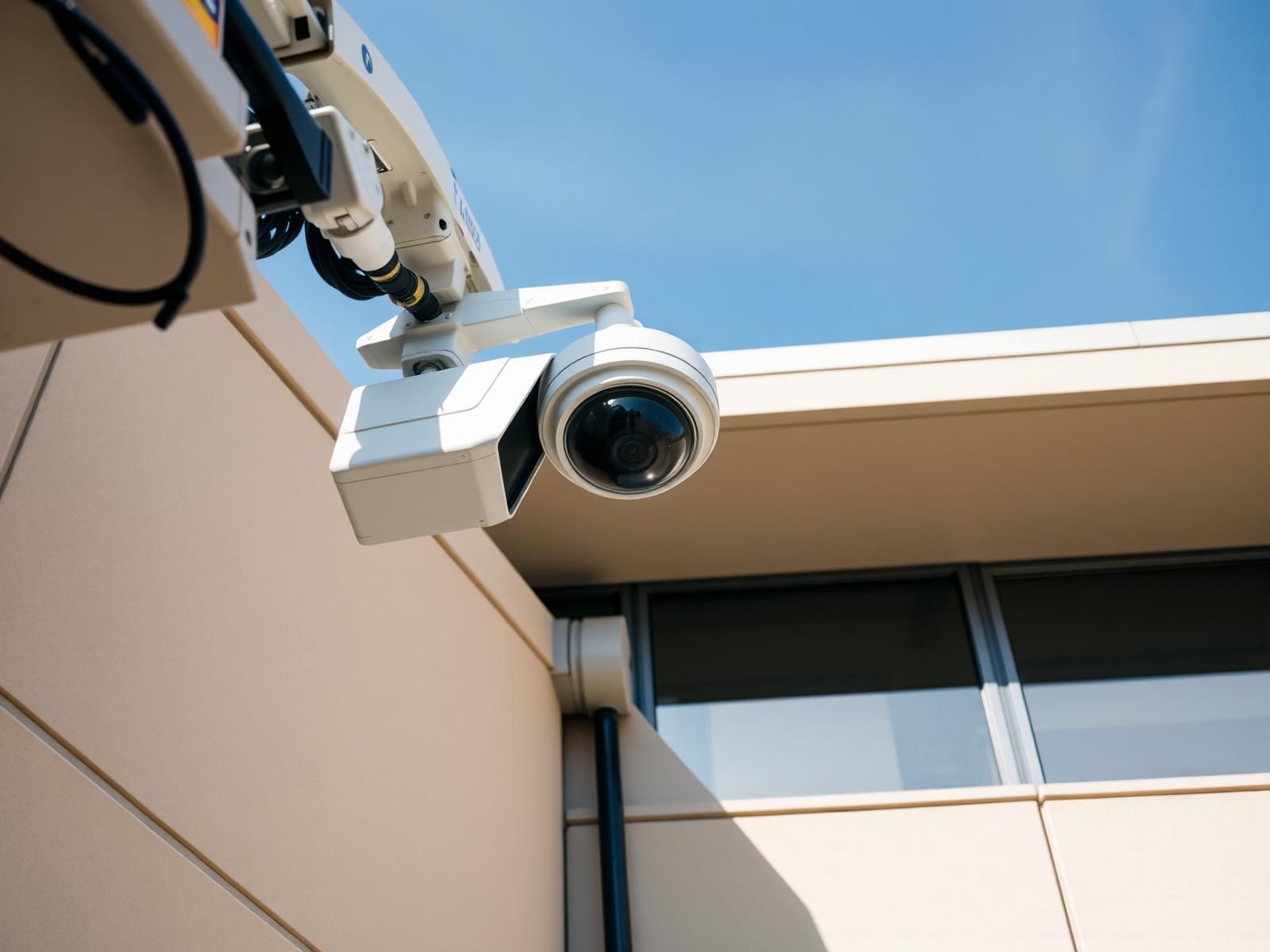
IP dome camera being installed on a commercial building exterior.
Key Benefits

Why ip camera installation from Access Cabling

Commercial-grade installation, certified performance, and infrastructure built to last 25+ years.

Certified installation by BICSI-trained technicians
Manufacturer warranties up to 25 years on structured cabling
Fluke DSX certification reports on every project
Licensed C-10 / C-7 low-voltage contractor
24/7 emergency response and MAC services
Nationwide coverage with California headquarters
Installation Process

Our proven commercial cabling process

A repeatable, engineered process — refined over 28 years and thousands of sites.

  1. Step 1

    Free on-site survey and needs assessment

  2. Step 2

    Engineered design with rack elevations and pathway plans

  3. Step 3

    Scheduled installation with minimal business disruption

  4. Step 4

    Termination, testing, labeling and documentation

  5. Step 5

    Fluke certification and as-built drawings delivered

Technical Standards & Testing

TIA-compliant. Fluke-certified. Fully documented.

Every ip camera installation installation follows TIA-568, TIA-606 labeling, NEC 800 and applicable manufacturer specifications. Fluke DSX Versiv certification and full as-built documentation are delivered at project close.

  • TIA-568 structured cabling standards
  • TIA-606 labeling and administration
  • TIA-942 data center infrastructure
  • Fluke DSX-8000 channel and link certification
  • Manufacturer certified installer for Panduit, CommScope, Leviton
Access Cabling commercial structured cabling infrastructure
Industries Served

IP Camera Installation for every commercial environment

28+
Years
5
CA Offices
50
States
12M+
Feet Installed
Local Service Area

IP Camera Installation across California & nationwide

Local crews dispatched daily from five California offices. Multi-site rollouts across all 50 states.

In Depth

A closer look at ip camera installation

Developing a robust, enterprise-grade IP camera system requires more than simply mounting cameras; it demands a meticulously engineered low-voltage cable plant capable of delivering both power and high-bandwidth data reliably. Access Cabling specializes in the comprehensive design, installation, and certification of these sophisticated infrastructures. Our focus is on providing IT directors, facilities managers, and general contractors with a resilient IP camera installation solution that integrates seamlessly into existing network architectures while adhering to the most stringent industry standards. We distinguish ourselves through a deep understanding of powering considerations like PoE and PoE+, meticulous pathway management, and certified performance validation, ensuring your surveillance system operates with optimal uptime and image fidelity today and scales for future demands.

Foundational Cabling Standards for IP Camera Systems

The backbone of any reliable IP camera installation is a standards-compliant structured cabling system. We adhere rigorously to TIA-568 series standards, specifically TIA-568.C.2 or TIA-568.D for balanced twisted-pair cabling, which dictates attenuation, crosstalk, return loss, and propagation delay specifications critical for transmitting high-resolution video streams over distances up to 100 meters. For Power over Ethernet (PoE) applications, adherence to TIA TSB-184-A is paramount to mitigate temperature rise within cable bundles, which can degrade performance and reduce cable life, especially in high-density installations. Our technicians are trained to identify and prevent these issues, selecting appropriate cable grades, such as CommScope GigaSPEED XL or Panduit TX6A, and ensuring proper bundle sizes and segregation according to BICSI ITSIMM guidelines. This foundational expertise ensures the camera's power and data requirements are met consistently, preventing common issues like dropped frames, signal degradation, or camera power cycling.

Design & Engineering for Optimal IP Camera Performance

Effective IP camera system design begins with a detailed site survey and a thorough understanding of the client's surveillance objectives. Our engineering team considers multiple factors beyond simple camera placement, including available lighting conditions, desired fields of view, network topology, and future scalability. We plan cable routes to avoid EMI sources, ensure proper bend radius for all cable types, and map out pathways that facilitate future expansion without disrupting existing infrastructure. For high-bandwidth cameras (e.g., 4K IP cameras), we may specify Category 6A or even OM3/OM4 fiber optic runs to aggregation switches, overcoming the 100-meter limitation of copper cabling while providing a robust, future-proof backbone. This phase includes meticulous documentation, creating detailed floor plans with cable routing, camera locations, power distribution, and IDF/MDF connections to provide a comprehensive roadmap for installation and subsequent system management.

Power Over Ethernet (PoE) Considerations and Implementation

Powering IP cameras via PoE (IEEE 802.3af), PoE+ (802.3at), or UPoE/PoE++ (802.3bt) significantly simplifies deployments by eliminating the need for local power outlets at each camera. However, it introduces critical considerations related to power budgeting, cable heat dissipation, and voltage drop. We meticulously calculate the power draw for each camera, factoring in IR illuminators, pan-tilt-zoom (PTZ) functions, and environmental heaters, to ensure the connected PoE switches or midspans can deliver sufficient power without exceeding their capacity or derating. For installations with numerous high-power cameras, we might design for power-sharing across multiple switches or deploy specialized PoE extenders. Cable selection, as per TIA TSB-184-A, is crucial; for certain high-density applications, we might opt for Panduit TX6A-SD (Small Diameter) or Belden DataTuff CAT6A to manage bundle size and heat, ensuring compliance with NEC articles 725 and 800 regarding power delivery over data cables. Proper grounding and bonding of the entire system are also integrated to protect against surges and faults, adhering to NEC Article 250.

Installation Methodologies and Best Practices

Our installation process prioritizes both performance and aesthetics. Cable pathways are carefully managed, utilizing appropriate conduits, cable trays, J-hooks, or innerducts to protect infrastructure and maintain organizational integrity. All cable runs are pulled with appropriate tension management tools to prevent micro-bends or stretch, which can significantly degrade performance, especially beyond Category 5e. Termination practices adhere to TIA-568 T568A or T568B pin assignments for RJ45 connectors (e.g., Leviton, CommScope) and utilize manufacturer-specific termination tools to ensure consistent, gas-tight connections. We use high-quality patch panels (e.g., Panduit DP6Plus, CommScope SYSTIMAX) for structured termination in telecommunication rooms, facilitating future adds, moves, and changes. Camera mounting hardware is selected based on environmental factors (e.g., wall mount, pole mount, pendant mount) and secured according to manufacturer recommendations and local building codes, ensuring stability and optimal field of view. All plenum-rated cabling is used in air-handling spaces as required by NEC Article 770 and 800.

Comprehensive Testing and System Certification

Post-installation, every single cable run supporting an IP camera undergoes rigorous testing and certification using industry-leading test equipment like the Fluke Networks DSX-8000 CableAnalyzer. We perform Level 2G or Level 3 testing according to TIA-1152-A standards, verifying parameters such as wiremap, length, propagation delay, delay skew, insertion loss, return loss, and alien crosstalk for Category 6A and above. For PoE installations, we additionally perform PoE load testing to ensure the cable plant can reliably deliver the specified voltage and current to the camera under operational conditions. Each certified link receives a comprehensive test report, providing objective evidence that the installed infrastructure meets or exceeds performance requirements. This certification validates our work and provides the client with a documented baseline for future troubleshooting or warranty claims, offering peace of mind regarding the system's operational integrity and longevity.

Integration and Application in Commercial Environments

IP camera systems, when properly installed, serve as critical components in various commercial and industrial applications. Our installations support a wide array of uses, from general security surveillance in office buildings and data centers to specialized process monitoring in manufacturing plants and distribution centers. We integrate with existing network infrastructure, ensuring proper VLAN segmentation for security and performance, and frequently work with leading Video Management System (VMS) providers to ensure seamless camera discovery and data flow. Specific considerations for applications like license plate recognition (LPR) or facial recognition involve careful camera selection (e.g., high-megapixel, specific lens focal lengths) and ensuring the underlying network can handle the increased data throughput for analytics and storage. Our expertise extends to deploying cameras in harsh environments, utilizing NEMA-rated enclosures and industrial-grade components where necessary to ensure reliability against dust, moisture, and extreme temperatures.

Adherence to Regulatory Compliance and Safety Protocols

Beyond performance, every IP camera installation must adhere to a complex web of regulatory compliance and safety protocols. As a licensed C-10/C-7 low-voltage contractor (CSLB 992009), Access Cabling rigorously follows local and national building codes, including the National Electrical Code (NEC), for all wiring practices. This includes proper firestopping for penetrations (NEC Article 300.21), proper labeling of all cables and components (TIA-606-B), and ensuring all cabling in plenums or air handling spaces is plenum-rated. For installations in sensitive environments, we adhere to specific data privacy regulations like HIPAA or GDPR, ensuring the network infrastructure supports secure data transmission and storage practices. Our commitment to safety extends to our field operations, where all technicians are trained in OSHA standards, LOTO procedures, and fall protection, ensuring a safe work environment for both our crew and our clients' personnel during the installation process.

Access Cabling's Differentiated IP Camera Expertise

Access Cabling's distinct advantage in IP camera installation stems from our comprehensive, full-lifecycle approach and deep technical bench. Unlike general electricians or IT generalists, we possess 28+ years of specialized low-voltage cabling experience, with specific certifications and training from leading manufacturers like Corning, CommScope, and Panduit. Our expertise isn't limited to pulling cable; it encompasses the strategic planning, detailed engineering, precise installation, and certified verification that high-performance IP camera systems demand. We understand the nuances of network backbone integration, PoE delivery challenges, and the critical importance of a properly balanced cable plant for high-resolution video. Our vendor-neutral approach means we recommend the best-fit products for your specific needs, not just what's in our inventory, ensuring a tailor-made, scalable, and reliable surveillance infrastructure that delivers verifiable performance and long-term value, backed by transparent documentation and comprehensive warranty support.

Advanced Video Analytics and Storage Architectures

Beyond simple surveillance, modern IP camera installations leverage advanced video analytics for enhanced security and operational intelligence. This includes object detection, facial recognition, license plate recognition (LPR), abnormal behavior analysis, and heat mapping. Implementing these features requires careful consideration of computational resources, often necessitating edge devices with integrated GPUs or powerful network video recorders (NVRs) capable of processing high-resolution H.264, H.265, or even future AV1 streams. Edge analytics, where processing occurs directly at the camera, reduces network bandwidth requirements and minimizes latency for real-time alerts. Conversely, centralized analytics, executed on powerful NVRs or dedicated servers, allows for more sophisticated algorithms and comprehensive data correlation across multiple cameras. The choice between edge and centralized analytics, or a hybrid approach, is dictated by the project's specific security objectives, camera count, network infrastructure, and budget. Hand-in-hand with analytics is the storage architecture. For high-resolution, high-framerate recordings, scalable and resilient storage solutions are critical. This often involves enterprise-grade NVRs with RAID configurations (e.g., RAID 5 or RAID 6 for data redundancy), or network-attached storage (NAS) arrays for larger systems requiring petabyte-scale storage. Cloud-based video management systems (VMS) offer flexible storage and remote accessibility, but introduce considerations like internet bandwidth, data egress costs, and compliance with data sovereignty regulations (e.g., GDPR, CCPA). Access Cabling engineers design optimal storage solutions, balancing retention periods, recording quality, redundancy, and disaster recovery strategies, often incorporating hybrid models that combine on-premise recording for immediate access with cloud archiving for long-term retention and off-site backup.

Cybersecurity for Networked IP Camera Systems

The inherent network connectivity of IP camera systems introduces significant cybersecurity vulnerabilities if not properly addressed. Our approach integrates robust cybersecurity measures from the design phase through commissioning. This begins with secure network segmentation, isolating the IP camera network from critical production networks using VLANs or dedicated physical networks. Implementing strong access controls, including multi-factor authentication (MFA) for VMS and NVR access, is paramount. Cameras themselves are provisioned with unique, complex passwords, and default credentials are never utilized. Firmware updates are performed regularly to patch known vulnerabilities, and cameras are configured to use secure protocols such as HTTPS for web interfaces, SSH for remote management (where applicable), and SRTP for encrypted video streams. Network reconnaissance tools are used to identify open ports and potential attack vectors. Intrusion detection and prevention systems (IDPS) are deployed to monitor network traffic for suspicious activity, such as brute-force attacks or unauthorized access attempts. Furthermore, we implement secure remote access solutions, typically VPNs with strong encryption, for maintenance and monitoring, avoiding direct exposure of VMS or camera web interfaces to the public internet. All network devices, including switches and routers supporting the IP camera system, are hardened following industry best practices (e.g., NIST Cybersecurity Framework guidelines). A comprehensive cybersecurity audit is part of our post-installation verification, ensuring all components adhere to the highest security standards and minimize the risk of unauthorized access, data breaches, or denial-of-service attacks that could compromise the surveillance system's integrity and effectiveness.

Environmental Hardening and Durability for External Deployments

Deploying IP cameras in outdoor or harsh industrial environments demands specialized considerations for environmental hardening and durability to ensure long-term operational reliability. This involves the careful selection of cameras and enclosures with appropriate Ingress Protection (IP) ratings, typically IP66 or IP67, to protect against dust and water ingress. For extreme temperatures, cameras must feature built-in heaters and coolers, often powered via PoE++, and be rated for a wide operational temperature range from -40°C to +60°C. Vandal-resistant features are also crucial for public or high-risk areas; these cameras, or their external housings, carry IK impact ratings (e.g., IK10) to withstand significant blunt force. Cabling for external deployments utilizes UV-resistant, outdoor-rated Category cables (e.g., CMX Outdoor, CMR shielded) to prevent degradation from sun exposure and moisture. Conduit systems, often rigid metallic or PVC, are installed to protect cables from physical damage and environmental factors while adhering to local electrical codes (e.g., NEC Article 300, 725). Proper grounding and surge protection are critical, especially in areas prone to lightning strikes or power fluctuations, to safeguard cameras and network equipment. This includes installing surge suppressors at camera locations and within network closets. When mounting cameras, structural integrity is paramount, using robust mounts designed to withstand wind loads, vibration, and potential tampering. Our engineers meticulously assess site-specific environmental factors, such as corrosive atmospheres, high humidity, or seismic activity, to specify the precise camera models, enclosures, mounting hardware, and cabling solutions that guarantee sustained performance and durability throughout the system's operational lifespan, minimizing maintenance and replacement costs.

Lifecycle Management and Future-Proofing Strategies

Effective lifecycle management and future-proofing are integral to maximizing the return on investment for IP camera systems. Our strategy extends beyond initial installation to encompass ongoing maintenance, potential upgrades, and eventual system modernization. This involves designing systems with open standards and interoperability in mind, utilizing ONVIF Profile S, G, T, or M compliant cameras and VMS platforms. This approach avoids vendor lock-in and facilitates the integration of future technologies or components from different manufacturers. We consider the technological roadmap of key components – cameras, NVRs, and VMS – choosing vendors with a proven track record of innovation and long-term support. Future-proofing also includes specifying network infrastructure (e.g., Category 6A or fiber optic cabling) that can accommodate increased bandwidth demands from higher resolution cameras or advanced analytics in the future without costly re-cabling. Scalability is built into the design, allowing for the seamless addition of more cameras, storage capacity, or analytical capabilities as organizational needs evolve. Furthermore, our post-installation services include preventative maintenance schedules, firmware management, and performance monitoring to proactively address potential issues and ensure optimal system health. We provide clients with clear documentation for system administration, including network topology, device inventories, and configuration settings, facilitating easier management and troubleshooting. For systems reaching end-of-life, we advise on migration strategies, considering factors like data transfer, phased cutovers, and the integration of new technologies while minimizing disruption to ongoing security operations. This comprehensive approach ensures that the IP camera system remains a valuable, adaptable, and cost-effective asset for years to come, aligning with long-term security and operational objectives.

Related Topics
  • PoE Cabling Standards
  • Structured Cabling for Security Systems
  • Network Infrastructure for Video Surveillance
  • Fiber Optic Backbones for IP Cameras
  • Low Voltage System Design
  • Commercial Network Installation
  • Cabling Certification for Enterprise
  • Physical Security Cabling
FAQ

Frequently asked questions

What specific cable types are recommended for future-proofing an IP camera installation, and why?+

For future-proofing, we generally recommend Category 6A (CAT6A) F/UTP or U/UTP cabling. While Category 5e or 6 might suffice for current 10/100/1000BASE-T cameras, CAT6A provides 10 Gigabit Ethernet capability over the full 100-meter channel length, accommodating higher bandwidth 4K or 8K IP cameras that are becoming more prevalent. F/UTP (foil shielded) versions offer superior alien crosstalk protection, critical in high-density pathways. For distances exceeding 100 meters or for backbone links to network switches, multimode fiber optic cable (OM3 or OM4) is specified, providing virtually limitless bandwidth for future upgrades and enhanced electromagnetic interference (EMI) immunity, safeguarding against signal degradation.

How does Access Cabling address power delivery stability and voltage drop for long-distance PoE camera runs?+

Power delivery stability and voltage drop on long PoE runs are critical concerns. We address this by meticulously calculating voltage drop based on cable gauge, length, and current draw, using tools and adhering to IEEE 802.3 standards. For runs approaching or exceeding the 100-meter maximum, we might recommend midspan PoE injectors closer to the camera to regenerate power, or deploy fiber optic cabling with remote PoE media converters at the camera end, eliminating copper cable loss entirely. In some cases, specialized long-reach PoE extenders can be utilized, but always with careful consideration of their power budget and potential impact on data rates, ensuring the camera receives its required operating power without compromise.

What documentation and handover materials does Access Cabling provide upon completion of an IP camera installation?+

Upon project completion, Access Cabling provides a comprehensive documentation package. This includes 'as-built' floor plans detailing exact camera locations, cable pathways, and telecommunications room layouts. We supply detailed cable test results for every certified link (typically Fluke DSX-8000 reports), affirming TIA/ISO compliance. Additionally, we provide cable labeling schemes (e.g., TIA-606-B compliant), a bill of materials with manufacturer part numbers, and any relevant warranty information for both components and labor. This thorough documentation package ensures easier system management, troubleshooting, and facilitates future expansions or modifications for the client.

When should an organization choose a separate low-voltage contractor for IP camera installation versus an IT generalist or security integrator?+

An organization should choose a specialized low-voltage contractor like Access Cabling when the long-term reliability and performance of the cable plant are paramount, particularly for enterprise-grade, high-density, or mission-critical IP camera deployments. While IT generalists or security integrators may handle camera configuration, their cabling expertise may not encompass the nuanced TIA/BICSI standards, PoE considerations, or advanced testing methodologies required for optimal system performance and longevity. A dedicated low-voltage contractor ensures the physical layer – the foundation of your camera system – is engineered and installed to professional, verifiable standards, mitigating future operational issues and ensuring full manufacturer warranty compliance.

What common mistakes does Access Cabling frequently observe in improperly installed IP camera systems, and how do you prevent them?+

Common mistakes include undersized cabling for PoE applications leading to voltage drop and camera instability, poor termination practices causing intermittent connections or data loss, exceeding cable length limits, and improper grounding causing signal interference or component damage. We prevent these through stringent adherence to TIA/EIA and BICSI standards, comprehensive power budget calculations for PoE, certified technicians employing manufacturer-recommended termination tools, and 100% cable certification with Fluke DSX-8000, ensuring every link performs as expected. Additionally, our design phase includes careful pathway planning to avoid EMI sources and ensure proper cable management.

How does Access Cabling handle large-scale or multi-site IP camera rollouts to ensure consistency and efficiency?+

For large-scale or multi-site IP camera rollouts, Access Cabling implements a standardized project management framework. This involves a centrally managed design and engineering phase to ensure consistent hardware specifications, cabling standards, and network architecture across all locations. We appoint dedicated project managers who coordinate material logistics, technician scheduling, and quality control. Standardized installation procedures and rigorous, uniform testing protocols are applied at each site, ensuring consistent performance. Regular communication with the client and detailed progress reporting maintain transparency and efficiency throughout the multi-site deployment, delivering predictable results across the entire enterprise.

What are Access Cabling's considerations for integrating IP camera systems with existing network infrastructure and security policies?+

Integrating IP cameras safely into existing networks requires careful planning. We work closely with the client's IT department to understand existing network topology, VLAN assignments, IP addressing schemes, and security policies. Cameras are typically placed on a dedicated VLAN to isolate surveillance traffic, enhance security, and prevent congestion on the main corporate network. We ensure proper network segmentation, apply strong authentication practices (e.g., 802.1X where applicable), and verify firewall rules support necessary VMS communication while restricting unauthorized access. Our design prioritizes minimizing attack surfaces and adhering to established cybersecurity best practices and compliance requirements.

Can Access Cabling provide support or recommendations for the Video Management System (VMS) selection and integration process?+

While Access Cabling specializes in the physical layer and network infrastructure, our extensive experience with IP camera deployments means we often provide valuable insights and recommendations regarding VMS selection and integration. We can advise on VMS compatibility with various camera brands, discuss network bandwidth implications for different VMS architectures (e.g., centralized vs. distributed recording), and highlight infrastructure requirements for NVRs/servers and storage. We ensure the underlying cable plant is optimized to support the chosen VMS effectively, facilitating seamless data flow and maximizing system performance, even if we don't directly install or configure the VMS software itself.

How much does IP camera installation cost?+

IP Camera Installation pricing depends on drop count, cable type, pathway complexity, and building conditions. Most commercial projects range from $150 to $350 per drop installed. Request a free site survey for an itemized quote.

Do you provide IP camera installation nationwide?+

Yes. Access Cabling is headquartered in California with a nationwide technician network for multi-site rollouts across all 50 states.

Is IP camera installation certified and warrantied?+

Every installation is Fluke-tested and certified. Structured cabling installs carry manufacturer warranties of up to 25 years through our Panduit, CommScope, Leviton and Belden partner relationships.


Related Services

Related commercial cabling services

Get Started

Build the commercial network your business actually deserves.

28 years, thousands of sites, one accountable contractor. Get a free site survey and an itemized quote in 48 hours.

Call Local Office(650) 212-1544