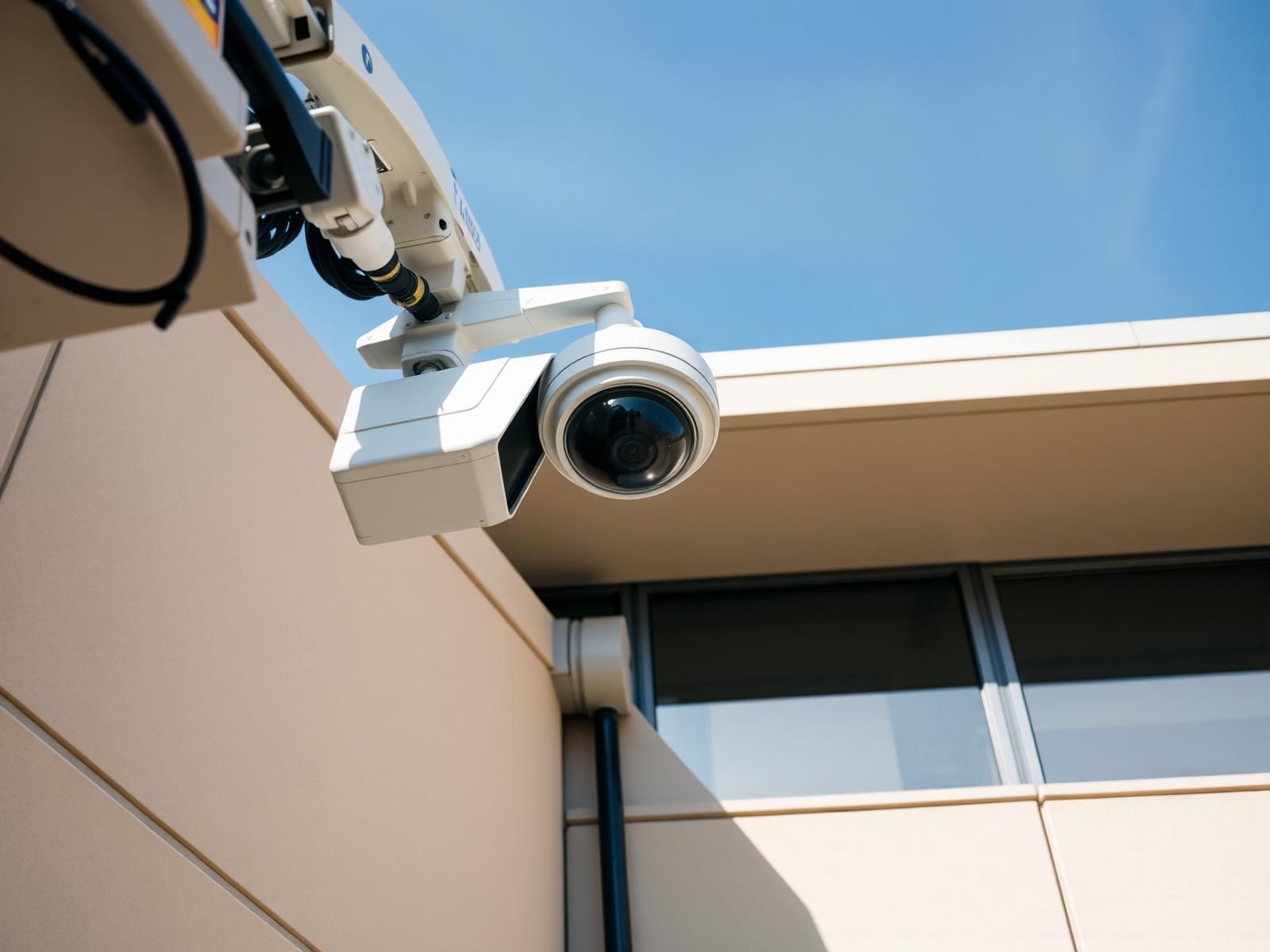
Effective security camera deployments depend critically on a robust and meticulously installed cabling infrastructure. Access Cabling provides expert security camera cabling services, designing and deploying reliable network foundations for IP CCTV systems. We understand that facility managers, IT directors, and general contractors overseeing security system integrations require more than just cable pulls; they need a high-performance, future-proof, and compliant low-voltage backbone. Our approach distinguishes itself through adherence to TIA/EIA standards, precise Power over Ethernet (PoE) implementation, and a comprehensive understanding of video surveillance demands. We focus on delivering optimal bandwidth, stable power delivery, and long-term operational resilience for every IP camera connected, ensuring your surveillance investment performs as intended from day one, minimizing downtime and maximizing data integrity across your enterprise.
The Criticality of IP Camera Cabling Standards and Performance
The performance of any IP-based security camera system is intrinsically linked to its underlying network infrastructure. Our security camera cabling services strictly adhere to TIA-568 series standards, specifically TIA-568.C.2 and TIA-568.D.2 for balanced twisted-pair cabling, and TIA-568.C.3 for optical fiber cabling. These standards dictate minimum performance requirements for signal transmission, including crucial parameters like insertion loss, return loss, near-end crosstalk (NEXT), and power sum alien crosstalk (PSACR), all of which directly impact video quality and network stability. For PoE applications, we consider the IEEE 802.3af, 802.3at (PoE+), and 802.3bt (PoE++) standards, which define power delivery over Ethernet. Proper cable selection, such as Cat6A shielded twisted-pair (STP) cables, is often paramount for multi-megapixel cameras requiring higher bandwidth (e.g., 4K resolution) and for mitigating alien crosstalk in dense cable bundles. This meticulous approach ensures that the physical layer supports the intended video stream resolution, frame rate, and compression, preventing common issues like pixelation, dropped frames, or camera power cycling due to insufficient bandwidth or voltage drop.
Strategic Design and Engineering for Optimal Surveillance Coverage
Our security camera cabling design process extends beyond simple point-to-point connections. It encompasses comprehensive site surveys, detailed pathway planning, and meticulous engineering to optimize camera placement, cable routes, and network architecture. We collaborate with clients and security integrators to understand coverage requirements, environmental factors (e.g., extreme temperatures, EMI sources), and proposed camera types (e.g., fixed dome, PTZ, thermal). This involves creating detailed schematics, specifying appropriate cable types—from outdoor-rated, UV-resistant F-type or plenum-rated OSP (Outside Plant) fiber for building-to-building links to riser-rated Cat6A for vertical runs—and designing logical segmentation for network zones. We consider the total power budget for all PoE devices on a given switch or midspan injector, calculating voltage drop over distances, especially for longer runs exceeding 100 meters, which may necessitate fiber optic runs with media converters or strategically placed powered network closets. Load calculations often guide us towards specific PoE switch selections from manufacturers like Cisco, Aruba, or Ubiquiti, ensuring sufficient power delivery and port density, minimizing the need for localized power drops which can complicate deployments and reduce reliability.
Material Specification and Component Integration for Longevity
The longevity and reliability of a security camera system are heavily dependent on the quality of its components and materials. Access Cabling exclusively utilizes industry-leading products from manufacturers such as CommScope (Systimax/Uniprise), Panduit, Leviton, Belden, and Corning. For structured cabling, this includes high-performance copper cables (Cat6, Cat6A) for standard-length runs and multimode (OM3/OM4) or singlemode (OS2) fiber optic cables for longer distances or high-bandwidth aggregation points. Connector choices are equally critical, with RJ45 modular plugs conforming to TIA-568 for copper and LC or SC connectors for fiber, ensuring minimal insertion loss and robust mechanical connection. We select appropriate enclosures to protect network devices and terminations, ranging from NEMA-rated outdoor enclosures for harsh environments to secure telecommunications closets. All patch panels, termination blocks, and cable ties are chosen for durability and to maintain proper bend radius, preventing signal degradation. For PoE applications, we pay particular attention to cable jacket materials (e.g., CMP plenum or CMR riser) to meet fire safety codes and ensure the cable itself can dissipate heat generated by power transmission, especially in bundled configurations, to prevent overheating and performance degradation.
Precision Installation Methodology and Pathway Management
Our security camera cabling installation process is characterized by precision and adherence to best practices. Each cable run is meticulously planned and executed, utilizing appropriate pathways such as conduit, cable trays, J-hooks, and D-rings to ensure proper support, maintain bend radius, and facilitate future maintenance or upgrades. We employ industry-standard techniques for pulling cables, avoiding kinks, excessive tension, or abrasion, which can compromise cable integrity. Termination at patch panels and camera end points is performed according to TIA-568A or TIA-568B wiring schemes, ensuring consistent pinouts and optimal signal integrity. For fiber optic installations, fusion splicing or mechanical termination is performed by certified technicians using precision tools to minimize light loss. All work is conducted with minimal disruption to ongoing operations, and strict safety protocols are followed, particularly when working at heights or in confined spaces. Our teams are proficient in integrating cabling into existing low-voltage infrastructure, including proper firestopping measures where cables penetrate fire-rated walls or floors as mandated by NEC Article 770 and 800.
Rigorous Testing and Certification for Guaranteed Performance
Upon completion of all security camera cabling installations, Access Cabling performs rigorous testing and certification to guarantee compliance with industry standards and specified performance metrics. For copper cabling, we utilize advanced network cable certifiers, such as the Fluke Networks DSX-8000 CableAnalyzer, to perform tests for wire map, length, propagation delay, delay skew, insertion loss, return loss, and comprehensive crosstalk measurements (NEXT, PSNEXT, ELFEXT, PSELFEXT, ACR-F, PSACR-F, alien crosstalk). These results are documented and provided to the client as an integral part of the project handover, serving as a 'birth certificate' for the cabling infrastructure. For fiber optic cabling, we perform OTDR (Optical Time Domain Reflectometer) and OLTS (Optical Loss Test Set) testing to measure end-to-end attenuation, identify splices, connectors, and any faults, ensuring light loss budgets are met. This comprehensive certification process confirms that the physical layer can support the high-bandwidth, continuous data streams demanded by modern IP surveillance cameras, preemptively identifying and resolving potential performance bottlenecks before the cameras are even activated.
Tailored Solutions for Diverse Commercial Security Applications
Our security camera cabling expertise extends across a wide spectrum of commercial and industrial applications. This includes, but is not limited to, large-scale campus environments (universities, corporate parks), critical infrastructure facilities (data centers, utilities), retail complexes, manufacturing plants, and healthcare institutions. Each environment presents unique challenges, whether it's securing perimeters with long-range PTZ cameras requiring fiber backbone, deploying numerous dome cameras in a retail store, or integrating specialized thermal cameras in a manufacturing facility. We design and install robust cabling systems to support various video management systems (VMS) and network video recorders (NVRs), ensuring seamless integration and data flow. Our comprehensive knowledge of different camera technologies and their specific cabling demands—from simple 10/100 PoE devices to multi-gigabit cameras requiring PoE++ with dedicated fiber uplinks—allows us to architect a solution that is both effective for current needs and scalable for future expansion, safeguarding the client's investment in security technology.
Compliance, Safety, and Low-Voltage Code Adherence
As a licensed C-10/C-7 low-voltage contractor (CSLB 992009), Access Cabling prioritizes full compliance with all applicable codes and regulations, including the National Electrical Code (NEC), local building codes, and TIA/EIA standards. For security camera cabling, this specifically mandates proper grounding, bonding, and surge protection for outdoor installations (NEC Article 800 and 770), correct cable type selection for environmental conditions (e.g., plenum-rated for air handling spaces, riser-rated for vertical shafts), and adherence to firestopping requirements. Our certified technicians are intimately familiar with these mandates, ensuring that every installation is not only operationally sound but also safe, legally compliant, and inspectable. This includes proper labeling of all cables and terminations according to TIA/EIA 606-C for ease of maintenance and troubleshooting. By strictly adhering to these codes and best practices, we mitigate risks associated with electrical hazards, fire propagation, and non-compliance fines, providing clients with a fully warranted and insurable infrastructure.
Access Cabling's Unwavering Commitment to Surveillance Infrastructure Excellence
What truly differentiates Access Cabling in the realm of security camera cabling is our deeply ingrained commitment to technical excellence and client satisfaction. With 28+ years of specialized experience, our teams don't just pull wires; they engineer and implement intelligent network solutions tailored to the exacting requirements of modern IP surveillance. We leverage our extensive expertise in low-voltage systems to foresee potential challenges, design robust topologies, and execute flawless installations, often collaborating closely with security integrators and IT departments. Our focus on certified components from top-tier manufacturers, combined with rigorous testing protocols using advanced Fluke DSX equipment, ensures an infrastructure that delivers documented performance and long-term reliability. We understand that a security system is only as strong as its foundation, and our methodical approach guarantees that foundation is solid, scalable, and fully compliant, protecting your assets and data with unwavering effectiveness across California and nationwide.
Advanced Analytics Integration and Network Latency Optimization
The modern security camera ecosystem extends far beyond simple video capture; it encompasses sophisticated video analytics, artificial intelligence (AI) for object recognition, behavioral analysis, and real-time threat detection. This paradigm shift places substantial demands on the underlying cabling infrastructure, particularly concerning network latency, bandwidth aggregation, and Power over Ethernet (PoE) budget management. For high-resolution IP cameras (e.g., 4K, 8K) and multi-imager sensors, the aggregate data rate can quickly saturate standard Category 5e or even Category 6 cabling when multiple streams are active, especially during peak event recording or live viewing with multiple clients. Our design philosophy accounts for these future-state analytic requirements by specifying Category 6A or even fiber optic cabling (OM3/OM4 multimode or OS2 single-mode) to camera locations where aggregate data rates are projected to exceed 10 Gbps, or where electromagnetic interference (EMI) is a significant concern from adjacent high-voltage lines or industrial machinery. Furthermore, the cable selection directly impacts the maximum transmission distance for PoE, as voltage drop across longer runs can lead to insufficient power delivery, causing camera instability or failure. We conduct detailed power budgets considering cable gauge, length, and current draw for each camera to ensure stable operation, often employing midspan PoE injectors or industrial-grade PoE switches with enhanced power capabilities (e.g., PoE++, 802.3bt Type 3/4) for high-powered pan-tilt-zoom (PTZ) units or cameras with integrated heaters/coolers. Understanding the 'last mile' latency introduced by individual cable segments and network hops is critical for time-sensitive analytics, necessitating meticulous link aggregation, VLAN segmentation for surveillance traffic prioritization (CoS/QoS), and careful placement of network switches to minimize propagation delays and ensure a smooth, uninterrupted data flow from sensor to analytics engine and VMS.
Post-Installation Support, Scalability, and Life-Cycle Management
A robust security camera cabling infrastructure is not merely a static installation; it is a dynamic asset requiring ongoing support, scalability planning, and proactive life-cycle management to maximize return on investment and ensure continuous operational efficacy. Our engagement extends beyond the commissioning phase, encompassing comprehensive post-installation support agreements that can include tiered response times, preventative maintenance schedules, and access to our technical support team for troubleshooting and system optimization. During the initial design, we meticulously document all cable paths, termination points, patch panel assignments, and IP schema, providing clients with 'as-built' drawings in both digital (CAD, BIM) and physical formats. This critical documentation facilitates rapid fault isolation, simplifies future expansions, and streamlines any necessary system migrations or component upgrades. Furthermore, we design with inherent scalability in mind, often over-provisioning conduit capacity, fiber strand counts, and comms closet real estate to accommodate future camera additions, technology refreshes (e.g., higher resolution cameras, new sensor types), or changes in surveillance scope without requiring a complete re-pull. For instance, instead of running a single Category 6A cable for a 10GbE uplink, we might recommend a multi-strand fiber optic cable for a future-proof 40/100GbE backbone. Our life-cycle strategy also addresses the physical degradation of outdoor-rated cabling due to UV exposure, extreme temperatures, and mechanical stress by specifying UV-stabilized, direct-burial, or armored options where environmental conditions demand it, extending the service life and reducing total cost of ownership by mitigating premature failures and expensive re-cabling projects. This holistic approach ensures the surveillance system remains resilient, adaptable, and performant over its entire operational tenure.
Inter-Trade Coordination and Project Management for Seamless Deployment
The successful deployment of a comprehensive security camera cabling system within a commercial or industrial environment requires meticulous inter-trade coordination and sophisticated project management, treating the cabling as an integral component of a larger construction or renovation effort. Our project managers serve as a central point of contact, liaising directly with general contractors, electrical contractors (for power drops and conduit pathways), HVAC technicians (for environmental controls in IDF/MDF rooms), and other low-voltage trades like access control or AV specialists. This collaborative approach ensures that conduit runs are properly sleeved through firewalls, penetrations are sealed in accordance with building codes (e.g., UL-listed firestop systems), and equipment racks are correctly sized and powered. A common pitfall is the lack of early engagement, leading to conflicts where cable pathways are obstructed by other utilities, or insufficient power is provisioned for PoE switches. We utilize BIM (Building Information Modeling) and CAD overlays to identify potential conflicts before physical installation begins, minimizing costly rework and schedule delays. Our detailed staging plans account for material delivery, scissor lift availability, and coordinated access to work areas, particularly in operational facilities where minimizing disruption is paramount. Furthermore, we manage the procurement and logistics for all specified cabling, connectivity hardware, and associated components, ensuring timely delivery and proper storage to prevent damage or loss. Regular progress meetings and comprehensive daily reports maintain transparency and allow for agile problem-solving, ensuring the cabling infrastructure integrates flawlessly with the overall security architecture, adheres to the master project timeline, and meets all stakeholder expectations without overruns in budget or schedule. Our proactive communication and detailed resource allocation, including specialized tooling (e.g., fiber fusion splicers, cable pullers, certifiers), are instrumental in delivering complex projects on time and within scope.
Cybersecurity Hardening and Physical Tamper Resistance of Cabling Infrastructure
Beyond traditional physical security, the cabling infrastructure supporting IP cameras represents a critical attack surface that requires specific cybersecurity hardening and physical tamper resistance measures. A compromised cable can lead to unauthorized network access, video feed manipulation, or complete system disablement. Our designs incorporate strategies to mitigate these risks, starting with the physical protection of the cable pathways. For external runs or vulnerable internal segments, we specify armored or rigid conduit, often burying runs where feasible, to deter cutting, tapping, or deliberate damage. For conduit accessed by non-authorized personnel, we recommend tamper-evident seals or locked enclosures at junction points and pull boxes. Within network closets and IDF rooms, structured cabling is neatly managed within locked cabinets, with physical port security measures implemented on network switches (e.g., disabling unused ports, MAC address filtering, 802.1X authentication). Addressing the data layer, all network cabling supporting IP cameras adheres to best practices for network segmentation, isolating surveillance traffic onto dedicated VLANs or even physically separate networks to prevent cross-contamination with corporate or public networks. This minimizes the lateral movement of threats should a camera or an edge device be compromised. Furthermore, we emphasize the use of properly rated and shielded cables (e.g., F/UTP or S/FTP for Category 6A) in environments susceptible to electromagnetic eavesdropping, where data could potentially be intercepted wirelessly from cable emanation. Password hygiene for connected network devices, regular firmware updates for network switches, and strict access controls for physical infrastructure are integral to our security posture, ensuring that the integrity and confidentiality of the surveillance data are maintained from the camera lens to its final storage destination. Our solutions move beyond simple connectivity to create an inherently resilient and secure physical and logical foundation for enterprise surveillance systems.