Enterprise networking relies on a robust and reliable physical layer. However, over time, changes, expansions, and deferred maintenance can lead to a deteriorated or undocumented cabling infrastructure, resulting in performance degradation, increased troubleshooting time, and security vulnerabilities. Access Cabling specializes in comprehensive cabling infrastructure audits, offering a forensic examination of your existing physical network to uncover hidden issues, identify compliance gaps, and provide accurate, actionable as-built documentation. Our approach is distinguished by our adherence to TIA/EIA, BICSI, and NEC standards, leveraging advanced diagnostic tools, and backed by 28 years of nationwide experience. We deliver a meticulously detailed assessment, giving IT directors, facilities managers, and general contractors the critical intelligence required to optimize, secure, and plan future network investments with confidence.
Comprehensive Infrastructure Audit Process and Methodologies
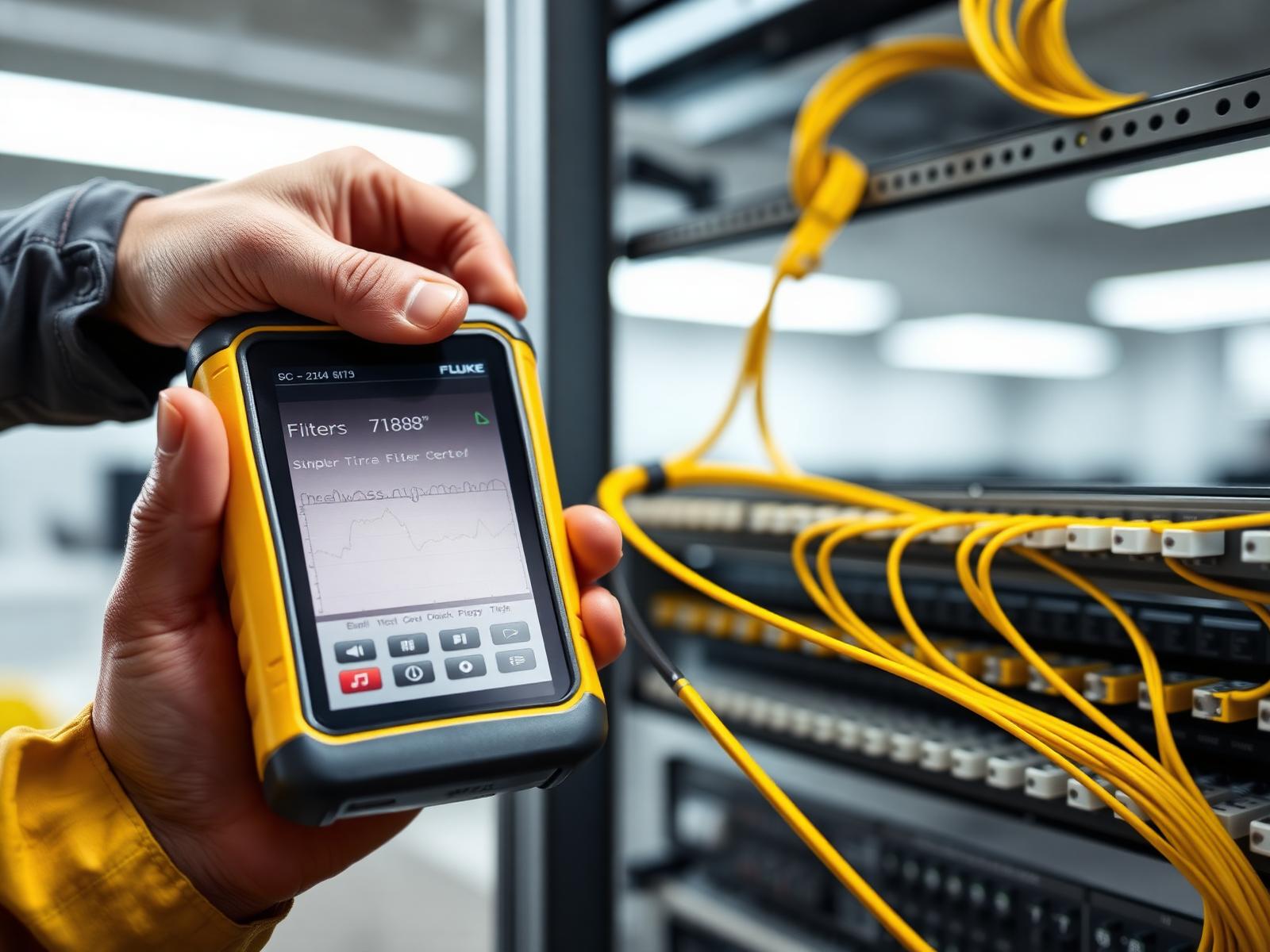
Access Cabling's infrastructure audit process is a structured, multi-phase methodology designed to provide a holistic view of your physical layer. We initiate with a discovery phase, reviewing any existing documentation, network diagrams, and organizational requirements. The physical audit then commences, involving a visual inspection of all active and passive network components, including telecommunications rooms (TRs), equipment rooms (ERs), backbone and horizontal cabling pathways, and workstation outlets. Our technicians meticulously trace, identify, and label obscured or undocumented cabling, verifying media types (e.g., Cat6A, OS2 fiber, OM4 fiber), termination points, and port assignments. This forensic approach extends to evaluating the physical security of enclosures, proper grounding and bonding per NEC Article 250, and adherence to TIA-568 series standards for component and transmission performance. We utilize tools such as Fluke Networks DSX CableAnalyzers for copper certification testing and fiber optic loss/OTDR testing, ensuring a data-driven assessment rather than subjective observation. This systematic process culminates in a detailed report outlining current state conditions, identified deficiencies, and recommended remediation actions, all supported by quantifiable data and photographic evidence.
Standards Compliance and Best Practices Assessment
Adherence to industry standards is paramount for a high-performing and future-proof network infrastructure. Our cabling infrastructure audits rigorously assess your existing system against TIA-568-D (Commercial Building Telecommunications Cabling Standard), TIA-569-D (Telecommunications Pathways and Spaces Standard), TIA-606-C (Administration Standard for Telecommunications Infrastructure), and TIA-942-B (Telecommunications Infrastructure Standard for Data Centers) as applicable. We evaluate whether pathways and spaces meet recommended fill ratios, bend radius requirements for copper and fiber, and separation from EMI-generating sources. The audit also scrutinizes termination practices, examining whether TIA-568 T568A/B assignments are consistently applied, and assessing the quality of terminations via visual inspection and certification testing. Furthermore, we verify compliance with BICSI TDMM guidelines for telecommunications room design, grounding, bonding, and firestopping. Our findings highlight any deviations from these standards, explaining the potential impact on network performance, maintainability, and future scalability. This detailed standards compliance assessment is critical for mitigating operational risks and ensuring the infrastructure can reliably support current and emerging technologies like PoE++ and 100GbE.
Diagnostic Tools and Data Collection for Detailed Analysis
Delivering an effective cabling infrastructure audit demands precision and reliable data. Access Cabling employs a suite of advanced diagnostic tools to collect comprehensive, verifiable data. For copper cabling, we utilize Fluke Networks DSX CableAnalyzers, capable of certifying Cat5e, Cat6, Cat6A, and Cat8 to TIA Level 2G/2F accuracy, measuring parameters such as insertion loss, return loss, near-end crosstalk (NEXT), far-end crosstalk (FEXT), and delay skew. For fiber optic infrastructure, we deploy Fluke Networks OptiFiber Pro OTDRs and CertiFiber Pro OLTS (Optical Loss Test Set) to measure end-to-end loss, identify splice and connector imperfections, and characterize fiber links according to TIA-526-7 (for multimode) and TIA-526-14 (for singlemode), ensuring compliance with application-specific loss budgets. Handheld network testers aid in active endpoint identification and PoE testing. We also leverage thermal imaging cameras to identify overheating equipment or cable bundles within congested pathways, indicating potential design flaws or impending failures. All data is systematically cataloged and presented in a format that allows for clear trend analysis, pinpointing areas where infrastructure upgrades, remediation, or re-engineering are most critically needed.
As-Built Documentation and Infrastructure Mapping
One of the most critical deliverables of our cabling infrastructure audit is the creation of accurate as-built documentation. Often, organizations operate with outdated or nonexistent records, leading to inefficiencies and prolonged troubleshooting. Access Cabling meticulously documents the "as-is" state of your physical layer. This includes updated floor plans detailing the location of telecommunications rooms, equipment racks, outlet IDs, and device connections. We generate comprehensive rack elevation diagrams, identifying every patch panel, network switch, server, and associated cabling. Horizontal and backbone cabling pathways are mapped, specifying cable types, lengths, and termination points. For fiber optic systems, we provide detailed splice schematics and fiber strand assignments. All patch panel and port assignments are meticulously recorded and linked to their corresponding workstation or device. This documentation adheres to TIA-606-C administration standards, providing a standardized, easily navigable resource that significantly improves an organization's ability to manage, troubleshoot, and plan for future network expansions. This deliverable is provided in both digital (e.g., AutoCAD, Visio, PDF) and physical formats, as required.
Identifying Performance Bottlenecks and Security Vulnerabilities
The primary objective of a cabling infrastructure audit extends beyond mere documentation to proactive identification of performance bottlenecks and security vulnerabilities at the physical layer. Performance issues often stem from exceeding maximum cable lengths, utilizing incorrect cable types for specific applications (e.g., non-shielded cable in high-EMI environments), poor termination practices leading to high return loss or crosstalk, or mismanaged patch panel configurations. Our audits leverage test data to pinpoint these exact deficiencies. From a security perspective, we assess risks such as unsecured telecommunications rooms, exposed backbone cabling, lack of proper labeling which can aid unauthorized access, and non-compliant grounding/bonding impacting equipment lifespan and safety. We also look for undocumented wireless access points, unauthorized network taps (physical or logical), and a general lack of physical controls. By identifying these physical layer weaknesses, Access Cabling empowers organizations to implement targeted remediation strategies that enhance network reliability, throughput, and significantly bolster their overall cybersecurity posture, moving beyond logical network security to encompass the often-overlooked physical attack surface.
Strategic Recommendations and Remediation Planning
Following the comprehensive audit and data analysis, Access Cabling provides strategic recommendations tailored to your organization's specific needs and future objectives. These recommendations are prioritized based on criticality and potential impact, distinguishing between immediate corrective actions and longer-term infrastructure upgrades. For instance, critical findings might include firestopping breaches, which require immediate remediation for safety and code compliance per NEC. Performance-impacting issues, such as exceeding TIA-568 link limits or unmitigated EMI, will lead to recommendations for re-cabling specific segments or deploying shielded solutions. We provide detailed specifications for recommended materials, such as Belden, CommScope, Panduit, Leviton, or Corning cabling and connectivity solutions, ensuring a future-proof upgrade path. Our remediation planning includes estimated timelines and potential phased implementation strategies to minimize operational disruption. The goal is to furnish IT directors, facilities managers, and general contractors with a clear, actionable roadmap for infrastructure modernization, enabling informed budgetary allocation and capital expenditure decisions based on transparent, expert insights rather than assumptions.
When to Conduct a Cabling Infrastructure Audit
There are several critical junctures when a cabling infrastructure audit becomes indispensable. Organizations experiencing unexplained network performance issues, frequent dropped connections, or intermittent outages should initiate an audit to eliminate the physical layer as a root cause. Prior to a major network upgrade, such as implementing 10GbE or 100GbE, or deploying a high-density Wi-Fi 6/7 environment, an audit is essential to verify the existing cabling's capability to support new bandwidth and power requirements (e.g., PoE/PoE++). Regulatory compliance requirements, such as those related to physical security or data center uptime (e.g., HIPAA, PCI DSS), often necessitate a thorough, documented assessment of the physical infrastructure. Mergers, acquisitions, or facility consolidations also warrant an audit to integrate disparate systems and identify common infrastructure standards. Furthermore, for facilities that have undergone numerous undocumented MAC (Moves, Adds, Changes) activities over several years, a comprehensive audit is the only way to re-establish an accurate baseline and regain control over the physical network assets, mitigating operational risks and improving efficiency.
Access Cabling's Differentiators in Infrastructure Consulting
Access Cabling distinguishes itself in the infrastructure consulting landscape through a combination of unparalleled experience, rigorous adherence to standards, and a client-centric approach. With 28 years as a licensed C-10/C-7 low-voltage contractor (CSLB 992009), our expertise is not theoretical but forged through hundreds of complex real-world projects nationwide. We employ exclusively certified technicians who are highly proficient in interpreting and applying TIA/EIA, BICSI, and NEC standards, ensuring every audit is conducted with the highest degree of technical accuracy. Our independence from specific hardware vendors allows for unbiased recommendations, focusing solely on the best-fit solutions for your infrastructure. Unlike less experienced firms, we don't just identify problems; we provide prescriptive, data-backed solutions and detailed remediation plans, leveraging our deep understanding of products from industry-leading manufacturers like Panduit, CommScope, Belden, Corning, and Leviton. Our rigorous documentation practices ensure that the output of our audits provides lasting value, transforming nebulous infrastructure into a clearly defined, manageable asset. We serve as a trusted, authoritative resource, providing the clarity and strategic guidance necessary for optimized network performance and long-term facility planning.
Vendor Agnostic Technology Roadmap and Lifecycle Planning
A critical outcome of a comprehensive infrastructure audit is the development of a vendor-agnostic technology roadmap and a detailed lifecycle management plan. Our audits extend beyond simply identifying current deficiencies; they project future needs based on anticipated business growth, technology evolution, and industry trends (e.g., increased bandwidth demands from AI/ML applications, IoT proliferation, converged IP systems). This involves evaluating the current infrastructure's capacity for scaling, its resilience to emerging threats, and its alignment with long-term strategic objectives. We analyze existing hardware and software components, assessing their end-of-life (EOL) status, refresh cycles, and compatibility with next-generation technologies. This includes evaluating the suitability of current Category 6A deployments versus a potential future transition to Category 8 or fiber optics for specific high-density zones, or the impact of migrating from a traditional access layer to a passive optical network (PON) architecture in certain scenarios. The roadmap articulates a phased investment strategy, prioritizing upgrades that offer the greatest impact on performance, security, and operational efficiency while minimizing total cost of ownership (TCO). This includes detailed financial forecasting for phased CAPEX and OPEX, helping organizations allocate resources effectively and avoid costly, reactive infrastructure overhauls. We consider the implications of power over Ethernet (PoE) evolution (e.g., PoE++, 4PPoE standard IEEE 802.3bt) on existing cabling and active equipment, ensuring the proposed roadmap supports increasing power requirements for advanced endpoints like smart lighting, IP cameras, and Wi-Fi 6E/7 access points without compromising cable bundle thermal performance or exceeding pathway capacities. Our recommendations are rooted in optimizing the long-term utility of the physical layer, accounting for factors like cable plant useful life (typically 10-20 years for structured cabling) and active equipment refresh cycles (3-5 years).
Ensuring Local Code Compliance and Regulatory Adherence
Infrastructure audits frequently uncover gaps in adherence to local building codes, fire safety regulations, and industry-specific compliance mandates. Our team meticulously reviews the existing installation against relevant national, state, and local ordinances, focusing on codes such as NFPA 70 (National Electrical Code - NEC), TIA-569-D (Telecommunications Pathways and Spaces), and local jurisdictional amendments. This includes verifying correct cable plant fire ratings (e.g., plenum-rated vs. riser-rated cables based on building occupancy and construction), proper grounding and bonding methodologies per ANSI/TIA-607-D, and adequate separation from power cabling to prevent electromagnetic interference (EMI) as per TIA-568 series. We also scrutinize pathways for proper fill ratios and firestopping integrity (e.g., using UL-listed firestop sealants and devices) to ensure compliance with IBC (International Building Code) and IFC (International Fire Code) requirements. Beyond safety and physical infrastructure, we assess compliance with data privacy regulations (e.g., HIPAA for healthcare, PCI DSS for financial institutions) as they pertain to the physical security and access controls of the network infrastructure, including secure cabinet access, environmental monitoring, and appropriate demarcation points. Common non-compliance issues identified include undersized or improperly sealed conduit systems, unlabeled or incorrectly routed cables, absence of required firestopping, and insufficient grounding electrodes. Our audit report provides explicit citations for identified violations and practical, phased remediation strategies that ensure full regulatory adherence, mitigate potential fines, and enhance business continuity. We leverage our deep understanding of local AHJ (Authority Having Jurisdiction) expectations to ensure proposed solutions are not just compliant but also practical for implementation within operational constraints.
Power Distribution and Environmental Control Assessment
The physical layer's reliability is intrinsically linked to robust power distribution and effective environmental controls. Our infrastructure audits delve into the critical aspects of powering and cooling network infrastructure. This involves a detailed examination of existing uninterruptible power supplies (UPS) – including battery health, runtime capacity, and appropriate sizing for current and projected loads – and power distribution units (PDUs), assessing their load balancing capabilities, remote monitoring features, and compliance with NEMA standards. We evaluate the resilience of the electrical infrastructure, including dedicated circuits for telecommunications rooms, generator backup systems, and transient voltage surge suppression (TVSS). A significant focus is placed on thermal management within server rooms, data closets, and equipment racks. We analyze existing HVAC systems, CRAC/CRAH units, hot aisle/cold aisle containment strategies, and rack-level airflow management, utilizing thermal imaging and environmental sensors to identify hotspots, inefficient cooling practices, and single points of failure relating to temperature and humidity control. For instance, we assess the effectiveness of blanking panels, cable management within racks to prevent airflow obstruction, and the overall cooling capacity versus current heat loads (BTU/hr). We also investigate potential vulnerabilities related to water detection, fire suppression systems (e.g., pre-action, FM-200, Novec 1230), and physical security access to critical infrastructure components. Recommendations often include optimizing airflow, upgrading aged UPS units, implementing smart PDUs for granular power monitoring, and integrating environmental sensors with building management systems for proactive threat detection and incident response, all aimed at enhancing the operational uptime and lifespan of active equipment.
Optimizing Collaboration and Project Management for Upgrades
Successful infrastructure upgrade projects, catalyzed by audit recommendations, demand robust project management and seamless collaboration among diverse stakeholders. Our audit deliverables include a project management framework that outlines critical path activities, resource allocation, and a detailed communication plan. This framework emphasizes coordination between IT teams, facilities management, electrical contractors, mechanical, electrical, and plumbing (MEP) engineers, and potentially general contractors. We define clear roles and responsibilities to mitigate common pitfalls such as scope creep, scheduling conflicts, and communication breakdowns during complex migrations or cutovers. For example, during a fiber backbone upgrade, meticulous planning is required to coordinate conduit installation with other trades (e.g., plumbing for ceiling access, sprinkler systems for fire safety), ensure precise fusion splicing schedules, and manage the impact on active network services. Our recommendations specify the types of documentation required at each project phase, including detailed statements of work (SOWs), technical specifications (e.g., specifying OM4 vs. OS2 fiber, MTP/MPO connector types), and comprehensive test plans (e.g., Tier 2 certification for fiber, Level 2G for Category 8 copper). We also advocate for agile methodologies where appropriate, allowing for adaptive planning and incremental deployment in complex environments. This proactive project management strategy, embedded within our audit findings, aims to minimize operational disruption, control costs, and ensure that infrastructure investments are realized efficiently and effectively, from initial design review through final commissioning and acceptance testing. Our reports often include sample project timelines and a risk mitigation matrix tailored to the identified deficiencies and proposed solutions.