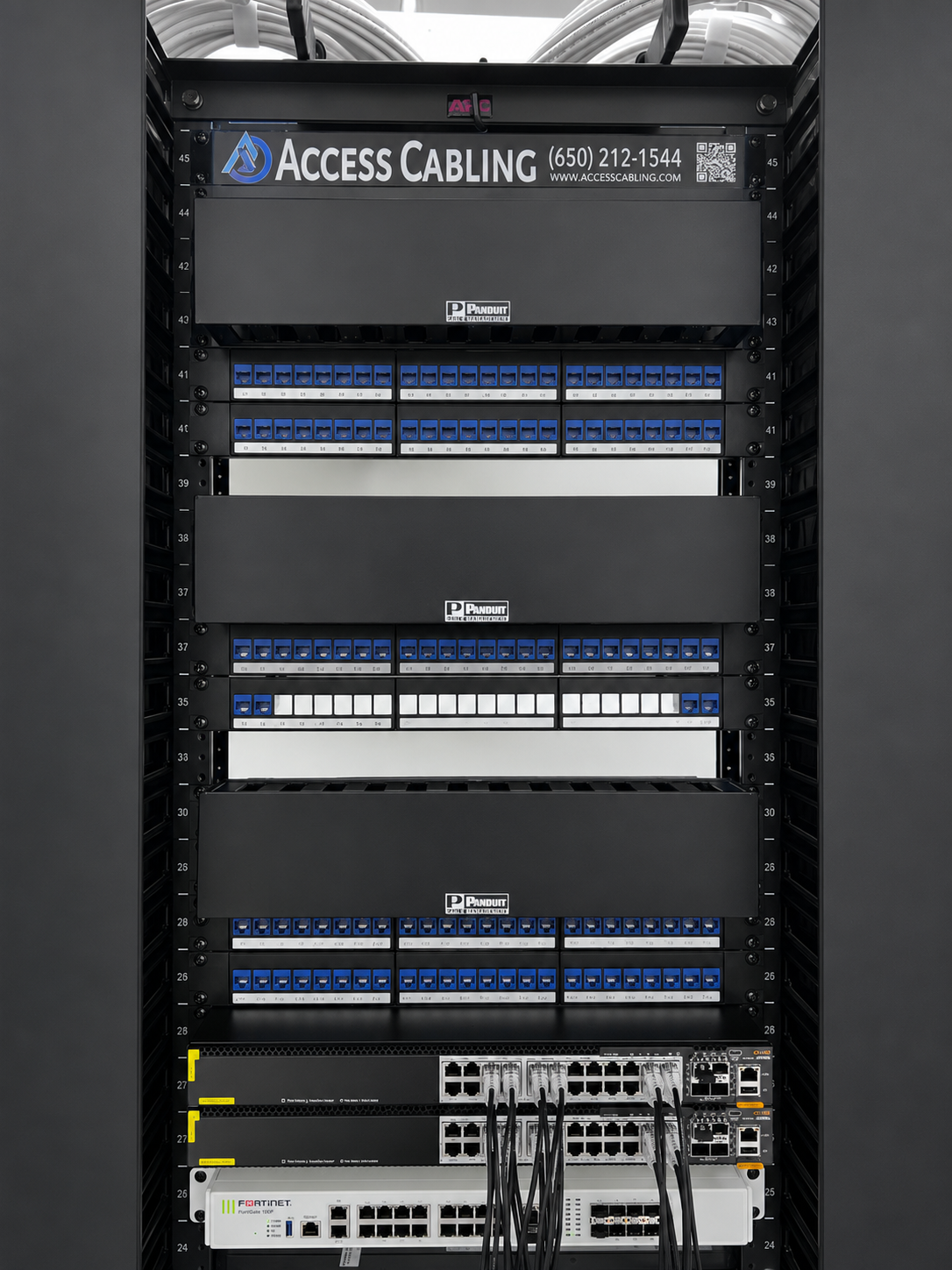
For general contractors, facilities managers, and IT directors overseeing ground-up commercial projects, the foundational integrity of the network infrastructure is paramount. New construction cabling, executed correctly from day one, forms the silent yet critical backbone of every modern building, influencing everything from IoT device performance to enterprise application reliability. Access Cabling specializes in designing, installing, and certifying robust low-voltage systems for new builds, integrating seamlessly with complex construction schedules and stringent regulatory requirements. Our approach emphasizes pre-construction planning, adherence to TIA/EIA and BICSI standards, and deploying certified technicians to ensure all pathways, cable runs, and termination points are precisely engineered for a 20+ year lifespan, eliminating costly rework and future performance bottlenecks inherent in post-construction modifications.
Comprehensive Low-Voltage System Design for New Builds
Effective new construction cabling begins long before conduit is laid. Our engineering phase involves meticulous planning based on architectural drawings, electrical blueprints, and projected technology requirements. We collaborate directly with general contractors and architectural teams early in the design-build process to identify critical pathways, telecommunications rooms (TRs), and equipment room (ER) locations, ensuring compliance with TIA-569-D and TIA-606-C standards for telecommunications pathways and spaces, and infrastructure administration, respectively. This proactive engagement addresses potential conflicts with other trades—HVAC, electrical, plumbing—and secures optimal routes for copper, fiber optic, and other low-voltage cabling types. Our designs account for future scalability, power-over-ethernet (PoE) demands, wireless access point (WAP) density, and specialized systems including access control, CCTV, and building automation, utilizing CAD drawings and detailed schematics to visualize the complete infrastructure and prevent costly field adjustments.
Rough-In Phase: Pathways, Containment, and Cable Pulls
The rough-in phase is the most critical stage for new construction cabling, establishing the physical framework for the entire network. This involves the installation of conduit systems, cable trays, J-hooks, and firestopping measures compliant with NEC Article 770 and 800. We ensure all pathways are appropriately sized for current and future cable counts, minimizing fill ratios to prevent signal degradation and overheating, while adhering to bending radius guidelines for fiber optic cables. Our crews strategically pull and stage horizontal and backbone cabling—Cat6A, Cat7A, OS2 single-mode, OM4 multi-mode fiber—following manufacturer specifications and TIA-568.3-E for fiber and TIA-568.2-D for balanced twisted-pair cabling. Proper labeling, slack loops, and adherence to firestopping protocols are meticulously maintained throughout the rough-in, guaranteeing a clean, code-compliant, and serviceable infrastructure for the trim-out phase. This foundational work directly impacts system longevity and maintenance ease.
Materials and Components: Ensuring Infrastructure Longevity
The selection of cabling infrastructure components is paramount for long-term performance and reliability. Access Cabling exclusively deploys certified, commercial-grade materials from industry leaders such as Panduit, CommScope, Leviton, Belden, and Corning. This includes plenum-rated (CMP) and riser-rated (CMR) copper and fiber optic cables, patch panels, jacks, fiber enclosures, and specialized components like industrial Ethernet connectors for harsh environments. Our material specifications strictly adhere to Category 6A (TIA/EIA-568.2-D) for 10 Gigabit Ethernet over copper and OS2/OM4 fiber optic standards (TIA/EIA-568.3-E) for backbone and specific high-bandwidth applications. We review product data sheets and certifications to ensure all components meet or exceed performance requirements, provide adequate headroom for future growth, and are compatible with active networking equipment. This commitment to quality prevents premature infrastructure obsolescence and guarantees system warranties up to 25 years from manufacturers.
Trim-Out and Termination: Precision and Performance
Following the rough-in, the trim-out phase focuses on precise termination of all installed cabling at telecommunications outlets, patch panels, and optical fiber distribution frames (OFDFs). This process demands exceptional attention to detail to maintain signal integrity and meet performance specifications. Our BICSI-certified technicians utilize specialized termination tools and follow strict manufacturer guidelines, such as punch-down techniques for copper jacks and connectors (e.g., RJ45 UTP/STP), and fusion splicing or mechanical termination for fiber optic connectors (e.g., LC/SC/MPO). Cable management, including dressing and routing, is critical at this stage to ensure proper bend radius, maintain conductor twists, and prevent crosstalk or data loss. Every termination point is meticulously executed and labeled according to TIA-606-C standards, providing a clearly organized and easily identifiable infrastructure for future troubleshooting and expansion, enhancing the overall manageability of the network.
Testing, Certification, and Documentation to TIA Standards
Post-installation, Access Cabling performs rigorous testing and certification of every cable run to validate performance against TIA/EIA standards. We utilize industry-leading test equipment, such as the Fluke DSX CableAnalyzer series, to conduct comprehensive tests including insertion loss, return loss, near-end crosstalk (NEXT), far-end crosstalk (FEXT), propagation delay, and wire map. For fiber optic cabling, we perform OTDR (Optical Time Domain Reflectometer) and OLTS (Optical Loss Test Set) tests to measure insertion loss, optical return loss, and identify any anomalies or breaks. All test results are compiled into detailed certification reports, providing verifiable proof that the installed infrastructure meets or exceeds Category 6A, OS2, or OM4 performance specifications. This documentation is critical for client acceptance, warranty validation, and serves as a baseline for future network diagnostics and upgrades, ensuring the network performs as expected from day one.
Compliance and Safety: Adhering to Industry Regulations
Compliance with industry codes and safety standards is non-negotiable in new construction environments. Access Cabling operates under strict adherence to the National Electrical Code (NEC), specifically Articles 770 (Optical Fiber Cables and Raceways) and 800 (Communications Circuits), ensuring proper grounding, bonding, and firestopping. Our OSHA 30-certified technicians are trained in identifying and mitigating hazards common on active construction sites, including fall protection, lockout/tagout procedures, and confined space entry protocols. We maintain C-10 and C-7 low-voltage contractor licenses (CSLB 992009) and carry comprehensive insurance, providing clients with peace of mind regarding adherence to all local and national regulations. Our internal quality control processes are aligned with BICSI installation methods, ensuring every aspect of the cabling infrastructure is installed safely, correctly, and will pass all necessary inspections.
Post-Install Support: Future-Proofing Your Investment
Our commitment to the client extends beyond the final certification report. Access Cabling offers comprehensive post-installation support tailored for new construction projects, ensuring the long-term viability and performance of the structured cabling system. This includes detailed as-built documentation, which provides an accurate record of the installed infrastructure, including pathways, cable routing, and termination locations, invaluable for future moves, adds, or changes (MACs). We also provide ongoing maintenance agreements, offering proactive inspections and reactive support to address any performance issues or expansion requirements. Our team can advise on hardware upgrades, network optimization, and migration strategies as technology evolves, protecting your investment and ensuring the cabling infrastructure remains a reliable and scalable asset throughout the building's operational lifecycle. This proactive support minimizes downtime and extends system effectiveness.
Integrated Project Management and Workflow Synergy
Effective cabling deployment within new construction necessitates a robust project management framework that seamlessly integrates with the overarching building lifecycle. Our approach prioritizes proactive communication and workflow synergy with general contractors, architects, electrical engineers, and other Mechanical, Electrical, and Plumbing (MEP) trades. This encompasses early engagement during the design phase to review blueprints, identify potential clashes or conduit sizing deficiencies, and establish clear demarcation points. We utilize Building Information Modeling (BIM) tools to overlay proposed cable routes and equipment locations, facilitating clash detection and optimizing pathways before physical construction begins. Regular on-site coordination meetings are critical, ensuring our cabling installations align precisely with construction schedules and avoid costly delays or rework. Specialized tooling, such as cable pathway mapping software and digital punch list systems, supports efficient task tracking and discrepancy resolution. Understanding the general contractor's critical path and providing accurate look-ahead schedules for cabling activities (e.g., conduit runs, cable pulls, termination dates) minimizes friction and ensures that our work facilitates, rather than impedes, the overall project timeline. This meticulous planning extends to material staging and delivery schedules, ensuring components are on-site precisely when needed, but not so early as to create storage issues or become susceptible to damage. Common pitfalls averted through this integrated approach include belated discovery of structural obstructions impacting cable routing, insufficient space allocated for telecommunications rooms (TRs) or equipment racks, and uncoordinated penetration points leading to compromised firestopping integrity. Our project managers are formally trained in construction project methodologies, ensuring our participation is an asset to the broader build team.
Advanced Firestopping and Environmental Sealing Protocols
A critical, yet often underestimated, aspect of new construction cabling is the implementation of advanced firestopping and environmental sealing protocols. Penetrations through fire-rated walls, floors, and ceilings for cabling pathways, conduit, or sleeves must be meticulously sealed to restore the original fire-resistance rating of the assembly, in accordance with ASTM E814 (UL 1479) standards. We employ a range of specialized firestop materials, including intumescent putties, sealants, collars, and bricks, selected based on the specific penetration type, substrate material, and required fire rating (e.g., F-ratings, T-ratings). Improper firestopping compromises life safety systems, allows for the rapid spread of fire and smoke, and represents a significant code violation. For exterior wall penetrations or environments susceptible to moisture ingress, we implement robust environmental sealing solutions to prevent water damage, mold growth, and maintain building envelope integrity. This involves using weather-resistant sealants, cable glands, and insulated penetration systems designed to withstand UV exposure and temperature fluctuations. Our technicians are factory-trained and certified in the application of various firestopping and sealing products from leading manufacturers, ensuring compliance with local building codes, NFPA standards (e.g., NFPA 70, NFPA 101), and manufacturer specifications. Documentation, including photographs and material data sheets, for every firestopped penetration is standard procedure, providing an auditable trail for inspectors and ensuring long-term accountability. Failure to adhere to these protocols not only presents severe safety risks but can also lead to costly remediation, project delays, and potential legal liabilities for the building owner and contractors. Our rigorous inspection and sign-off process includes verifying proper material application, sufficient fill ratios, and correct curing times for all firestopping and sealing compounds.
Power Distribution and Grounding for Telecommunications Infrastructure
The reliable operation of a new build's telecommunications infrastructure hinges critically on adequately designed and implemented power distribution and grounding systems. This extends beyond basic electrical outlets to dedicated circuits, uninterruptible power supplies (UPS), and robust grounding and bonding networks specified by ANSI/TIA-607-C. We collaborate closely with electrical engineers to ensure that telecommunications rooms (TRs), equipment racks, and data centers are supplied with sufficient dedicated power circuits, often on separate panels, to prevent interference and ensure stability. This includes specifying appropriate voltage (e.g., 120V, 208V), amperage, and NEMA receptacle types for active equipment. UPS systems are often integrated to provide battery backup for critical network devices, ensuring continuity of service during power fluctuations or outages. Our scope involves coordinating the installation of dedicated electrical panels, distribution units (PDUs) within racks, and surge protection devices. Crucially, a comprehensive grounding and bonding infrastructure is implemented throughout the cabling system. All metallic components, including racks, cabinets, cable trays, conduits, and equipment frames, are bonded to the Telecommunications Main Grounding Busbar (TMGB) or Telecommunications Grounding Busbar (TGB) via properly sized grounding conductors (e.g., AWG #6, #2) and listed bonding hardware. This prevents ground loops, reduces electromagnetic interference (EMI), and provides a safe path for fault currents, protecting both personnel and valuable equipment. Non-compliance with TIA-607-C grounding standards can lead to intermittent network issues, equipment damage, warranty voidance, and significant safety hazards. We utilize precision ohmmeters and ground resistance testers to verify the integrity and effectiveness of the installed grounding system, delivering detailed test reports as part of the final documentation package. Careful consideration is also given to the separation of power and data cabling during cable tray and conduit installation to minimize cross-talk and induction, following industry best practices for cable management.
Strategic Future-Proofing and Scalability Considerations
In new construction, the cabling infrastructure must not only meet immediate demands but also be strategically future-proofed and designed for seamless scalability to accommodate technological evolution and organizational growth. Our design philosophy incorporates a lifecycle cost perspective, emphasizing value over initial lowest cost. This involves deploying a structured cabling system that exceeds current bandwidth requirements, often recommending Category 6A or even fiber optic cabling to the desk (FTTD) where future applications like 10 Gigabit Ethernet or higher are anticipated. Conduit pathways are strategically oversized (e.g., 2-inch for potential fiber runs) and often run with pull strings, allowing for easy expansion and cable upgrades without invasive and costly renovations. We assess projected growth rates for headcount, device density (IoT, Wi-Fi 6E/7), and data traffic, designing telecommunications rooms and demarcation points with ample rack space, power distribution capacity, and cooling provisions. This includes anticipating increased port density per building area and providing flexible patching fields. For environments with known future technology roadmaps, such as advanced manufacturing facilities or healthcare institutions, we might recommend modular patch panels and backbone designs that facilitate easy circuit adds, moves, and changes. Consideration is also given to the physical layout, ensuring that TRs are appropriately sized, strategically located to minimize horizontal cable lengths (per TIA-568-D standards), and accessible for maintenance. Ignoring scalability in the design phase inevitably leads to premature infrastructure obsolescence, disruptive and expensive retrofits, extended downtime during upgrades, and a higher total cost of ownership (TCO) within 5-10 years post-occupancy. Our detailed documentation includes 'as-built' drawings with spare capacity clearly marked and a technology roadmap consultation, guiding clients on potential upgrade paths and timelines to maximize the longevity and adaptability of their cabling investment.