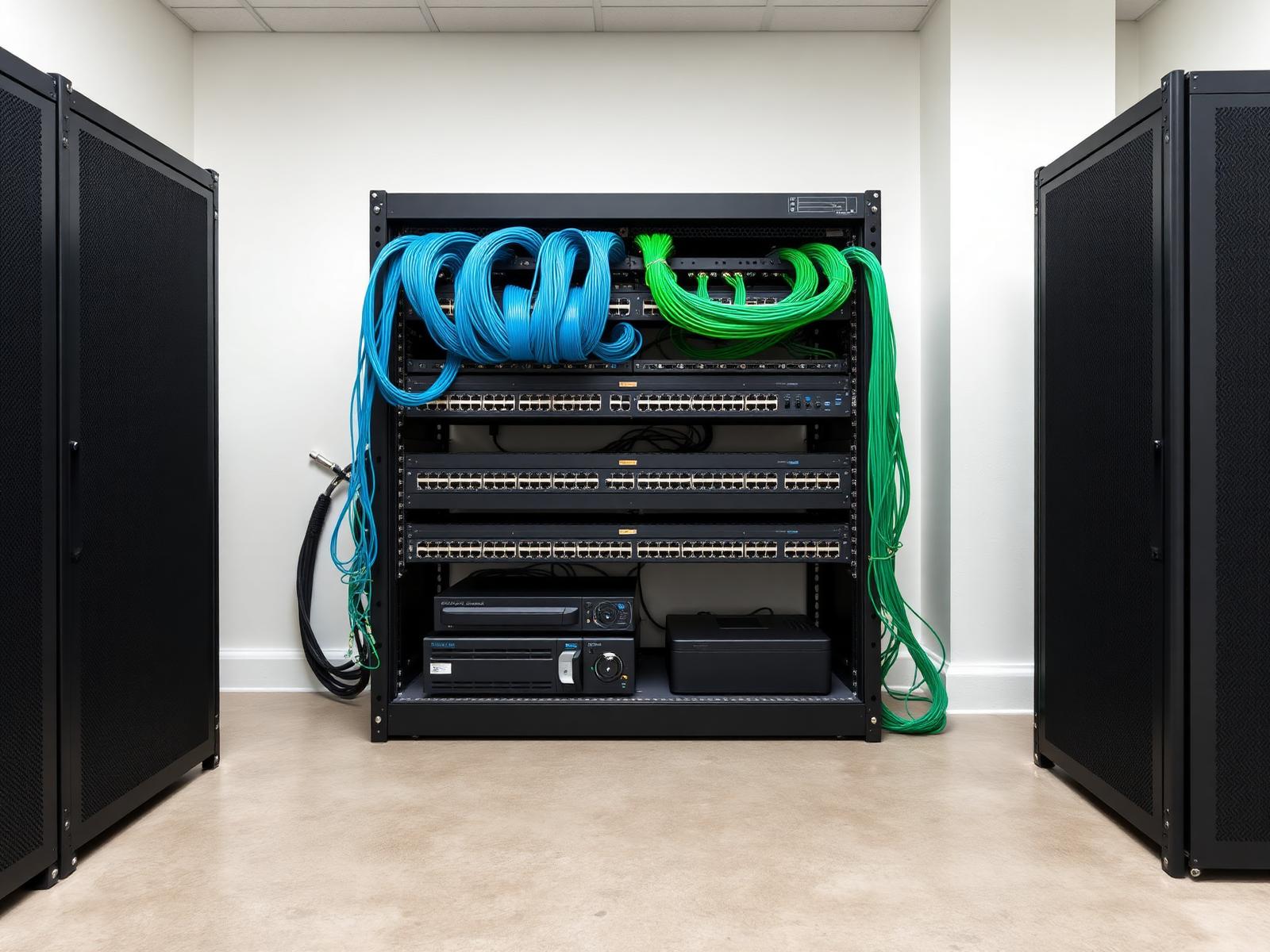
Successfully executing an office relocation demands more than just packing boxes; it necessitates a meticulously planned and executed network infrastructure transition. For IT directors, facilities managers, and general contractors overseeing such a move, ensuring business continuity through seamless data and voice connectivity is paramount. Access Cabling specializes in comprehensive office move cabling services, encompassing everything from pre-relocation infrastructure assessments and detailed migration planning to the systematic decommissioning of existing networks and the certified re-installation and activation of new systems. Unlike ad-hoc approaches, our methodology integrates TIA/EIA standards, BICSI methodologies, and manufacturer-specific best practices from the outset, providing a predictable, efficient, and fully compliant transition that minimizes downtime and eliminates post-move connectivity issues. We don't just move cables; we engineer a continuous operational environment for your organization.
Strategic Decommissioning and Pre-Installation Assessments
The initial phase of any office relocation cabling project involves a detailed assessment of the existing infrastructure at the origin site and a thorough site survey at the destination. For decommissioning, this means identifying all active and passive network components, documenting existing patchingschemes, and systematically labeling and tracing every cable run back to its port or patch panel. Adherence to TIA-606-C Administration Standard for Telecommunications Infrastructure ensures that all removed components are cataloged and can be re-administered efficiently if reused. Our teams utilize Fluke DSX CableAnalyzer series to verify connectivity at the origin point prior to disconnection, establishing benchmarks for re-installation. Simultaneously, a comprehensive destination site survey assesses conduit availability, telecommunications closet (TR) space, power requirements, environmental controls, and pathway capacity. This dual-pronged assessment allows for precise Bill of Materials (BOM) generation, identifies potential bottlenecks, and informs a phased migration strategy, preventing costly on-site surprises and ensuring the new footprint accommodates growth.
Network Design and Infrastructure Planning for New Space
Effective network infrastructure design for a new office space is foundational to its long-term performance and scalability. Our certified Registered Communications Distribution Designers (RCDD) collaborate with clients to translate business requirements into detailed architectural plans, adhering to TIA-568.C standards for structured cabling systems. This includes precise placement of telecommunications rooms (TRs) or equipment rooms (ERs) to meet horizontal cabling distance limitations (90 meters maximum for copper, excluding work area cords), fiber optic backbone distribution (TIA-568.C.3), and strategic wireless access point (WAP) placement validated through RF site surveys. We specify appropriate cable types—Category 6A for 10 Gigabit Ethernet (10GbE) readiness, single-mode or multi-mode fiber for backbone applications—from manufacturers like CommScope, Panduit, and Belden. Our design approach also incorporates power over Ethernet (PoE) considerations, ensuring adequate cable gauge for extended distances and higher power devices, and planning for pathways and spaces conforming to BICSI TDMM guidelines to prevent future congestion.
Component Selection: Ensuring Performance and Future-Proofing
The selection of cabling components directly impacts network performance, reliability, and future upgradeability. For office relocations, we standardize on enterprise-grade components from leading manufacturers such as Panduit, CommScope, Leviton, and Corning. This includes Category 6A F/UTP or UTP copper cabling for workstations and high-bandwidth devices, ensuring compliance with IEEE 802.3an for 10 Gigabit Ethernet over balanced twisted-pair cabling. For backbone and inter-TR connections, we deploy OS2 single-mode fiber optic cabling (ITU-T G.652.D) for long-haul and future 40/100GbE applications, or OM4 multi-mode fiber for shorter distances within a campus or building. Patch panels (e.g., Panduit QuickNet, CommScope SYSTIMAX), modular jacks, and cable management solutions (e.g., Leviton Opt-X Fiber Enclosures, Panduit NetRunner) are chosen for their durability, ease of administration, and adherence to TIA-942-B Telecommunications Infrastructure Standard for Data Centers, even in smaller TRs. This meticulous component selection ensures a highly robust and reliable network infrastructure for the newly relocated office.
Installation Methodologies and Cable Management Best Practices
Our installation teams adhere to stringent methodologies to ensure optimal performance, longevity, and ease of maintenance in the new office environment. This involves meticulous cable routing through designated pathways—conduit, cable trays, J-hooks—maintaining bend radius specifications (e.g., four times the cable diameter for Category cables) to prevent performance degradation. Cables are dressed and bundled using Velcro ties, never plastic zip ties, to prevent cinching and facilitate future moves, adds, and changes (MACs). All horizontal runs are terminated using industry-standard T568B configuration for consistency across the network. Vertical and backbone cabling, whether copper or fiber, is installed with proper strain relief and protection, especially at entry points into patch panels or active equipment. Our crews are trained to implement cable management systems effectively, labeling every port at the patch panel and workstation outlet in accordance with TIA-606-C, simplifying troubleshooting and administration tasks for the client's IT staff post-relocation. This systematic approach reduces signal loss, improves airflow, and enhances the overall aesthetic and functional integrity of the telecommunications infrastructure.
Rigorous Testing, Certification, and Documentation Protocols
Post-installation, every single cable drop at the new office location undergoes comprehensive testing and certification to guarantee performance and compliance with TIA/EIA standards. We utilize Fluke Networks DSX-8000 CableAnalyzers for Level IIIe certification of copper cabling and OptiFiber Pro for Tier 1 fiber optic certification, verifying parameters such as Near-End Crosstalk (NEXT), Return Loss, Insertion Loss, length, and propagation delay. This diagnostic process identifies and rectifies any anomalies before network activation. Upon successful testing, clients receive a complete documentation package, often in digital format, which includes detailed test results for each link, as-built drawings depicting TR layouts, cable pathways, and outlet locations, and a comprehensive labeling scheme. This certification and documentation provide an auditable record of system integrity, essential for warranty claims, future troubleshooting, and demonstrating adherence to industry standards and manufacturer specifications.
Ensuring Business Continuity and Minimizing Relocation Downtime
A critical aspect of office relocation cabling is the strategic planning and execution designed to minimize business disruption. Our phased approach includes a detailed cutover plan, often scheduling the physical network transition during off-peak hours or weekends to facilitate a 'lift and shift' where active equipment is moved and quickly reconnected to a pre-certified infrastructure. This involves pre-patching strategies where possible, clearly labeling server racks, and coordinating closely with the client's IT team for server, switch, and firewall migration. We ensure necessary power is available, cooling is adequate in equipment rooms, and all critical network devices are correctly racked and powered before final connectivity testing. By meticulously planning every step, from WAN circuit provisioning at the new site to final workstation connectivity checks, we ensure that employees can resume operations with minimal lost productivity, making the network relocation a non-event for day-to-day business. Our methodology prioritizes uninterrupted service delivery rather than merely installing cable.
Compliance, Safety, and Permitting for Low-Voltage Systems
Operating within the commercial construction and low-voltage contracting space necessitates strict adherence to a myriad of regulatory requirements, a core tenet of our office relocation services. As a licensed C-10/C-7 contractor (CSLB 992009), we ensure all installations comply with the National Electrical Code (NEC) articles relevant to low-voltage cabling (e.g., Article 800 for Communications Circuits). This includes proper fire-rating of cables (plenum-rated where required by NFPA 70), appropriate grounding and bonding of telecommunications infrastructure (per TIA-607-B), and adherence to local building codes for pathway fill ratios and firestopping. Our personnel are OSHA-30 certified, upholding rigorous safety protocols on job sites, including fall protection, lockout/tagout procedures, and proper tool usage. We manage all necessary permits for low-voltage installations, working directly with local Authorities Having Jurisdiction (AHJ) to ensure every project meets legal and safety obligations, eliminating potential liabilities and project delays for our clients.
Why Access Cabling is the Partner of Choice for Office Moves
Access Cabling's 28+ years of experience in managing complex network infrastructure projects, including large-scale office relocations, distinguishes us from competitors. We operate with a "right the first time" philosophy, minimizing costly rework and project delays. Our manufacturer-agnostic approach allows us to recommend and implement the optimal solution for specific client requirements and budgets, leveraging partnerships with industry leaders like Panduit, CommScope, and Corning. Certified RCDDs on staff ensure designs are robust and future-proof. Crucially, our commitment to transparency in project management, detailed documentation, and rigorous testing means clients receive a fully validated and highly reliable cabling infrastructure, not just a collection of cables. We are a single point of contact for all low-voltage aspects of your move, providing consistent project communication and accountability, a critical differentiator for IT directors and GCs seeking predictable and high-quality outcomes.
Inter-Trade Coordination and Project Management for Seamless Transitions
Successful office relocations hinge on meticulous inter-trade coordination and a robust project management framework. Access Cabling employs PRINCE2-aligned methodologies, assigning a dedicated Project Manager responsible for orchestrating all low-voltage system aspects, from initial site surveys to post-relocation support. This includes integrating with mechanical, electrical, and plumbing (MEP) trades, general contractors, interior designers, and IT teams. We generate detailed Gantt charts outlining critical path activities, dependencies, and resource allocation, ensuring that cabling infrastructure – including fiber backbone, copper horizontal runs, Wi-Fi access point placements, and AV integrations – aligns perfectly with HVAC ducting, power conduits, and architectural finishes. A common pitfall is inadequate coordination with electrical contractors, leading to conflicts over conduit pathways or insufficient power outlets for network equipment racks. Our project managers conduct regular on-site meetings, utilizing Building Information Modeling (BIM) data and CAD drawings to preemptively identify and resolve potential clashes, such as insufficient plenum space for cable trays or conflicts between security camera feeds and lighting fixtures. We focus on establishing clear communication channels and escalation procedures to guarantee that cabling installation phases are synchronized with other building fit-out activities, minimizing rework, avoiding delays, and ensuring that the new office is infrastructure-ready on schedule. This proactive approach mitigates risks associated with access limitations, power availability, and environmental controls critical for sensitive data center or server room environments, which are often the bottlenecks in relocation projects. Furthermore, our project managers are adept at navigating the dynamic nature of construction projects, adapting plans to unforeseen site conditions while maintaining tight control over scope, budget, and timeline, a critical differentiator in complex multi-vendor relocation scenarios.
Migration Strategy and Cutover Planning for Zero Downtime
The transition of critical IT services during an office relocation demands a meticulously planned migration and cutover strategy to achieve near-zero downtime. Access Cabling develops a comprehensive, phased migration plan that identifies all mission-critical applications, servers, network devices, and user endpoints requiring relocation. This strategy typically includes pre-cabling the new location with an active network infrastructure parallel to the existing one, allowing for equipment staging and pre-configuration. For server and data center migrations, we advocate for 'cold' migrations where possible, scheduling downtime during off-peak hours, but are fully equipped for 'warm' or 'hot' migrations using virtualization technologies and replication services to minimize service interruption. A key component is the development of detailed cutover checklists and runbooks, outlining the precise sequence of disconnection, transportation, re-connection, and power-up procedures, along with rollback plans in case of unforeseen issues. We utilize specialized transportation services for sensitive IT equipment, ensuring proper environmental controls and anti-static handling. Testing protocols include pre-cutover verification of all new cabling infrastructure (Tier 1 and Tier 2 fiber testing, copper certification to ANSI/TIA-568 standards for Category 6A and above) and post-cutover functional testing of all networked systems, including VoIP, Wi-Fi coverage, and application connectivity. The biggest pitfall is underestimating the time required for post-cutover troubleshooting and user acceptance testing, which we mitigate by building buffer time into our schedules and providing dedicated on-site support engineers during the initial operational period. Our aim is to ensure that on day one in the new office, all network services are fully operational and performing optimally, seamlessly supporting business operations from the moment employees walk through the door.
Scalability, Performance Optics, and Technology Roadmapping
Future-proofing office network infrastructure involves an acute focus on scalability, performance optics, and a clear technology roadmap, particularly in dynamic business environments. Access Cabling designs and implements cabling solutions with a minimum 5-7 year technology refresh cycle in mind, recommending Category 6A or even Category 8 copper cabling for horizontal applications to support 10 Gigabit Ethernet (10GbE) and future 25G/40G speeds at the desktop. For backbone infrastructure, we exclusively deploy single-mode fiber optic cabling (OS2) to accommodate future bandwidth demands, as it offers virtually unlimited upgrade potential by simply replacing transceivers, a significantly more cost-effective approach than re-cabling. Our designs incorporate ample spare capacity in cable pathways (conduits, trays, risers) and patch panel ports (e.g., leaving 20-30% spare capacity) to facilitate future expansion without disruptive renovations. Performance optics are critical: ensuring low insertion loss and return loss in fiber links through precise termination and splicing, and guaranteeing compliance with Power over Ethernet (PoE/PoE+/PoE++) standards for endpoint devices like Wi-Fi 6/6E access points, IP cameras, and smart lighting. A common pitfall is shortsighted planning where cost-cutting on initial cabling inhibits future upgrades, leading to significantly higher total cost of ownership (TCO) down the line due to rip-and-replace scenarios. We consult on technology roadmapping, advising clients on emerging standards like Wi-Fi 7, passive optical LAN (POL), and advanced IoT integrations, ensuring the installed infrastructure can support these technologies without extensive re-cabling. This forward-looking approach safeguards initial investment, provides a competitive advantage, and ensures the network remains a strategic asset rather than a limiting factor as an organization grows and technology evolves.
Security Integration and Physical Layer Hardening for Data Protection
Data protection extends beyond logical network security to encompass the physical layer, making security integration and physical hardening crucial during an office relocation. Access Cabling designs network infrastructure with robust physical security measures to prevent unauthorized access, tampering, or eavesdropping. This includes deploying secure, lockable server cabinets and racks (e.g., using robust APC NetShelter or Rittal enclosures) within dedicated server rooms, equipped with environmental monitoring (temperature, humidity, fire detection) and access control systems (biometric, keycard). Cable pathways are designed to be secure and tamper-resistant, utilizing locked patch panels and designated, often concealed, cable routes. We integrate IP-based physical security systems directly into the network, deploying high-resolution surveillance cameras (e.g., Axis Communications or Hanwha Techwin) in strategic locations, controlled access card readers on entry points, and alarm systems. These systems are typically powered via PoE, requiring careful consideration of power budget and redundant power supplies. The use of shielded cabling (STP/FTP) is considered in environments susceptible to electromagnetic interference (EMI) or where heightened physical security against tapping is paramount, though its implementation requires meticulous grounding to be effective, a common oversight in less experienced installations. Documenting cable routes, termination points, and equipment locations accurately is not just for maintenance but also for incident response and legal compliance. A significant pitfall is failing to secure communication rooms or data closets adequately, leaving critical network infrastructure vulnerable to unauthorized access, which can lead to data breaches or service disruptions. Our comprehensive approach ensures that the physical network infrastructure provides a resilient and secure foundation, complementing logical cybersecurity strategies and safeguarding sensitive organizational data post-relocation.