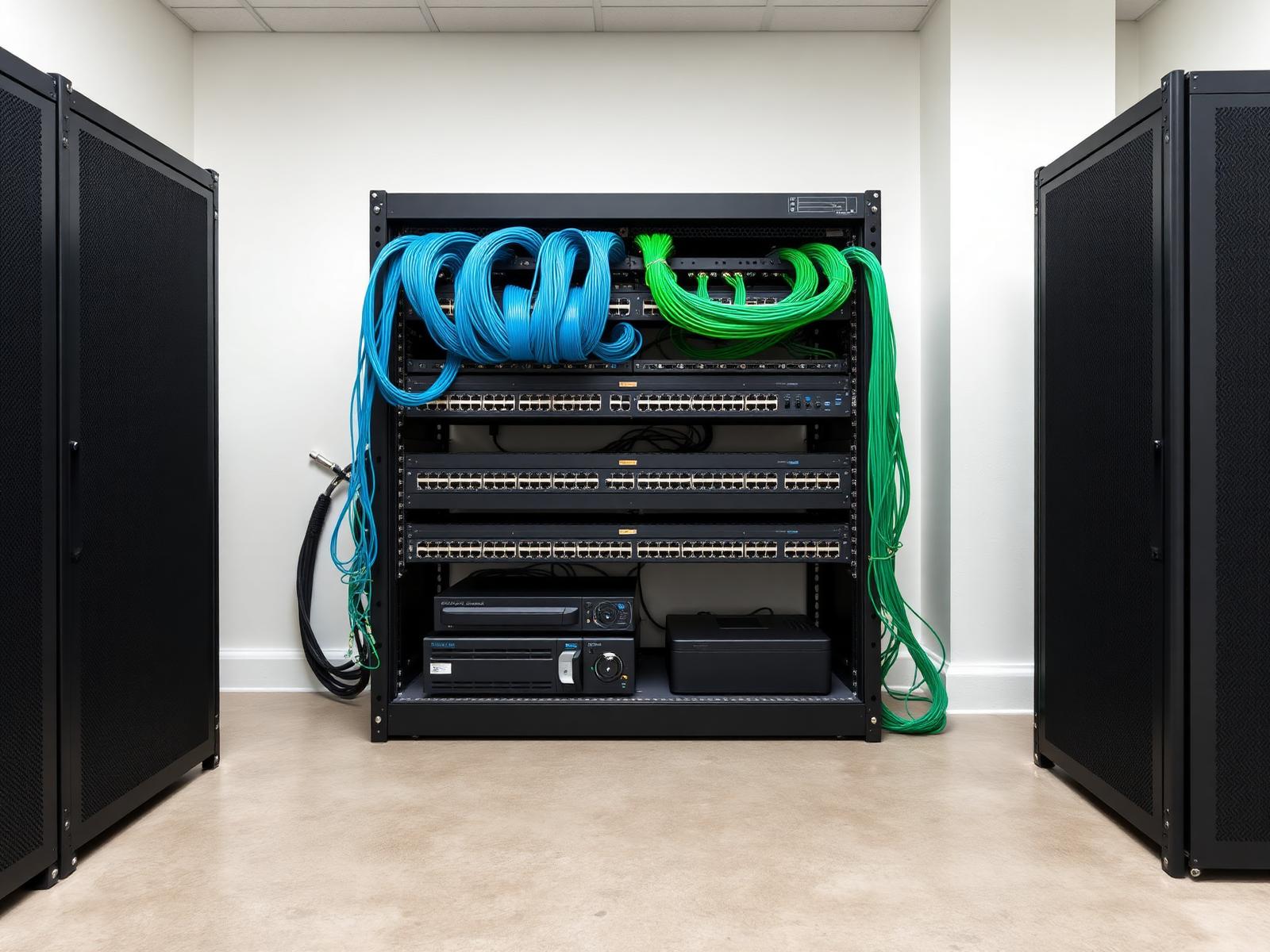
Critical network infrastructure failures, even those impacting a single drop or patch panel, can halt operations, leading to significant financial losses and reputational damage. When an unexpected cabling issue arises, or when project timelines demand off-hour deployments to minimize operational disruption, Access Cabling's 24 Hour Cabling service provides immediate, expert intervention or planned after-hours installation. We understand that for many businesses—from data centers to manufacturing facilities to financial institutions—"business hours" are 24/7. Our certified technicians are equipped to execute rapid diagnostics, repair, or new installations around the clock, adhering strictly to TIA/EIA and BICSI standards. This proactive 24-hour cabling availability ensures your critical systems remain online or are brought online efficiently, preventing downtime that impacts production, transactional processing, or core communications. Leveraging 28+ years of experience, we deploy skilled personnel and specialized tooling to address urgent infrastructure needs or execute scheduled projects outside of peak operational windows, wherever your business operates nationwide.
Emergency Rapid Response Cabling Standards and Protocols
When a network outage occurs due to a physical layer compromise, the speed and accuracy of the response are paramount. Our 24 Hour Cabling service prioritizes establishing immediate communication channels with your designated IT and facilities management teams to accurately assess the situation. During emergency call-outs, our technicians follow stringent protocols that align with TIA/EIA-568 series standards for commercial building cabling, even under pressure. This includes systematic fault isolation using advanced test equipment like the Fluke DSX CableAnalyzer for copper circuits or OTDRs for fiber optics, ensuring that intermittent or hard faults are precisely located. We adhere to BICSI best practices for cable accessioning, routing, and termination, even during off-hour repairs, utilizing manufacturer-specified components from vendors like CommScope, Panduit, or Corning to maintain system integrity. Our teams are trained not just in repair, but in evaluating potential causes to prevent recurrence, documenting every step through a standardized incident response framework.
Off-Hours Installation Project Planning and Execution
For planned cabling deployments requiring zero-downtime execution, 24 Hour Cabling extends to comprehensive off-hours project management. This involves meticulous pre-installation planning conducted during regular business hours with your project stakeholders. We detail every aspect, from cable pathways, conduit fill ratios, and firestopping requirements to equipment rack elevations and patching schedules, all conforming to NEC articles 770 and 800. The objective is to minimize any impact on your daily operations by scheduling all disruptive work—such as core network switch cutovers or MDF/IDF reconfigurations—during pre-approved maintenance windows. Our project managers work interactively with your team to define specific KPIs for project success, including maximum allowable downtime for specific services, data migration strategies, and final system testing parameters. This structured approach, combined with our 24/7 field capabilities, ensures that even complex multi-floor or multi-site deployments are executed efficiently, precisely, and entirely outside of your critical operational hours.
Material Selection and Contingency Stock Management
Effective 24 Hour Cabling relies not only on skilled labor but also on immediate access to the correct materials. During emergencies, standardized components are critical for rapid repair. For planned off-hours projects, precise material procurement prevents delays. We maintain a strategic inventory of common copper and fiber optic components—including Category 6A UTP/F/UTP cable, OM3/OM4/OS2 fiber optic assemblies, patch panels, modules, and connectors from industry leaders like Belden, Leviton, and Corning. This includes fire-rated plenum and riser cables where required by building codes. For emergency response, our service vehicles are stocked with critical parts to address the most common failures, ensuring that a damaged patch cable, a faulty keystone jack, or a cut fiber strand can be remediated without waiting for parts delivery. For larger planned projects, materials are pre-staged and inventoried against a detailed Bill of Materials (BOM) to ensure all components are present and functional before the off-hours work window commences, minimizing potential on-site delays.
Advanced Testing, Certification, and Documentation
Post-installation or repair, rigorous testing and certification are non-negotiable, particularly in 24 Hour Cabling scenarios where time is of the essence but quality cannot be compromised. All copper links are certified to TIA-568-C.2 or ISO/IEC 11801 standards using Fluke Networks DSX-8000 CableAnalyzers, providing documentation for insertion loss, return loss, near-end crosstalk (NEXT), power sum alien crosstalk (PSANEXT), and ACR-F (formerly ELFEXT). For fiber optic links, we perform Tier 1 (insertion loss using OLTS/LSPM per TIA-526-14A and TIA-526-7) and, when specified, Tier 2 (OTDR per TIA-598-D) testing, utilizing equipment like the Fluke OptiFiber Pro. Comprehensive test reports, alongside detailed as-built drawings and pathway schematics, are provided to the client. This documentation package is crucial not only for warranty validation but also for future troubleshooting and infrastructure management, ensuring that even off-hours work is fully auditable and integrated into your long-term network management strategy.
Compliance, Safety, and Site-Specific Protocols
Executing 24 Hour Cabling services necessitates strict adherence to all applicable safety regulations, building codes, and site-specific protocols, regardless of the time of day. Our C-10/C-7 licensing (CSLB 992009) ensures full compliance with California state regulations, and our nationwide operations uphold all relevant local ordinances and NEC requirements. Technicians are trained in OSHA 10/30, LOTO (Lockout/Tagout), confined space entry, and proper use of PPE. When working outside standard business hours, particularly in sensitive environments like data centers, healthcare facilities, or secure government sites, we integrate seamlessly with existing security procedures, escort requirements, and access control systems. This includes respecting noise restrictions, minimizing disruption to essential services, and ensuring all work areas are left clean and safe before our departure. Our project managers will work with your facilities team to review and incorporate all site-specific safety plans and entry/exit procedures into the project scope before work commences.
Maximizing Uptime Through Proactive 24 Hour Cabling
The primary objective of offering 24 Hour Cabling is to empower businesses with the flexibility to maintain maximum operational uptime. This service is not solely reactive; it's a strategic resource for proactive infrastructure upgrades, migrations, and expansions that cannot disrupt daytime operations. Consider a retail chain upgrading POS systems across multiple stores, or a manufacturing plant implementing new control systems on an off-production shift. Our ability to deploy skilled technicians during these precise windows means your revenue-generating activities remain unaffected. We specialize in coordinating complex cutovers, multi-site rollouts, and system integration projects that leverage these non-peak hours, providing a critical operational advantage. By strategically utilizing our 24/7 capabilities, businesses can significantly reduce their Mean Time To Recovery (MTTR) for critical incidents and accelerate Time To Market (TTM) for new infrastructure deployments, directly impacting profitability and competitive positioning.
Prioritizing Critical Infrastructure in Emergency Deployment
In situations demanding 24-hour cabling deployment, our initial assessment prioritizes critical infrastructure components for immediate restoration or installation. This involves a granular analysis of the network architecture, identifying single points of failure (SPOFs) and mission-critical pathways that directly impact operational continuity. Utilizing specialized diagnostic tools like EXFO FiberBaser or Fluke Networks Versiv DSX-8000, our technicians rapidly map existing fiber optic links' integrity, copper backbone continuity, and power over Ethernet (PoE) capabilities for devices such as IP cameras or access control systems. We meticulously adhere to TIA-942-B Telecommunications Infrastructure Standard for Data Centers guidelines, even in field conditions, understanding that rapid deployment cannot compromise future reliability or maintainability. For active equipment reliant on structured cabling, we differentiate between temporary patching and permanent reruns, ensuring that any interim solutions are clearly documented and slated for proper re-engineering within a defined window. The focus extends beyond network connectivity to include appropriate earthing and bonding as per ANSI/TIA-607-C for grounding and bonding existing and new infrastructure, mitigating electromagnetic interference (EMI) and potential electrical hazards that could undermine newly established links. Our field supervisors communicate real-time progress using secure, encrypted channels, providing stakeholders with transparent updates on the restoration sequence, predicted service restoration times, and any identified complexities requiring immediate executive decisions. This systematic prioritization, coupled with real-time data, ensures that the most impactful cabling failures are addressed first, minimizing costly downtime and allowing for a phased, controlled return to full operational capacity. Our technicians are equipped with portable splicers like Sumitomo Type-82C+ or Fujikura 90S for rapid fiber termination, alongside precision copper termination tools, ensuring that diverse media types can be addressed with equal expediency and compliance to TIA/EIA 568-C.2 standards.
Interfacing with Security and IT Teams for Access Protocols
Executing 24-hour cabling projects necessitates stringent coordination with clients' internal security and IT teams to navigate access protocols efficiently and securely. Before any technician sets foot on site, a comprehensive access matrix is established, detailing required credentials, escort requirements, designated work zones, and sensitive data protection zones. This process often involves pre-approval for out-of-hours entry, background checks for our personnel, and adherence to client-specific non-disclosure agreements (NDAs) and confidentiality policies, especially in environments handling PII, PCI, or HIPAA data. We employ a digital check-in/check-out system, leveraging geo-fencing and time-stamping, to provide an auditable trail of technician presence, ensuring accountability and compliance with ISO 27001 information security management standards when applicable. Furthermore, our teams are briefed on the client's incident response plan, understanding communication channels and escalation procedures should an unforeseen security event or data breach risk arise during the cabling work. For establishments utilizing advanced physical access control systems (PACS) such as LenelS2, CCURE 9000, or AMAG Technology, our project managers coordinate directly with security operations centers (SOCs) to obtain temporary badge access or guided escorts, minimizing delays while maintaining the highest level of site integrity. This proactive engagement prevents costly downtime associated with access control hurdles, ensures the physical security of client assets, and upholds the confidentiality of their operations throughout the rapid deployment or restoration process. Our technicians are trained to identify and report any anomalous activities or unsecure conditions while on site, acting as an extended layer of security vigilance.
Optimizing Equipment Sourcing and Logistics for Immediacy
The success of 24-hour cabling services hinges critically on the immediate availability and rapid deployment of highly specialized materials and tools. Our logistics framework is designed for 'just-in-time' delivery, but with critical redundancies. We maintain strategic alliances with Tier 1 distributors such as Anixter and Graybar, securing priority access to high-demand components like Category 6A F/UTP copper cables (e.g., CommScope SYSTIMAX GigaSPEED X10D), OS2 single-mode fiber optic patch panels (e.g., Panduit Opti-Core), custom-length direct-bury fiber assemblies, and various specialty connectors. Key to our agility is a dynamic, localized inventory at regional depots, continually optimized based on historical emergency call-out data and projected technology trends. Each mobile emergency response vehicle is also equipped with a pre-configured 'go-kit' containing a core inventory of common fiber types (OM3/OM4 and OS2), copper variants (Cat6/6A), pre-terminated MPO/MTP cassettes, and a comprehensive suite of connectors, tools, and testing equipment (OTDRs like the Viavi MTS-4000, power meters, light sources, and certifiers like the Fluke DSX-8000). For highly specialized or large-volume requirements, we leverage pre-negotiated, express freight services and dedicated delivery drivers, with defined service level agreements (SLAs) guaranteeing delivery within 2-4 hours to most metropolitan areas. Our procurement system integrates real-time inventory tracking and automated reorder points, mitigating stockouts during critical moments. This integrated approach to sourcing and logistics ensures that our technicians arrive on-site not only quickly but fully equipped with the precise materials required to complete the job without requiring additional procurement delays, a common pitfall in emergency response scenarios. This robust supply chain management directly translates into faster resolution times and reduced overall operational expenditure for our clients by minimizing prolonged outages.
Post-Installation Audit and Future-Proofing Recommendations
Upon completion of any 24-hour cabling intervention, whether emergency restoration or expedited installation, a comprehensive post-installation audit is immediately initiated to validate the integrity and sustainability of the deployed infrastructure. This audit extends beyond basic connectivity checks, incorporating advanced network performance monitoring tools to capture baseline data for newly installed links, including latency, jitter, packet loss, and throughput metrics, against client-defined SLAs. We utilize tools like Viavi Observer APM or SolarWinds NetFlow Traffic Analyzer to ensure that the cabling solution not only functions but performs optimally under anticipated load. Detailed 'as-built' documentation is meticulously generated, including updated floor plans with conduit pathways, exact cable routing, rack unit assignments, and port mapping, complementing the TIA/EIA-606-B Administration Standard for Telecommunications Infrastructure. This crucial documentation is delivered in both digital (CAD, PDF) and, when requested, hard-copy formats, ensuring that the client’s facility management and IT teams have readily accessible records for future maintenance and troubleshooting. Furthermore, our seasoned engineers provide forward-looking recommendations aimed at future-proofing the infrastructure. This includes identifying potential bottlenecks, suggesting upgrades to fiber optic capacities (e.g., migrating from OM3 to OM4 or OS2 for higher bandwidth requirements), proposing strategic conduit expansion for anticipated growth, and advising on climate control or environmental monitoring solutions within data cabinets to prevent future thermal failures. We also assess the physical security of the new cabling, recommending measures such as pathway segregation and tamper-evident labeling where appropriate, ensuring the long-term resilience and scalability of the cabling plant. This holistic post-service engagement ensures immediate functionality and provides a strategic roadmap for sustained operational excellence and asset protection.