
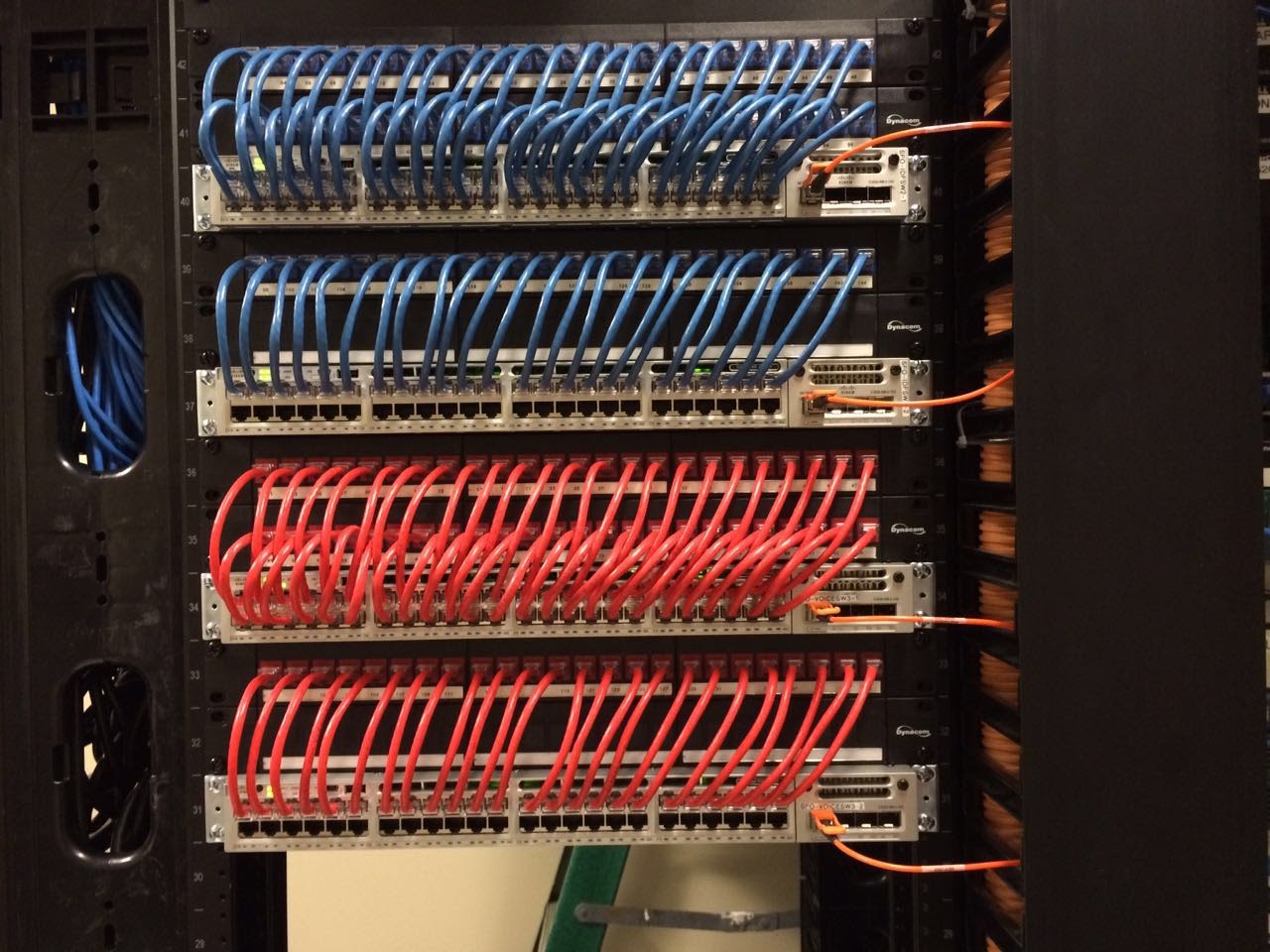
TIA-606 labeling is the reason a technician who has never been in your building can trace a cable in 30 seconds. It is unglamorous, essential, and routinely skipped by contractors who deliver photogenic racks with no records. The label is not the sticker — it is the identifier that ties the sticker to a schedule, a drawing, and a warranty registration.
- Every cable, outlet, port, and pathway gets a unique identifier.
- Labels installed at both ends within 24 hours of termination.
- Machine-printed labels only; hand-written labels never survive.
- Identifier schema documented and shared with facilities and IT.
Executive summary
A TIA-606-C-compliant labeling scheme uses a documented identifier format that survives building renovations, staff turnover, and multiple contractor generations. The correct deliverable includes labels, a cable schedule, floor plans marked with outlet IDs, and rack elevations — all in a format the facility can maintain.
What bad labeling costs
A trouble ticket that takes 15 minutes to resolve with good labels takes two hours without them. Across a year, an under-labeled facility spends the labor cost of a decent labeling refresh on tracing cables that should have identified themselves at first look.
Naming scheme
A typical identifier for a horizontal cable takes the form BUILDING-FLOOR-ROOM-OUTLET-PORT. Example: 'HQ-3-3120A-01' identifies drop 01 in outlet 3120A on floor 3 of the HQ building. The same identifier appears on the outlet sticker, the patch panel port, and the cable schedule.
Elements to identify
- Outlets (jacks at the wall).
- Cables (horizontal runs).
- Patch panel ports.
- Racks and rack units.
- Pathways (trays, conduits, backbone segments).
- Grounding busbars (TGB, TMGB).
Common mistakes
- Numbering per rack instead of per building — collisions on move-adds.
- Hand-written labels that fade or peel within a year.
- Different schema per contractor — the second cabling vendor renumbers everything.
- No cable schedule delivered — the labels exist but map to nothing.
Best practices
- Write the labeling schema in the specification, not after install.
- Machine-printed labels, wraparound style for cables, flag or plaque style for outlets.
- Deliver a cable schedule (CSV or Excel) at closeout.
- Update the schedule with every MAC visit.
When to call a professional
Any facility with more than 50 drops and no current labeling scheme is a candidate for a re-label engagement. A two-technician crew can label and document a 400-drop floor in about a week, and the return in trouble-ticket time is measurable inside a quarter.