
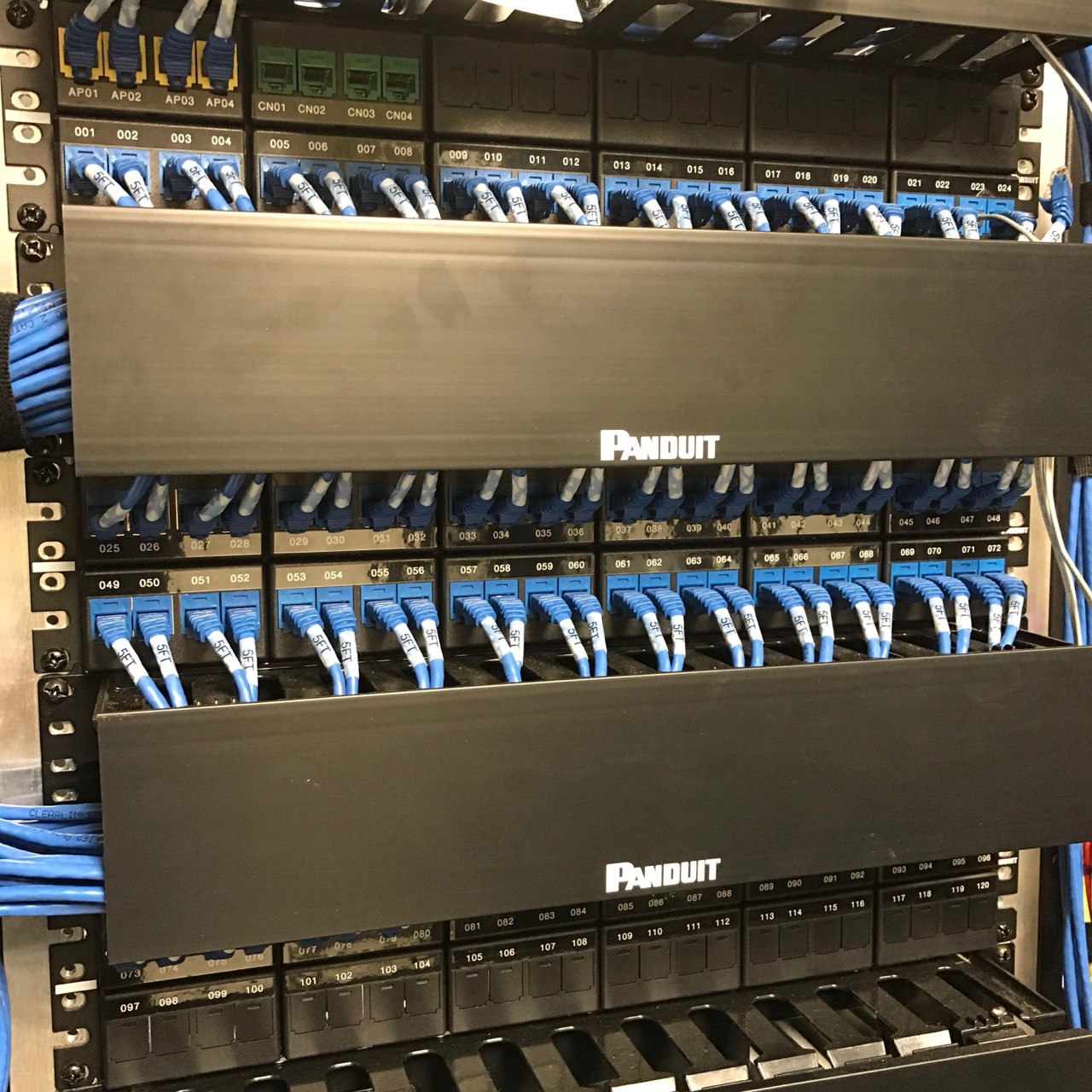
The TIA standards are not marketing documents. They are the reason two contractors from different companies can dress a rack, terminate a link, and hand over a system that behaves consistently under test. An IT leader who understands the vocabulary — 568, 606, 942, 862 — can read a specification and hold a contractor to it.
- TIA-568 defines the cabling itself — categories, distances, testing.
- TIA-606 defines labeling and administration — the documentation deliverable.
- TIA-942 defines data center topology and tier ratings.
- TIA-862 defines low-voltage cabling for building automation.
Executive summary
The four standards a commercial buyer should know are TIA-568 (cabling), TIA-606 (labeling), TIA-942 (data centers), and TIA-862 (intelligent buildings). Requiring compliance in a specification is not enough — the specification must call out which parts, which revision, and what documentation will prove conformance.
Why standards matter to the buyer
A specification that says 'install Cat6A per industry standards' is unenforceable. A specification that says 'install per ANSI/TIA-568.2-D Category 6A, permanent link tested with a Fluke DSX-8000 to Level V accuracy, results delivered as .flw files' is enforceable and defensible in a warranty claim.
The core standards
TIA-568 — Cabling
Defines cable categories (Cat5e, Cat6, Cat6A, Cat8), distances, testing methods, and pinout (T568A/T568B). The revision matters: 568.2-D is the current copper standard. When a project spec cites '568', ask for the sub-part and revision.
TIA-606 — Labeling and administration
Defines the format for identifiers, labels, and records. 606-C requires a unique identifier for every cable, outlet, port, and pathway. A compliant deliverable includes labels, drawings, and a cable schedule that map to each other.
TIA-942 — Data centers
Defines topology (main distribution area, horizontal distribution area, equipment distribution area) and tier ratings (Rated-1 through Rated-4) for redundancy. Rated-2 covers most commercial server rooms; Rated-3 and Rated-4 apply to enterprise and colocation facilities.
TIA-862 — Intelligent buildings
Extends structured cabling principles to building automation, lighting control, and low-voltage device networks. Increasingly relevant as PoE lighting and IoT sensors converge onto the same cable plant.
Common mistakes in specifications
- Citing 'TIA-568' with no sub-part or revision.
- Requiring 'certification' without specifying tester, accuracy level, or file format.
- Missing TIA-606 entirely — labels get installed but no schedule or drawing is produced.
- Confusing TIA-942 tiers with Uptime Institute tiers. They are related but not identical.
How to write an enforceable spec
- Cite the current revision letter (e.g., 568.2-D, 606-C).
- Name the tester make and accuracy level.
- Require .flw or .db files, not PDFs alone.
- Require a labeled cable schedule and updated rack elevations at closeout.
- Reference manufacturer channel warranty by name (Panduit Certification Plus, CommScope SYSTIMAX, Leviton Atlas-X1).
Specification snippets
When to call a professional
Every commercial specification worth writing should be reviewed by a BICSI-credentialed designer (RCDD) before it goes to bid. The hour of design review typically prevents a five-figure change order and a warranty registration failure at closeout.