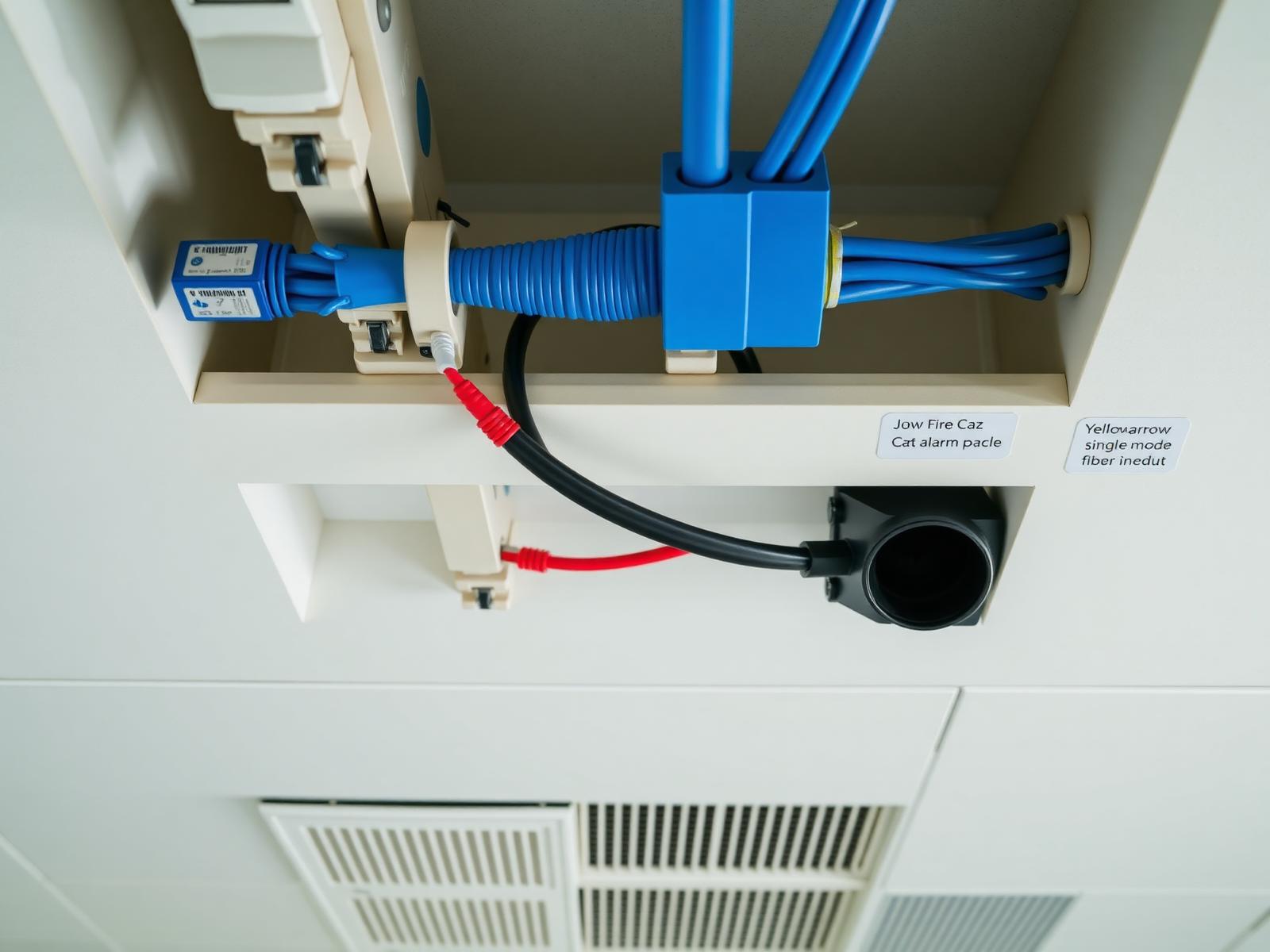
Facilities managers, IT directors, and general contractors facing infrastructure retrofits, tenant improvements, or full data center decommissioning understand the critical need for proper cable removal. Abandoned low-voltage cabling, often left behind during previous infrastructure upgrades or tenant turnovers, poses significant fire hazards, obstructs airflow, and violates current building codes. Access Cabling specializes in the compliant and efficient removal of abandoned premise wiring, meticulously adhering to NEC 800.25 (and later sections like 805.25, 820.25, etc., depending on cable type) and BICSI 005. This isn't merely cutting and discarding; it's a precision-driven process involving comprehensive site surveys, meticulous documentation, and adherence to stringent safety protocols. Our approach ensures not only code compliance but also minimizes disruption to active systems and provides a clean foundation for future network deployments, backed by over 28 years of nationwide experience in complex MAC (Moves, Adds, Changes) environments.
Understanding Abandoned Cable Compliance Per NEC 800.25
The National Electrical Code (NEC) is the foundational standard governing electrical installations in the United States. Specifically, NEC Article 800.25, 'Abandoned Cables,' mandates the removal of accessible abandoned low-voltage cable installations. This applies to communications cables and addresses the fire and safety hazards posed by unused pathways. An 'abandoned cable' is defined as installed communications cable that is not terminated at both ends at a connector or other communications equipment and is not identified for future use with a permanent tag at both ends. Non-compliance can lead to failed inspections, insurance liabilities, and increased fire load, particularly in plenums. Our teams are trained to identify and categorize all potentially abandoned cabling, differentiating between truly defunct infrastructure and future-use pathways, ensuring that only non-compliant cables are removed while preserving critical active or reserved infrastructure.
Comprehensive Site Surveys and Disruption Mitigation Strategies
Effective cable removal begins with a detailed, pre-removal site survey. Our technicians utilize high-resolution imaging, as-built documentation review, and often, tone and probe tools to meticulously identify active versus abandoned cables. This critical phase minimizes the risk of inadvertently disconnecting active network infrastructure. We develop a comprehensive Method of Procedure (MOP) that outlines the scope, identifies potential risks, details shutdown and lockout/tagout (LOTO) procedures for associated power, and establishes communication protocols with facility management. For live environments, our strategies include phased removal, off-hours operations, and meticulous cable segregation using temporary labeling systems before any cuts are made, guaranteeing operational continuity while addressing the abandoned cabling issues.
Specialized Tools and Technician Expertise for Efficient Removal
The safe and efficient removal of abandoned cabling requires more than just basic cutters. Our technicians are equipped with specialized tools such as long-reach cable cutters, insulated tools for incidental contact with live electrical circuits (though LOTO is always primary), and cable identification equipment like ultrasonic tone generators and inductive amplifiers (e.g., Fluke Intellitone Pro 200). We employ ergonomic tools to prevent repetitive strain injuries during extensive removal projects, especially in overhead or confined spaces. Furthermore, our teams are proficient in adhering to ANSI/TIA-569-C pathway and spaces standards, ensuring that cable removal clears pathways without damaging existing conduits or support structures, thereby preparing the space for future cabling installations rather than creating new problems.
Disposal Protocols and Environmental Compliance
Beyond physical removal, the responsible disposal of bulk cabling is a critical aspect. Abandoned copper and fiber optic cables contain materials (e.g., PVC jacketing, copper conductors, aramid yarn in fiber) that must be handled and disposed of according to environmental regulations. We work with certified recycling partners to ensure that copper (e.g., Cat5e, Cat6, Cat6A) and fiber optic cables are processed responsibly, minimizing landfill waste and recovering valuable materials. Our processes include sorting by cable type and material composition at the job site to streamline the recycling process. This commitment extends to proper labeling and containment of debris immediately upon removal, maintaining a clean and safe work environment throughout the project lifecycle and complying with all local, state, and federal waste disposal guidelines.
Ensuring Safety Throughout the Removal Process
Safety is paramount in all cable removal projects, particularly in plenum spaces or areas with high equipment density. Our technicians adhere strictly to OSHA guidelines, including fall protection, confined space entry protocols, and personal protective equipment (PPE) requirements (e.g., hard hats, safety glasses, gloves, respirators for dust). Before commencing work, a thorough Job Hazard Analysis (JHA) is performed to identify and mitigate potential risks such as asbestos exposure (common in older plenum spaces), live electrical conduits, or unstable support structures. Lockout/Tagout procedures are consistently implemented for any rack or pathway associated with electrical power to prevent accidental energization, ensuring a zero-incident safety record even in the most challenging environments.
Post-Removal Documentation and Workflow Integration
Upon completion of the cable removal, comprehensive post-removal documentation is provided to the client. This includes updated floor plans, revised pathway schematics, and a detailed inventory of removed cable quantities by type. This documentation is crucial for future facilities planning, fire marshal inspections, and maintaining accurate infrastructure records. Our rigorous documentation process, often leveraging CAD or BIM software, ensures that the client receives a clear, actionable overview of the updated cabling infrastructure. This integration into the client's existing workflow not only demonstrates compliance but also provides a clean slate for subsequent build-outs, making our removal service a critical enabler for future infrastructure scalability and efficiency.
The Access Cabling Difference in Cable Abatement
Access Cabling sets itself apart through its meticulous adherence to industry standards, transparent processes, and unparalleled experience in complex, operational environments. Unlike vendors who might treat cable removal as a secondary service, we approach it as a critical infrastructure project requiring specialized expertise. Our C-7 and C-10 licenses, combined with BICSI RCDD-led project management, ensure that every removal project is executed with precision, safety, and full compliance from initial assessment to final disposal. We provide detailed estimates, clear communication, and non-disruptive execution, enabling our clients to achieve code compliance and prepare their facilities for future technological advancements without operational interruptions. Our nationwide presence and extensive project history demonstrate our capability to handle projects of any scale, from single tenant improvements to multi-building corporate campuses.
Optimizing Project Logistics for Multi-Phase Cable Abatement
Effective cable removal within active network environments demands meticulous project planning and stringent logistical control, particularly in multi-phase, large-scale deployments often encountered in data centers or commercial high-rises. Our methodology integrates a phased approach, beginning with a comprehensive pre-abatement survey utilizing tools like Fluke Networks' DSX-8000 CableAnalyzer to precisely map and categorize active vs. abandoned infrastructure, thus mitigating potential disruptions to operational circuits. We prioritize critical infrastructure components, developing granular cut sheets and procedural matrices that define the sequence of removal, temporary pathway reconfigurations, and strict adherence to change management protocols. This includes a detailed communication plan with facility management, IT stakeholders, and building occupants, ensuring all parties are apprised of work schedules, potential noise, and access requirements. Our project managers leverage advanced scheduling software, such as Primavera P6 or Microsoft Project, to synchronize cable abatement activities with other concurrent MEP (Mechanical, Electrical, Plumbing) or fit-out projects, preventing costly conflicts and delays. This coordination extends to securing necessary permits, scheduling elevator access, and arranging waste removal logistics in accordance with building hours and waste management policies. Every phase concludes with a rigorous post-removal site inspection, utilizing visual checks and re-testing of remaining active infrastructure to confirm network integrity, preventing service degradation or downtime, which represents a significant financial and operational risk for our clients. The technical specificity in our logistical planning ensures that even the most complex cable abatement projects are executed with minimal impact on ongoing business operations.
Addressing Security and Confidentiality in Data Center Decommissioning
The process of cable removal, particularly within sensitive environments like data centers or financial institutions, necessitates a robust framework for security and confidentiality. Beyond the physical removal of low-voltage cabling, our protocols address the potential for data remnants and unauthorized access points. Prior to any physical abatement, a comprehensive audit is conducted to identify and log all cabling types, including fiber optic, copper, and specialized control cables, ensuring that no active or data-bearing infrastructure is inadvertently removed or exposed. For cabling that may have been decommissioned but not properly sanitized, especially older copper runs or media with residual data, we implement secure destruction methodologies. This extends to coordinating with client security teams to ensure compliance with relevant industry standards such as NIST SP 800-88 for media sanitization, even if the data-bearing component is not directly within the cable itself, but rather its proximity or historical use. Our technicians are background-checked, security-cleared, and operate under strict access control protocols, including non-disclosure agreements and escorted access where mandated. All removed cabling is segregated and transported using secure chain-of-custody procedures, particularly if it contains metals or materials that could be re-purposed or if its composition indicates previous use in high-security applications. We provide clients with detailed disposition reports, including photographic documentation and certification of secure destruction or recycling, ensuring transparency and accountability for all materials removed, thereby safeguarding against data breaches and maintaining the integrity of the client’s physical security posture. This meticulous approach is critical in mitigating risks associated with potential industrial espionage or compliance failures inherent in less rigorous abatement processes.
Leveraging Advanced Tooling for Efficient Backbone Decommissioning
Efficient and safe removal of abandoned cabling, especially within congested vertical risers and horizontal wireways, demands specialized tooling and techniques beyond standard hand tools. For backbone decommissioning, where cables can be large, heavy, and tightly bundled, we employ hydraulic or battery-powered cable cutters capable of severing multi-pair copper trunk cables up to 4 inches in diameter and large fiber optic bundles without causing undue stress or vibration to adjacent active infrastructure. We utilize specialized cable pulling equipment, such as Capstan winches with controlled tension settings, to carefully extract long runs of abandoned cable from conduit and tray systems, preventing snags, breakage, and potential damage to active cables. In situations where cables are embedded or passed through fire-rated separations, we employ thermal imaging cameras, like FLIR T-series, to identify potential heat signatures from active lines prior to cutting, and use firestop-rated sealing compounds such as Hilti CP 606 or Specified Technologies International (STI) SpecSeal to restore fire ratings post-removal, adhering strictly to UL 1479 and ASTM E814 standards. For overhead tray systems, our certified technicians utilize aerial lifts and scissor lifts equipped with integrated cutting and bundling tools, minimizing ladder work and enhancing safety. The systematic use of these advanced tools, combined with rigorous training on their operation and maintenance, allows for precise, efficient, and compliant removal of even the most challenging abandoned backbone cabling, thereby reducing labor costs, mitigating project timelines, and ensuring the continued operational integrity of the building’s essential services. This advanced tooling suite is a cornerstone of our ability to tackle complex and demanding cable abatement scenarios effectively.
Integrating Cable Removal with Building Renovation and Technology Roadmaps
Cable removal often represents a critical early-stage activity within larger building renovation projects or technology roadmap implementations. Our approach integrates seamlessly with broader construction schedules and future technology deployments, ensuring that the abatement process not only clears abandoned infrastructure but also prepares pathways for new installations. We collaborate closely with architecture, engineering, and construction (AEC) firms, utilizing BIM (Building Information Modeling) platforms like Autodesk Revit to overlay existing cable pathways, identify abandoned segments, and coordinate removal efforts with proposed floor plans and infrastructure upgrades. This proactive integration helps prevent costly rework and ensures optimal routing for new cabling, such as Category 6A, OM4 fiber, or even specialized IoT infrastructure. For clients embarking on full network upgrades, our cable removal teams work in tandem with new installation teams, often performing cleanup in zones immediately prior to the deployment of new active equipment and cabling, maximizing efficiency and minimizing downtime. This involves establishing clear cutover strategies and managing the transition between old and new systems with minimal impact on business continuity. We consider the long-term technology roadmap of the client, recommending pathways and conduit capacities that not only address current needs but also accommodate future growth and emerging technologies, thereby reducing the Total Cost of Ownership (TCO) associated with future infrastructure modifications. The strategic planning involved in integrating cable removal into the overarching building and technology modernization efforts ensures a synergistic outcome, transforming a potentially disruptive process into an enabling phase for future-proof infrastructure.