
Quick Answer
Structured cabling costs vary widely because every building is different — but in general, commercial network cabling projects are priced by the number of network drops, the cable type (Cat6, Cat6A, or fiber), and how difficult the building is to work in. A small office with a handful of workstations might need a modest, straightforward installation. A warehouse, hospital, or multi-floor office could require multiple telecommunications rooms, fiber backbone runs, and hundreds of connections.
There's no reliable flat rate or per-drop number we'd feel right quoting without seeing the space — anyone who gives you one sight-unseen is guessing. The only way to get a number you can actually plan around is a site survey, which is why that's always our first step.
Why There's No Simple Price List
People often expect structured cabling to work like a menu — "$X per drop" — the way you'd price a phone or a laptop. It doesn't work that way, and here's why: two buildings with identical square footage can cost completely differently to wire, because of things a price list can't capture. Ceiling type, existing pathways, where the server room sits, how many devices need to connect — all of that changes the labor, not just the materials.
We've been designing and installing structured cabling across California for close to 30 years, and the pattern holds every time: the building itself, not the square footage on paper, is what determines the real cost.
What Actually Drives the Cost
Building size. More space usually means more cable and longer runs, but it's not linear — a single-floor office might need one equipment room, while a warehouse or hospital might need several telecom rooms tied together with fiber.
Number of network drops. Every workstation, access point, camera, VoIP phone, and printer needs a connection. Some clients need one drop per desk; others need hundreds across multiple floors. It's almost always cheaper to run extra cable during initial construction than to add it after the space is occupied.
Cable type. Cat6 still covers most office needs well. Cat6A makes sense when you're planning for higher bandwidth, a longer equipment lifecycle, or heavier Power-over-Ethernet loads. Fiber comes in for connecting rooms, buildings, or high-speed equipment together. The right choice depends on what the business actually needs — not just which cable is cheapest per foot.
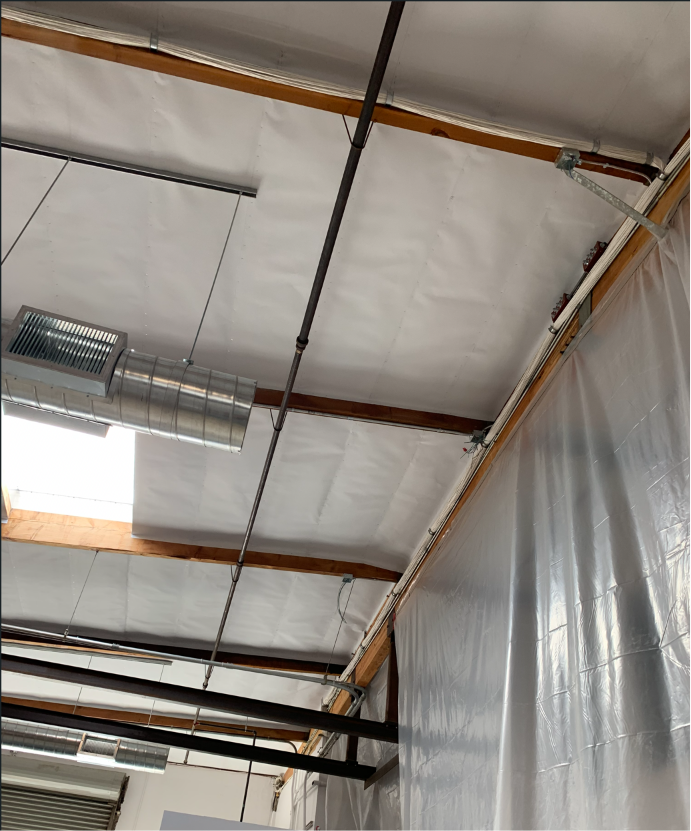
Building construction. This is usually the biggest swing factor in labor cost. An open warehouse ceiling is fast to work in. A finished office ceiling, concrete construction, an occupied space you can't disrupt, or a historic building with architectural constraints — all of these slow the work down and raise the price.
What's already there. During a site survey, we check whether existing cable tray, conduit, racks, or fiber can be reused. When they can, it lowers the cost of getting to a modern, reliable network. When they can't, that's better to know upfront than mid-project.
What You're Actually Paying For
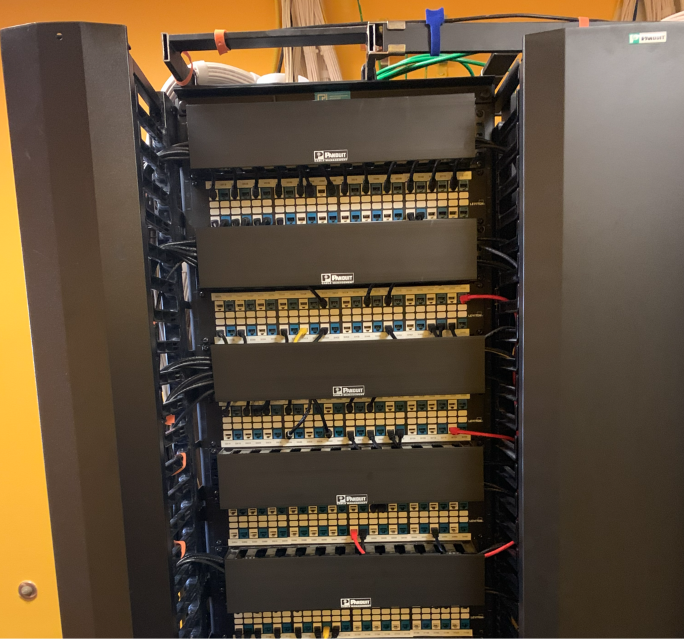
Structured cabling isn't just running Ethernet through a ceiling — it's the physical foundation every other system in the building depends on: computers, phones, access points, cameras, access control, conference rooms, switches, all of it. A properly designed system keeps working long after the computers and switches on it get replaced, which is why the planning takes as much time as the installation itself.
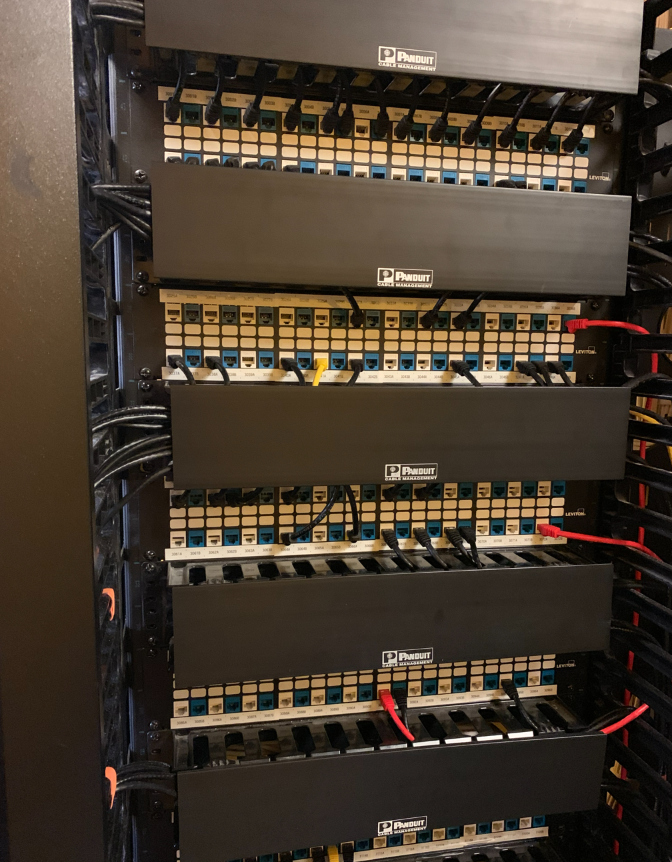
A complete project typically includes the cable itself (Cat6, Cat6A, or fiber backbone), cable tray and J-hooks, conduit, firestop systems, patch panels, wall outlets and faceplates, racks and cabinets, cable management and labeling, Fluke certification testing, and as-built documentation. Skipping any of these to hit a lower number usually just moves the cost to later.
Why We Start With a Site Survey, Not a Quote
We've walked into buildings that seemed straightforward on paper and found there was no pathway between floors at all. We've also found buildings with great existing infrastructure that made the project much cheaper than expected. There's no way to know which situation you're in without actually looking.
A site survey covers current network equipment, building layout, telecom rooms, ceiling type, cable pathways, future expansion plans, wireless coverage, security integration, and fiber backbone needs. What comes out of it is a proposal built for your specific building — not a generic estimate.
Planning Ahead Costs Less Than Retrofitting
The most expensive mistake we see is designing a network for exactly today's needs and nothing more. Businesses grow, teams move, cameras and access-control doors get added, wireless coverage expands. Running a few extra cables during the original installation is almost always cheaper than coming back later to retrofit a space that's already occupied and finished.
Mistakes That Drive the Price Up
- Waiting until construction is nearly done — cabling after ceilings are finished means more labor and fewer routing options.
- Picking the lowest bid without comparing scope — not every quote includes certification, labeling, and documentation, so the lowest number and the lowest cost aren't always the same thing.
- Under-building for growth — the minimum number of drops today often means an expensive add-on project next year.
- Skipping certification — every cable should be tested against industry standards before the project is considered done, not just installed and left.
Frequently Asked Questions
- How much does structured cabling cost per drop?
- Most commercial Cat6 drops fall between roughly $150 and $300 installed, and Cat6A typically runs $225 to $450. The range depends on cable length, ceiling and pathway conditions, terminations, testing, and how many drops are in the project — larger jobs almost always bring the per-drop cost down.
- What's the average cost of a structured cabling project?
- Small office buildouts commonly land in the $5,000 to $25,000 range, mid-size projects run $25,000 to $150,000, and multi-floor or campus jobs regularly exceed $150,000. Fiber backbone, rack build-outs, and after-hours work push the number higher.
- Why can't you give me a firm price over the phone?
- Two buildings with the same square footage can price very differently once you factor in ceiling type, existing pathways, firestopping, conduit, cable length, and how the racks need to be built. A short on-site walk almost always pays for itself by producing an accurate, itemized number instead of a guess.
- What drives the cost of structured cabling up the most?
- Labor time is the biggest driver — hard-lid ceilings, long runs, core drilling, conduit, tight risers, and after-hours access all add hours. Materials matter too (Cat6A, plenum-rated cable, fiber, and enterprise-grade patch panels cost more), but a difficult install environment moves the price more than the parts do.
- Is Cat6 or Cat6A more cost-effective for a new build?
- Cat6 is cheaper up front and fine for most office data and voice. Cat6A costs more per drop but is the better long-term investment for Wi-Fi 6E/7 access points, PoE++ devices, and 10G-ready runs — replacing cable later almost always costs more than installing the right one now.
- Do you charge for the site survey and estimate?
- Standard commercial walk-throughs and written proposals are free for qualified projects in our service area. Detailed engineered designs, CAD drawings, or as-built documentation for existing facilities are quoted separately.
- How can I lower the cost of a cabling project without cutting corners?
- Plan drops before drywall goes up, bundle related work (data, Wi-Fi, cameras, access control) into one mobilization, keep pathways accessible, and standardize on one cable type per floor. Rushing, phasing in small pieces, and after-hours-only schedules are the fastest ways to drive the price up.