
Quick Answer
Title 24 of the California Code of Regulations is the California Building Standards Code — the statewide building code adopted by the California Building Standards Commission and republished on a triennial cycle with intervening supplements and errata. It is not one document: it is twelve parts, and a single low-voltage scope can be governed by four or five of them at once.
For technology work, the parts that matter most are Part 3 (California Electrical Code), Part 4 (Mechanical, for plenum spaces), Part 6 (California Energy Code, which sets mandatory lighting controls) and Part 9 (Fire Code, for concealed spaces and abandoned cable). On hospitals, skilled nursing facilities, licensed clinics and correctional treatment centers, HCAI reviews and observes the work under authority traced back to the Alfred E. Alquist Hospital Seismic Safety Act.
The Parts of Title 24
Title 24 is published in parts, each maintained by a different state agency and each adopted by the California Building Standards Commission. Here is the practical view from a low-voltage and cabling scope:
| Part | Code | Why it matters to cabling |
|---|---|---|
| Part 1 | California Administrative Code | Administrative rules, including how HCAI/OSHPD reviews and observes hospital construction. |
| Part 2 | California Building Code | Structural, fire-rated assemblies and occupancy rules that dictate firestopping and penetrations for cable pathways. |
| Part 3 | California Electrical Code | Based on the NEC, including Articles 725 and 800 that govern Class 2/3 and communications cabling. |
| Part 4 | California Mechanical Code | Plenum and air-handling spaces — the reason plenum-rated cable and pathways are required above many ceilings. |
| Part 5 | California Plumbing Code | Rarely in a low-voltage scope, but coordinates pathway routing in shared shafts. |
| Part 6 | California Energy Code | Energy efficiency and mandatory lighting-control requirements — the part most cabling contractors touch daily. |
| Part 8 | California Historical Building Code | Alternative compliance paths for qualified historic buildings. |
| Part 9 | California Fire Code | Concealed-space rules, abandoned cable removal and fire-alarm interfaces. |
| Part 10 | California Existing Building Code | Applies to tenant improvements and retrofits in existing shells. |
| Part 11 | CALGreen | Green building standards, including construction waste diversion for removed cable. |
| Part 12 | California Referenced Standards Code | The referenced standards that Parts 2–11 rely on. |
The current triennial edition, its intervening supplements and errata are published by the California Building Standards Commission. Always verify against the published edition rather than a contractor's summary — including this one.
How Title 24 Applies to Cabling and Low Voltage
TIA standards tell you how to build a cabling system that performs. Title 24 tells you what California will actually allow in the building. The requirements that come up on nearly every commercial job:
- Cable listing. Plenum-rated (CMP) cable in air-handling ceilings, riser-rated (CMR) in vertical shafts, per Part 3 and Part 4.
- Support and pathways. Independent support at required intervals — no cable laid on ceiling tile, sprinkler pipe or conduit.
- Firestopping. Every penetration of a rated assembly restored with a listed system, documented by location.
- Separation from power. Class 2 and communications circuits kept out of line-voltage raceways and boxes unless the code permits it.
- Abandoned cable. Cable no longer terminated at equipment and not identified for future use must be removed under Part 9.
- Seismic. Racks, cabinets, ladder rack and cable tray anchored and braced — a much heavier lift on HCAI facilities.
If you are earlier in the process, our low voltage systems primer and San Jose commercial low-voltage requirements page cover the jurisdiction-level detail that sits on top of Title 24.
Part 6: Lighting Controls and the Energy Code
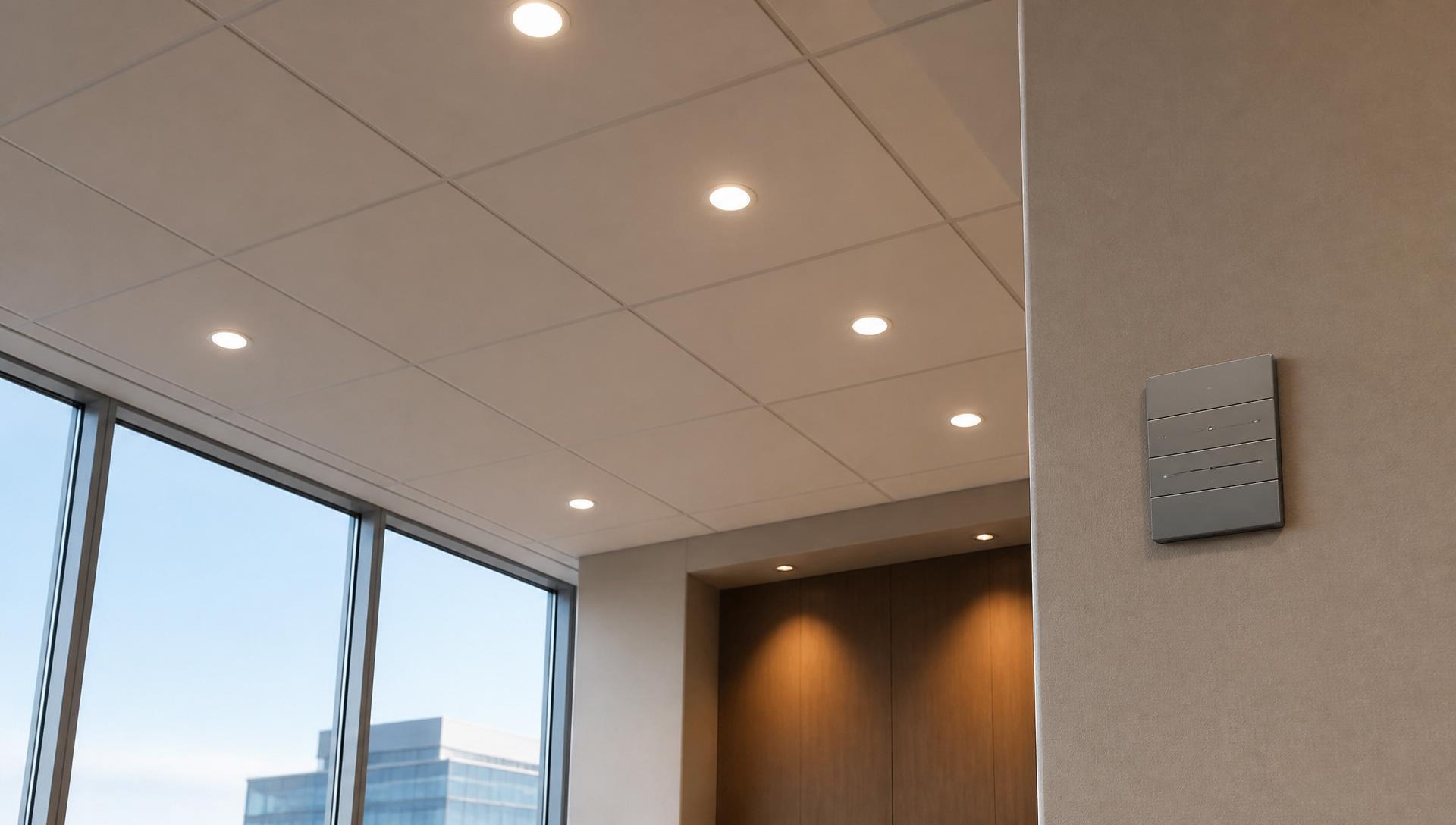
Part 6, the California Energy Code, is where most contractors get caught. Non- residential spaces generally require multi-level or dimming control, automatic shut-off, occupancy sensing in many space types, daylighting control in daylit zones, and demand responsive control in larger buildings. Networked lighting control systems increasingly ride the same structured cabling and PoE infrastructure as the rest of the building.
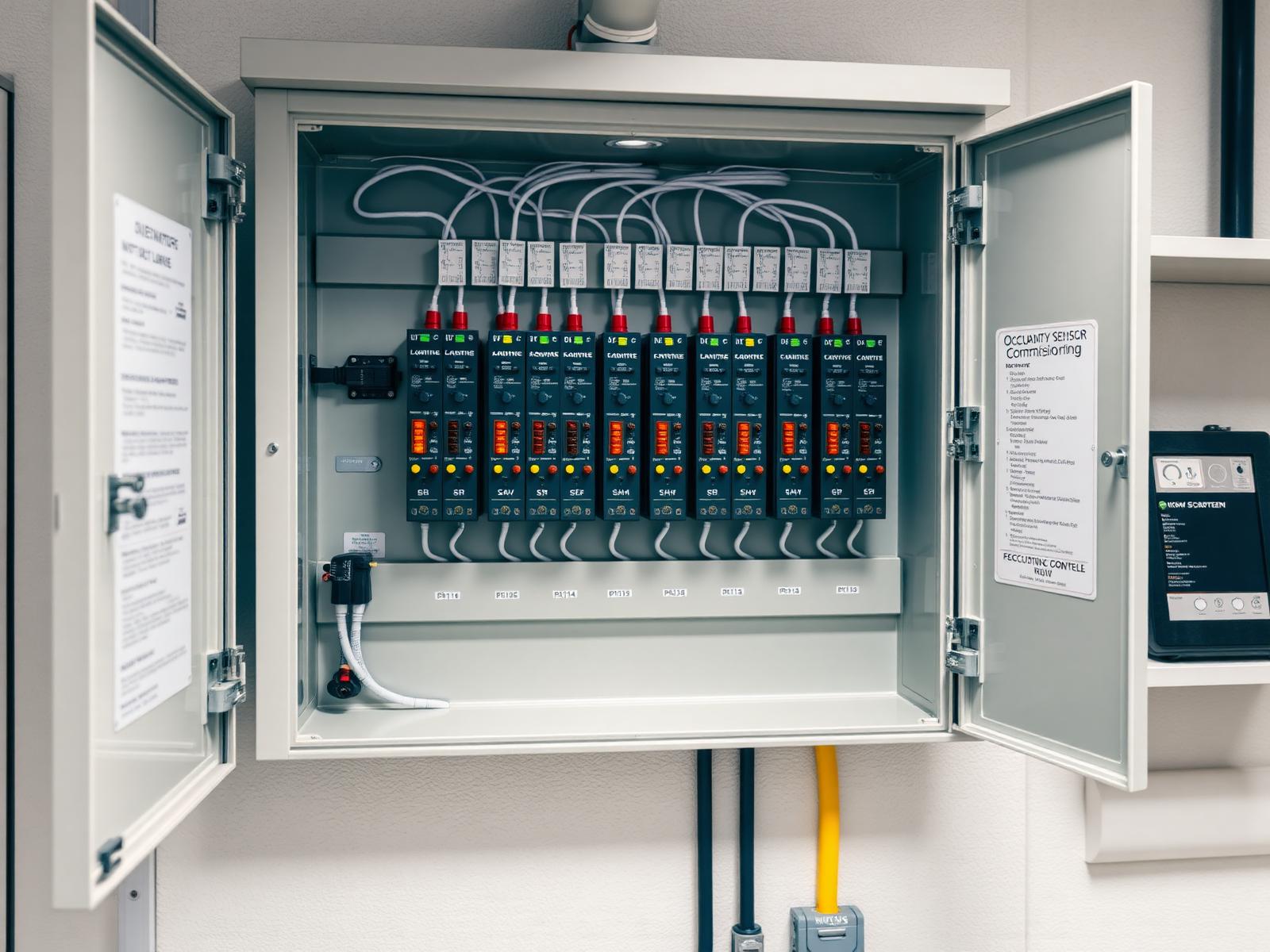
Installed controls are not compliant until they are functionally tested. Acceptance testing has to be performed and documented, and the certificates are part of the closeout package the building department expects. We install and commission this scope under Title 24 lighting controls and coordinate it with building automation integration.
HCAI / OSHPD Facilities
The Department of Health Care Access and Information (HCAI) — the agency formerly known as OSHPD — regulates construction of hospitals, skilled nursing facilities, licensed clinics and correctional treatment centers in California. Its Building Standards Unit develops the healthcare building standards and amendments that are adopted into Title 24 by the California Building Standards Commission, work rooted in the Alfred E. Alquist Hospital Seismic Safety Act of 1983.
Practically, on an HCAI-jurisdiction building the rules of engagement change:
- HCAI performs plan review instead of the local building department.
- An Inspector of Record observes construction continuously, and cabling work is inspected as installed rather than at the end.
- Seismic anchorage and bracing details are pre-approved — racks, tray and support systems must match the approved submittal, using OSHPD/HCAI pre-approved products where the design calls for them.
- Deviations require formal documentation and amended construction documents; field improvisation is not an option.
- Infection control risk assessment procedures govern above-ceiling work in occupied patient areas.
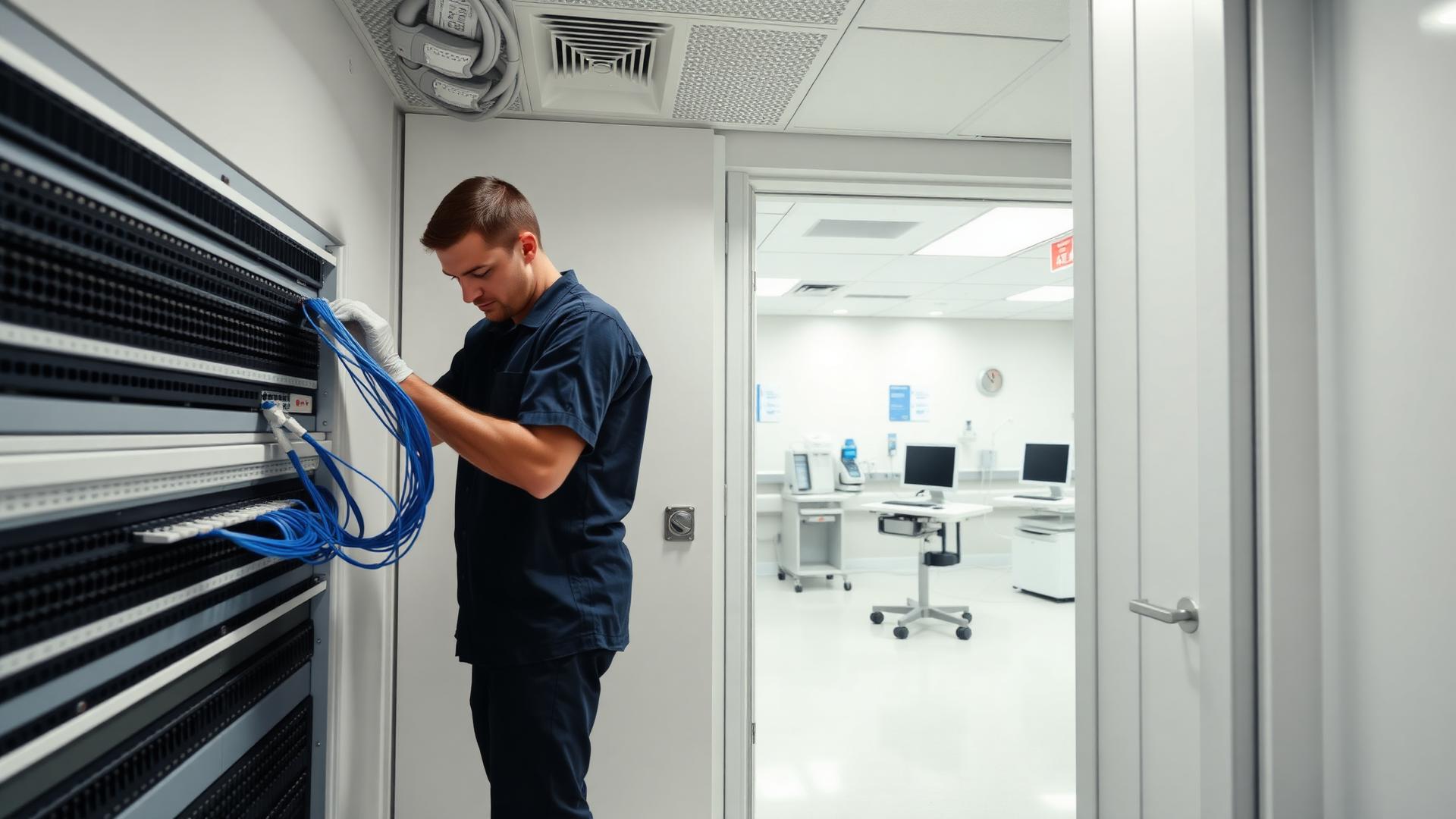
Our healthcare cabling practice covers clinical Wi-Fi, nurse call pathways, imaging-department fiber, and access control for restricted departments — all delivered to the approved submittal, with the documentation the Inspector of Record needs.
What Compliance Actually Looks Like
- Confirm jurisdiction and edition. Local building department or HCAI, and which Title 24 edition the permit falls under.
- Design to the governing parts. Cable listing, pathway sizing, firestop details, seismic anchorage and lighting-control sequences fixed on paper before procurement.
- Submittals and permits. Product data, anchorage details and control narratives submitted for review, with pre-approval numbers on HCAI work.
- Install to the approved set. Support intervals, separation, firestopping and labeling verified as work proceeds — not corrected later.
- Test and certify. Fluke DSX certification for copper, OTDR and insertion loss for fiber, acceptance testing for lighting controls.
- Close out. As-builts, test results, firestop logs, acceptance certificates and warranty registration delivered as one package.
Documents You Should Get at Closeout
- Fluke DSX certification reports for every copper drop, and OTDR/loss results for fiber
- Lighting-control acceptance test certificates and control narratives
- Firestop log identifying every rated penetration and the listed system used
- Seismic anchorage documentation for racks, cabinets and tray
- TIA-606 labeling schedule and as-built pathway drawings
- Manufacturer warranty registration for the installed cabling system
Common Compliance Failures
- Non-plenum cable installed in an air-handling ceiling
- Cable supported on sprinkler pipe, conduit or ceiling grid
- Unsealed penetrations through rated walls and floors
- Abandoned cable left in place during a tenant improvement
- Lighting controls installed but never acceptance tested
- Racks set without approved seismic anchorage on an HCAI facility
- Field changes on an HCAI job with no amended documents
Who We Are
Access Cabling is a California commercial low-voltage and electrical contractor — CSLB license 992009, C-7 and C-10 classifications, 28+ years, five California offices. We deliver structured cabling, fiber, Title 24 lighting controls and physical security on permitted commercial and healthcare projects, and we hand over the compliance package with the work.
See where we work on the California service areas hub, or request a scoped quote.
Frequently Asked Questions
What is Title 24 of the California Building Standards Code?+
Title 24 of the California Code of Regulations is the California Building Standards Code — the statewide set of building standards adopted by the California Building Standards Commission. It is published in a triennial edition with intervening supplements and errata, and it is organized into parts covering administration, building, electrical, mechanical, energy, fire and green building standards.
Does Title 24 apply to low voltage and network cabling?+
Yes. Cabling work is affected by Part 3 (California Electrical Code, including NEC Articles 725 and 800), Part 4 for plenum spaces, Part 9 for concealed spaces and abandoned cable, and Part 6 whenever the scope includes lighting controls or networked lighting. Pathway support, firestopping and cable listing all come from Title 24 parts rather than from TIA standards.
What are Title 24 Part 6 lighting control requirements?+
Part 6, the California Energy Code, requires mandatory lighting controls in most non-residential spaces: multi-level or dimming control, automatic shut-off, occupancy sensing in many space types, demand responsive controls in larger buildings, and daylighting controls in daylit zones. Installed systems must be functionally tested and documented by an acceptance test technician before final sign-off.
Who is HCAI and what does OSHPD have to do with Title 24?+
HCAI — the California Department of Health Care Access and Information, formerly OSHPD — regulates the construction of hospitals, skilled nursing facilities, licensed clinics and correctional treatment centers. Its Building Standards Unit develops the healthcare building standards and amendments that are adopted into Title 24 by the California Building Standards Commission, and HCAI performs its own plan review and construction observation on those facilities.
How is an HCAI/OSHPD project different from a normal commercial job?+
On an HCAI-jurisdiction facility, plans are reviewed by HCAI rather than the local building department, an Inspector of Record observes the work, and deviations require formal documentation. For cabling and low voltage that means pre-approved pathway and support details, seismic bracing for racks and trays, OSHPD-anchorage products where required, and paperwork submitted as the work is installed instead of after the fact.
Do Title 24 projects require permits and inspection for cabling?+
In most California jurisdictions yes — commercial low voltage work is permitted, and inspectors check cable listing, support, separation from power, firestopping at rated penetrations and removal of abandoned cable. HCAI facilities add HCAI plan review and Inspector of Record observation on top of that.
Which Title 24 edition applies to my project?+
Generally the edition in effect on the date your permit application is filed. California publishes a triennial edition with intervening supplements, so long-running projects can be designed to one edition while adjacent phases fall under the next. Confirm the governing edition with the authority having jurisdiction before ordering materials.
Is Access Cabling licensed for Title 24 work in California?+
Yes. Access Cabling holds California C-7 low voltage systems and C-10 electrical classifications under CSLB license 992009, and delivers Title 24 lighting control installation, acceptance-test coordination and code-compliant cabling across our five California offices.
This page is a general reference for California commercial projects, not a code ruling. Verify requirements against the published Title 24 edition and your authority having jurisdiction.