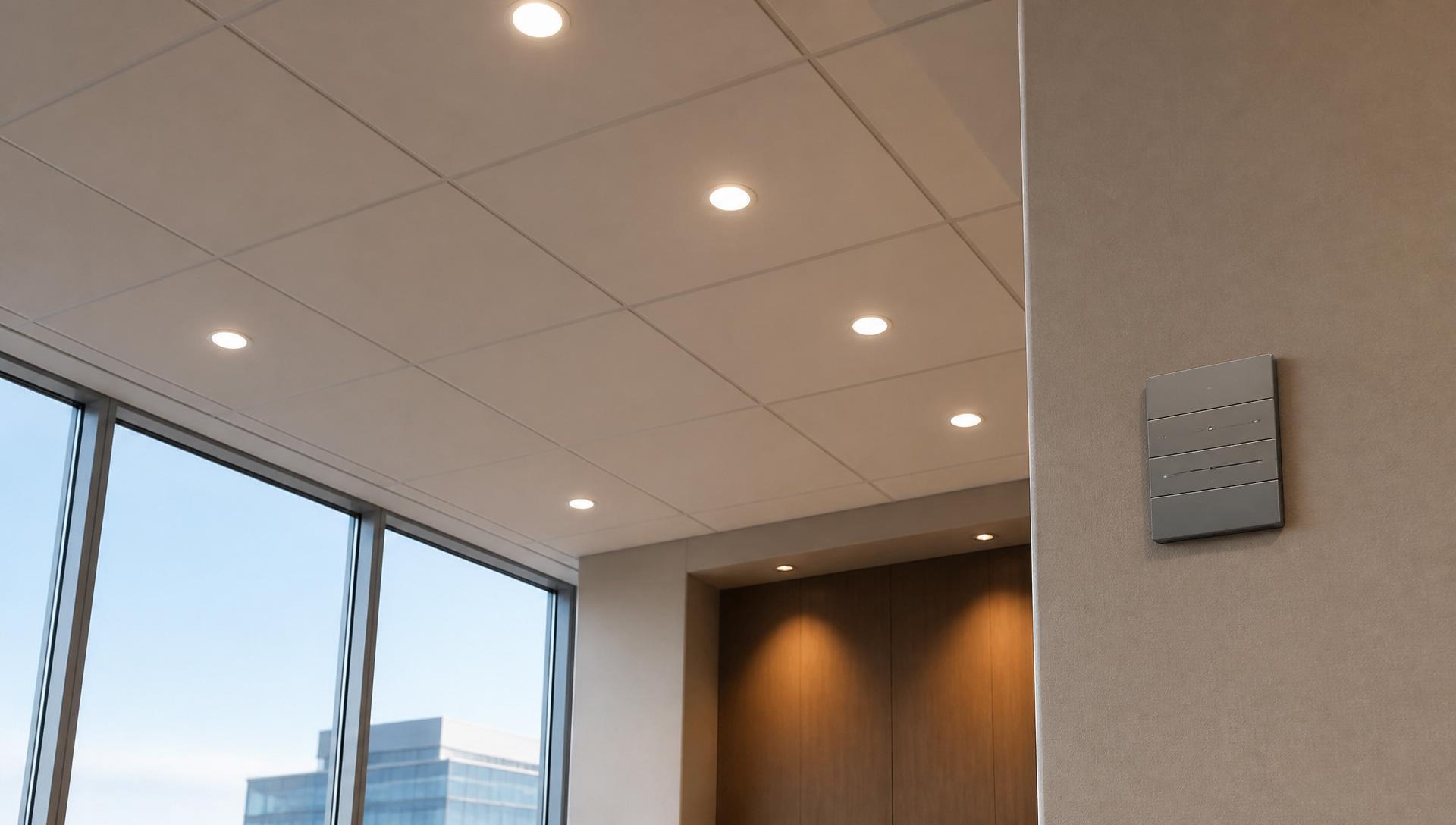
Facilities managers, property developers, and general contractors navigating California's stringent energy efficiency regulations face significant challenges in designing and implementing compliant lighting control systems. Title 24, Part 6 of the California Building Standards Code mandates specific performance requirements for non-residential and high-rise residential buildings, demanding expertise beyond simple electrical contracting. Access Cabling specializes in the comprehensive design, installation, and commissioning of integrated Title 24 lighting controls, ensuring your projects achieve full compliance while optimizing energy consumption. Our approach leverages detailed knowledge of the latest code revisions, advanced control technologies, and rigorous commissioning protocols, minimizing change orders and ensuring seamless project delivery. We integrate leading manufacturer solutions from companies like Lutron, Acuity Brands, Legrand, and Crestron, delivering intelligent, adaptable systems tailored to your facility's unique operational needs and energy reduction goals.
Understanding Title 24 Part 6 for Lighting Control Systems
Title 24, Part 6, the California Energy Code, sets the bar for energy efficiency in commercial and high-rise residential buildings within the state. For lighting systems, this includes explicit mandates regarding automatic shut-off controls, multi-level lighting, demand response capabilities, and daylight harvesting. Compliance is not merely about installing specific fixtures but implementing an integrated control strategy that encompasses occupancy sensing, time-based scheduling, dimming capabilities, and often, communication with building management systems (BMS). The code continually evolves, with the most recent iterations demanding even greater granularity in control, often requiring granular control over individual luminaires or zones, and the inclusion of acceptance testing procedures. The nuances of compliance vary based on building type, space function, and wattage density, necessitating a thorough understanding of applicable sections like 130.0-130.5 for indoor and outdoor lighting control requirements.
Integrated Design and Engineering for Code Compliant Systems
Effective Title 24 lighting controls begin with meticulous design and engineering. Our process involves a detailed analysis of architectural plans, intended space usage, natural light availability, and HVAC integration requirements. We utilize lighting control design software to map out sensor placement, control zones, and wiring pathways, ensuring optimal coverage and compliance with Section 130.1(c) for automatic shut-off and Section 130.1(d) for multi-level lighting. This phase includes specifying appropriate control devices—occupancy/vacancy sensors (ultrasonic, passive infrared, dual-technology), photocells for daylight harvesting, dimming interfaces (0-10V, DALI, DMX), and networked controllers. Our engineers collaborate directly with architects, electrical engineers, and general contractors to develop comprehensive control narratives and sequence of operations, mitigating potential conflicts or code interpretation issues before installation commences. Particular attention is paid to meeting Power Adjustment Factors (PAFs) through advanced control strategies, as outlined in the Nonresidential Compliance Manual.
Advanced Lighting Control Components and Technologies
Implementing robust Title 24 lighting controls necessitates the deployment of advanced, enterprise-grade components. We specify solutions from industry leaders such as Lutron (Vive, Quantum), Acuity Brands (nLight, Fresco), Legrand (Wattstopper, Vantage), and Crestron. This includes networked lighting control panels, touchpanel interfaces, DALI (Digital Addressable Lighting Interface) or 0-10V dimmable drivers, intelligent sensors, and building-wide integration platforms. For outdoor lighting, we commonly employ astronomical time clocks and photocells compliant with Section 130.2. The choice of wiring infrastructure is critical; while traditional low-voltage cabling (e.g., Belden 16AWG or 18AWG shielded for 0-10V) is common, Power over Ethernet (PoE) lighting systems are increasingly specified for their simplified infrastructure and network integration capabilities, leveraging Cat6A or higher-rated cabling. Wireless control protocols, such as Bluetooth Mesh or Zigbee, can also be integrated where suitable, provided they meet latency and reliability requirements for code compliance and user experience. Each component selection is justified by its ability to meet specific Title 24 performance metrics and long-term reliability demands.
Precise Installation and Network Infrastructure for Controls
The physical installation of Title 24 lighting control systems demands precision and adherence to both manufacturer specifications and NEC standards (e.g., Article 725 for Class 2 and Class 3 circuits). Our BICSI-certified technicians are trained in the structured cabling best practices required for low-voltage control circuits, ensuring proper termination, grounding, and separation from high-voltage wiring to prevent interference. For networked control systems, this includes running dedicated Cat6A or fiber optic backbone cabling to lighting control panels and gateways, ensuring compliance with TIA/EIA specifications for data transmission reliability. Accurate sensor placement is paramount; occupancy sensors must have clear lines of sight, while daylight harvesting sensors require specific orientation and calibration to avoid false readings or over-dimming, directly impacting energy savings and user comfort. All wiring is meticulously labeled and documented to facilitate future maintenance and troubleshooting, a critical step often overlooked but essential for system longevity and adaptability to future code updates.
Rigorous System Programming and Acceptance Testing
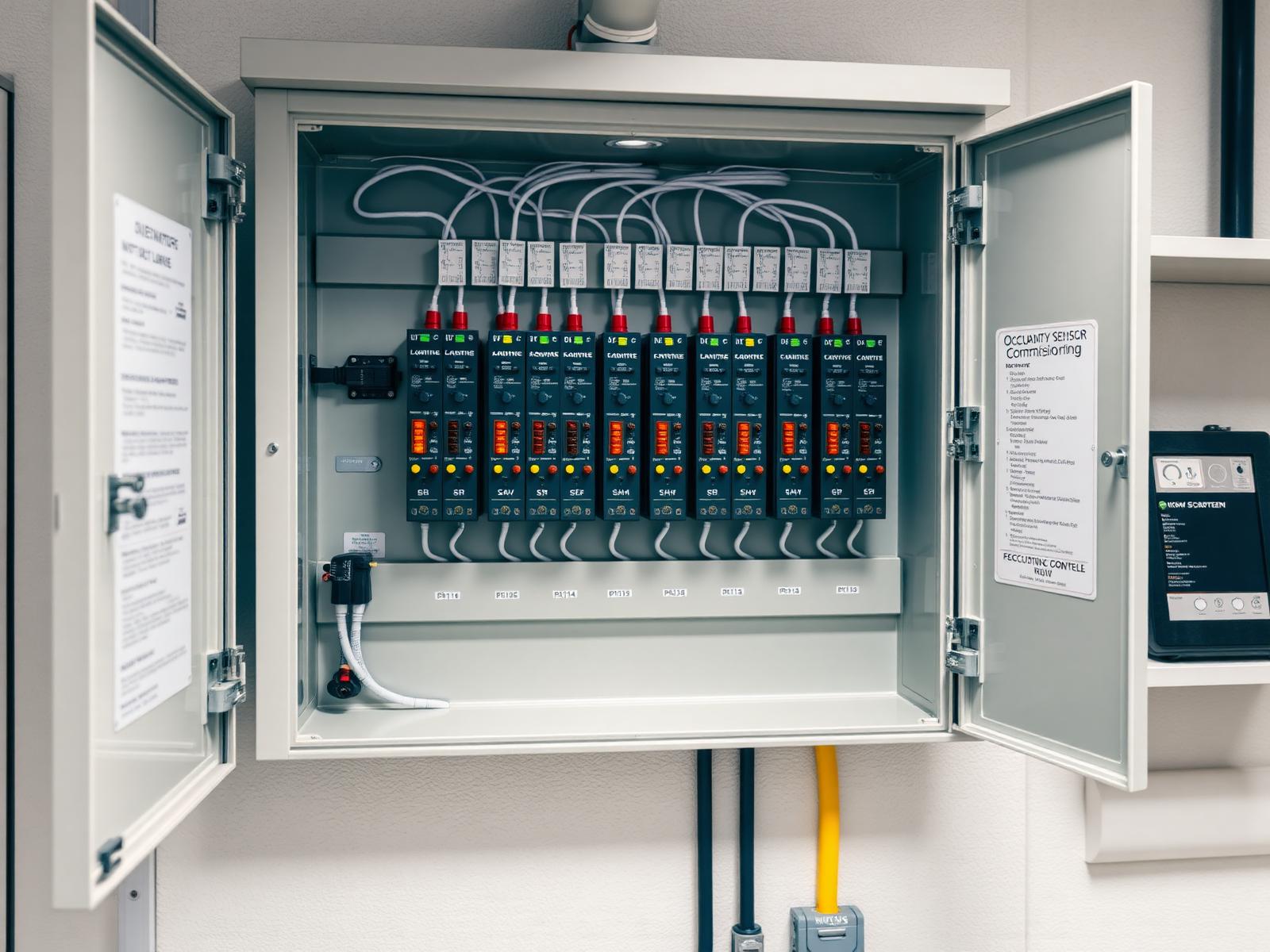
Title 24 compliance requires not only proper installation but also thorough programming and mandatory acceptance testing. Our certified technicians configure control panels, assign sensors to specific zones, program time schedules, set dimming levels, and enable demand response functionality as per project specifications. This involves fine-tuning parameters such as occupancy sensor delay times, daylight harvesting thresholds, and ramp-up/ramp-down rates to optimize energy efficiency without impacting occupant experience. Following programming, we conduct comprehensive Acceptance Testing, adhering to the stringent requirements outlined in the California Advanced Lighting Controls Training Program (CALCTP). This includes functional tests for automatic shut-off, multi-level control, daylight harvesting, and demand response. We utilize specialized tools, including Fluke DSX CableAnalyzers for network continuity checks where applicable, and manufacturer-specific commissioning software to verify that every component and system function operates precisely as designed and meets all Title 24, Part 6 criteria. This rigorous process culminates in the compilation of required documentation for compliance officers.
Seamless Integration with Building Management Systems (BMS)
Modern Title 24-compliant lighting control systems are rarely standalone; they are often integrated into a broader Building Management System (BMS) or Building Automation System (BAS). Our expertise extends to facilitating this critical integration, utilizing open protocols such as BACnet/IP, Modbus TCP, LonWorks, or more proprietary APIs from leading control manufacturers. This interoperability allows for centralized monitoring, scheduling adjustments, and diagnostics of lighting control functionality from a single platform, enhancing operational efficiency and providing granular data for energy reporting. For example, integrating occupancy data from lighting sensors with HVAC systems can optimize heating and cooling in unoccupied spaces, driving further energy savings. Our team works closely with BMS integrators to ensure seamless data exchange and coordinated control strategies, providing a unified building intelligence platform that maximizes energy performance and streamlines facility operations, while maintaining Title 24 compliance across all integrated systems.
Post-Commissioning Support and Long-Term Compliance
Achieving Title 24 compliance is an ongoing commitment, not a one-time event. Post-commissioning, Access Cabling provides detailed system documentation, including as-built drawings, control narratives, and operational manuals, which are crucial for facility staff. We also offer staff training on system operation, scheduling adjustments, and basic troubleshooting, empowering your team to manage the system effectively. As building usage or energy codes evolve, our team is available for system recalibration, firmware updates, and expansions, ensuring the lighting control system remains optimized and compliant. This proactive approach to post-installation support helps maintain the long-term energy savings and operational efficiency promised by a well-designed Title 24 system, preventing potential issues that could lead to non-compliance penalties or reduced performance over time. Our commitment extends beyond project handover to include ongoing partnership and support.
Access Cabling's Differentiators in Title 24 Lighting Projects
What sets Access Cabling apart in the specialized field of Title 24 lighting controls is our unique blend of low-voltage expertise, deep code knowledge, and a vendor-agnostic approach. As a licensed C-10/C-7 low-voltage contractor (CSLB 992009) with 28+ years of experience, we possess the specific technical acumen required for integrated control systems, differentiating us from general electrical contractors. Our team holds relevant certifications, including BICSI RCDD for structured cabling design and manufacturer-specific certifications from leaders like Lutron and Acuity Brands. We don't just install; we design and commission, ensuring every aspect of the system meets the intricate demands of Title 24, Part 6. Our rigorous, multi-stage commissioning and acceptance testing protocols, leveraging tools like Fluke DSX CableAnalyzers, guarantee documented compliance and optimal performance. We prioritize long-term system reliability, scalability, and ease of maintenance, delivering solutions that not only pass inspection but also provide lasting energy savings and operational efficiency for our clients nationwide.
Navigating Permitting and AHJ Reviews for Expedited Approvals
Successful Title 24 lighting control projects necessitate a proactive and meticulous approach to the permitting and Authority Having Jurisdiction (AHJ) review process. This begins long before physical installation, with a comprehensive understanding of local interpretations of Title 24 Part 6 and Part 11, alongside specific municipal ordinances that may overlay or append state-level requirements. Our process involves a preliminary regulatory deep-dive, identifying potential ambiguities or heightened scrutiny areas pertinent to the project's scope, such as dimming zones, daylight harvesting strategies, occupancy/vacancy sensor placement, and emergency lighting integration. We meticulously prepare submittal packages, which include detailed photometric layouts, control schematics, device cut sheets, Title 24 compliance forms (e.g., NRCC-LTI, NRCC-LTO), and sequence of operations narratives. These narratives are critical, translating complex control logic into understandable documentation for plan checkers and inspectors, demonstrating how the proposed system achieves mandatory and prescriptive compliance. Common pitfalls, such as incorrectly calculating controlled load, failing to demonstrate independent control of specific spaces, or inadequate documentation of multi-level lighting capabilities, are rigorously addressed pre-submission. We employ CAD overlays to visually depict sensor coverage, control zones, and daylight harvesting apertures, ensuring clarity regarding the system's operational efficacy and adherence to energy reduction benchmarks. Engaging with the AHJ early, often through pre-application meetings, allows for clarification of specific requirements, fostering a smoother approval trajectory and mitigating costly redesigns or delays caused by unforeseen interpretations or missing documentation. This proactive engagement is particularly vital for projects involving complex spaces like open-plan offices, educational facilities, or healthcare environments that often trigger more stringent review protocols for energy budgets and lighting quality. Our documentation suite is engineered to stand up to the most rigorous examinations, outlining every fixture type, control device, wiring pathway (low-voltage and line-voltage control), and operational mode. This includes detailed wiring diagrams for DALI, 0-10V, DMX, and networked control architectures, ensuring that the physical implementation aligns precisely with the approved design and commissioning plan. We also provide clear documentation on how the system handles demand response signals, a critical aspect of Title 24 affecting larger commercial and institutional projects, detailing the hierarchical control and override mechanisms. This level of technical specificity and proactive engagement with regulatory bodies is fundamental to de-risking the project timeline and budget, ensuring that the path from design to occupancy is as efficient and compliant as possible.
Ensuring Data Integrity and Cybersecurity in Networked Lighting Controls
As Title 24 compliant lighting control systems increasingly leverage networked architectures, comprising IP-enabled devices and cloud-based management platforms, the imperative for robust data integrity and cybersecurity measures becomes paramount. These systems often operate on enterprise networks, requiring stringent adherence to IT security protocols to prevent unauthorized access, data manipulation, or system disruption. Our approach integrates cybersecurity considerations from the initial design phase, aligning with standards like NIST Cyber Security Framework and ISO/IEC 27001. This includes implementing secure boot processes for controllers, utilizing strong authentication protocols (e.g., 802.1X for network access), and employing end-to-end encryption for all data transmitted between luminaires, sensors, gateways, and control servers. We prioritize systems that support secure firmware updates, ensuring that patches for vulnerabilities can be deployed efficiently and verifiably. Data integrity is maintained through cryptographic hashing and digital signatures, preventing tampering with configuration files, operational logs, and energy consumption data, which is often required for compliance reporting. For cloud-connected systems, we evaluate the vendor's security posture, emphasizing adherence to robust data privacy regulations (e.g., CCPA, GDPR where applicable to data residency). Network segmentation, employing VLANs or micro-segmentation, is a critical strategy to isolate lighting control traffic from other building systems, minimizing the attack surface. Furthermore, our designs incorporate redundant control pathways and fail-safe modes to ensure that in the unlikely event of a cyber incident, essential lighting functionalities (e.g., emergency lighting, basic illumination) remain operational. Access control is granular, utilizing role-based access control (RBAC) to restrict system modifications to authorized personnel, with detailed audit trails logging all changes. We also educate building owners and operators on best practices for password management, network hygiene, and recognizing potential phishing attempts targeting building automation systems. The complexity of integrating Lighting Control Systems (LCS) with broader Building Management Systems (BMS) introduces additional security vectors. Our solutions address this by implementing secure API integrations, using OAuth2 for authorization, and ensuring that data exchange between systems is authenticated and authorized. This holistic approach to cybersecurity is not merely a best practice; it is a critical component of ensuring the long-term reliability, privacy, and operational integrity of Title 24 compliant lighting control infrastructures in a digitally interconnected building environment. Overlooking these aspects can lead to significant operational disruptions, compliance violations, and reputational damage. Our methodology meticulously vets and deploys technologies that are not only Title 24 compliant but also resilient against evolving cyber threats, providing clients with peace of mind regarding their critical building systems.
Life Cycle Cost Analysis and Long-Term Performance Optimization
Beyond initial Title 24 compliance, a critical aspect of intelligent lighting control system deployment involves a comprehensive Life Cycle Cost Analysis (LCA) and planning for long-term performance optimization. This extends beyond the capex of hardware and installation, delving into ongoing operational expenditures (opex) such as energy consumption, maintenance, software licensing, and potential upgrade paths. Our LCA evaluates various control strategies and component selections—from distributed intelligence sensor networks to centralized controllers—against their projected energy savings, maintenance intervals for components like photo sensors and occupancy detectors, and expected lifespan. For instance, comparing the total cost of ownership between a wired DALI system and a wireless mesh network (e.g., Zigbee or Bluetooth Mesh) requires analyzing not only installation complexity but also battery replacement cycles for wireless sensors, potential signal interference, and the scalability of the chosen protocol. We utilize sophisticated modeling tools to simulate energy savings based on project-specific occupancy patterns, daylight availability, and desired lighting levels, providing clients with realistic ROI projections that factor in local utility rates and potential rebates for advanced controls. Furthermore, long-term performance optimization involves understanding the degradation characteristics of system components and planning for preventative maintenance and recalibration. For example, photo sensors may drift over time, requiring periodic recalibration to maintain accurate daylight harvesting and prevent over-lighting. Software updates and cybersecurity patches, while often overlooked in budgeting, are critical for system longevity and security. Our recommendations include budgeting for these, along with potential software licensing renewals for advanced analytics or cloud services. The LCA also incorporates the cost of staff training for building operators to effectively manage and troubleshoot the system, ensuring that the intended energy savings and functionality are realized consistently. We emphasize the importance of open standards and interoperability (e.g., BACnet, Modbus, MQTT facades for proprietary protocols) to prevent vendor lock-in and facilitate future upgrades or integrations without costly rip-and-replace scenarios. This foresight allows for a more agile and cost-effective approach to evolving building needs and technological advancements. Moreover, we provide detailed documentation on system component lifecycles, recommended maintenance schedules, and end-of-life strategies for hardware and software, ensuring that clients can plan for future capital expenditures. Our objective is to design and implement Title 24 compliant lighting control systems that not only meet current regulatory demands but also deliver sustained financial and operational benefits over their entire operational life, maximizing asset value and minimizing unforeseen costs. This holistic financial planning ensures that the investment in advanced lighting controls yields optimal returns and continuous energy efficiency improvements over decades, not just years.
Commissioning Documentation and Continuous Validation for Compliance
The robust documentation of commissioning activities and a framework for continuous validation are indispensable for demonstrating ongoing Title 24 compliance and ensuring system performance throughout a building's lifecycle. Beyond the initial acceptance testing, comprehensive documentation serves as the authoritative record for AHJ inspections, warranty claims, and future system modifications or expansions. Our commissioning documentation package extends beyond the basic NRCC-CXR forms, encompassing detailed sequences of operation as verified in the field, as-built control schematics, sensor calibration reports, and a comprehensive functional performance test matrix. Each test point, covering occupancy/vacancy sensing, daylight harvesting (including high-end trim and continuous dimming), multi-level lighting control capabilities, demand response functionality, and manual override provisions, is meticulously recorded with pass/fail criteria and actual measured values. This granular detail ensures traceability and provides irrefutable evidence of compliance at the time of system handoff. Furthermore, we provide a detailed O&M manual specifically tailored to the installed control system, explaining the logic, configuration parameters, and everyday operational procedures. This manual includes troubleshooting guides for common issues, contact information for support, and procedures for accessing and interpreting energy performance data. A critical component of continuous validation involves recommending and implementing ongoing monitoring and analytics platforms. These systems collect real-time data on lighting usage, energy consumption, and control device performance, allowing building operators to identify anomalies, confirm energy savings, and proactively address potential issues before they impact compliance or occupant comfort. Regularly scheduled functional performance tests, similar to the initial commissioning, are often recommended, particularly for complex systems or after significant building modifications. The documentation of these periodic tests serves as an audit trail for continuous compliance. For Title 24 Part 6, the emphasis on ensuring that systems perform as designed extends beyond the initial occupancy. Therefore, our hand-off process includes training for facility managers on how to interpret system data, generate compliance reports, and make minor adjustments within the constraints of the approved sequence of operations. This empowers the building operations team to maintain optimal performance and compliance without constant external intervention. The creation of a comprehensive 'Commissioning Record' and 'Operating and Maintenance Manual' is not merely a formality; it is a vital asset for the building owner, providing the necessary tools and information to sustain performance, navigate regulatory audits, and ensure the long-term integrity of their Title 24 compliant lighting control infrastructure. Without this detailed and readily accessible documentation, verifying ongoing compliance or diagnosing system degradation becomes an arduous, often costly, and speculative endeavor.