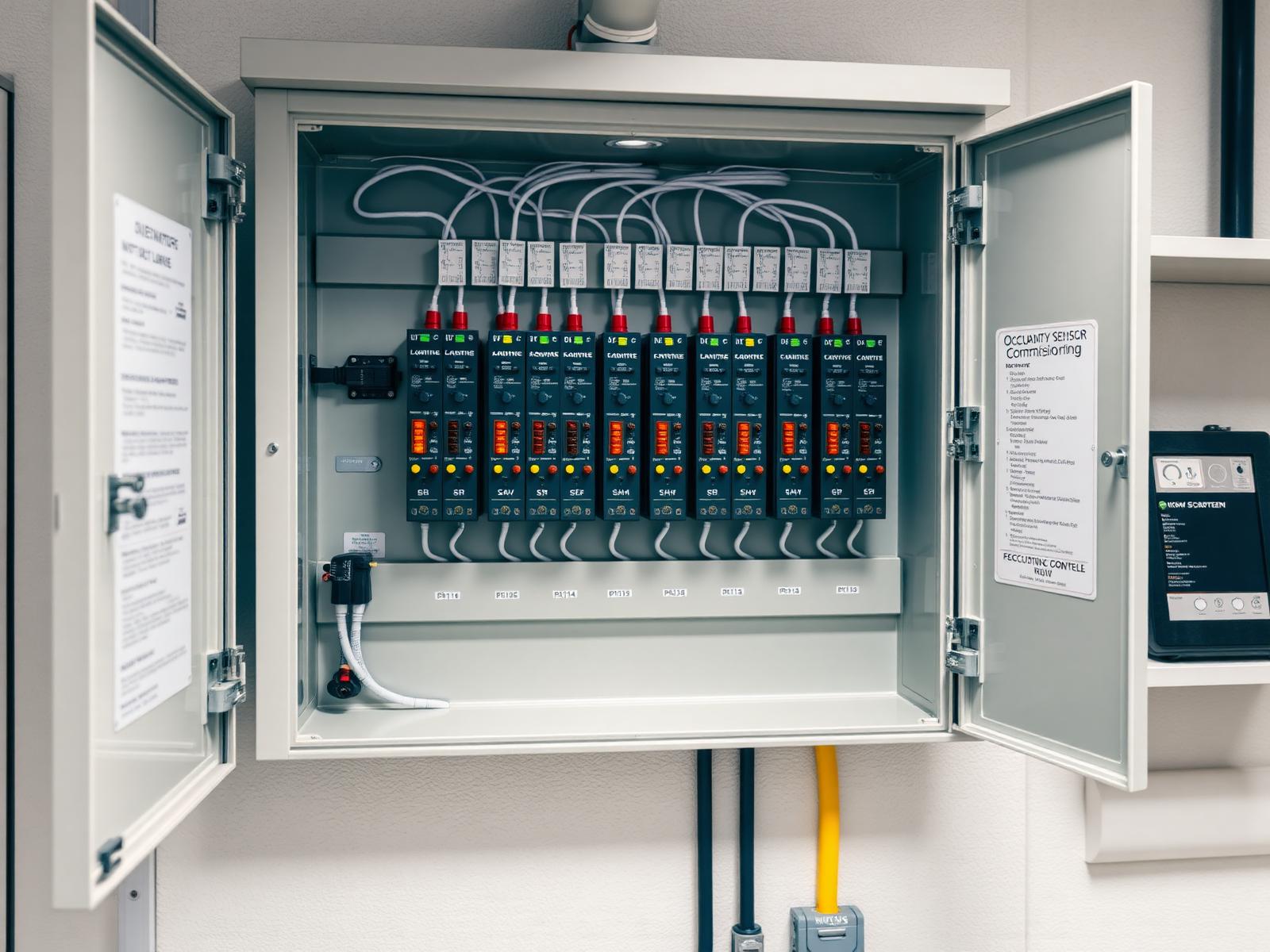
For facility managers, IT directors, and general contractors seeking precise environmental control and demonstrable energy savings, compliant occupancy sensor systems are not merely an amenity but a strategic imperative. Access Cabling delivers meticulously engineered and installed occupancy and vacancy sensor solutions designed to meet stringent energy codes like California's Title 24, Part 6. Our approach extends beyond basic installation; we provide end-to-end integration, ensuring your lighting controls enhance operational efficiency, reduce utility expenditure, and optimize space utilization. With 28 years of low-voltage expertise, CSLB 992009 certification, and a deep understanding of sensor technologies from manufacturers like Leviton, Lutron, and Acuity Brands, we architect systems that are both robust and intelligent. This commitment to technical precision and adherence to industry standards, including BICSI and NEC, guarantees a lighting control infrastructure that performs reliably while contributing directly to your organization's sustainability goals and bottom line.
Occupancy Sensor Systems and Regulatory Compliance
Occupancy sensor systems are sophisticated environmental control technologies designed to detect human presence or absence within a designated space, subsequently managing lighting, HVAC, and other electrical loads. The primary goal is energy conservation, achieved by automatically deactivating or dimming systems when areas are vacant. For commercial and industrial facilities, the implementation of these systems is frequently mandated by building energy codes, most notably California's Title 24, Part 6. This regulation sets rigorous standards for energy efficiency in new construction and major renovations, requiring specific types of occupancy and vacancy sensors in various spaces, such as offices, conference rooms, restrooms, and corridors. Compliance necessitates not only the correct sensor deployment but also proper programming, commissioning, and verification of operational parameters, ensuring that the installed system meets mandated wattage reductions and control strategies. Access Cabling specializes in designing and deploying systems that satisfy these complex regulatory requirements, minimizing the risk of non-compliance and maximizing energy savings.
Design Considerations for Optimal Sensor Placement and Type
Effective occupancy sensor system design hinges on selecting the appropriate sensor technology and strategically positioning devices to maximize coverage and minimize false triggers. There are several primary sensor types: Passive Infrared (PIR), which detects heat and motion; Ultrasonic (US), which emits high-frequency sound waves and measures their reflection; and Dual-Technology (DT), which combines both PIR and US for enhanced reliability and sensitivity. PIR sensors are often suitable for enclosed spaces with clear lines of sight, while US sensors excel in open areas or those with obstructions, as they can detect motion around corners. DT sensors provide the most robust detection and are ideal for critical spaces where false-offs are unacceptable. Key design considerations include room geometry, ceiling height, potential obstructions, ambient temperature fluctuations, and the typical activities within the space. Our engineers analyze elevation drawings and perform thorough site surveys to determine optimal sensor density, coverage patterns, and sensitivity settings, mitigating issues such as 'dead zones' or 'phantom occupancy' that can diminish system effectiveness.
Advanced Components and Integrated Control Architectures
Modern occupancy sensor deployments involve a sophisticated interplay of specialized hardware and integrated control architectures. Components extend beyond the sensors themselves to include networked lighting panels, control modules, dimming ballasts or LED drivers, and often integration with Building Management Systems (BMS). Sensor types may vary in their communication protocols, ranging from traditional low-voltage wired connections using plenum-rated cables to wireless solutions leveraging Zigbee, Bluetooth Mesh, or proprietary RF technologies. For wired systems, careful consideration is given to wire gauge, shielding, and cable management to prevent interference and ensure signal integrity. Wireless solutions require robust mesh networking design to guarantee reliable communication pathways and minimize latency. We specify and install robust equipment from industry-leading manufacturers such as Lutron, Leviton, Acuity Brands, and Crestron, ensuring interoperability, scalability, and long-term performance. Our expertise includes integrating these disparate components into a cohesive, centralized control platform that allows for granular scheduling, zoning, and remote management, providing facility managers with unparalleled control over their lighting infrastructure.
Precision Installation and Commissioning Protocols
The installation of occupancy sensor systems demands meticulous attention to detail to ensure correct functionality and compliance. This encompasses precise mounting of sensors at specified heights and orientations, careful routing and termination of low-voltage control wiring according to TIA/EIA standards, and proper power provisioning. For networked systems, IP addressing and network configuration must be executed with precision. Following physical installation, a critical phase is commissioning, where the entire system is brought online, tested, and fine-tuned. This involves verifying sensor coverage and sensitivity, programming delay times, configuring light level thresholds for daylight harvesting, and establishing zoning parameters. Our BICSI-certified technicians utilize specialized diagnostic tools to confirm signal integrity, validate communication between all devices, and verify that the system adheres to the specified control sequences. This rigorous commissioning process is essential for preventing operational anomalies, maximizing energy efficiency, and ensuring the system performs as designed and mandated by regulatory bodies.
Testing, Verification, and Post-Deployment Optimization
Rigorous testing and verification are non-negotiable for any occupancy sensor installation to validate performance and compliance. Post-installation, our teams conduct comprehensive functional tests to confirm that every sensor, control module, and luminaire responds correctly to occupancy and vacancy events. This includes simulating various usage scenarios, such as entering and exiting a room, prolonged desk work, and temporary departures, to ensure accurate detection and appropriate lighting responses. We verify that all delay timers, sensitivity settings, and daylight harvesting thresholds are programmed according to design specifications and Title 24 requirements. Advanced testing methodologies may involve power meter readings to quantify energy savings and thermal imaging to identify potential PIR sensor interference. Beyond initial commissioning, Access Cabling offers post-deployment optimization services, where we analyze usage data and facility feedback to fine-tune sensor parameters. This iterative process allows for continuous improvement of system performance, adapting to evolving facility needs and further enhancing energy efficiency.
Comprehensive Compliance and Safety Assurance
Compliance with relevant codes and safety standards is paramount for all occupancy sensor installations. In California, adherence to Title 24, Part 6 is a primary focus, governing aspects from specified sensor types per space to automatic shut-off and dimming requirements. Beyond energy codes, all low-voltage wiring and equipment must conform to the National Electrical Code (NEC) for safe electrical practices, including proper wire sizing, overcurrent protection, and grounding. Specific articles within the NEC, such as Article 725 for Class 1, 2, and 3 Circuits, and Article 760 for Fire Alarm Systems (if integrated), are directly relevant. Our licensed C-10/C-7 low-voltage technicians are intimately familiar with these complex regulations. We ensure that every component, from the sensor head to the control panel, is UL-listed and installed in accordance with manufacturer specifications and industry best practices. This meticulous approach to compliance and safety not only ensures legal operability but also protects building occupants and safeguards against potential liabilities, providing peace of mind for facility owners and general contractors.
Access Cabling's Differentiated Expertise in Lighting Controls
What distinguishes Access Cabling in the occupancy sensor and lighting control market is our unwavering commitment to technical precision, regulatory expertise, and a vendor-agnostic approach. Unlike integrators who may be tied to a single manufacturer, our experience spans a broad spectrum of industry-leading brands, including Lutron, Leviton, Acuity Brands, Tridonic, and Wattstopper. This allows us to recommend and implement the optimal solution for your specific project requirements and budget, without compromise. Our 28 years of experience as a licensed C-10/C-7 contractor (CSLB 992009) ensures that every installation meets the highest standards of workmanship and reliability. We provide detailed as-built documentation, comprehensive testing reports (including Fluke DSX CableAnalyzer output for network-dependent controls), and thorough user training, empowering your team to manage and optimize the system effectively. Our nationwide service capability, coupled with localized project management, means consistent quality and accountability, whether you have a single facility or a multi-site rollout, positioning Access Cabling as your trusted partner for advanced lighting control solutions.
Addressing False Triggers and Nuisance Switching in Sensors
False triggers and nuisance switching represent significant challenges in occupancy sensor deployment, undermining energy savings and user comfort. Technologically, these issues frequently stem from insufficient sensor sensitivity calibration, particularly in passive infrared (PIR) sensors where ambient temperature fluctuations or air currents can mimic human presence. Ultrasonic sensors, while effective in line-of-sight obstructed environments, are susceptible to false positives from HVAC air movement, rattling blinds, or even external noise sources vibrating contiguous surfaces. Dual-technology sensors, integrating both PIR and ultrasonic, aim to mitigate these false triggers by requiring confirmation from both sensing modalities, significantly enhancing reliability. However, even these advanced units demand meticulous configuration of detection zones, sensitivity thresholds, and time delays. A critical aspect of mitigating these issues involves rigorous site-specific pre-installation surveys, including analysis of HVAC diffuser locations, potential sources of non-human motion (e.g., oscillating fans, window coverings, nearby foot traffic visible through glass partitions), and ambient light levels. Furthermore, understanding the temporal patterns of occupancy versus false triggers is crucial; short-duration, high-frequency false positives might indicate overly sensitive ultrasonic thresholds, while intermittent, longer-duration false positives in PIR zones could suggest thermal drift or improper placement relative to heat sources. Post-installation, iterative adjustments to sensor parameters, leveraging data from the building management system (BMS) or dedicated lighting control dashboards, are indispensable for achieving optimal performance and minimizing user complaints, which are direct indicators of unresolved nuisance switching. Failure to implement these precise calibration and adjustment protocols often leads to occupant dissatisfaction and manual override of automated controls, negating the entire purpose of the occupancy sensor system.
Integration of Occupancy Data with Building Management Systems
The true power of modern occupancy sensor systems is realized through their seamless integration with broader Building Management Systems (BMS) and IoT platforms. This integration moves beyond simple lighting control to enable sophisticated, data-driven operational efficiencies. Communication protocols such as BACnet IP, Modbus TCP, KNX, and increasingly, MQTT with JSON payloads, facilitate the exchange of occupancy data, presence detection statuses (occupied/unoccupied), and even occupant count estimates from advanced sensors. This rich dataset allows the BMS to dynamically adjust HVAC setpoints, ventilation rates, and even access control policies based on real-time occupancy rather than fixed schedules. For instance, an unoccupied zone can trigger a setback in temperature, reduce air changes per hour (ACH), or automatically lock doors after hours. Moreover, granular occupancy data provides invaluable insights for space utilization analytics, informing workplace strategy, optimizing cleaning schedules, and identifying underutilized assets. The architectural complexity often involves a dedicated lighting control network (e.g., DALI, wireless mesh using Zigbee or Bluetooth Mesh) that aggregates sensor data locally before passing it to a gateway device, which then translates and forwards the information to the central BMS over an enterprise network. Cybersecurity considerations are paramount in this integration; robust authentication, encryption, and network segmentation are essential to protect sensitive occupancy data and prevent unauthorized access or manipulation of building systems. Pitfalls include incompatible protocol versions, data silo architectures where occupancy data remains isolated, and inadequate bandwidth provision for high-frequency data transmission from thousands of endpoints, all of which underscore the need for a meticulously planned and executed integration strategy informed by IT and OT convergence principles.
Lifecycle Management and Future-Proofing for Sensor Technologies
Effective lifecycle management for occupancy sensor technologies extends beyond initial deployment to encompass ongoing maintenance, firmware updates, and strategic future-proofing. The rapid evolution of sensor capabilities, including micro-radar, millimeter-wave (mmWave), and even AI-driven vision-based sensors, necessitates a forward-looking approach. A critical aspect of lifecycle management involves establishing a robust maintenance schedule for sensor calibration drift, battery replacement in wireless units, and general physical integrity, particularly for sensors in high-traffic or exposed environments. Firmware updates are not merely for bug fixes; they often introduce new features, improve detection algorithms, enhance cybersecurity posture, and extend interoperability with emerging control platforms. Organizations must implement a structured process for evaluating, testing, and deploying these updates, typically managed through the lighting control system's central management software. Future-proofing entails designing systems with modularity and open standards to facilitate technology refreshes. This includes specifying sensor hardware with standardized connectors, interchangeable modules, and support for evolving communication protocols. For example, opting for fixtures with Zhaga Book 18 or ANSI C137.4 receptacles enables easy upgrades to newer sensor types without replacing the entire luminaire. Furthermore, anticipating the transition from discrete occupancy sensors to integrated sensor hubs that gather environmental data (CO2, VOC, humidity, sound) alongside occupancy is crucial. This convergence allows for more comprehensive environmental control and building automation, driven by a holistic dataset. Strategic planning must also consider the Total Cost of Ownership (TCO), factoring in not just initial CAPEX but also OPEX for maintenance, energy savings realized, and the human capital required to manage and adapt the system over its projected 10-15 year lifespan. Neglecting these lifecycle considerations often leads to premature obsolescence, vendor lock-in, and an inability to leverage advancements in smart building technology.
Regulatory Compliance and Incentive Programs for Sensor Deployment
Navigating the complex landscape of regulatory compliance and leveraging available incentive programs is paramount for successful and financially beneficial occupancy sensor deployments. Key regulatory frameworks include energy codes such as ASHRAE 90.1, IECC (International Energy Conservation Code), and local specific ordinances that mandate occupancy-based lighting control in various spaces, ranging from private offices and conference rooms to restrooms and corridors. These codes often dictate minimum performance criteria, such as required vacancy sensor functionality (manual-on/auto-off) in specific areas or maximum time delays for automatic shutoff. Furthermore, specialized standards like Title 24 in California impose stringent requirements on lighting controls, including multi-level control, daylight harvesting, and demand response capabilities, where occupancy sensors play a critical role as an enabling technology. Non-compliance can result in substantial fines, project delays, or even denial of occupancy permits. Beyond compliance, numerous utility companies, state, and federal entities offer incentive programs designed to encourage energy efficiency upgrades, including the installation of occupancy sensors. These programs often provide rebates, tax credits, or low-interest financing. Eligibility criteria typically involve meeting specific energy savings thresholds, using certified products (e.g., ENERGY STAR rated), and adhering to prescribed installation and commissioning guidelines. Engaging with these programs requires a detailed understanding of their technical requirements, application processes, and documentation deliverables, such as energy audit reports, commissioning statements, and proof of purchase for qualifying equipment. Proactive engagement with regulatory bodies and incentive program administrators during the project planning phase can significantly de-risk deployments, enhance project viability, and accelerate the return on investment (ROI) by offsetting upfront capital expenditure. Failing to thoroughly research and integrate these compliance and incentive considerations can lead to missed financial opportunities and necessitate costly retrofits to meet minimum legal requirements.