Optimizing energy efficiency within commercial and industrial facilities increasingly relies on intelligent building systems. Daylight harvesting, a sophisticated lighting control strategy, integrates natural light into interior illumination schemes to minimize electrical lighting consumption. This technology is critical for IT directors, facilities managers, and general contractors seeking to reduce operational expenditures, meet sustainability targets, and enhance occupant comfort under LEED or WELL Building standards. Access Cabling specializes in the design, installation, and commissioning of robust daylight harvesting systems, seamlessly integrating them with existing or new Building Management Systems (BMS) through open protocols like BACnet and LonWorks. Our approach prioritizes precise sensor calibration, effective zoning, and seamless integration with other building automation components, leveraging our deep expertise in low-voltage infrastructure to deliver verifiable energy savings and a consistent, high-quality lighting environment across diverse commercial footprints, from corporate campuses to retail establishments and manufacturing plants.
Foundations of Integrated Daylight Harvesting Systems
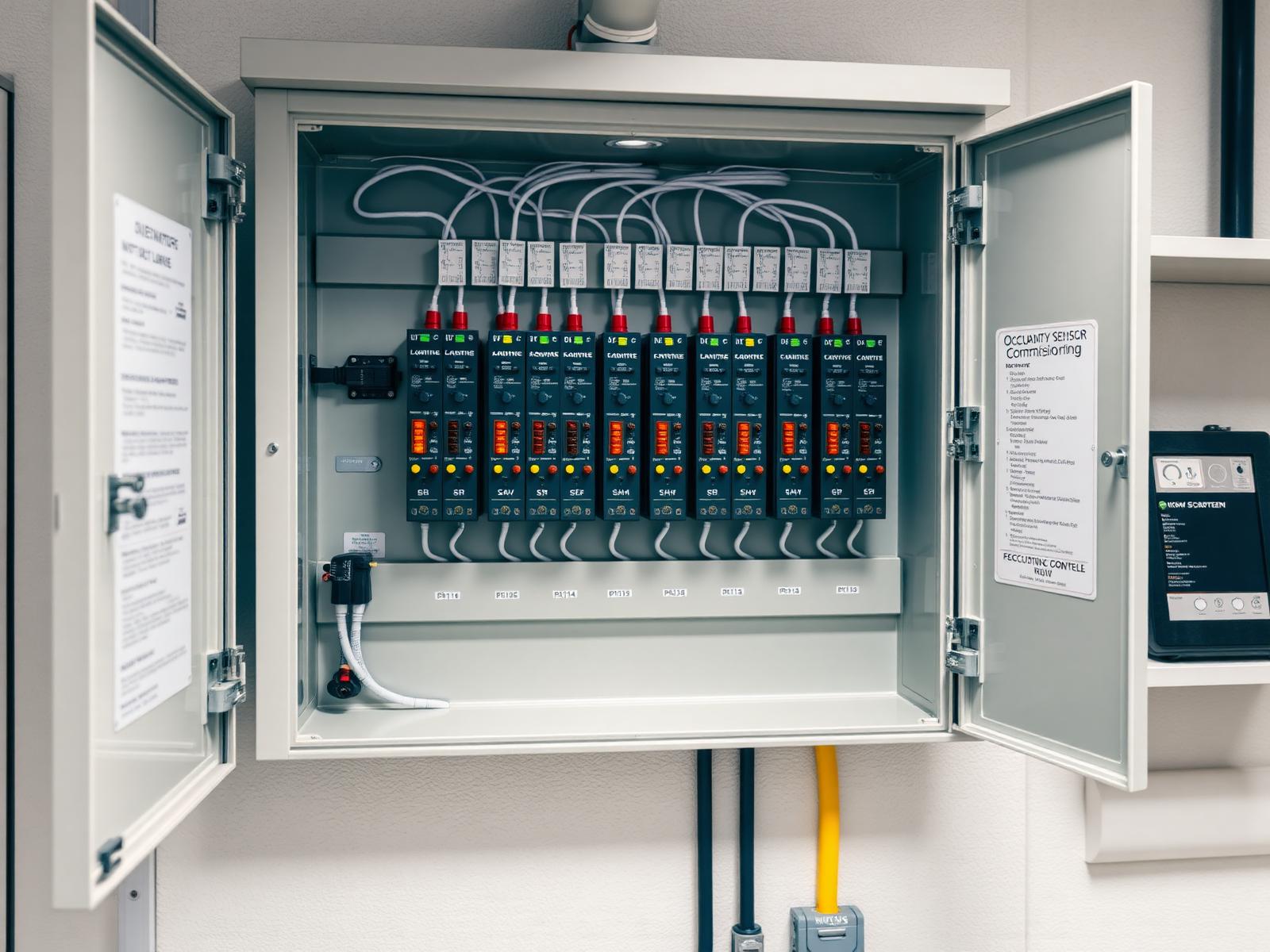
Daylight harvesting fundamentally involves sensors detecting ambient natural light and dimming or switching artificial lights accordingly to maintain a desired foot-candle level. The technical backbone for this system relies on precise photometric sensors, often employing silicon photodiodes, strategically placed to capture representative light levels without being directly affected by artificial fixtures. These sensors communicate light level data to a central or distributed lighting control panel, typically through low-voltage wiring (e.g., Cat5e/6/A) utilizing protocols like DALI (Digital Addressable Lighting Interface), 0-10V, or proprietary manufacturer protocols. The control panel then issues commands to dimmable or switched luminaires. Compliance with ASHRAE 90.1, IECC, and Title 24 energy codes mandates the implementation of daylight harvesting in certain building areas, necessitating a thorough understanding of these requirements during the initial design phase. Our installations adhere strictly to these energy codes, ensuring not only energy savings but also regulatory compliance through verifiable system performance and commissioning reports. The integration into a larger BMS often occurs at the lighting control panel level, exposing lighting data and control points via open protocols, allowing for consolidated building management and advanced analytics.
Comprehensive Design and Engineering for Optimized Performance
Effective daylight harvesting is not a plug-and-play solution; it requires meticulous planning and engineering tailored to each facility's unique architectural and operational requirements. Our design process initiates with a detailed site assessment, analyzing building orientation, fenestration characteristics (window size, VLT – Visible Light Transmittance, shading coefficients), ceiling heights, and interior finishes that impact natural light penetration. We employ specialized lighting design software (e.g., AGI32, Dialux) to model daylight availability and inform sensor placement, zoning, and luminaire selection. Zoning is paramount; individual control zones must align with distinct natural light exposures and occupant use patterns—for instance, perimeter offices facing different cardinal directions require independent control. The chosen control strategy, whether continuous dimming, stepped dimming, or ON/OFF switching, significantly impacts energy savings and occupant experience. Our engineers specify appropriate sensor types (e.g., open-loop for overall ambient light, closed-loop for specific task light levels) and control devices (e.g., DALI drivers, 0-10V dimming ballasts). Careful consideration is given to potential glare issues and sensor calibration to prevent 'hunting' (rapid dimming/brightening) and ensure stable, comfortable illumination. This granular approach ensures the system adapts dynamically to changing natural light conditions throughout the day and year.
Component Selection and Interoperability Standards
The selection of high-quality, interoperable components is fundamental to a reliable and scalable daylight harvesting system. We specify industry-leading manufacturers such as Lutron, Acuity Brands, Eaton, and ETC for control panels, sensors, and dimming modules, ensuring long-term performance and manufacturer support. For network infrastructure, we utilize structured cabling systems from Panduit, CommScope, or Belden for robust data transmission between sensors, control devices, and the central controller. Optical fiber from Corning or similar manufacturers is employed for longer runs or increased bandwidth requirements when integrating with campus-wide BMS. Sensor technology evaluation includes assessing cosine correction characteristics, spectral response, and overall stability. Luminaire compatibility with selected dimming protocols (e.g., DALI, DMX, 0-10V) is verified to ensure smooth, flicker-free operation and appropriate dimming range. The integration layer, often involving BACnet MS/TP, BACnet/IP, or LonWorks, ensures seamless communication with the broader BMS ecosystem, allowing facilities managers to monitor, schedule, and optimize lighting alongside HVAC, security, and other building systems from a unified interface. Our expertise ensures proper driver selection, firmware compatibility, and precise address assignment for all network-enabled devices, minimizing integration complications.
Precise Installation and Commissioning Procedures
Installation of daylight harvesting systems demands precision beyond typical electrical wiring. Our certified technicians meticulously adhere to design specifications for sensor placement, ensuring optimal field of view and avoiding obstructions or direct fixture illumination that could skew readings. Low-voltage wiring for sensors and control signaling is segregated from line voltage circuits to prevent electromagnetic interference (EMI) and ensure signal integrity, following NEC Article 725. Proper termination of network cables (e.g., Cat6 to RJ45 or terminal blocks) to TIA/EIA-568 standards for consistent data transmission is critical. Post-installation, the commissioning phase is paramount, involving several key steps. Initial verification includes checking all sensor connections, addressing, and communication with the control panel. Calibration involves adjusting light level set points (e.g., target foot-candles) within each zone to meet design intent and energy code requirements. This iterative process often utilizes a calibrated light meter (e.g., a hand-held Fluke or similar) to measure actual light levels and fine-tune sensor sensitivity and control algorithms. We conduct functional performance testing, simulating various natural light conditions to verify system response, dimming curves, and fade rates, ensuring smooth transitions and preventing noticeable light level fluctuations. Comprehensive documentation, including as-built drawings, programming parameters, and operational sequences, is provided upon completion.
Advanced Testing, Reporting, and Certification
Access Cabling's commitment to quality extends through rigorous testing and detailed reporting, ensuring the daylight harvesting system performs as designed and delivers verifiable energy savings. Post-installation, we perform comprehensive point-to-point continuity testing on all low-voltage control circuits and conduct network connectivity tests to confirm robust communication between devices and the central controller. For DALI systems, we utilize specialized software tools to verify addressability and control of each luminaire. Functional performance testing validates the operational sequences, dimming ranges, and sensor response under various light conditions. We simulate low light, high light, and transitional periods to confirm the system adjusts correctly and maintains target light levels within specified tolerances. Documentation includes commissioning reports detailing sensor calibration values, programmed light level setpoints, zone configurations, and system operational parameters. Energy performance can be further validated through post-occupancy monitoring and logging of electrical consumption data from connected lighting circuits, often integrated with the BMS's energy management dashboards. Our processes ensure compliance with all applicable energy codes and provide irrefutable evidence of system functionality and performance, often a requirement for LEED certification or utility rebates.
Targeted Deployment across Commercial Environments
The application of daylight harvesting extends across a broad spectrum of commercial and institutional environments, each with unique requirements. In corporate office spaces, it's deployed in perimeter offices, open-plan workspaces, and reception areas to enhance employee comfort and productivity while reducing energy costs. Educational institutions benefit by installing systems in classrooms, libraries, and atriums, creating conducive learning environments and demonstrating sustainable practices. Retail establishments leverage daylight harvesting in sales floors, fitting rooms, and public areas to maintain inviting illumination while minimizing utility expenses, without compromising merchandising aesthetics. Industrial facilities and warehouses with skylights or large window sections can significantly reduce lighting loads in production areas, loading docks, and administrative zones. Even healthcare facilities implement these systems in waiting areas, patient rooms, and common corridors, where natural light exposure is known to positively impact patient well-being. Our approach considers the specific use case, occupancy patterns, and aesthetic requirements for each environment, tailoring sensor placement, zoning, and control logic to deliver optimal performance and maximize energy savings across diverse building typologies and operational demands.
Compliance and Safety in Control System Integration
Integrating complex low-voltage control systems like daylight harvesting demands strict adherence to electrical codes, safety standards, and robust cyber-security practices. All cabling installations conform to TIA/EIA standards for structured cabling and NEC guidelines, specifically Articles 725 (Class 1, 2, and 3 Remote-Control, Signaling, and Power-Limited Circuits) and 700 (Emergency Systems), where applicable, especially for circuits that might interact with emergency lighting. Proper grounding, shielding, and cable separation are paramount to prevent electrical interference and ensure longevity. Our technicians are CSLB licensed and trained in safe work practices, including lockout/tagout procedures during installation and maintenance. From a control system perspective, ensuring secure communication between lighting controllers and the BMS is critical. This involves implementing network segmentation, firewalls, and secure communication protocols (e.g., encrypted BACnet/IP) to protect against unauthorized access and potential cyber threats. Physical security of control panels and network infrastructure is also considered. Ongoing maintenance and firmware updates are planned to address vulnerabilities and maintain system integrity over time. Access Cabling ensures every aspect of the installation meets or exceeds industry safety regulations and cybersecurity best practices, safeguarding both personnel and building system integrity.
Lifecycle Management and Future-Proofing for Daylight Harvesting
Effective daylight harvesting systems are not static installations; they require a robust lifecycle management strategy to ensure sustained performance and adaptability to evolving building requirements and technological advancements. A critical aspect of this involves proactive planning for system upgrades, patch management, and end-of-life considerations for hardware and software components. Access Cabling employs a structured approach that incorporates technology road mapping during the initial design phase, anticipating future integration needs with emerging IoT platforms, smart grid initiatives, and advanced building management systems (BMS). We specify control platforms that adhere to open standards like BACnet IP or LonWorks over proprietary solutions where feasible, facilitating easier integration and minimizing vendor lock-in risks. Furthermore, our documentation deliverables include detailed asset registers, configuration backups, and migration strategies that outline potential upgrade paths for control modules, sensors, and communication gateways. This foresight extends to considering API accessibility for third-party analytics platforms, enabling clients to leverage their daylighting data for deeper insights into energy consumption patterns, occupant comfort, and predictive maintenance. We also address potential obsolescence by recommending solutions with established product lines and clear upgrade trajectories, focusing on modular designs that permit component replacement rather than wholesale system overhauls. This approach significantly reduces the total cost of ownership (TCO) over the system's operational lifespan by mitigating unforeseen expenses related to unsupported hardware or incompatible software updates, a common pitfall in rapidly evolving building technology sectors. Our commitment extends to providing ongoing support frameworks, including remote monitoring capabilities and scheduled maintenance protocols, essential for identifying and addressing performance deviations before they escalate into significant system failures, ensuring continuous optimal operation of the daylight harvesting solution.
Interoperability Challenges and Mitigation with Diverse Building Systems
The successful implementation of daylight harvesting often hinges on seamless interoperability with a complex array of other building systems, including HVAC, electric lighting, shading controls, and security infrastructure. This presents significant technical challenges due to varying communication protocols, data formats, and control philosophies across different manufacturers and subsystems. Access Cabling addresses these challenges head-on by specifying integration layers that act as translators and orchestrators between disparate systems. We utilize robust middleware platforms, often based on enterprise-level building integration tools such as Tridium Niagara Framework or specific vendor APIs, to create a unified control environment. For instance, coordinating electric lighting dimming with VAV box activity requires shared occupancy data, while dynamic shading adjustments to mitigate glare must be synchronized with both outdoor illuminance levels and indoor temperature setpoints. A common pitfall is the "data island" where sensor data from one system is not accessible or interpretable by another, leading to suboptimal performance or even conflicting control actions. Our approach involves meticulous data mapping and defined data exchange protocols during the design phase, ensuring that critical parameters like occupancy status, daylight levels (measured in lux or foot-candles), solar azimuth/altitude, and window shade positions are consistently shared across relevant platforms. This includes ensuring appropriate network security segmentation and authentication mechanisms when integrating systems across different IT domains, particularly when leveraging cloud-based services for analytics or remote management. We conduct rigorous integration testing throughout the commissioning phase, deploying packet sniffers and protocol analyzers to verify data integrity and timely communication between all connected components, ensuring a cohesive and intelligent building response to available daylight rather than a fragmented, reactively controlled environment. This meticulous attention to interoperability extends to defining clear roles and responsibilities for data ownership and control authority, preventing conflicts that can arise from overlapping control logic.
Cybersecurity Considerations for Integrated Lighting Control Networks
As daylight harvesting systems become increasingly integrated with converged building networks and the Internet of Things (IoT), cybersecurity moves from a peripheral concern to a central design imperative. The connection of lighting control panels, sensors, and gateways to an IP network introduces potential attack vectors that could compromise building security, occupant privacy, or operational integrity. Access Cabling implements a defense-in-depth strategy, beginning with network segmentation using VLANs or dedicated control network architectures to isolate lighting control traffic from sensitive IT or OT (Operational Technology) networks. This mitigates the lateral movement of threats should a component be compromised. We specify control hardware that supports robust encryption protocols, such as TLS 1.2 or higher for IP-based communication, and employs secure boot mechanisms and firmware integrity checks to prevent unauthorized code execution. Authentication and authorization are critical; access to control system interfaces and configuration parameters is managed through strong password policies, multi-factor authentication (MFA) where supported, and role-based access control (RBAC) to ensure only authorized personnel can make changes. A significant vulnerability lies in default passwords and open communication ports; our installation and commissioning procedures include strict protocols for changing all default credentials and closing unnecessary ports. Furthermore, we address physical security of control panels and network devices to prevent tampering. Regular vulnerability assessments and penetration testing, either conducted internally or by third-party specialists, are crucial for identifying and remediating weaknesses. We also develop incident response plans specifically tailored for lighting control system breaches, outlining procedures for containment, eradication, recovery, and post-incident analysis. These measures are essential to protect against denial-of-service attacks, data exfiltration (e.g., occupancy patterns), or malicious manipulation that could impact building operations or compromise the safety and comfort of occupants. Adherence to standards like NIST Cybersecurity Framework or IEC 62443 provides a structured approach to managing these risks systematically across the entire system lifecycle, ensuring the daylight harvesting infrastructure remains secure and resilient against evolving cyber threats.
Sustainability Reporting and Verifiable Energy Performance Outcomes
Beyond the immediate energy savings, a key value proposition of daylight harvesting lies in its verifiable contribution to broader sustainability goals and corporate social responsibility (CSR) initiatives. This necessitates robust measurement, verification (M&V), and reporting capabilities that extend beyond simple energy meter readings. Access Cabling designs systems with integrated metering and data logging functionality that captures granular energy consumption data for electric lighting circuits, correlated with real-time daylight levels (photometry expressed in lumens per square meter or foot-candles) and occupancy patterns. We leverage platforms that can generate reports compliant with established energy performance standards, such as ASHRAE Guideline 14 for M&V or those required for green building certifications like LEED (e.g., EAp2 and EAc1 Optimize Energy Performance credits), BREEAM, or WELL Building Standard. This involves not only historical data aggregation but also baseline development and ongoing performance trending to quantify actual energy reduction relative to predicted savings. The system is configured to provide actionable insights, such as identifying zones where daylighting potential is underutilized or where controls may be over-responding, leading to unnecessary dimming or frequent cycling. Moreover, the environmental impact extends to reducing peak demand charges through load shifting, and lowering the heat gain from electric lighting, which subsequently reduces HVAC loads. Our documentation includes comprehensive M&V plans, outlining the methodology for data collection, analysis, and reporting, ensuring transparency and accountability for energy performance. We specify platforms that can export data in open formats (e.g., CSV, JSON via API) for integration with broader energy management information systems (EMIS) or building performance dashboards. This capability is critical for demonstrating return on investment (ROI), securing future investment in efficiency upgrades, and fulfilling stringent sustainability reporting requirements often mandated by regulatory bodies or shareholder expectations. The verifiable energy narratives enabled by these systems move beyond anecdotal evidence, providing concrete proof of environmental stewardship and operational efficiency derived directly from optimized daylight utilization.