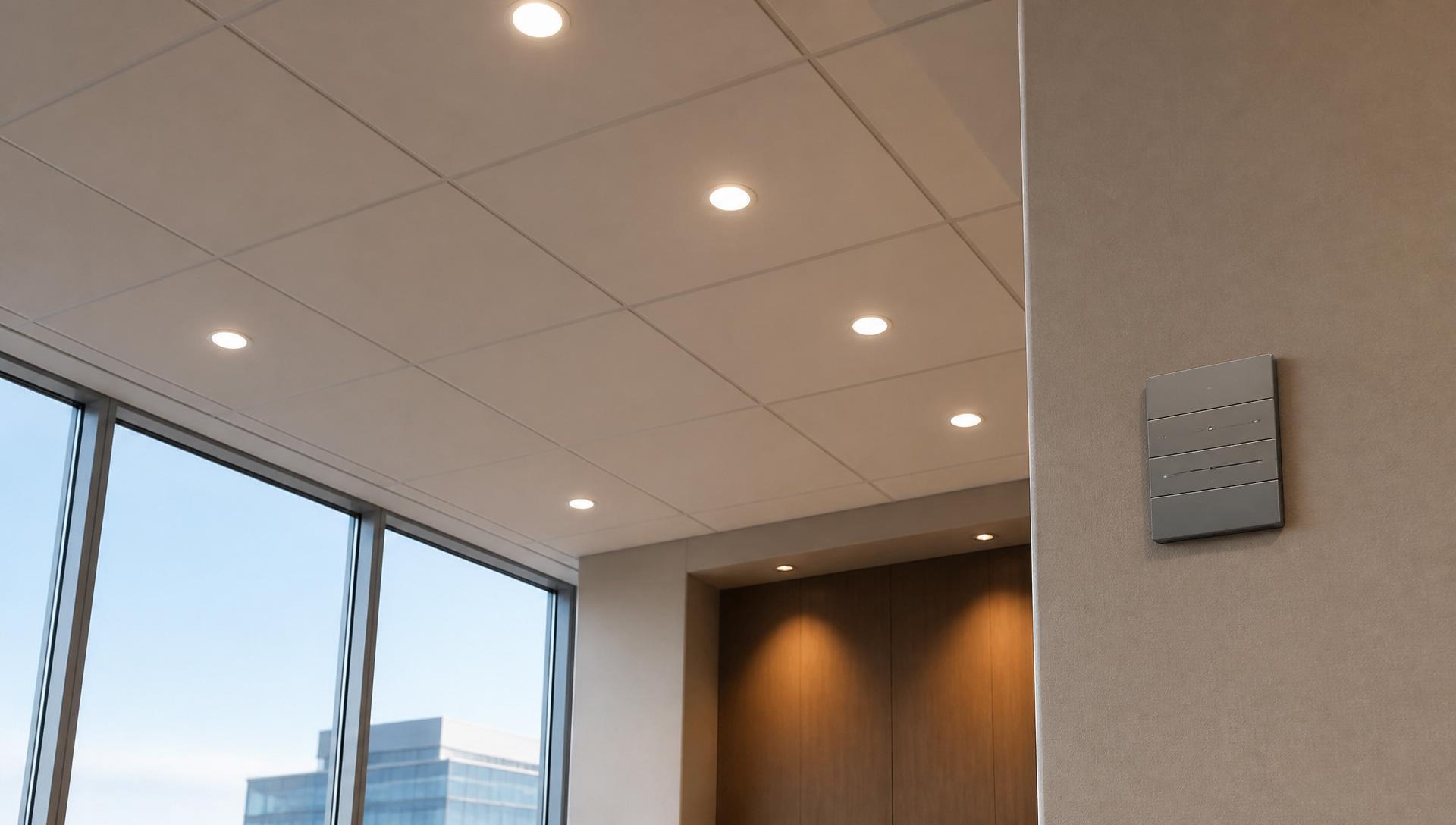
Optimizing commercial building energy consumption and occupant experience requires intelligent, integrated solutions beyond traditional ON/OFF switches. Lighting automation, specifically networked lighting control (NLC) systems, provides granular control over lighting across an entire facility, adapting to occupancy, daylight availability, and schedule. For IT Directors, Facilities Managers, and General Contractors tasked with modernizing infrastructure or developing new smart buildings, understanding the technical nuances of NLC implementation is critical. Access Cabling specializes in the design, installation, and commissioning of robust lighting automation systems that leverage industry-leading protocols like DALI, PoE, and BACnet/IP. Our approach integrates seamlessly with existing building management systems (BMS) and structured cabling infrastructure, ensuring a scalable, fault-tolerant, and energy-efficient lighting environment. We deliver fully documented, standards-compliant solutions that meet specific operational requirements, setting a new benchmark for building intelligence and energy performance.
Foundations of Networked Lighting Control (NLC)
Networked lighting control (NLC) systems are sophisticated ecosystems designed for dynamic light management within commercial and industrial facilities. Unlike stand-alone controls, NLCs integrate luminaires, sensors, control devices, and software platforms into a unified network, often leveraging structured cabling. Key industry standards guiding NLC implementation include ANSI/ASHRAE 90.1, mandating specific lighting control requirements for new construction and major renovations, and Title 24 Part 6 in California, which sets stringent energy efficiency standards, frequently driving the adoption of advanced NLC. Protocols like Digital Addressable Lighting Interface (DALI) provide a robust, bi-directional communication method for individual fixture control and status monitoring over a dedicated low-voltage bus. Power over Ethernet (PoE) NLC systems, conversely, deliver both data and power to LED luminaires and control devices over standard Category 5e/6/6A copper cabling, simplifying installation and reducing the need for separate high-voltage wiring runs. The choice between DALI, PoE, or hybrid systems depends on luminaire availability, infrastructure scale, and integration requirements with other building systems, such as HVAC or security. Accurate system design must account for TIA/EIA cabling standards for network backbone and horizontal runs, ensuring reliable data transmission and power delivery for PoE applications, and NEC Article 725 for Class 2/3 circuits when deploying DALI or other low-voltage control wiring. Access Cabling's expertise encompasses the planning and deployment of these diverse NLC architectures, prioritizing system reliability and future scalability.
Design & Engineering for Optimal Lighting Automation
Effective lighting automation begins with meticulous design and engineering, considering both functionality and long-term operational efficiency. Our design process initiates with a comprehensive site assessment and stakeholder consultation to define performance objectives, including energy savings targets, occupant comfort, code compliance (e.g., ASHRAE 90.1, Title 24), and integration needs with existing BMS (Building Management Systems) or AV infrastructure. Software simulation tools are employed to model daylight harvesting potential, analyze sensor coverage patterns for occupancy and vacancy detection, and predict energy savings based on various control strategies. This includes zone planning, light level programming, scheduling, and sensor type selection (passive infrared, ultrasonic, dual technology, photographic). For PoE lighting, crucial engineering considerations involve precise PoE switch sizing and placement, ensuring adequate power budgets per port and overall power capacity. Cable length limitations for PoE (100 meters per segment for data and power without midspan repeaters) dictate conduit and cable tray layouts. DALI system design requires careful planning of DALI subnets (up to 64 devices per subnet) and the appropriate selection of DALI controllers, gateways, and power supplies. Interoperability between different protocols (e.g., DALI to BACnet/IP) is addressed through appropriate gateways and integration modules. Our engineering drawings provide detailed schematics, specifying device locations, networking topology, power distribution, and integration points, adhering to BICSI TDMM guidelines for structured cabling and infrastructure best practices. This upfront diligence minimizes costly change orders and ensures the deployed system meets all performance specifications.
Components and Infrastructure for NLC Deployment
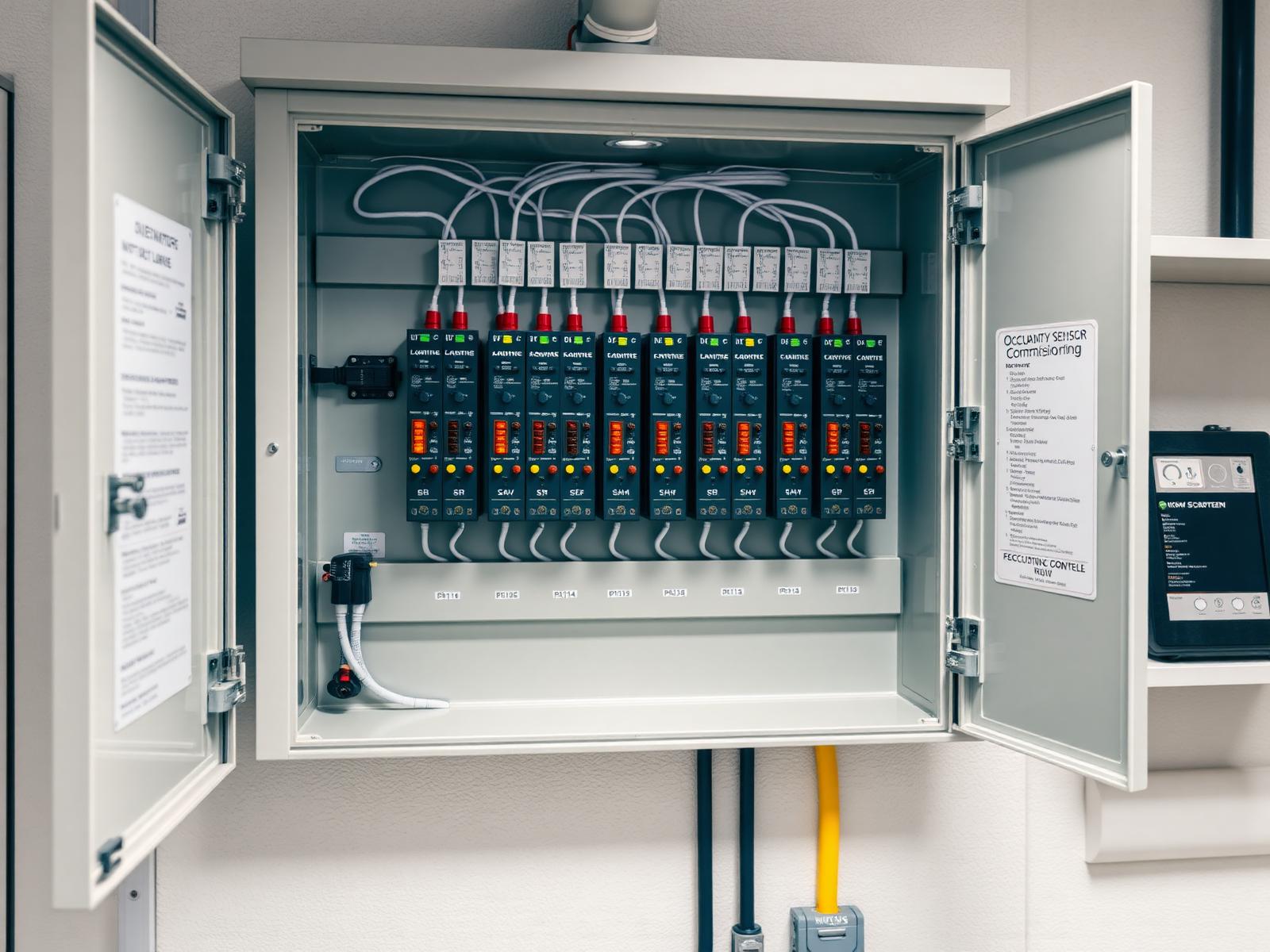
Implementing a robust lighting automation system relies on high-quality, interoperable components and meticulously installed infrastructure. Key components include smart luminaires (LED fixtures with integrated drivers and communication modules), occupancy/vacancy sensors (ceiling-mounted, wall-mounted, or integrated into fixtures), daylight sensors (photocells), wall control stations (keypads, dimmers, touch panels), and network control processors or gateways. For PoE lighting systems, we specify compliant Cat5e, Cat6, or Cat6A cables from manufacturers like Belden, CommScope, or Panduit, ensuring adequate conductor gauge (often 23 AWG for PoE+) to minimize voltage drop over distance and support higher power delivery up to 90W (PoE++ or Type 4). PoE switches, such as those from Cisco, HP Aruba, or specific PoE lighting vendors, are selected based on port density, power budget, and management features. DALI systems utilize DALI control wires (often two-conductor low-voltage shielded cable), DALI power supplies, and DALI controllers/gateways that bridge to higher-level networks (e.g., Ethernet, BACnet). All control wiring (NEC Class 2/3) is installed separately from line-voltage wiring per NEC Articles 725 and 300, maintaining proper segregation to prevent interference. Our infrastructure also includes appropriate cable management solutions – conduit, cable trays, and j-hooks – to support pathways and maintain bend radius compliance for network cabling. Panel enclosures for controllers and network equipment are designed for proper ventilation and accessibility, aligning with TIA-569-D pathway and space recommendations. Material selection prioritizes reliability, longevity, and compliance with UL listings and local fire codes for plenum or riser-rated cabling.
Precision Installation of Lighting Control Systems
The physical installation of lighting automation systems requires precision and strict adherence to electrical and network cabling standards. Our CSLB-licensed low-voltage technicians are trained specifically in the nuances of NLC deployment, which differs significantly from traditional electrical work. For PoE lighting systems, this involves the careful termination of RJ45 connectors onto Category cabling at both the PoE switch and the luminaire or control device, ensuring correct pin-outs (T568A or T568B) and minimal untwisting. Cable runs are executed to maintain bend radius, prevent crimping, and respect maximum length specifications. For DALI systems, two-conductor control wiring is installed and terminated at DALI controllers, luminaires, and sensors, ensuring correct polarity and addressing. All wiring is neatly dressed, labeled according to TIA-606-C standards, and routed to prevent electromagnetic interference from power circuits. Sensor placement is critical; occupancy sensors are positioned to maximize coverage per manufacturer specifications, avoiding obstructions and HVAC airflow that could trigger false readings. Daylight sensors are optimally located to capture ambient light levels while minimizing direct sunlight or fixture glare. Integration points with other building systems, such as BACnet MSTP or IP controllers for HVAC, are carefully cabled and configured. Each installation phase is meticulously documented, providing as-built drawings that capture exact device locations, cable paths, and termination points, which is invaluable for future maintenance, troubleshooting, and system expansion. Our installation methodology adheres to NEC guidelines for low-voltage wiring and general electrical practices, including proper grounding and bonding, to ensure system safety and performance.
Thorough Testing and Certification for NLC Systems
Comprehensive testing and certification are paramount to validating the functionality, performance, and compliance of a lighting automation system. Post-installation, our process employs specialized tools and methodologies. For PoE cabling, we utilize Fluke DSX CableAnalyzers to perform Level 2 or Level 2G certification tests on all horizontal runs (Cat5e, Cat6, Cat6A) to ensure compliance with TIA-568 standards for insertion loss, return loss, near-end crosstalk (NEXT), and power-over-ethernet (PoE) performance metrics, including resistance unbalance and power feeding capability. This guarantees the cabling infrastructure can reliably support both data and power delivery to PoE luminaires and devices. For DALI and other low-voltage control wiring, continuity and short-circuit testing are performed with multimeters and specialized DALI commissioning tools. System-level testing involves verifying communication between all networked components – luminaires, sensors, controllers, and gateways. We commission each device individually, assigning unique addresses and confirming proper operation based on the programmed control sequences (e.g., dimming range, sensor sensitivity, scheduling). Light level measurements are taken with calibrated light meters to confirm that minimum illuminance levels are met in accordance with design specifications and applicable codes. Functional testing involves simulating various scenarios – unoccupied spaces, daylight cycles, scheduled events – to ensure the system responds as programmed. Finally, we provide detailed test reports and as-built documentation, including cable certification results, device configuration files, IP addressing schemes, and a comprehensive commissioning report, certifying that the system meets all design specifications, energy codes, and performance criteria.
Advanced Use Cases for Modern Lighting Automation
Modern lighting automation systems extend far beyond basic ON/OFF control, offering advanced functionalities that significantly enhance building operations and occupant experience. One critical application is sophisticated daylight harvesting, where integrated light sensors continuously monitor ambient light levels and automatically reduce artificial light output in areas with sufficient natural light, leading to substantial energy savings. Occupancy-based control, leveraging precise PIR or ultrasonic sensors, ensures lighting is only active when and where needed, further reducing consumption in dynamic environments like offices, warehouses, or educational facilities. Task tuning allows for setting specific maximum light levels for different zones or tasks, providing flexibility while maintaining energy efficiency. Human-centric lighting (HCL) is an emerging use case where the color temperature and intensity of LED luminaires can be dynamically adjusted throughout the day to mimic natural circadian rhythms, improving occupant comfort, productivity, and well-being in corporate offices, healthcare facilities, and educational institutions. Space utilization analytics, derived from aggregated sensor data, can provide valuable insights into building usage patterns, informing facility management decisions regarding space optimization and energy efficiency. Integration with other building systems – such as access control for pathway illumination upon entry, fire alarm systems for emergency egress lighting, or HVAC systems for integrated comfort control – creates a truly intelligent building ecosystem. These advanced use cases require an NLC system built on robust infrastructure, precise setup, and seamless integration, capabilities where Access Cabling excels.
Compliance and Safety in Lighting Automation Deployments
Ensuring regulatory compliance and system safety is non-negotiable in commercial lighting automation deployments. All installations must adhere rigorously to the National Electrical Code (NEC), specifically Articles 725 (Class 1, Class 2, and Class 3 Remote-Control, Signaling, and Power-Limited Circuits) and 300 (Wiring Methods). This includes proper separation of low-voltage control wiring from high-voltage power circuits, appropriate grounding and bonding techniques, and the use of listed components. For PoE lighting, NEC Article 725.144 outlines requirements for cable bundles and thermal management to prevent overheating in cable trays and conduits, especially with higher power PoE types (PoE+ and PoE++). State and local energy codes, such as California’s Title 24 Part 6, impose strict requirements for lighting controls, mandating features like multi-level switching, occupancy/vacancy sensing, daylight harvesting, and demand response capabilities. Our designs are engineered to meet or exceed these codes, ensuring legal compliance and eligibility for potential energy rebates. Furthermore, adherence to industry standards from organizations like ANSI/ASHRAE (e.g., 90.1 for energy efficiency) and BICSI (e.g., for structured cabling pathways and spaces) ensures best practices for infrastructure design and installation. Safety also extends to cybersecurity for networked systems; implementing secure network segmentation, strong authentication protocols, and regular firmware updates protects the lighting control system from unauthorized access or operational vulnerabilities. Access Cabling’s certified technicians execute installations with an unwavering commitment to these codes and standards, safeguarding both occupants and building infrastructure while ensuring long-term operational integrity.
Access Cabling's Unrivaled Expertise in Lighting Controls
Access Cabling distinguishes itself through a deep, specialized understanding of complex lighting automation systems, underpinned by 28+ years of low-voltage contracting experience. Our C-10/C-7 licensing (CSLB 992009) signifies our proven capability to execute both the networking and power-limited aspects of NLC integration. We don't just pull cable; we engineer holistic solutions. Our approach prioritizes protocol agnosticism, allowing us to implement the best-fit technology – whether it's a DALI-based system for precise luminaire control, a PoE lighting solution for simplified infrastructure and power delivery, or a hybrid architecture integrating disparate systems via BACnet/IP or Modbus TCP. We collaborate closely with leading manufacturers like Lutron, Legrand, Acuity Brands, Cree, and other smart lighting innovators to specify robust, interoperable components. Our technical team holds industry certifications relevant to structured cabling (e.g., BICSI RCDD for design, Installer certifications for specific manufacturer ecosystems) and stays abreast of evolving NLC standards and technologies. This ensures that every project, from initial design to final commissioning and documentation, is executed with unparalleled technical rigor and attention to detail. We pride ourselves on delivering solutions that are not only compliant and energy-efficient but also intuitive to manage and scalable for future expansion, providing a tangible return on investment through optimized energy use and enhanced occupant experiences. Our commitment is to provide a reliable, high-performance lighting automation backbone that empowers intelligent building operations.
Integrating Lighting Control Systems with Building Management Systems (BMS)
The seamless integration of advanced lighting control systems with overarching Building Management Systems (BMS) is paramount for achieving true operational synergy and maximizing energy efficiency in modern facilities. This integration transcends mere data exchange, encompassing a bidirectional communication architecture that allows the BMS to command lighting states based on broader building conditions—such as occupancy detection from HVAC zones, daylight harvesting analytics, or scheduled events—while simultaneously providing granular lighting data back to the BMS for comprehensive performance monitoring and optimization. We leverage industry-standard protocols such as BACnet/IP, LonWorks, and Modbus TCP for robust data exchange, ensuring interoperability with diverse BMS platforms from vendors like Siemens, Honeywell, and Johnson Controls. Our approach involves meticulous mapping of control points and data registers, defining data schemas, and configuring application-level gateways to translate between proprietary lighting control network protocols (e.g., DALI, KNX, Power over Ethernet (PoE) lighting) and the facility's master BMS. Challenges often arise in reconciling differing data models and ensuring real-time response, which we mitigate through careful protocol selection, robust network segmentation, and the deployment of application-specific controllers capable of localized intelligence and fail-safe operation.
Integration also extends to user interfaces, where a unified BMS graphical interface can provide a single pane of glass for facility managers to monitor and adjust lighting alongside other building systems. This eliminates the need for separate control applications, streamlining operations and reducing training overhead. Our engineering team meticulously designs the API (Application Programming Interface) layer for these integrations, ensuring secure and scalable data access. Particular attention is paid to cyber security best practices, segmenting the lighting control network from the enterprise network where necessary and employing encrypted communication channels between the lighting control server and the BMS. The objective is not just functionality, but resiliency, ensuring that a fault in one system does not compromise the entire building's environmental control or security posture. This deep integration unlocks advanced capabilities such as demand response programs, predictive maintenance alerts tied to luminaire performance data, and comprehensive energy reporting that correlates lighting consumption with occupancy patterns and environmental conditions, driving continuous operational improvement and significant ROI for our clients.
Cybersecurity Posture and Data Privacy in Networked Lighting Controls
As lighting automation evolves from isolated analog systems to sophisticated, IP-enabled networks, the imperative for robust cybersecurity and meticulous data privacy practices becomes critical. Networked Lighting Controls (NLC) systems, particularly those leveraging Power over Ethernet (PoE) or wireless Mesh technologies, are integral components of a building's smart infrastructure, making them potential vectors for cyber threats if not properly secured. Our methodology encompasses a layered security approach, starting with network segmentation and firewalling to isolate the NLC network from broader IT infrastructures, conforming to NIST Cybersecurity Framework guidelines. We implement strong authentication protocols for device access and control interfaces, utilizing FIPS 140-2 validated cryptographic modules where applicable, and enforce role-based access control (RBAC) to limit user privileges based on their operational necessity. Firmware updates are rigorously managed, ensuring only authenticated and digitally signed updates from trusted sources are applied, mitigating risks from Supply Chain attacks. Data privacy is equally paramount, as NLC systems can collect granular occupancy data, energy consumption patterns, and even environmental sensor readings. Our designs incorporate 'privacy by design' principles, anonymizing and aggregating data where possible, and employing data encryption both in transit (e.g., TLS 1.2/1.3) and at rest to protect sensitive information. We meticulously document data flows and storage locations, ensuring compliance with regulations such as GDPR or CCPA for projects requiring such adherence.
Moreover, our security audits extend beyond initial deployment, including regular vulnerability assessments and penetration testing of the NLC infrastructure, simulating real-world attack scenarios to identify and remediate weaknesses proactively. This continuous monitoring is crucial, given the evolving threat landscape. The physical security of NLC components, particularly controllers and gateways, is also addressed to prevent unauthorized tampering. We educate client IT and facilities teams on best practices for password management, anomaly detection, and incident response specific to lighting control systems. For wireless NLC deployments, we prioritize secure protocols like WPA3 Enterprise, implement MAC address filtering, and employ frequency hopping spread spectrum (FHSS) techniques where appropriate to enhance signal resilience and prevent eavesdropping. Understanding that no system is entirely impervious, our designs also incorporate resilience measures, such as local fail-safe modes that ensure lighting remains operational even during a network outage or security compromise, upholding safety and business continuity.
Lifecycle Management and Future-Proofing for Long-Term Value
Effective lifecycle management and future-proofing are cornerstones of designing and deploying lighting automation systems that deliver sustained value over their multi-decade operational lifespan. Our approach transcends immediate installation, focusing on a holistic strategy that accounts for technological obsolescence, evolving operational requirements, and the integration of emerging innovations. This begins with hardware selection, prioritizing manufacturers that offer robust product roadmaps, backward compatibility, and readily available spare parts for critical components like gateways, controllers, and specialized sensors. We advocate for modular, scalable architectures that allow for incremental upgrades rather than wholesale system replacements. For instance, selecting DALI-2 compliant fixtures and drivers ensures a standardized communication bus that can support future sensor integration and advanced control strategies without requiring proprietary network overlays. Software maintainability is equally critical. We implement systems with well-documented APIs, support for open standards (e.g., Python, JavaScript for scripting), and a clear upgrade path for firmware and control application software, ensuring compatibility with future operating systems and security patches. Furthermore, we provide detailed documentation on system architecture, network topology, IP addressing schemes, and device configurations, empowering client IT and facilities teams with the knowledge to manage and troubleshoot the system proactively.
Future-proofing also involves anticipating shifts in energy regulations, building codes, and sustainability mandates. Our designs often incorporate dynamic lighting capabilities, such as tunable white or color-changing (RGBW) luminaires, even if not immediately required, to allow for future implementation of human-centric lighting (HCL) strategies or aesthetic changes without ripping and replacing infrastructure. We also consider the total cost of ownership (TCO) over a 10-15 year horizon, factoring in maintenance costs, potential upgrade expenditures, and the diminishing returns of outdated technology. This includes planning for end-of-life strategies for hardware, advising on responsible recycling, and facilitating seamless component replacement. Our post-installation services include preventative maintenance contracts, remote monitoring capabilities to detect anomalous performance, and regular software update services to ensure the system remains secure, efficient, and aligned with the client's evolving business objectives. This proactive management minimizes downtime, reduces unscheduled maintenance costs, and extends the useful life of the investment, maximizing its return for our clients.
Advanced Energy Monitoring & Optimization through Lighting Automation
Modern lighting automation systems are not merely about 'on/off' or dimming; they are sophisticated platforms for granular energy monitoring and continuous optimization, fundamentally shifting how facilities manage their largest electrical load. Our implementations go beyond simple kilowatt-hour meters, leveraging embedded sensors and intelligent controllers to collect a wealth of data on lighting power consumption, occupancy patterns, daylight contribution, and even temperature and humidity. This data is aggregated and processed by our central lighting control servers, often integrating with edge analytics platforms to provide real-time insights into energy performance. Key metrics tracked include power density (W/sq ft), daily and monthly energy consumption (kWh), peak demand contributions, and efficacy (lumens/watt) of individual circuits or areas. Through intuitive dashboards, facility managers gain unparalleled visibility, allowing them to pinpoint energy wastage, identify underperforming zones, and validate the effectiveness of demand-response strategies. For instance, by correlating lighting energy use with actual occupancy data from integrated sensors, we can precisely determine the energy savings achieved through occupancy-based controls and identify areas where schedules or set points can be further optimized.
Continuous optimization is an iterative process driven by this rich data. Our systems autonomously adjust lighting levels based on dynamic inputs like real-time daylight harvesting, predicted occupancy (via machine learning algorithms), and even utility demand response signals. For deep optimization, we deploy advanced algorithms that dynamically adjust dimming levels not just to a static set point, but to maintain a target lux level while minimizing energy consumption, adapting to luminaire degradation over time as well. This 'closed-loop' optimization approach ensures that energy efficiency is maxed without compromising visual comfort or task performance. Integration with weather data APIs can inform predictive dimming strategies, while historical data helps benchmark performance against similar facilities or industry standards. Our reporting tools generate comprehensive energy reports for LEED, WELL, and other sustainability certifications, providing auditable proof of performance. Pitfalls often include data overload or misinterpretation; thus, our solutions include intelligent data visualization and alert systems that highlight actionable insights, turning raw data into strategic energy management decisions and ensuring the client reaps the full financial and environmental benefits of their advanced lighting automation investment.