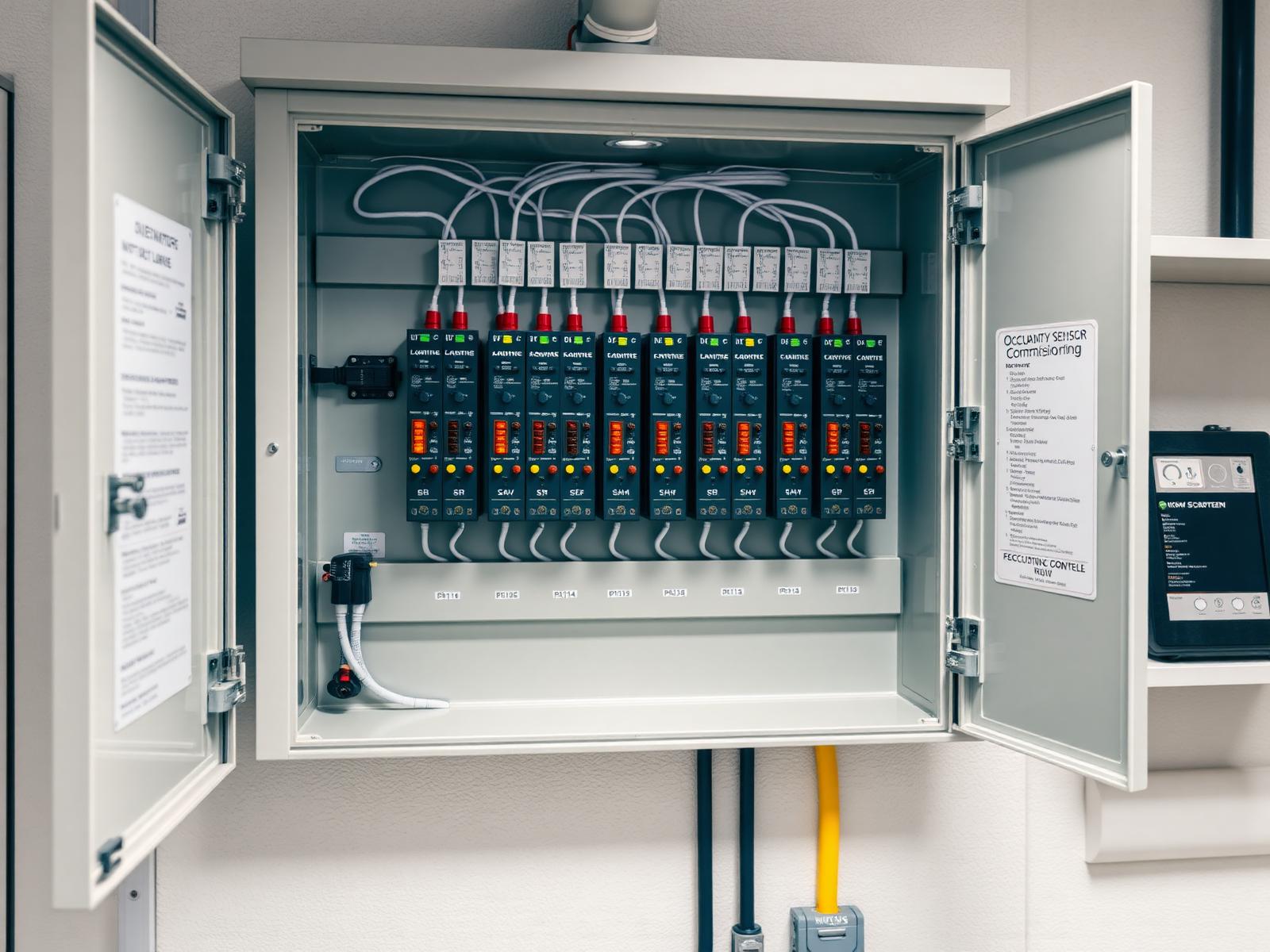
Optimizing commercial interior environments requires precision-engineered infrastructure, and low-voltage lighting systems represent a critical component in achieving both aesthetic and operational efficiency. Access Cabling specializes in the design, installation, and integration of sophisticated low-voltage lighting solutions for corporate campuses, retail establishments, data centers, and other commercial spaces. Unlike conventional line-voltage systems, low-voltage lighting — operating typically at 12V or 24V DC — offers distinct advantages in safety, energy management, and design flexibility, particularly when integrated with modern building automation and lighting control platforms. Our C-10/C-7 licensed technicians bring 28 years of nationwide experience to ensure that these systems are not merely functional, but meticulously planned to meet specific illumination requirements, energy codes, and long-term maintenance objectives. We leverage industry-leading components and TIA/EIA compliant structured cabling practices to deliver robust, scalable, and future-ready low-voltage lighting infrastructure.
Precision-Engineered Low-Voltage Lighting Systems
Low-voltage lighting refers to a class of electrical illumination systems that operate at significantly reduced voltages, typically 12V or 24V Direct Current (DC), as opposed to the 120V or 277V Alternating Current (AC) used in line-voltage applications. These systems necessarily incorporate a transformer or LED driver to convert the higher line voltage down to the safe operating voltage. The primary advantage in commercial interiors lies in enhanced safety due to lower shock risk, greater energy efficiency, and unparalleled flexibility in fixture placement and control integration. The NEC (National Electrical Code) Article 411 specifically addresses low-voltage lighting systems, dictating wiring methods, overcurrent protection, and power source requirements to ensure safety and compliance. Our installations strictly adhere to these NEC provisions, along with TIA/EIA standards for pathway and space considerations, ensuring a robust and compliant infrastructure from the ground up.
Integrated Design and Engineering for Optimal Performance
Successful low-voltage lighting implementation begins with a comprehensive design and engineering phase. This involves detailed photometric studies to determine optimal light levels (lux/foot-candles) and distribution patterns for different task areas, as well as energy modeling to project consumption and ensure compliance with Title 24 or local energy codes. Our design process incorporates manufacturer specifications from partners like Lutron, Legrand, and Crestron, ensuring seamless integration with their sophisticated lighting control modules. We meticulously plan power distribution, cable routes, and driver locations, considering voltage drop calculations across cable runs to guarantee consistent light output and prevent premature LED degradation. Considerations for ingress protection (IP ratings) are also crucial for fixtures in environments with potential moisture or dust, such as commercial kitchens or data center cold aisles. This upfront engineering prevents costly rework and ensures the system operates at peak efficiency throughout its lifecycle.
Advanced Components: Drivers, Fixtures, and Control Modules
The selection of advanced components is paramount to the reliability and performance of a low-voltage lighting system. Key components include LED drivers, which convert AC input to the appropriate DC output for LED arrays, often incorporating dimming capabilities (e.g., 0-10V, DALI, or PWM). We utilize high-quality drivers from manufacturers like Mean Well, ERP Power, or Philips Advance, selected for their efficiency, longevity, and compatibility with specified control protocols. Lighting fixtures themselves are chosen based on lumen output, color temperature (CCT), Color Rendering Index (CRI), beam angle, and aesthetic integration. We specify fixtures from leading brands such as Cooper Lighting, Acuity Brands, or KSA, ensuring they meet project-specific requirements. Furthermore, control modules from platforms like Lutron Vive, Crestron, or Enlighted are integrated to enable granular control over individual fixtures or zones, facilitating daylight harvesting, occupancy sensing, and scheduled scene changes. Cabling for these systems, often 18/2 or 16/2 shielded or unshielded copper, must meet specific gauge requirements to minimize voltage drop and maintain signal integrity, adhering to Article 725 of the NEC for Class 2 and Class 3 power-limited circuits.
Structured Installation Methodologies for Reliability
Our installation methodology for low-voltage lighting adheres strictly to TIA/EIA cabling standards and BICSI best practices, treating the lighting control infrastructure with the same rigor as critical data networks. This includes careful cable routing in conduits, cable trays, or J-hooks to prevent strain and interference, maintaining proper bend radii, and ensuring adequate separation from high-voltage wiring as per NEC Article 300. Cable termination — whether crimped, soldered, or IDC — is performed with precision using manufacturer-recommended tools to ensure robust, low-resistance connections. For addressable lighting systems utilizing protocols like DMX or DALI, signal integrity is paramount; thus, data cabling (e.g., CAT5e/6 for DMX over Ethernet, or specific DALI two-wire cable) is installed and tested to ensure reliable communication between control devices and fixtures. Particular attention is paid to power supply and driver locations, ensuring proper ventilation, accessibility for maintenance, and adherence to electrical panel and junction box fill requirements. Every step of the installation is documented for future modification and troubleshooting.
Comprehensive Testing, Commissioning, and Certification
Post-installation, comprehensive testing and commissioning are critical to validate the entire low-voltage lighting system's functionality and performance. This process involves verifying continuity, polarity, and insulation resistance for all power and control wiring. Voltage drop measurements are taken at the furthest fixture in each circuit to confirm adequate power delivery. For smart lighting systems, the commissioning phase integrates fixtures and sensors into the control network, configuring zones, scheduling, and sensor parameters (e.g., occupancy thresholds, daylight response curves). We utilize diagnostic tools such as Fluke DSX CableAnalyzer for network-based lighting controls (e.g., PoE lighting validation) or specialized light meters and spectrum analyzers to confirm light levels, color accuracy, and flicker rates. Final commissioning includes functional testing of all control sequences, dimming ranges, and emergency lighting integration. Upon successful completion, we provide detailed documentation, including as-built drawings, test reports, and configuration files, ensuring compliance with project specifications and relevant safety standards.
Strategic Applications: Enhancing Commercial Environments
Low-voltage lighting systems offer strategic advantages across a diverse range of commercial applications. In corporate offices, they enable dynamic lighting scenes that adapt to time of day or task, supporting employee well-being and productivity while minimizing energy consumption through occupancy and daylight sensing. Retail environments benefit from precise accent lighting to highlight merchandise, coupled with tunable white fixtures to optimize product presentation without the limitations of traditional track lighting. Data centers leverage low-voltage LEDs for efficient aisle lighting, often integrated with DC power infrastructure to avoid AC-DC conversion losses, and utilize motion sensors to illuminate only active areas, reducing PUE. Educational institutions and healthcare facilities benefit from the safety aspects and the ability to create varied, task-specific illumination for classrooms, labs, and patient rooms. The inherent flexibility of low-voltage systems allows for intricate designs that are difficult or cost-prohibitive with line-voltage alternatives, particularly in retrofit scenarios where conduit capacity or structural limitations exist.
Adherence to Codes, Safety, and Future-Proofing
Compliance with relevant codes and safety standards is non-negotiable for all low-voltage lighting projects. Our team is fluent in NEC Article 411 and Article 725, ensuring that all wiring methods, power sources, and protection mechanisms meet or exceed regulatory requirements. We design systems to comply with energy codes such as ASHRAE 90.1, IECC, and California's Title 24, incorporating daylight harvesting, occupancy sensing, and robust dimming capabilities to achieve specified Power Density (LPD) limits. Beyond compliance, future-proofing is a core aspect of our approach. We anticipate evolving technologies, designing infrastructure that can accommodate future upgrades to higher lumen output LEDs, more advanced control protocols (e.g., Li-Fi or Matter), or integration with broader IoT building management systems. This involves selecting scalable control platforms, deploying modular components, and installing pathways that allow for additional cabling without disruptive renovations, protecting our clients' long-term investment in their lighting infrastructure.
Access Cabling: Your Partner in Intelligent Lighting Infrastructure
Choosing Access Cabling for your low-voltage lighting project means partnering with a C-10/C-7 licensed contractor that understands the intricate technical demands of modern commercial infrastructure. Our 28 years of nationwide experience is not just a number; it represents a deep institutional knowledge in deploying complex low-voltage systems, backed by certifications from BICSI and partnerships with industry leaders like Lutron, DALI, and PoE lighting manufacturers. We do not offer templated solutions; instead, each project receives a bespoke design informed by specific operational requirements, architectural considerations, and energy efficiency goals. Our dedicated project managers and field technicians are experts in current NEC standards, TIA/EIA structured cabling guidelines, and manufacturer best practices, ensuring a meticulously planned and expertly executed installation. We provide transparent communication, detailed documentation, and a commitment to delivering a high-performance, maintainable, and scalable lighting solution that extends beyond mere illumination to tangible operational and economic benefits for your enterprise.
Leveraging Digital Building Twins for Lighting System Lifecycle Management
The integration of low-voltage lighting systems within a broader Digital Building Twin (DBT) framework offers unparalleled advantages in project visualization, operational efficiency, and long-term asset management. Access Cabling employs advanced Building Information Modeling (BIM) platforms, such as Autodesk Revit and Trimble SketchUp Pro, to create hyper-accurate 3D models of proposed lighting installations. These models go beyond mere spatial representation, embedding critical data points for each luminaire, driver, and control module. This includes photometric data (IES files), electrical characteristics (voltage, wattage, amperage), network topology (IP addresses, MAC IDs for IoT-enabled devices), and maintenance schedules. During the design phase, our engineers can simulate light distribution, energy consumption, and thermal loads, identifying potential conflicts with HVAC or other MEP systems before construction commences. This proactive approach significantly reduces change orders, minimizes field-related issues, and ensures optimal system performance. The DBT also serves as a robust foundation for clash detection, enabling real-time collaboration with architectural, mechanical, electrical, and plumbing trades to resolve spatial or functional incompatibilities, leading to a smoother, faster deployment cycle. Furthermore, the digital twin becomes a living repository of the entire system's history, documenting every modification, upgrade, and maintenance event, which is invaluable for facility managers.
Advanced Power over Ethernet (PoE) Illumination Architectures
Our expertise extends to implementing sophisticated Power over Ethernet (PoE) lighting architectures, particularly relevant for DC-powered low-voltage luminaires. Utilizing IEEE 802.3bt (PoE++) and future IEEE 802.3bn (Type 4) standards, we design systems that deliver both power and data over a single Category cable, typically Cat6A or higher, eliminating the need for separate AC wiring and conduit runs directly to each fixture. This not only streamlines installation but also significantly reduces material and labor costs while enhancing flexibility for fixture relocation or re-tasking. Access Cabling meticulously plans the PoE infrastructure, considering power budget allocations per switch port, cable length limitations, and voltage drop calculations to ensure consistent light output and reliable network connectivity for each device. We integrate intelligent PoE lighting controllers and network switches from leading manufacturers such as Cisco, Philips, and Igor, configured to prioritize critical lighting circuits and provide granular control, dimming capabilities, and energy usage monitoring at the individual fixture level. This approach facilitates dynamic lighting schemes, occupancy-based controls, and advanced scheduling, all managed through a centralized IP-based platform, directly contributing to energy conservation and a reduced Total Cost of Ownership (TCO) over the system's lifespan.
Rigorous Cyber-Physical Security for Networked Lighting Systems
As low-voltage lighting systems become increasingly networked and integrated into building automation platforms, robust cyber-physical security measures are paramount. Access Cabling implements multi-layered security protocols to safeguard against unauthorized access, data breaches, and potential system disruptions. Our designs incorporate network segmentation, isolating lighting control networks from core IT infrastructure through VLANs (Virtual Local Area Networks) and dedicated firewalls. We deploy secure communication protocols such as TLS/SSL encryption for data transmission between controllers, gateways, and cloud platforms. Device authentication, utilizing strong password policies and MAC address filtering, prevents rogue devices from joining the lighting network. Furthermore, our installations often include intrusion detection systems (IDS) tailored for IoT devices, monitoring for anomalous traffic patterns or unauthorized configuration changes. We also address physical security vulnerabilities, ensuring control panels, network switches, and critical control modules are housed in secure, lockable enclosures with appropriate environmental controls to prevent tampering or environmental damage. Our commissioning process includes penetration testing and vulnerability assessments to identify and mitigate potential weaknesses before system handover, aligning with industry best practices like IEC 62443 and NIST Cyber Security Framework guidelines to ensure the integrity and resilience of the intelligent lighting infrastructure.
Long-Term Operational Efficiency Through Proactive Maintenance and Analytics
Ensuring the sustained optimal performance and energy efficiency of low-voltage lighting systems requires a proactive, data-driven approach to maintenance and operational analytics. Access Cabling implements advanced monitoring solutions that collect real-time data on luminaire health, driver performance, energy consumption, and network uptime. This telemetry is aggregated onto centralized dashboards, providing facility managers with actionable insights into system behavior, allowing for predictive maintenance rather than reactive repairs. For instance, our systems can detect early signs of driver degradation or LED module failure rates exceeding expected parameters, triggering automated alerts for preemptive replacement, thereby minimizing downtime and ensuring consistent illumination levels. Furthermore, lighting analytics platforms can identify opportunities for further energy optimization, such as refining occupancy sensor thresholds, adjusting dimming schedules based on actual usage patterns, or identifying zones with unexpectedly high energy consumption. We also offer comprehensive service level agreements (SLAs) including remote diagnostics, firmware updates for networked devices to address security vulnerabilities or introduce new features, and on-site technical support. This holistic approach to long-term operational efficiency ensures that the initial investment in a cutting-edge low-voltage lighting system continues to deliver maximum value, energy savings, and occupant comfort throughout its lifespan, significantly reducing lifecycle costs and environmental impact.