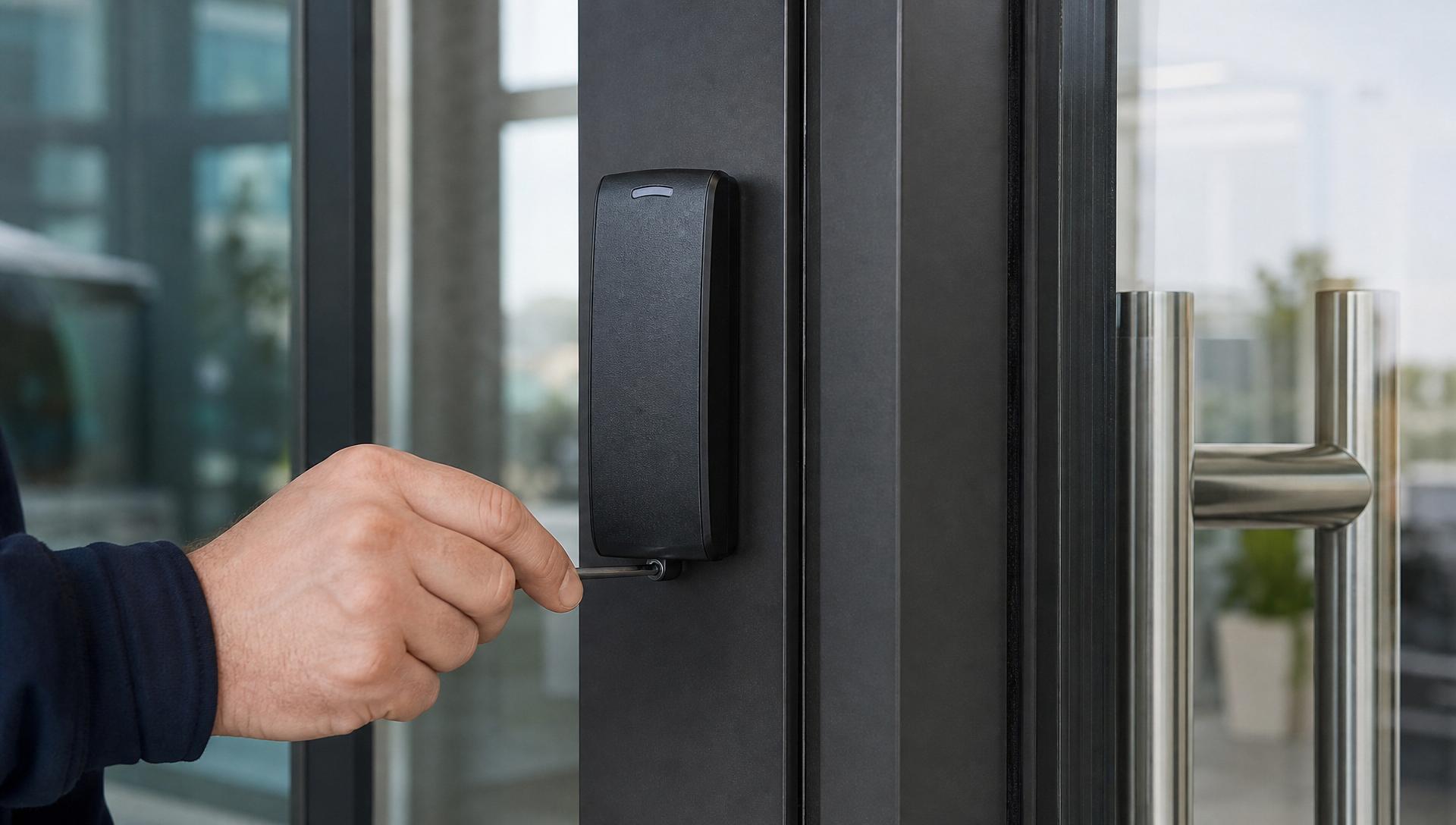
Securing commercial facilities effectively requires more than just locks; it demands a robust, integrated access control system engineered for precision and scalability. At Access Cabling, we specialize in designing, installing, and commissioning commercial access control systems that protect assets, personnel, and proprietary information across diverse environments. Our approach moves beyond off-the-shelf solutions, focusing instead on architecting systems with industry-leading components from manufacturers like HID, Mercury Security, and Assa Abloy, integrating them seamlessly with existing network infrastructure. We leverage our 28 years of low-voltage expertise to ensure every controller, reader, and lock interface is properly wired, configured, and tested to meet stringent security protocols and operational demands, providing IT directors and facilities managers with uncompromising control and granular visibility over physical access points and perimeter security across their campuses or distributed enterprises.
Foundational Access Control Architecture and Standards
Commercial access control systems are built upon a layered architecture comprising credential readers, electronic locking hardware, access control panels (ACPs), and central management software. Adherence to open standards is critical for ensuring interoperability and future-proofing investments. Our designs frequently incorporate panels from Mercury Security (now part of HID Global), leveraging their Authentic Mercury open platform which supports a wide array of integration options via OSDP (Open Supervised Device Protocol) for reader communication. OSDP, in accordance with SIA (Security Industry Association) standards, provides enhanced security features like encryption and authentication compared to older Wiegand protocols, mitigating credential cloning and man-in-the-middle attacks. Power over Ethernet (PoE) functionality for certain controllers and readers simplifies installation while adhering to IEEE 802.3at/bt standards. We ensure all low-voltage wiring for readers, door contacts, and request-to-exit (REX) devices complies with NEC Article 725 for Class 2 and Class 3 circuits, utilizing appropriate cable types like multi-conductor shielded Plenum-rated cable (e.g., Belden 5500UE) where required by local fire codes or pathway restrictions, guaranteeing both system integrity and regulatory compliance throughout the cabling infrastructure.
Strategic Design for Scalability and Integration
Effective access control system design necessitates a comprehensive site assessment and a forward-looking strategy for scalability and third-party integration. Our engineering process begins with a detailed analysis of the client's current and anticipated security requirements, regulatory compliance objectives (e.g., HIPAA, CMMC, SOC 2), and existing IT network infrastructure. We evaluate access points (doors, gates, cabinet locks), user populations, and desired access policies to specify appropriate hardware, including biometric readers, smart card readers (e.g., HID iCLASS SE, Seos), or mobile credentials. The selection of the access control management platform, such as LenelS2 OnGuard, Genetec Security Center, or Open Options DNAFusion, is dictated by the client's functional requirements, integration needs with video surveillance (VMS), human resources information systems (HRIS), or visitor management systems. We architect the network topology for access panels, typically utilizing dedicated VLANs, ensuring reliable IP communication while segmenting security traffic from general data. This meticulous planning prevents costly rework, accommodates future expansion, and ensures seamless integration with other building management and security systems, providing a unified operational view and command structure for facilities personnel and security operations centers.
Component Selection and Low-Voltage Pathway Management
The longevity and reliability of an access control system are directly tied to the quality of its components and the integrity of its low-voltage cabling pathways. We specify commercial-grade hardware, including electric strikes (e.g., Folger Adam, HES Schlage), magnetic locks (maglocks), and electrified panic devices, selecting products rated for the expected duty cycle and environmental conditions. For cabling, this means selecting plenum or riser-rated multi-conductor cable (e.g., 18/2, 18/4, 22/6 AWG from manufacturers like General Cable or Southwire) for power, data, and sensor connections, ensuring adequate gauge for voltage drop over distance. Door contacts (e.g., concealed, surface-mount, balanced magnetic switches) and request-to-exit devices (e.g., passive infrared REX, push button) are chosen based on door type and application. Furthermore, robust pathway management is critical. This includes proper conduit installation (EMT, RMC), cable tray systems, firestopping penetrations in accordance with UL 1479 and local AHJ requirements, and adhering to bend radius requirements for all wiring. Attention to these details minimizes electromagnetic interference (EMI), protects cables from physical damage, and facilitates system maintenance, ensuring consistent and uninterrupted system functionality for years to come. Our detailed labeling practices, using Brady or Panduit systems, ensure clear identification of every wire and device during commissioning and future servicing.
Precision Installation and Commissioning Protocols
Access control system installation demands meticulous attention to detail, stringent adherence to blueprints, and a disciplined commissioning process. Our C-10/C-7 licensed technicians are trained in the precise execution of cabling runs, termination, and device mounting. This includes accurate placement and calibration of credential readers to ensure optimal read range, correct installation of electric locking hardware to comply with local fire and life safety codes (e.g., egress requirements, delayed egress timers), and secure mounting of access control panels within IDF/MDF closets or dedicated security rooms. All connections to door position switches, REX devices, and power supplies are meticulously terminated, typically using IDC or screw-terminal blocks, and verified for continuity and polarity using Fluke or Psiber network and cable certifiers. Following physical installation, the system undergoes a comprehensive commissioning phase. This involves power-up, network configuration for each panel (static IP assignment, subnet masking, gateway settings), panel firmware updates, and the loading of the initial access control database including card formats, access groups, schedules, and holiday exceptions. Every door and reader is individually tested to confirm proper lock/unlock operation, alarm triggers from forced doors or door held open events, and REX functionality, ensuring the system operates as designed and meets all specified security parameters. We integrate with client IT teams throughout this process, particularly for network integration and firewall rule adjustments.
Rigorous System Testing and Compliance Verification
Comprehensive testing and compliance verification are non-negotiable steps in every access control system deployment. Post-commissioning, we conduct a multi-faceted testing regimen. This includes functional testing of all hardware components, verifying reader performance, lock response times, and the accurate reporting of alarms (e.g., tamper, power failure, forced door) to the central management system. We simulate various real-world scenarios, such as card denials for unauthorized access, global lock-downs, and emergency overrides, to confirm the system's responsiveness and adherence to predefined security policies. Network connectivity and latency are assessed using tools like Fluke Network's LinkRunner™ to ensure data integrity and real-time event logging. Furthermore, a critical aspect of our process is verifying legal and code compliance. This involves confirming that all egress pathways meet NFPA 101 Life Safety Code requirements, that delayed egress systems adhere to local AHJ (Authority Having Jurisdiction) regulations, and that all wiring is installed in accordance with NEC Article 725 and Article 760 (for fire alarm system integration where applicable). We provide comprehensive as-built documentation, including detailed floor plans with device locations, wiring schematics, and configuration reports, establishing a clear baseline for ongoing maintenance, audits, and future system enhancements. This meticulous approach minimizes vulnerabilities and ensures the access control system meets its intended security and operational objectives while remaining fully compliant with relevant codes and standards.
Advanced Applications and Multi-Site Deployment Strategies
Access control systems extend far beyond simple door entry, offering advanced functionalities essential for modern commercial security and operational efficiency. We implement solutions for elevator control integration, restricting floor access based on credentials; asset tracking within secure cabinets or data center racks; and visitor management system integration to streamline guest registration and credential issuance. For multi-site organizations, our expertise includes designing centralized access control platforms capable of managing hundreds or thousands of doors across geographically dispersed locations. This typically involves deploying a master-server architecture, potentially leveraging cloud-hosted or hybrid cloud solutions from vendors like Brivo or Open Options, for unified management, reporting, and policy enforcement from a single interface. Secure VPN tunnels and robust network infrastructure are critical for maintaining reliable communication between remote panels and the central server, ensuring real-time event synchronization and consistent security posture across the entire enterprise. Each remote site’s IT environment is assessed for network readiness, and appropriate bandwidth and latency considerations are factored into the design to prevent communication disruptions. This unified approach provides granular control, consistent security policies, and consolidated reporting across complex, distributed footprints, minimizing administrative overhead and enhancing overall organizational security.
Compliance Enforcement and Data Security
In an era of increasing cyber threats and stringent data privacy regulations, the security and compliance of access control system data are paramount. Our design and implementation practices prioritize data protection from the ground up. This includes utilizing secure communication protocols (e.g., HTTPS, SFTP, OSDP with AES-128 encryption) between components and the central server, and segmenting the access control network using dedicated VLANs to isolate it from general corporate networks. We configure robust user authentication and authorization within the access control software, employing role-based access control (RBAC) to ensure that only authorized personnel have access to specific system functions and data. Data at rest, such as credential databases and event logs, is protected with encryption where supported by the platform. Furthermore, we assist clients in understanding and meeting compliance requirements relevant to their industry, whether it's GDPR, CCPA, HIPAA, or industry-specific standards like FIPS 201 for federal agencies. Our expertise extends to incorporating audit logging features, ensuring that all access events, administrative actions, and system modifications are recorded for forensic analysis and compliance reporting. By adhering to these best practices, we safeguard sensitive personnel data and system integrity, providing clients with a secure, compliant, and auditable access control solution that mitigates both physical and cyber risks.
Access Cabling's Differentiated Project Execution
What sets Access Cabling apart in the implementation of commercial access control systems is our unwavering commitment to technical excellence, meticulous project management, and a vendor-agnostic approach. Unlike integrators tied to single manufacturers, our independence allows us to specify and combine best-in-class components from industry leaders like HID, Mercury Security, Schlage, and Assa Abloy, tailoring solutions precisely to client requirements rather than being limited by a product catalog. Our C-10/C-7 licensed teams bring 28 years of specialized low-voltage installation experience, ensuring that every wire is pulled correctly, terminated cleanly, and tested rigorously, avoiding the common pitfalls of improper wiring that plague many security system installations. We provide detailed, transparent documentation including as-built drawings, test reports from Fluke DSX-8000 certifiers for network connectivity, and comprehensive system configuration settings, empowering client IT and facilities teams with complete visibility. Our project managers maintain clear communication throughout the lifecycle, from initial site survey and design through installation, commissioning, and client training, guaranteeing on-time and on-budget delivery. This integrated approach, rooted in deep technical expertise and client collaboration, results in a robust, reliable, and easily maintainable access control infrastructure that serves as a cornerstone of your facility's physical security posture.
Lifecycle Management: From Obsolescence to Upgrades
Effective access control system longevity is predicated not just on initial deployment but on a robust lifecycle management strategy that anticipates technological evolution and component obsolescence. Our approach integrates a forward-looking analysis of hardware and software roadmaps from leading manufacturers (e.g., Mercury Security, HID Global, LenelS2, Genetec) to inform system design, ensuring that components are not only current but have a defined upgrade path, minimizing stranded assets. We specifically evaluate end-of-life (EOL) announcements, firmware deprecation schedules, and backward compatibility mandates to provide clients with a clear technology refresh cycle. This proactive planning mitigates the significant operational disruptions and unforeseen capital expenditures associated with reactive component failures or security vulnerabilities in unsupported systems. Furthermore, our project documentation includes a comprehensive technology transition plan, detailing modular upgrade paths for controllers, readers (e.g., OSDP v2.1.7 compliance, mobile credential support including NFC/BLE), and master software platforms, alongside data migration strategies to preserve historical audit trails and user profiles during major system overhauls. We also consider the total cost of ownership (TCO) beyond initial capital outlay, factoring in ongoing maintenance, licensing fees, and the cost efficiency of future upgrades as opposed to complete system replacements, often leveraging open architecture platforms to enhance interoperability and reduce vendor lock-in, which are critical considerations for long-term system sustainment.
Interfacing with Critical Building Management Systems
The true efficacy of a modern access control system extends beyond door security, deeply integrating with other critical building management systems (BMS) and low-voltage infrastructure to create a cohesive operational environment. Our design methodology systematically identifies and defines the necessary interfaces with HVAC controls, lighting automation, fire alarm systems (FAS), video surveillance (CCTV/VMS), and elevator dispatch systems. This necessitates meticulous protocol mapping, often utilizing industry standards such as BACnet IP for HVAC, Modbus RTU/TCP for energy management, and ONVIF profiles for IP cameras, ensuring seamless data exchange and coordinated operational responses. For instance, in an emergency, the access control system must be designed to receive a signal from the FAS via dry contact or API, automatically triggering door unlocks for egress and simultaneously initiating appropriate CCTV recording and elevator homing. This level of integration demands a deep understanding of each system's API, SDK, and communication architecture, preventing common pitfalls such as latency in critical event notification or data loss during cross-system transfers. We specifically employ advanced middleware solutions and custom scripting where direct native integrations are unavailable, providing a unified operational dashboard and consolidated event logging, which significantly enhances situational awareness and streamlines incident response protocols for facility security and operations teams. Proper coordination with MEP (Mechanical, Electrical, and Plumbing) trades during the design and construction phases is paramount to ensure adequate pathway infrastructure, power availability (e.g., redundant PoE options, dedicated circuits), and environmental controls for integrated equipment racks and server rooms.
Addressing Evolving Cyber-Physical Security Threats
In an era of escalating cyber-physical threats, the security of an access control system is as dependent on its network resilience and data integrity as on its physical hardening. Our design and implementation practices incorporate a multi-layered cybersecurity framework specifically tailored for low-voltage access control infrastructure. This includes implementing robust network segmentation using VLANs (Virtual Local Area Networks) and firewalls to isolate critical access control devices from general IT networks, minimizing attack surfaces. We mandate compliance with industry best practices such as NIST SP 800-53 and ISO 27001 for security controls, focusing on strong encryption protocols (e.g., AES-256 for all data in transit and at rest), secure boot processes for controllers, and regular penetration testing and vulnerability assessments to proactively identify and remediate weaknesses. Furthermore, we emphasize the secure provisioning of devices, ensuring that default credentials are never utilized and that all firmware updates are authenticated and cryptographically signed. Insider threat mitigation is addressed through granular role-based access control (RBAC) within the access software, coupled with comprehensive audit logging that tracks all user activity, configuration changes, and credential usage, providing an immutable record for forensic analysis. Our approach extends to securing client workstations and servers hosting the access control software, applying principle of least privilege, endpoint detection and response (EDR) solutions, and regular security patching, understanding that a compromised workstation can render the most robust physical security system vulnerable. We also educate clients on the risks associated with social engineering and advise on secure credential management policies and practices.
Delivering Comprehensive Documentation and Training
The long-term operational success and maintainability of an access control system are directly correlated with the quality and completeness of its accompanying documentation and the efficacy of operator training. Our project deliverables include a meticulous 'as-built' documentation package that extends beyond standard blueprints. This package comprises detailed riser diagrams illustrating conduit pathways, cable types (e.g., shielded vs. unshielded, Cat6A, fiber optic) and lengths, device locations with exact coordinates, and power distribution schematics including UPS integration points and dedicated circuit breakers. We provide comprehensive network topology maps detailing IP addresses, MAC addresses, port configurations, and VLAN assignments for every networked access control component. Additionally, the documentation includes fully indexed software configuration files, database schemas, and administrator passwords (delivered securely via one-time encrypted channels) for emergency access. Crucially, cut sheets and configuration guides for all installed hardware (e.g., intelligent controllers, reader types, electrified locking hardware, request-to-exit devices) are collated and cross-referenced. Beyond the technical specifics, we develop custom operator manuals tailored to the client's specific operational workflows, covering routine tasks, alarm acknowledgment, report generation, and basic troubleshooting. Our training programs are multi-tiered, catering to end-users on daily operations, system administrators on configuration and maintenance, and IT personnel on troubleshooting network and server-related issues. Training includes hands-on sessions utilizing the actual deployed system, reinforced with scenario-based exercises to build practical proficiency and ensure client personnel are fully competent in maximizing system functionality and responding effectively to various operational and security events.