Cloud vs. on-prem VMS: which fits your operation
Cloud (Verkada, Meraki MV, Rhombus, Avigilon Alta) for small IT teams, multi-site standardization, and any environment where the value of remote management and zero-maintenance outweighs the per-camera subscription. On-prem VMS (Milestone XProtect, Genetec Security Center, Avigilon ACC, Hanwha Wisenet WAVE) for large deployments, high camera counts, video-analytics-heavy workloads, or environments where footage must stay on the customer network. Hybrid designs are common.
Camera selection: resolution, sensor, and lens
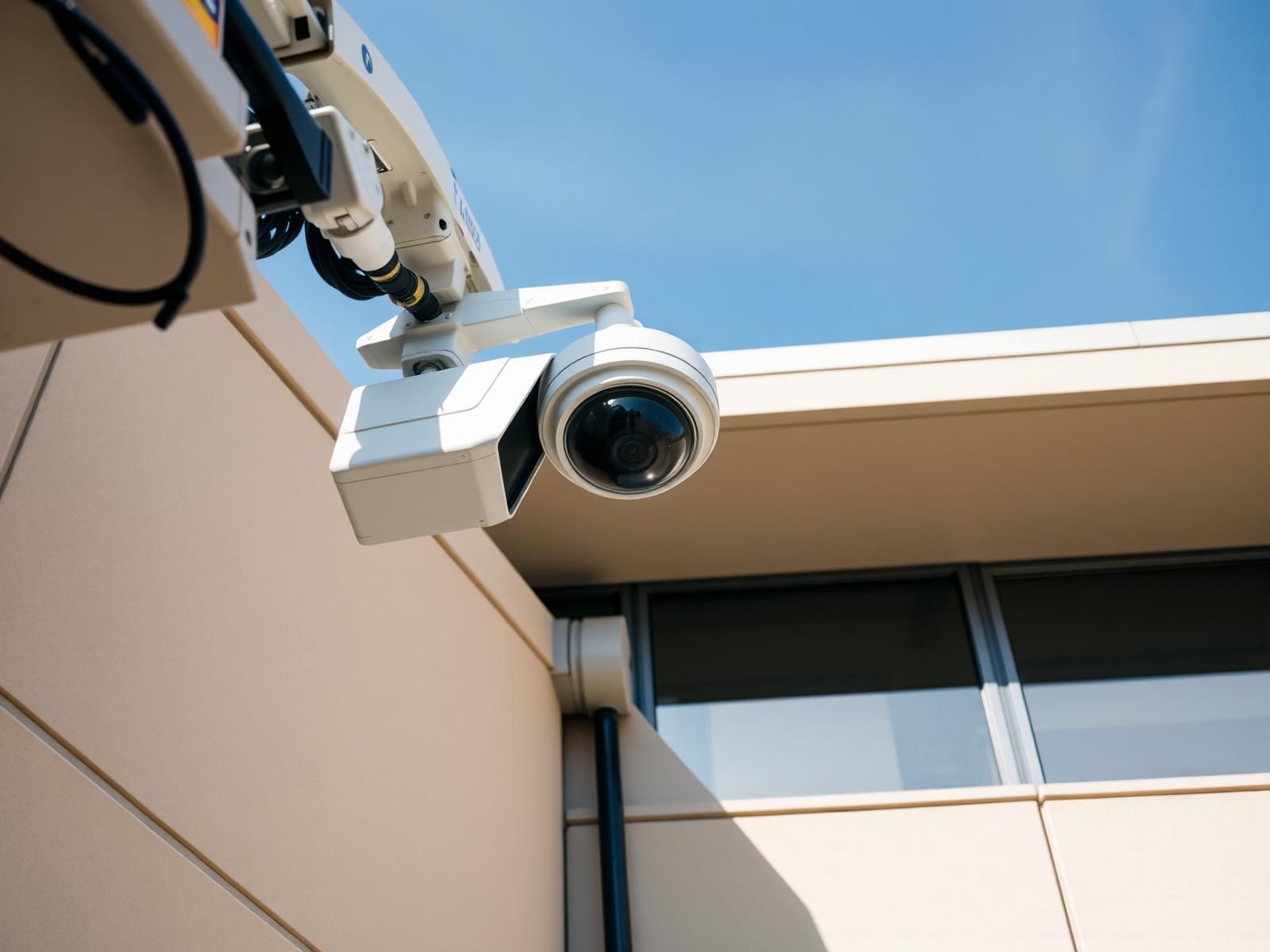
4MP is the current baseline for general coverage; 8MP (4K) for parking lots, wide areas, and forensic-quality capture. Multi-sensor (180/360°) cameras replace 3-4 fixed cameras at one mount point in atriums, warehouses, and retail. LPR-optimized cameras with global-shutter sensors at driveways and gates. Thermal for perimeter and low-light. Every design starts with a coverage map and pixel-density requirement (PPF/PPM) per area.
Analytics and integration
License plate recognition, people counting, loitering detection, cross-line and intrusion analytics, face-match, and behavior analytics are standard on modern IP cameras (edge) or VMS (server). Access-control integration links every door event to camera bookmarks. Alarm system integration triggers recording and alerts on intrusion.
Security camera installation cost: what a commercial CCTV install runs in 2026
Commercial security camera installation cost is driven by camera count, pathway conditions, storage retention, and platform choice. A useful all-in benchmark: $850-$2,400 per interior IP camera and $2,500-$5,000 per exterior camera installed — camera hardware, PoE switch port, CAT6 structured cabling drop, mount, license, NVR/cloud share, configuration, and commissioning. Enterprise cameras (PTZ, LPR, thermal, multi-sensor) run $2,500-$6,000 per camera because the hardware alone is $1,500-$3,500 and installation requires heavier mounts, weatherized enclosures, and longer runs.
At the project level, a typical 16-camera commercial install into an existing building with open plenum ceilings prices at $18,000-$28,000 including cameras, cabling, PoE switch, and either an on-prem NVR or one year of cloud licensing. The same 16 cameras in a hard-lid retail buildout with fire-rated walls, after-hours access, and 30-day 4K retention can hit $40,000-$50,000. Cloud VMS platforms (Verkada, Meraki MV, Rhombus, Avigilon Alta) add $10-$40 per camera per month but remove the on-prem NVR line item — usually $6,000-$12,000 of RAID storage for a 32-camera 30-day retention plant.
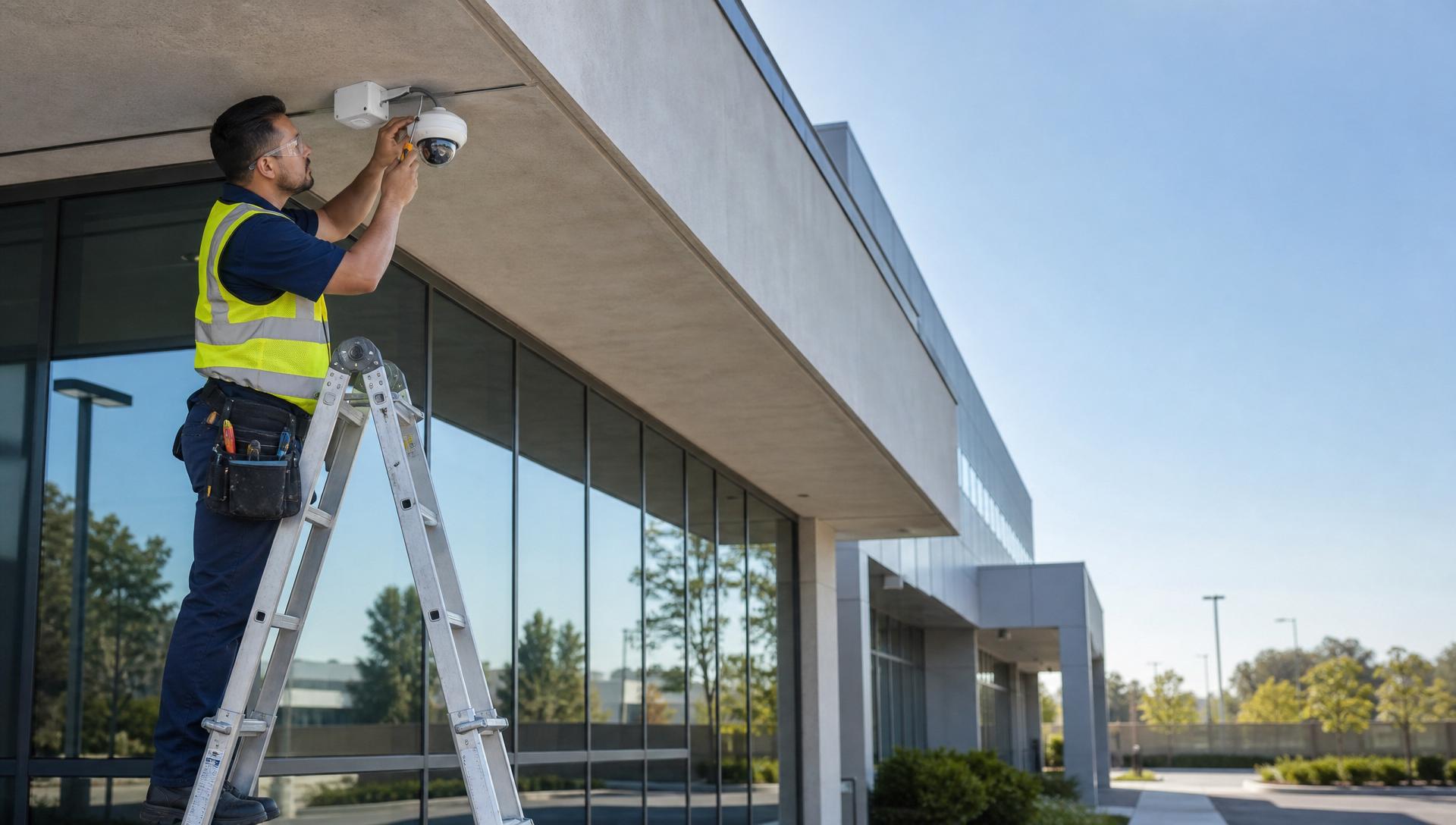
What drives the biggest variance in security camera installation cost? Pathway and mounting. Open ceiling, existing cable tray, and interior mounts are the cheapest install. Exterior cameras on stucco, brick, or high walls need lift equipment, weatherized J-boxes, in-line surge protection, and often a fiber-to-copper media converter on runs beyond 100m. Cat6 handles standard PoE cameras; move to Cat6A for PTZ, LPR, and any camera in a warehouse or manufacturing space with electrical noise — the cable premium is small, and re-pulling copper at year seven to upgrade is not. Every quote we send is fixed, line-itemized per camera, and delivered within 48 hours of a site walk.