Access Cabling commercial structured cabling infrastructure
Commercial · Low Voltage

Intercom Systems Services

IP and analog intercom systems for entry, tenant and internal comms.

28+ Years Experience
C-10 / C-7 Contractor
CSLB: 992009
Licensed Commercial Contractor
5 California Offices
California & Nationwide Service

Request a Intercom Systems site survey

Free, no-obligation walkthrough. Licensed C-10 / C-7 (CSLB #992009). 28+ years, California & nationwide.

Request a site survey
Commercial Service Overview

Enterprise-grade intercom systems engineered for commercial buildings.

Intercom Systems from Access Cabling delivers enterprise-grade intercom systems engineered by a licensed low-voltage contractor with 28+ years serving California and nationwide clients. Our BICSI-trained technicians design, install, terminate, test and certify every run to TIA/EIA standards so your infrastructure supports current bandwidth demands and future growth.

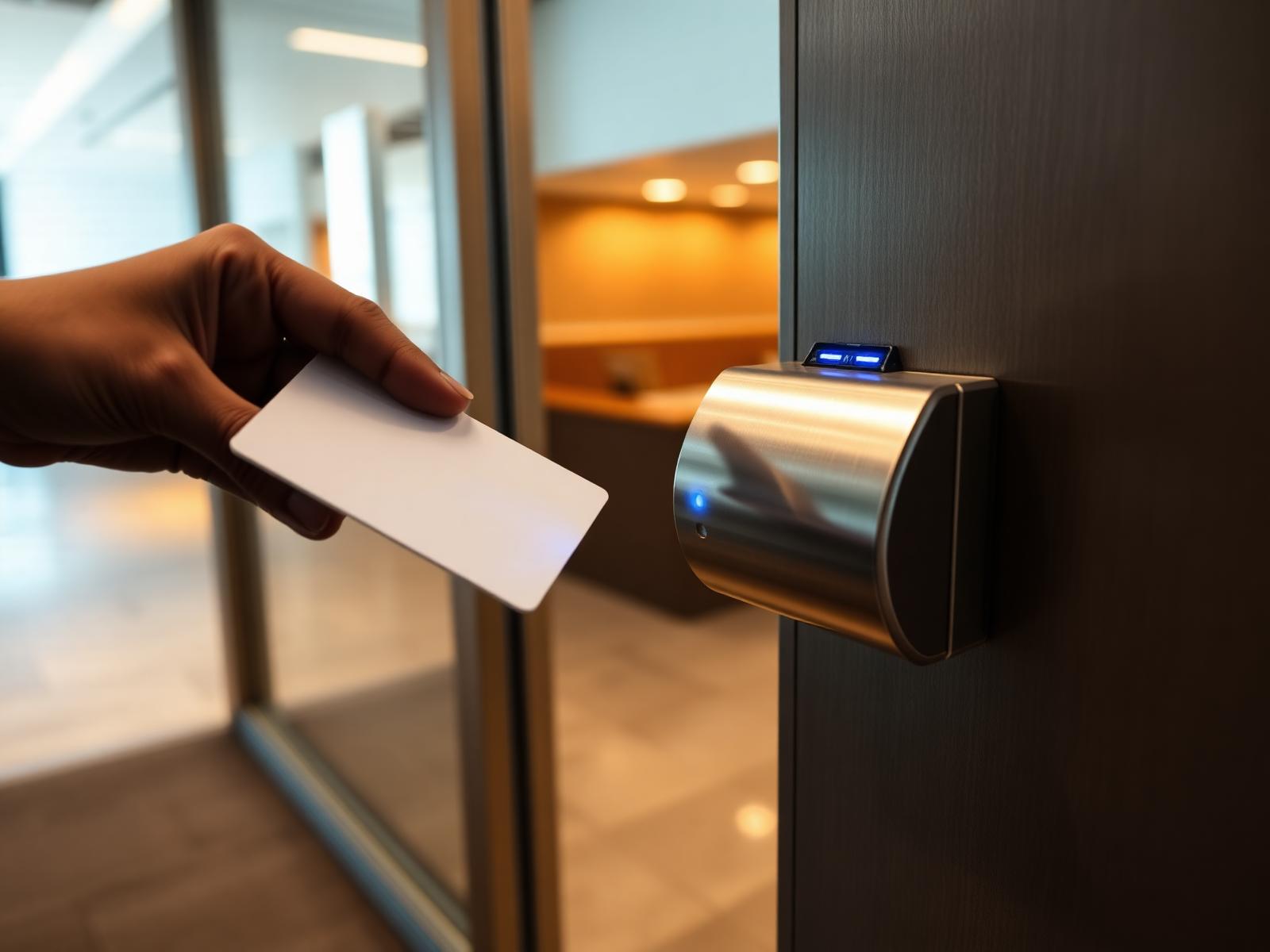
IP intercom mounted at a commercial entry beside a proximity reader.
Key Benefits

Why intercom systems from Access Cabling

Commercial-grade installation, certified performance, and infrastructure built to last 25+ years.

Certified installation by BICSI-trained technicians
Manufacturer warranties up to 25 years on structured cabling
Fluke DSX certification reports on every project
Licensed C-10 / C-7 low-voltage contractor
24/7 emergency response and MAC services
Nationwide coverage with California headquarters
Installation Process

Our proven commercial cabling process

A repeatable, engineered process — refined over 28 years and thousands of sites.

  1. Step 1

    Free on-site survey and needs assessment

  2. Step 2

    Engineered design with rack elevations and pathway plans

  3. Step 3

    Scheduled installation with minimal business disruption

  4. Step 4

    Termination, testing, labeling and documentation

  5. Step 5

    Fluke certification and as-built drawings delivered

Technical Standards & Testing

TIA-compliant. Fluke-certified. Fully documented.

Every intercom systems installation follows TIA-568, TIA-606 labeling, NEC 800 and applicable manufacturer specifications. Fluke DSX Versiv certification and full as-built documentation are delivered at project close.

  • TIA-568 structured cabling standards
  • TIA-606 labeling and administration
  • TIA-942 data center infrastructure
  • Fluke DSX-8000 channel and link certification
  • Manufacturer certified installer for Panduit, CommScope, Leviton
Access Cabling commercial structured cabling infrastructure
Industries Served

Intercom Systems for every commercial environment

28+
Years
5
CA Offices
50
States
12M+
Feet Installed
Local Service Area

Intercom Systems across California & nationwide

Local crews dispatched daily from five California offices. Multi-site rollouts across all 50 states.

In Depth

A closer look at intercom systems

Effective communication and access control are critical for operational security and efficiency across commercial, industrial, and multi-tenant environments. Intercom systems provide a robust, reliable, and instantaneous method for voice and, increasingly, video communication between entry points, strategic locations, and internal personnel. Unlike generic communication platforms, dedicated intercom solutions are engineered for constant operation, integration with access control, and enhanced security features, resilient to environmental variables. Access Cabling specializes in the design, installation, and optimization of sophisticated IP and analog intercom systems, ensuring seamless communication pathways. Our approach goes beyond simple installation; we leverage our 28 years of low-voltage experience, C-10/C-7 licensing, and adherence to TIA/EIA, BICSI, and NEC standards to deliver purpose-built intercom infrastructure tailored to each client's unique security and operational demands, from single-point entry to complex multi-building campus deployments. We focus on providing solutions that integrate with existing systems rather than stand in isolation.

Intercom System Architectures: IP vs. Analog Foundations

Intercom systems are fundamentally categorized by their underlying transmission technology: Analog or IP (Internet Protocol). Analog intercoms, while still relevant for specific, often simpler applications, transmit audio signals directly over dedicated twisted-pair cabling. They are generally robust against network vulnerabilities but lack the advanced features, scalability, and integration capabilities of their IP counterparts. IP intercom systems, however, leverage standard Ethernet infrastructure, transmitting audio and video as digital packets. This allows for Power over Ethernet (PoE) deployment, integration with VoIP PBXs, video management systems (VMS), and centralized management platforms. Selecting between these architectures dictates cabling requirements, system features, and long-term expandability, a decision guided by the client's current infrastructure, future needs, and budget. For mission-critical security applications, the enhanced monitoring and interoperability of IP systems often present a superior value proposition, particularly when considering multi-site or geographically dispersed operations.

Strategic Design and Engineering for Critical Communications

The engineering phase for intercom systems extends far beyond simply selecting hardware; it involves a comprehensive site assessment, detailed pathway planning, and a thorough understanding of operational workflows. Our process begins with an in-depth analysis of traffic patterns, security vulnerabilities, and desired communication endpoints. Considerations include environmental factors for exterior units (IP ratings, vandal resistance), audio intelligibility in high-noise areas, and integration with existing access control systems, CCTV, and building management systems (BMS). We meticulously map out cable routes, anticipating potential electromagnetic interference (EMI) and ensuring adherence to NEC Article 800 for communication circuits. Utilizing CAD software, we develop detailed schematics that specify device placement, cabling standards (e.g., Cat6A for future-proofing IP video intercoms), power requirements, and network topology. This rigorous design phase, informed by TIA/EIA 568 standards for structured cabling, minimizes post-installation issues and guarantees a system that performs optimally under demanding conditions.

Component Selection: Robustness and Interoperability

The durability and functionality of an intercom system are directly tied to the quality and compatibility of its components. Access Cabling specifies enterprise-grade hardware from industry leaders such as Aiphone, Comelit, Zenitel (Vingtor-Stentofon), and Hikvision, ensuring reliability and long-term support. Key components include master stations (IP or analog), door/gate entry panels (weather-rated, vandal-resistant, often with integrated cameras and card readers), substations, and network switches. For IP systems, PoE switches compliant with IEEE 802.3at (PoE+) or 802.3bt (UPoE/PoE++) are frequently deployed to power remote units, streamlining cabling. Intercom units themselves are selected based on their audio codec support (e.g., G.711, G.722 for wideband audio), SIP compatibility for VoIP integration, and compliance with ONVIF for seamless video stream integration with VMS. We ensure every component is not only robust enough to withstand its intended environment but also fully interoperable within the larger security and communication ecosystem, avoiding proprietary lock-in and simplifying future upgrades.

Precision Installation and Cable Plant Management

The physical installation of an intercom system's cabling infrastructure is as critical as the hardware selection. Our C-10/C-7 licensed technicians meticulously adhere to industry best practices and NEC requirements (e.g., Article 725 for Class 2 and 3 circuits, Article 800 for communications circuits). This includes correct cable selection (e.g., shielded Cat6A for EMI-prone environments, outdoor-rated direct-burial cable), proper cable management, conduit sizing, and firestopping. For IP systems, structured cabling principles are paramount, ensuring proper bend radii, slack management, and termination techniques for all RJ44 or fiber optic connections, often using manufacturer-specific tools from Panduit or Leviton. Analog systems require careful attention to shielding and grounding to prevent hum and interference. We ensure that all cabling pathways are clearly labeled, systematically documented, and maintain proper separation from high-voltage wiring to mitigate induction and ensure signal integrity. This meticulous approach prevents signal degradation, reduces future troubleshooting, and ensures a reliable communication backbone for the entire system.

Rigorous Testing, Certification, and Documentation

Post-installation, Access Cabling implements a comprehensive testing and certification regimen to validate the performance and integrity of the intercom system. For structured cabling components, we utilize Fluke DSX series cable certifiers to perform Level 2G/IIIe or higher tests, verifying compliance with TIA-568 standards for insertion loss, return loss, near-end crosstalk (NEXT), and power sum alien crosstalk (PSAN). This ensures the underlying physical layer can support the required bandwidth for IP voice and video. Beyond cable certification, each intercom point undergoes functional testing, including audio quality (intelligibility, volume), video clarity, call routing, and integration with access control. We check for duplex audio, echo cancellation, correct microphone and speaker operation, and verify SIP registration for IP-based units. Upon successful completion, clients receive detailed documentation, including as-built drawings, cable termination schedules, test reports, and warranty information, providing an invaluable resource for facility management and future system modifications or troubleshooting.

Key Applications: Enhancing Security and Operations

Intercom systems are integral to security and operational efficiency across a diverse range of commercial and industrial applications. In corporate offices and campuses, they facilitate visitor verification at entry points, internal communication between departments, and emergency notification. For multi-tenant residential or commercial buildings, sophisticated IP video intercoms enable tenants to visually identify and grant access to guests remotely, enhancing security and convenience. Industrial facilities utilize ruggedized intercoms in noisy environments for immediate, hands-free communication between supervisors and personnel, crucial for incident response and operational coordination. Healthcare facilities deploy specialized intercoms for patient care, staff communication, and restricted area access. Data centers leverage intercoms for secure, two-way communication at mantraps and limited access zones, ensuring strict adherence to access protocols. The versatility of these systems makes them a foundational element for secure and efficient operations in any environment requiring controlled access and clear, instant communication.

Compliance, Safety, and Future-Proofing

Adherence to regulatory compliance and safety standards is non-negotiable in all intercom system deployments. Access Cabling's installations strictly follow the National Electrical Code (NEC), particularly articles pertaining to low-voltage cabling, grounding, and power. This includes proper firestopping for penetrations through fire-rated walls and floors (NEC Article 770 & 800), ensuring the integrity of building fire safety systems. For VoIP-based intercoms, considerations for E911 dispatch and local emergency service call routing are paramount, often requiring specific gateway configurations. Furthermore, we design systems with future scalability in mind. By deploying standards-compliant cabling (e.g., Belden Cat6A or Corning fiber) and open-platform IP devices, we ensure that as technology evolves, clients can upgrade components or expand their system without needing to re-cable the entire infrastructure. This forward-thinking approach protects the client's investment and ensures the intercom system remains a viable, effective solution for years to come.

Integrating Intercom Systems with Building Management Systems (BMS)

Advanced intercom deployments extend beyond standalone communication, necessitating seamless integration with overarching Building Management Systems (BMS) and other facility automation platforms. This integration enables sophisticated control, centralized monitoring, and automated response protocols. For instance, an IP-based intercom system utilizing SIP (Session Initiation Protocol) can be configured to trigger specific BMS actions upon predefined events, such as access granted/denied, emergency call activation, or tamper detection. This might involve unlocking doors via an access control module, activating CCTV surveillance on designated cameras (e.g., ONVIF Profile S integration), or initiating lockdown procedures through a networked physical security information management (PSIM) system. We leverage APIs (Application Programming Interfaces) and industry-standard protocols like BACnet/IP for HVAC and lighting, Modbus TCP for PLCs, and OPC UA for industrial automation to establish robust communication pathways. Our engineers meticulously map data points and control logic between the intercoms (e.g., using manufacturers like Aiphone with their IP gateways or Commend's VirtuoSIS server) and the BMS (e.g., Johnson Controls Metasys, Siemens Desigo CC, Schneider Electric EcoStruxure). This ensures that critical events from entrance panels, substations, or emergency call points are not merely announced but actively drive coordinated responses across diverse building subsystems, enhancing operational efficiency and threat response capabilities. Challenges include protocol translation, ensuring data integrity across disparate systems, and managing network latency to guarantee real-time event processing.

Mitigating Cybersecurity Risks in IP-Based Intercom Networks

The proliferation of IP-native intercom systems introduces a critical vector for cybersecurity vulnerabilities if not adequately addressed. Beyond physical hardening, our approach emphasizes a multi-layered cybersecurity posture aligned with frameworks like NIST CSF and ISO 27001. This begins during system design with network segmentation, typically leveraging dedicated VLANs (Virtual Local Area Networks) for intercom traffic, isolating it from corporate LANs to limit the blast radius of any compromise. We mandate strong authentication protocols, including 802.1X for device authentication, and enforce complex, regularly rotated credentials. Encryption of voice and video streams is paramount, often employing SRTP (Secure Real-time Transport Protocol) for audio and TLS (Transport Layer Security) for signaling, protecting against eavesdropping and man-in-the-middle attacks. Firmware updates are rigorously managed, often executed through a secure, authenticated channel to prevent malicious code injection. Our deployments often incorporate intrusion detection/prevention systems (IDPS) specifically tuned for common VoIP and video over IP attack signatures. Furthermore, device hardening involves disabling unneeded ports and services, configuring robust firewalls (both network-level and device-level), and implementing regular vulnerability scanning and penetration testing. The goal is to ensure the confidentiality, integrity, and availability of critical communication pathways against evolving cyber threats, differentiating robust enterprise deployments from basic, unsecure installations.

Acoustic Engineering and Environmental Noise Remediation for Clear Communication

Effective intercom communication is profoundly influenced by acoustic environmental factors, demanding specialized engineering to ensure intelligibility. Our design process incorporates acoustic analysis, particularly in high-noise industrial settings, transportation hubs, or outdoor public spaces where ambient noise can severely degrade voice clarity. We specify intercom units with advanced digital signal processing (DSP) capabilities, including adaptive noise cancellation (ANC), echo cancellation (AEC), and automatic gain control (AGC) to dynamically adjust microphone sensitivity and speaker output. For challenging environments, specialized components such as directional microphones to reduce background pick-up or weatherproof, vandal-resistant enclosures with integrated acoustic baffling are selected (e.g., using products from Zenitel, formerly Phontech/Vingtor-Stentofon, or specific Algo Communications units). In scenarios with significant reverberation, such as large open-plan offices or concrete stairwells, speaker placement and type are optimized to minimize sound reflections and standing waves, sometimes requiring integration with acoustic panels or targeted sound reinforcement. We utilize diagnostic tools such as SPL (Sound Pressure Level) meters and RTA (Real-Time Analyzer) software during commissioning to measure speech transmission index (STI) and ensure compliance with project-specific intelligibility requirements. Pitfalls include incorrect microphone gain settings, improper speaker aiming, and neglecting the impact of HVAC noise or machinery hum, all of which can render even high-end intercom systems functionally useless.

Lifecycle Management and Total Cost of Ownership (TCO) Optimization

Optimizing the Total Cost of Ownership (TCO) for intercom systems extends far beyond initial procurement and installation, encompassing ongoing operational expenses, maintenance, and eventual end-of-life considerations. Our lifecycle management strategy focuses on selecting durable, serviceable components that offer extended warranties and readily available spare parts, favoring manufacturers with a proven track record of long-term product support. We emphasize modular system designs that facilitate incremental upgrades and expansion, mitigating the need for full system replacements when technology evolves or requirements change. This includes adopting open standards (e.g., SIP, ONVIF) to avoid vendor lock-in and ensure future interoperability. Proactive maintenance contracts are critical, incorporating scheduled checks of power supplies, network connectivity, firmware updates, and environmental seals, extending system longevity and preventing costly reactive repairs. Training end-users and maintenance personnel minimizes operational errors and maximizes system utilization. Furthermore, we develop clear obsolescence roadmaps with clients, outlining refresh cycles for critical hardware and software, budgeting for replacements, and planning for secure data migration or disposal. By considering factors like energy consumption of networked devices, licensing costs for management software, and the labor associated with routine inspections, we provide a transparent TCO analysis that supports informed capital expenditure decisions, ensuring the system remains high-performing and cost-effective throughout its operational life.

Related Topics
  • Access Control Systems
  • Video Surveillance (CCTV)
  • Structured Cabling Solutions
  • Fiber Optic Network Design
  • Emergency Communication Systems
  • Physical Security Integration
  • VoIP and IP Telephony
  • Low Voltage System Maintenance
FAQ

Frequently asked questions

What is the typical lifespan of a commercial intercom system and how can it be extended?+

The typical lifespan of a well-maintained commercial intercom system is often 10-15 years for its core infrastructure, depending on component quality and environmental factors. Entry panels, particularly those exposed to weather or heavy use, may require replacement sooner. Lifespan extension is achieved through selecting enterprise-grade components, adherence to TIA/EIA cabling standards ensuring proper signal integrity, and regular maintenance. Utilizing PoE for IP systems minimizes points of failure, while systematic firmware updates resolve vulnerabilities and enhance features. Access Cabling's designs prioritize robust, modular solutions enabling component-level upgrades rather than full system overhauls.

Can intercom systems integrate with existing access control or security camera systems?+

Absolutely. Modern IP intercom systems are designed for seamless integration with existing IP-based access control and video surveillance (CCTV) platforms. Utilizing open standards like SIP (Session Initiation Protocol) for voice and ONVIF (Open Network Video Interface Forum) for video streams, intercoms can push video feeds to VMS, trigger door unlocks via access control panels, and leverage existing network infrastructure. This integration provides a unified security interface, enhancing situational awareness, recording all communication events, and streamlining visitor management workflows. Analog systems have more limited integration capabilities, often requiring dedicated relays or converters.

What are the primary considerations for intercom system audio quality in noisy environments?+

Achieving clear audio in noisy environments necessitates specific design considerations. This includes selecting intercom units with excellent noise cancellation technology (e.g., digital signal processing - DSP), directional microphones to focus on speech, and powerful speakers for intelligible output. Furthermore, strategic placement is critical, avoiding areas with direct noise sources and considering acoustic treatments. For large industrial sites, systems like Zenitel's Vingtor-Stentofon, built for high-noise areas, feature advanced audio capabilities. Access Cabling assesses ambient noise levels during design to recommend suitable hardware and placement, ensuring communication clarity even in challenging acoustic conditions.

How does Power over Ethernet (PoE) impact intercom system deployment?+

PoE significantly streamlines IP intercom deployment by delivering both power and data over a single Ethernet cable, eliminating the need for separate power outlets at each intercom endpoint. This reduces installation complexity, material costs, and labor. It also centralizes power management at the network switch, enabling uninterruptible power supply (UPS) integration for enhanced system uptime during power outages. For high-power devices like video intercoms with integrated heaters or large displays, IEEE 802.3at (PoE+) or 802.3bt (PoE++) is often required, which the network infrastructure must be engineered to support. Careful PoE budget calculation is essential during the design phase.

What is the role of structured cabling in modern IP intercom installations?+

Structured cabling is the foundational backbone for modern IP intercom installations. Adhering to TIA/EIA-568 standards for Category 5e, 6, 6A, or fiber optic cabling provides the reliable, high-bandwidth infrastructure necessary for voice, video, and control data transmission. Proper cable management, termination, and testing per BICSI guidelines ensure signal integrity, minimize latency, and support PoE requirements. A well-designed structured cabling system enables easy scalability, simplifying the addition of new intercom units or integration with other IP-based security devices without major infrastructure overhauls. Without a robust structured cabling plant, IP intercom performance will be compromised regardless of the quality of the intercom hardware itself.

Are there specific regulatory requirements for intercom systems in specific industries?+

Yes, certain industries have specific regulatory requirements that impact intercom system design and deployment. For example, healthcare facilities may need to comply with HIPAA regulations regarding patient privacy and data security, influencing network segmentation for IP intercoms. Education and public facilities must consider emergency communication protocols, including integration with mass notification systems. Elevators have specific code requirements for emergency communication systems (e.g., ASME A17.1). Our design process considers these specific industry mandates, ensuring the intercom system meets both functional needs and all applicable compliance standards, from NEC for electrical safety to specific local or federal regulations.

When should a client consider a hosted (cloud-based) intercom solution versus an on-premise system?+

The decision between a hosted (cloud-based) and on-premise intercom system depends on several factors. Hosted solutions offer reduced upfront hardware costs, simplified maintenance (managed by the provider), and high scalability, often with a subscription-based model. They are suitable for organizations seeking operational efficiency without significant IT overhead. On-premise systems provide greater control over data, security, and customization, requiring local servers and infrastructure, but incur higher initial capital expenditure and ongoing IT management. For mission-critical security applications or environments with strict data sovereignty requirements, an on-premise or hybrid approach might be preferred. Access Cabling helps evaluate the best fit based on IT resources, budget, and security policies.

What common mistakes are made during intercom system planning and how does Access Cabling avoid them?+

Common planning mistakes include underestimating power requirements for PoE devices, neglecting future scalability, failing to account for environmental factors (e.g., weather protection, vandal resistance), and overlooking integration complexities with existing systems. Additionally, insufficient conduit sizing or cable pathways, and a lack of proper grounding, can lead to system failures. Access Cabling mitigates these by conducting thorough site surveys, creating detailed CAD designs specifying power budgets and pathways, performing comprehensive needs assessments, and prioritizing enterprise-grade hardware. Our CSLB 992009 license and 28 years of experience ensure we anticipate and address potential pitfalls during the crucial design phase, preventing costly rework and performance issues.

How much does intercom systems cost?+

Intercom Systems pricing depends on drop count, cable type, pathway complexity, and building conditions. Most commercial projects range from $150 to $350 per drop installed. Request a free site survey for an itemized quote.

Do you provide intercom systems nationwide?+

Yes. Access Cabling is headquartered in California with a nationwide technician network for multi-site rollouts across all 50 states.

Is intercom systems certified and warrantied?+

Every installation is Fluke-tested and certified. Structured cabling installs carry manufacturer warranties of up to 25 years through our Panduit, CommScope, Leviton and Belden partner relationships.


Related Services

Related commercial cabling services

Get Started

Build the commercial network your business actually deserves.

28 years, thousands of sites, one accountable contractor. Get a free site survey and an itemized quote in 48 hours.

Call Local Office(650) 212-1544