Access Cabling commercial structured cabling infrastructure
Commercial · Data Center

MDF Buildouts Services

MDF room design, termination fields, backbone and grounding buildouts.

28+ Years Experience
C-10 / C-7 Contractor
CSLB: 992009
Licensed Commercial Contractor
5 California Offices
California & Nationwide Service

Request a MDF Buildouts site survey

Free, no-obligation walkthrough. Licensed C-10 / C-7 (CSLB #992009). 28+ years, California & nationwide.

Request a site survey
Commercial Service Overview

Enterprise-grade mdf buildouts engineered for commercial buildings.

MDF Buildouts from Access Cabling delivers enterprise-grade MDF buildouts engineered by a licensed low-voltage contractor with 28+ years serving California and nationwide clients. Our BICSI-trained technicians design, install, terminate, test and certify every run to TIA/EIA standards so your infrastructure supports current bandwidth demands and future growth.

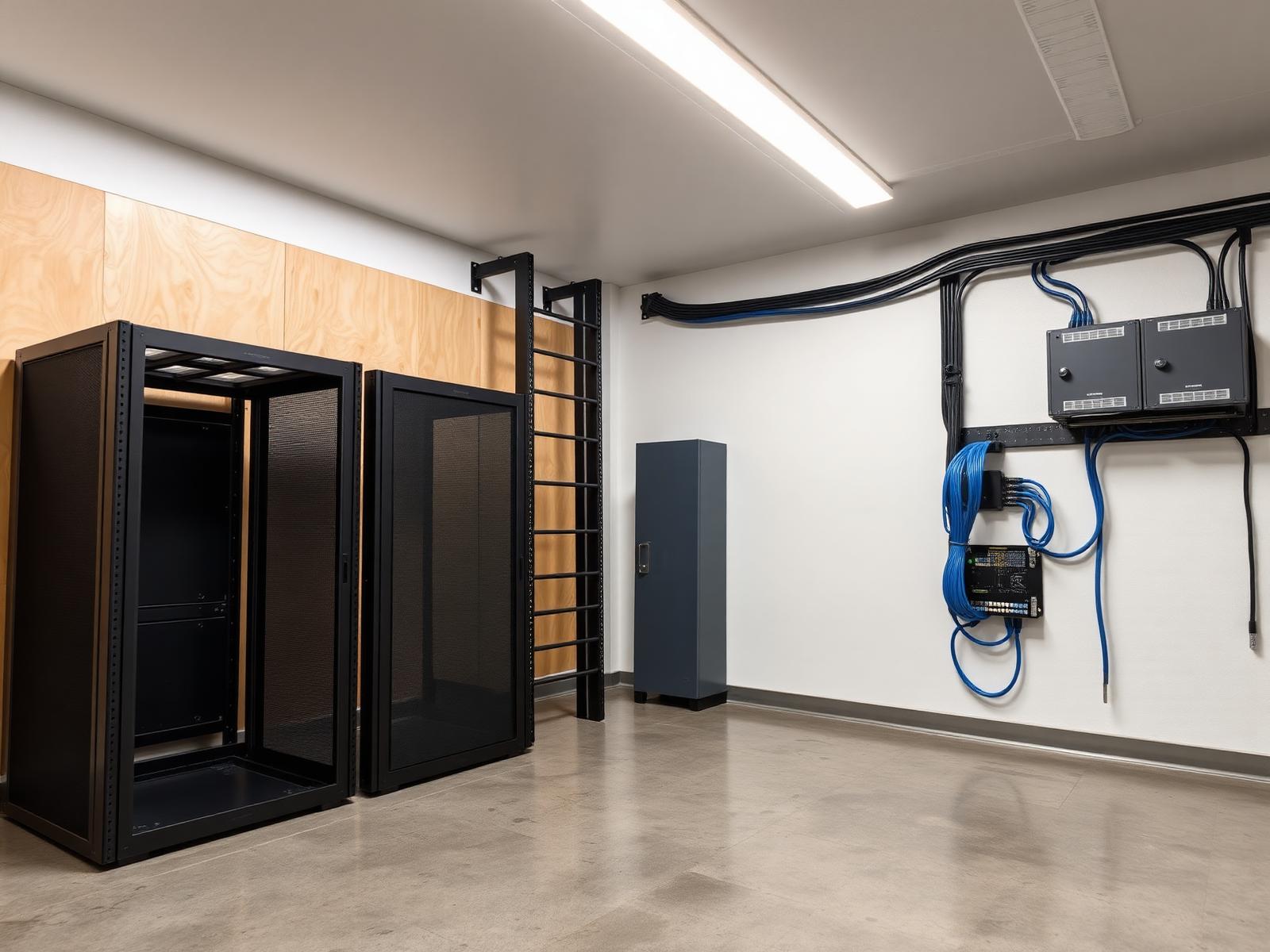
MDF room buildout with copper and fiber backbones landed on new patch panels.
Key Benefits

Why mdf buildouts from Access Cabling

Commercial-grade installation, certified performance, and infrastructure built to last 25+ years.

Certified installation by BICSI-trained technicians
Manufacturer warranties up to 25 years on structured cabling
Fluke DSX certification reports on every project
Licensed C-10 / C-7 low-voltage contractor
24/7 emergency response and MAC services
Nationwide coverage with California headquarters
Installation Process

Our proven commercial cabling process

A repeatable, engineered process — refined over 28 years and thousands of sites.

  1. Step 1

    Free on-site survey and needs assessment

  2. Step 2

    Engineered design with rack elevations and pathway plans

  3. Step 3

    Scheduled installation with minimal business disruption

  4. Step 4

    Termination, testing, labeling and documentation

  5. Step 5

    Fluke certification and as-built drawings delivered

Technical Standards & Testing

TIA-compliant. Fluke-certified. Fully documented.

Every mdf buildouts installation follows TIA-568, TIA-606 labeling, NEC 800 and applicable manufacturer specifications. Fluke DSX Versiv certification and full as-built documentation are delivered at project close.

  • TIA-568 structured cabling standards
  • TIA-606 labeling and administration
  • TIA-942 data center infrastructure
  • Fluke DSX-8000 channel and link certification
  • Manufacturer certified installer for Panduit, CommScope, Leviton
Access Cabling commercial structured cabling infrastructure
Industries Served

MDF Buildouts for every commercial environment

28+
Years
5
CA Offices
50
States
12M+
Feet Installed
Local Service Area

MDF Buildouts across California & nationwide

Local crews dispatched daily from five California offices. Multi-site rollouts across all 50 states.

In Depth

A closer look at mdf buildouts

The Main Distribution Frame (MDF) serves as the central nervous system for an enterprise data network, directly impacting performance, reliability, and future scalability. For IT directors, facilities managers, and general contractors overseeing data center operations or significant network expansions, an MDF buildout is a mission-critical undertaking. Access Cabling specializes in the meticulous design, engineering, and installation of robust MDF infrastructure, moving far beyond simple cable runs to deliver fully integrated, standards-compliant solutions. We understand that an improperly executed MDF can bottleneck an entire operation, which is why our approach emphasizes architectural precision, adherence to TIA-942 and BICSI best practices, and the strategic deployment of enterprise-grade components. This ensures your core network distribution point is not only operational upon deployment but remains a resilient, manageable, and performant asset for decades.

MDF Architecture, Standards, and Core Functionality

The MDF is the primary point of convergence and distribution for all communication cabling within a facility, whether it's copper, fiber, or a hybrid. Its architectural integrity is paramount, dictated by standards such as TIA-942 (Telecommunications Infrastructure Standard for Data Centers), BICSI Data Center Design and Implementation Best Practices, and pertinent sections of the National Electrical Code (NEC) articles 770 and 800. An MDF buildout encompasses the physical space planning, rack and cabinet deployment, horizontal and backbone cabling termination fields, inter-building and intra-building pathways, and, critically, the proper grounding and bonding infrastructure. Unlike Intermediate Distribution Frames (IDFs) or Equipment Distribution Areas (EDAs), the MDF connects directly to external service providers and often houses core network equipment like switches, routers, and firewalls. Our designs prioritize logical cable routing, optimal hardware density, and clear segregation of services, preventing interference and simplifying future MACs (Moves, Adds, Changes).

Strategic Design and Engineering Considerations for MDFs

Effective MDF design begins with a comprehensive needs assessment and site survey, factoring in current bandwidth requirements, projected growth, redundancy needs, and physical environmental constraints. Key engineering considerations include pathway diversity, firestopping requirements (per NEC Articles 770.26 and 800.26), and environmental controls such as cooling and humidity. We dimension pathways for future expansion, often specifying oversized conduit or tray systems to accommodate additional fiber optic or copper trunks without requiring disruptive infrastructure overhauls. Rack unit (RU) density, thermal management within cabinets, and power distribution unit (PDU) placement are meticulously planned to maximize efficiency and maintain operational integrity. Furthermore, we design for multi-vendor interoperability, ensuring that chosen components like Panduit Net-Access or CommScope SYSTIMAX solutions integrate seamlessly with existing or planned network hardware, facilitating a cohesive and manageable infrastructure.

Enterprise-Grade Components and Termination Fields

Access Cabling exclusively deploys industry-leading components from manufacturers such as Corning, Belden, CommScope, Panduit, and Leviton, ensuring the highest performance and longevity. For fiber optic termination fields, we utilize high-density MPO/MTP cassettes, fiber optic patch panels (e.g., Corning CCH series, CommScope FOSC), and pre-terminated fiber trunks to minimize splicing and installation time while maximizing port density. Copper termination fields feature Category 6A, Category 7A, or Category 8 compliant patch panels and connectivity, always deployed with proper bend radius management and cable dressing to maintain performance parameters like Alien Crosstalk (AXT) and Near-End Crosstalk (NEXT). Backbone cabling often involves OS2 single-mode fiber for inter-building links and OM4/OM5 multi-mode fiber for high-bandwidth intra-building connections, terminated in robust, clearly labeled fiber distribution units (FDUs) or optical distribution frames (ODFs). Our material selection is driven by performance specifications, fire ratings (e.g., plenum-rated OFNP/CMP, riser-rated OFNR/CMR), and the need for long-term reliability in critical data center environments.

Precision Installation Methodology and Cable Management

Our installation methodology for MDF buildouts adheres strictly to TIA-568 series standards, ensuring optimal performance and serviceability. Cable pathways are meticulously designed and implemented using appropriate support structures, such as overhead ladder rack systems (e.g., CPI Cablofil) or underfloor raceways, to prevent cable stress and maintain airflow. We execute precise cable dressing, ensuring proper bend radius is maintained for both copper and fiber optic cables, critical for preserving signal integrity (e.g., maintaining 10x cable diameter for Cat6A, 20x for fiber). All cabling is systematically labeled at both ends according to TIA/EIA 606-C administration standards, facilitating rapid fault isolation and efficient MACs. Patch panel termination is performed by certified technicians following manufacturer-specific guidelines (e.g., Panduit DP6 Plus, CommScope SYSTIMAX) to eliminate errors and guarantee performance. This methodical approach significantly reduces the potential for network downtime and simplifies ongoing network administration.

Rigorous Testing, Certification, and Documentation Protocols

Post-installation, Access Cabling performs comprehensive testing and certification on all installed infrastructure using industry-leading equipment such as Fluke DSX-8000 CableAnalyzers for copper and Fluke OptiFiber Pro for fiber optic cabling. Our testing protocols include full Permanent Link and Channel certification for copper to verify compliance with TIA-568 standards for insertion loss, return loss, NEXT, FEXT, PSNEXT, ELFEXT, PsELFEXT, and Alien Crosstalk. For fiber optic cabling, we perform Tier 1 (Loss/Length) and Tier 2 (OTDR) testing to assess connector loss, splices, total link loss, and detect any physical aberrations. Each test result is meticulously documented, providing a granular report that includes pass/fail status, performance margins, and detailed graphs. This comprehensive documentation, including as-built drawings and test results, forms a critical part of the project handover, serving as a verifiable baseline for future troubleshooting and warranty claims. This transparency ensures that the client receives a fully certified and validated cabling infrastructure.

Critical Grounding, Bonding, and Rack Earth Practices

Proper grounding and bonding within an MDF is not merely an NEC requirement (Article 250, Article 770, Article 800) but a fundamental pillar of network reliability, safety, and electromagnetic interference (EMI) mitigation. Our approach follows TIA-607-C (Generic Telecommunications Bonding and Grounding for Customer Premises) guidelines rigorously. This includes the installation of a Telecommunications Main Grounding Busbar (TMGB) connected to the building's electrical ground system, often via a dedicated grounding electrode conductor. All racks, cabinets, cable trays, and metallic pathways within the MDF are systematically bonded to the TMGB using appropriately sized bonding conductors (e.g., #6 AWG or larger stranded copper). Equipment grounding conductors are meticulously routed to ensure a low-impedance path to ground, minimizing potential differences and protecting sensitive network equipment from transient voltages and electrostatic discharge. This comprehensive grounding schema is essential for data integrity and personnel safety.

Scalability, Maintainability, and Future-Proofing Strategy

A well-designed MDF must offer both current performance and long-term scalability. Access Cabling's designs incorporate significant headroom for future expansion, minimizing the need for costly and disruptive infrastructure upgrades. This involves specifying modular patch panels (e.g., Leviton eXtreme, CommScope SYSTIMAX InstaPATCH), scalable fiber optic distribution frames, and leaving spare rack units and cable tray capacity. Our cable management solutions are designed for ease of access and identification, simplifying future MACs and reducing the risk of accidental disconnections. By utilizing highly flexible, standards-based architectures and enterprise-grade hardware, we ensure that your MDF can readily adapt to evolving technological demands, from higher-speed Ethernet (e.g., 25G, 40G, 100G) to emerging fiber applications. The objective is an MDF that remains performant and manageable for its entire lifecycle, a true long-term investment rather than a depreciating asset.

Navigating Complex Code Compliance and Regulatory Mandates

MDF buildouts are subject to a stringent, often multi-layered, regulatory framework ensuring safety, reliability, and interoperability. This encompasses compliance with national electrical codes such as NFPA 70 (National Electrical Code - NEC), specifically articles pertaining to telecommunications and data processing equipment, which dictate proper conduit fill ratios, grounding practices, and separation from power conductors. Furthermore, adherence to TIA/EIA standards, particularly TIA-942 for data center infrastructure and TIA-606-B for administration standard for infrastructure, is non-negotiable for cabling, pathways, and labeling. Local building codes, fire safety regulations (e.g., NFPA 72 for fire alarm systems and NFPA 75 for fire protection of information technology equipment), and even specific health and safety guidelines for personnel working within these environments must be meticulously addressed. Our project managers possess deep expertise in navigating these complex requirements, conducting thorough pre-construction reviews, and liaising directly with Authority Having Jurisdiction (AHJ) officials to secure necessary permits and ensure all aspects of the MDF design and implementation meet or exceed mandated standards. Failure to comply can result in significant project delays, costly rework, fines, and—critically—compromised operational integrity, making this a pivotal, often underestimated, phase of any MDF deployment. Beyond foundational electrical and fire codes, certain MDF deployments, particularly those handling sensitive data, must also contend with industry-specific regulations like HIPAA for healthcare, PCI DSS for financial services, or NERC CIP for critical infrastructure. These mandates often impose additional requirements on physical security within the MDF, including access control, surveillance, and environmental monitoring, all of which must be integrated into the initial design. Considerations for electromagnetic interference (EMI) and radio-frequency interference (RFI) shielding, as stipulated by TIA-568-C.0 standards, become paramount in environments with high data throughput or proximity to power infrastructure. Our approach involves a comprehensive regulatory matriz mapping, identifying all applicable standards and codes at the project outset, and ensuring each design element, from cable tray selection to pathway segregation, directly addresses these requirements. This proactive, compliance-driven methodology mitigates risks and assures a robust, legally sound infrastructure.

Advanced Environmental Control and Security Integration

The operational longevity and performance of critical active and passive equipment within an MDF are directly contingent upon precise environmental control and robust physical security. Thermal management is paramount; neglecting this can lead to premature hardware failure, system instability, and reduced service life. Our designs incorporate sophisticated HVAC strategies, often including redundant CRAC (Computer Room Air Conditioner) or CRAH (Computer Room Air Handler) units, careful hot/cold aisle containment, and precision airflow management via perforated floor tiles and blanking panels to prevent hot spots and optimize cooling efficiency. Humidity control is equally vital, as excessive moisture can lead to condensation and corrosion, while overly dry conditions can exacerbate electrostatic discharge (ESD) risks. We integrate advanced environmental monitoring systems that track temperature, humidity, and airflow in real-time, providing alerts and automated responses to maintain optimal conditions. These systems often utilize sensor arrays strategically placed throughout the racks and pathways, feeding data into a centralized Building Management System (BMS) for comprehensive oversight. Physical security within the MDF is another critical layer, protecting against unauthorized access and potential sabotage. Our solutions extend beyond simple locked doors to include multi-factor authentication systems, often integrating biometric scanners, proximity card readers, and robust key management protocols. Video surveillance, utilizing high-resolution IP cameras with motion detection and archival capabilities, provides a complete audit trail of all activity. Rack-level security, incorporating smart locks and access controls, can further segment access to specific equipment. Additionally, our designs account for the physical hardening of the MDF space itself, including reinforced walls, ceilings, and floors, often incorporating ballistic or blast-resistant materials where deemed necessary. The integration extends to fire suppression systems, opting for non-water-based agents like FM-200 or Novec 1230 to protect electronics, rather than traditional sprinkler systems which can cause catastrophic damage. This holistic approach to environmental and security integration ensures an MDF that is not only highly performant but also resilient against a comprehensive range of physical and environmental threats, safeguarding critical network infrastructure and data integrity.

Seamless Migration and Zero-Downtime Cutover Strategies

Executing a successful MDF buildout often culminates in a complex migration and cutover process that demands rigorous planning and meticulous execution to minimize or eliminate service disruption. Our approach begins with a comprehensive discovery phase, thoroughly inventorying existing infrastructure, mapping all connections, and documenting logical and physical dependencies. This forms the basis for a detailed cutover plan, which includes a phased migration strategy, identifying critical path services, and establishing clear rollback procedures. We utilize sophisticated asset management tools and detailed labeling adherence (e.g., TIA-606-B standard) to track every strand and port, ensuring accurate transfers. For 'swing-cut' scenarios, where active circuits must be moved without interruption, our teams employ specialized tools and techniques, such as pre-terminated fiber and copper assemblies, alongside meticulous cross-connect and patching procedures, often leveraging temporary overlay infrastructure to ensure continuity. The planning includes defining precise change windows, coordinating with all affected departments and service providers, and clearly delineating responsibilities to avoid ambiguity during live operations. Pre-cutover dry runs and mock migrations are standard practice to identify potential issues and validate the strategy before initiating the live transition. Our project managers work closely with client IT teams to simulate peak load conditions and test failover mechanisms, ensuring the new MDF infrastructure can handle projected demands. During the cutover itself, our certified technicians execute the plan methodically, utilizing real-time monitoring tools to confirm service restoration and identify any anomalies immediately. Post-cutover, a comprehensive validation and optimization phase confirms all systems are functioning optimally, performance benchmarks are met, and all documentation is updated to reflect the new configuration. This includes verifying circuit continuity with OTDRs (Optical Time Domain Reflectometers) for fiber and advanced network analyzers for copper, alongside end-to-end application testing. Our emphasis on detailed planning, robust pre-testing, and expert execution ensures a seamless transition, preserving business continuity and delivering a fully operational MDF with minimal impact on ongoing operations.

Lifecycle Management, Maintainability, and Total Cost of Ownership

Beyond initial deployment, the true value of an MDF buildout is realized through its long-term maintainability and optimized total cost of ownership (TCO). Our design philosophy incorporates principles of lifecycle management, ensuring that the infrastructure remains adaptable and serviceable throughout its operational lifespan. This begins with the selection of high-quality, industry-standard components from reputable manufacturers, offering extended warranties and readily available spare parts. We emphasize modularity in design, using scalable rack systems, patch panels, and fiber optic distribution units that allow for easy expansion or reconfiguration without requiring extensive overhauls. Pathways are designed with ample capacity for future growth, preventing costly re-cabling projects due to unforeseen demand. The implementation of a robust cable management strategy, utilizing vertical and horizontal managers, cable ties, and clear labeling, is critical for reducing troubleshooting time and minimizing the risk of accidental disconnections during routine maintenance activities, thereby reducing operational expenditure (OpEx). Further contributing to a reduced TCO is the integration of intelligent infrastructure management (IIM) solutions. These systems provide real-time visibility into physical layer connectivity, port utilization, and asset location, dramatically simplifying moves, adds, and changes (MACs) and virtually eliminating human error in patching and provisioning. By automating documentation and providing dynamic insights into infrastructure health, IIM platforms reduce labor costs associated with manual audits and troubleshooting. Energy efficiency is also a key consideration; our designs include energy-efficient power distribution units (PDUs), optimizing server and network equipment placement to maximize cooling effectiveness, and specifying high-efficiency lighting and cooling systems. Lastly, we provide comprehensive training to client staff on the new infrastructure, empowering them with the knowledge and skills necessary for effective day-to-day management and basic troubleshooting, further reducing reliance on external support and extending the operational efficiency and economic lifespan of the MDF. This holistic approach ensures not just a current solution, but a resilient, cost-effective infrastructure that evolves with your business needs.

Related Topics
  • Data Center Cabling Infrastructure
  • Structured Cabling Systems
  • Fiber Optic Backbone Installation
  • TIA-942 Data Center Standards
  • Network Infrastructure Design
  • Ethernet Cabling Standards
  • Low-Voltage Contractor Services
  • Rack and Cabinet Solutions
FAQ

Frequently asked questions

What specific TIA standards are most critical for Data Center MDF buildouts?+

For data center MDFs, TIA-942-B (Telecommunications Infrastructure Standard for Data Centers) is paramount as it outlines requirements for topology, pathway/space, environmental considerations, and redundancy levels. In addition, TIA-568.x (Commercial Building Telecommunications Cabling Standard) governs cabling performance, termination, and pathways, while TIA-606-C (Administration Standard for Telecommunications Infrastructure) specifies labeling and documentation. TIA-607-C (Generic Telecommunications Bonding and Grounding for Customer Premises) is crucial for safety and EMI mitigation. Our designs integrate all these standards for a comprehensive solution.

How does Access Cabling address cooling and power considerations within the MDF space?+

While we are cabling specialists, our MDF buildouts integrate with and account for the critical interplay of cooling and power. Our designs optimize rack and cabinet placement to align with hot aisle/cold aisle containment strategies, recommending appropriate cable management systems to prevent airflow obstruction. We coordinate closely with electrical and HVAC contractors to ensure adequate power distribution units (PDUs), UPS systems, and cooling capacity are planned and installed. Proper cable routing and dressing also prevent thermal hot spots within cabinets, contributing to overall system efficiency and longevity, especially in high-density core equipment racks.

What are the common pitfalls to avoid during an MDF buildout, especially in a data center environment?+

Common pitfalls include underestimating future growth, leading to insufficient space or pathway capacity; neglecting proper grounding and bonding, causing intermittent network issues or safety hazards; poor cable management resulting in 'spaghetti' wiring, hindering troubleshooting and MACs; using non-compliant or low-quality components that fail prematurely; and inadequate testing and documentation, which complicates maintenance. Access Cabling mitigates these by adhering to meticulous planning, using enterprise-grade materials, stringent installation practices, and comprehensive certification, ensuring a robust, future-proof infrastructure.

Could you elaborate on the importance of 'structured cabling' principles within an MDF?+

Structured cabling within an MDF refers to a standardized, modular approach to cabling infrastructure that ensures predictability, manageability, and scalability. Instead of 'point-to-point' wiring, structured cabling organizes the network into easily identifiable blocks (e.g., backbone, horizontal, equipment cabling) with standardized components like patch panels, optical distribution frames, and horizontal cross-connects. This allows for quick, non-disruptive changes, simplified troubleshooting, and clear documentation. Its modularity means technicians can perform MACs without specialized tools or in-depth network knowledge, significantly reducing operational costs and potential human error.

What is the typical project timeline for a complex data center MDF buildout?+

The timeline for a data center MDF buildout varies significantly based on its scale, complexity, and the level of integration with existing infrastructure. A smaller, single-rack MDF might take 2-4 weeks for design, procurement, and installation. A large-scale, multi-rack, high-density core MDF, potentially involving redundant pathways, multi-mode and single-mode backbone runs, and extensive grounding, could span 8-16 weeks or more. Factors like component lead times, site accessibility, and coordination with other trades (electrical, HVAC) are major determinants. We provide detailed project schedules with milestone tracking.

How does Access Cabling ensure the security of the MDF during and after installation, relevant to data center compliance?+

Physical security within the MDF is paramount for data center compliance (e.g., ISO 27001, SOC 2). During installation, our teams adhere strictly to site access protocols, background checks, and badging requirements. Post-installation, our designs can incorporate physical security features such as lockable cabinets, designated secure zones, and integration points for access control systems (e.g., card readers, biometric scanners). We ensure pathway concealment where required and utilize tamper-evident labeling for critical connections. We also practice clean-room level cleanliness to prevent contamination of active equipment.

What level of redundancy and fault tolerance can be designed into an MDF buildout?+

The level of redundancy in an MDF buildout is driven by the client's specific uptime requirements and risk tolerance, often categorized by TIA-942-B's four tiers. We can design for N+1 redundancy in critical pathways, ensuring alternative routes for backbone and feeder cables. This might involve physically diverse cable trays or conduits for primary and secondary links to different areas or service providers. Further, we can implement active-passive or active-active redundancy in patch panel configurations, allowing for immediate failover. Our designs focus on eliminating single points of failure at the infrastructure layer, crucial for high-availability data centers.

When is it more cost-effective to build a new MDF versus upgrading an existing one?+

The decision to build new versus upgrade depends on several factors. An upgrade is often cost-effective if the existing MDF has sufficient physical space, adheres to modern fire and safety codes, and its foundational infrastructure (e.g., grounding, conduit capacity, structural integrity of racks) remains sound. However, if the existing MDF is severely space-constrained, lacks proper grounding, has outdated pathways that prevent modern cable runs (e.g., tight bend radii for fiber), or requires extensive remediation to meet current codes and performance requirements, a new buildout can prove more economical in the long run. A comprehensive site assessment and TCO (Total Cost of Ownership) analysis will determine the optimal path.

How much does MDF buildouts cost?+

MDF Buildouts pricing depends on drop count, cable type, pathway complexity, and building conditions. Most commercial projects range from $150 to $350 per drop installed. Request a free site survey for an itemized quote.

Do you provide MDF buildouts nationwide?+

Yes. Access Cabling is headquartered in California with a nationwide technician network for multi-site rollouts across all 50 states.

Is MDF buildouts certified and warrantied?+

Every installation is Fluke-tested and certified. Structured cabling installs carry manufacturer warranties of up to 25 years through our Panduit, CommScope, Leviton and Belden partner relationships.


Related Services

Related commercial cabling services

Get Started

Build the commercial network your business actually deserves.

28 years, thousands of sites, one accountable contractor. Get a free site survey and an itemized quote in 48 hours.

Call Local Office(650) 212-1544