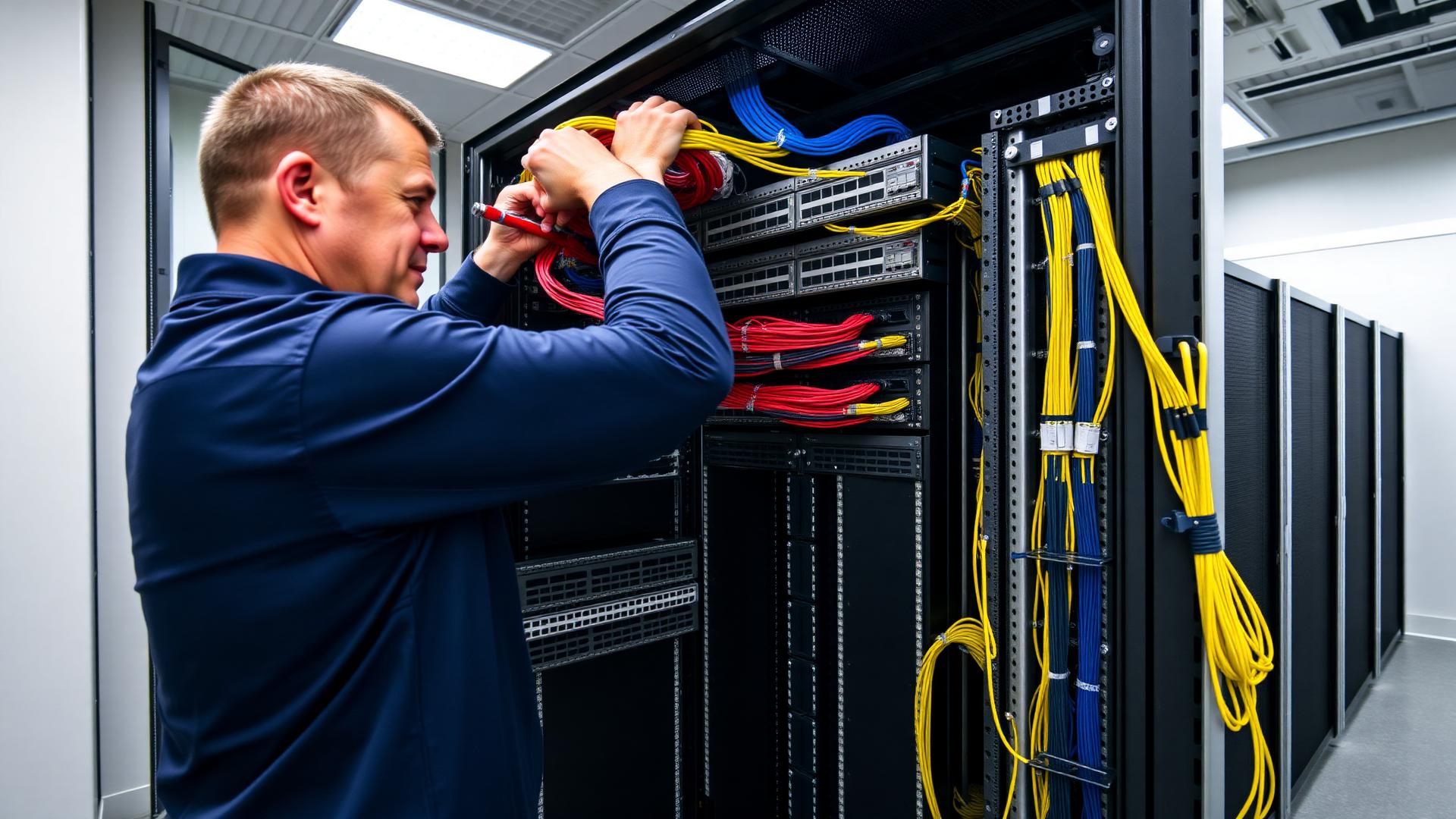
Access Cabling technician installing switches and cable management in a 42U network rack.
Commercial · Data Center

Network Rack Installation Services

Two-post and four-post network rack build-outs.

28+ Years Experience
C-10 / C-7 Contractor
CSLB: 992009
Licensed Commercial Contractor
5 California Offices
California & Nationwide Service

Request a Network Rack Installation site survey

Free, no-obligation walkthrough. Licensed C-10 / C-7 (CSLB #992009). 28+ years, California & nationwide.

Request a site survey
Commercial Service Overview

Enterprise-grade network rack installation engineered for commercial buildings.

Network Rack Installation from Access Cabling delivers enterprise-grade network rack installation engineered by a licensed low-voltage contractor with 28+ years serving California and nationwide clients. Our BICSI-trained technicians design, install, terminate, test and certify every run to TIA/EIA standards so your infrastructure supports current bandwidth demands and future growth.

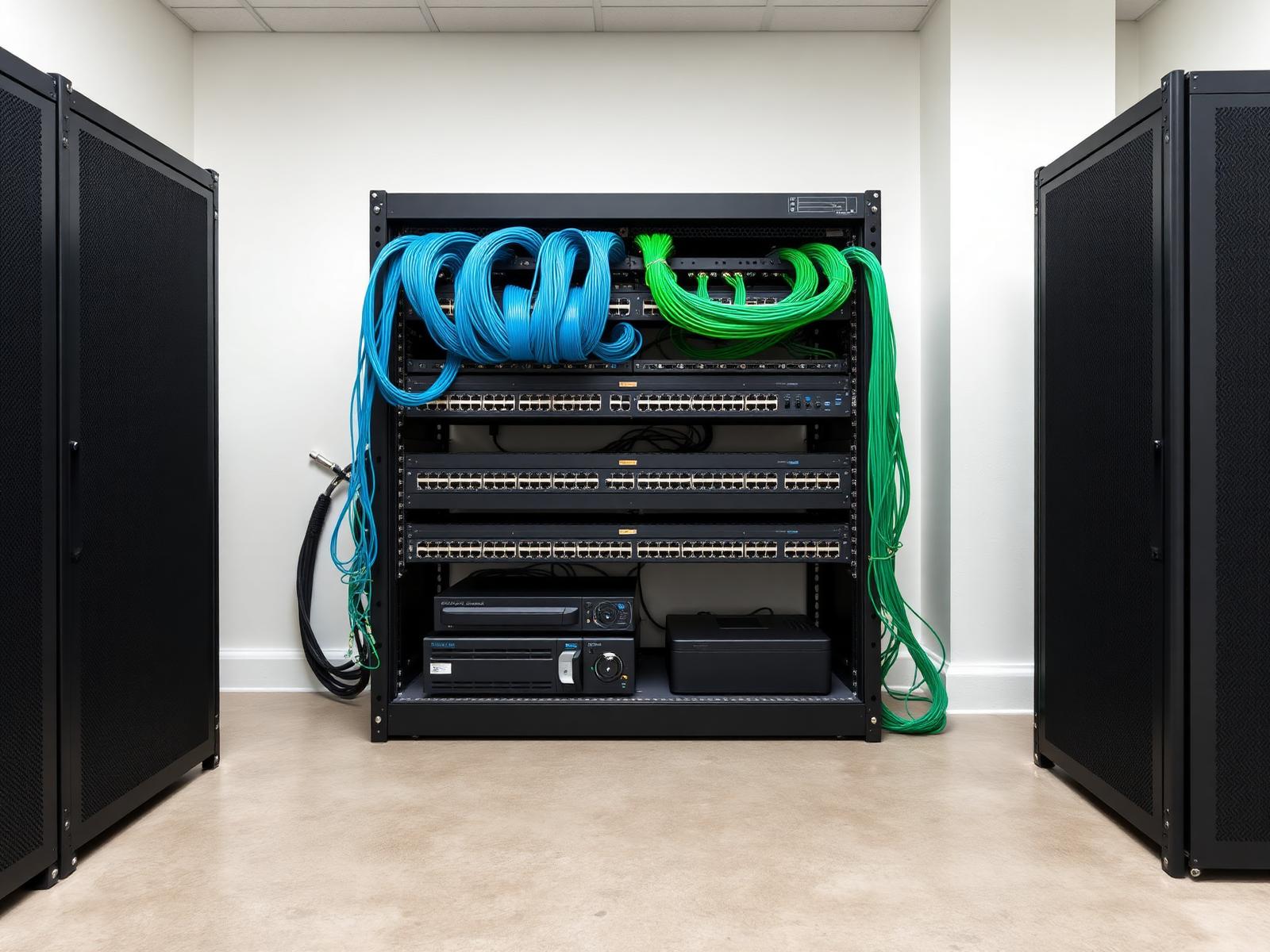
Completed 42U network rack with color-coded patch cords and vertical cable management.
Key Benefits

Why network rack installation from Access Cabling

Commercial-grade installation, certified performance, and infrastructure built to last 25+ years.

Certified installation by BICSI-trained technicians
Manufacturer warranties up to 25 years on structured cabling
Fluke DSX certification reports on every project
Licensed C-10 / C-7 low-voltage contractor
24/7 emergency response and MAC services
Nationwide coverage with California headquarters
Installation Process

Our proven commercial cabling process

A repeatable, engineered process — refined over 28 years and thousands of sites.

  1. Step 1

    Free on-site survey and needs assessment

  2. Step 2

    Engineered design with rack elevations and pathway plans

  3. Step 3

    Scheduled installation with minimal business disruption

  4. Step 4

    Termination, testing, labeling and documentation

  5. Step 5

    Fluke certification and as-built drawings delivered

Technical Standards & Testing

TIA-compliant. Fluke-certified. Fully documented.

Every network rack installation installation follows TIA-568, TIA-606 labeling, NEC 800 and applicable manufacturer specifications. Fluke DSX Versiv certification and full as-built documentation are delivered at project close.

  • TIA-568 structured cabling standards
  • TIA-606 labeling and administration
  • TIA-942 data center infrastructure
  • Fluke DSX-8000 channel and link certification
  • Manufacturer certified installer for Panduit, CommScope, Leviton
Access Cabling technician installing switches and cable management in a 42U network rack.
Industries Served

Network Rack Installation for every commercial environment

28+
Years
5
CA Offices
50
States
12M+
Feet Installed
Local Service Area

Network Rack Installation across California & nationwide

Local crews dispatched daily from five California offices. Multi-site rollouts across all 50 states.

In Depth

A closer look at network rack installation

Optimizing data center efficiency and ensuring network resilience begins with a meticulously planned and executed physical infrastructure. For IT directors, facilities managers, and general contractors overseeing mission-critical environments, robust network rack installation is not merely assembly; it's the foundational framework for all active equipment, cable management, cooling, and power distribution. Access Cabling specializes in the precision engineering and deployment of two-post and four-post network racks, aligning with TIA-942-B and ANSI/BICSI 002-2019 standards for data center design. We deploy standardized, scalable, and secure rack solutions that directly support high-density compute, storage, and networking requirements, providing a future-proof platform for your data center's continuous operation. Our expertise ensures every rack system is configured for optimal airflow, cable pathway separation, and maintainability, mitigating common points of failure and maximizing equipment longevity. This strategic approach to network rack installation contributes directly to enhanced uptime and reduced operational expenditures for critical data center infrastructure.

Precision Data Center Rack Design and Standards Adherence

Effective network rack installation within a data center demands adherence to stringent industry standards to ensure performance, scalability, and safety. Access Cabling’s methodology integrates TIA-942-B (Infrastructure Standard for Data Centers) and ANSI/BICSI 002-2019 (Data Center Design and Implementation Best Practices) from the initial design phase. We evaluate key factors such as equipment weight loading, power requirements, cooling strategies (hot/cold aisle containment), cable pathway planning, and future expansion during the pre-installation survey. For example, a high-density compute environment will necessitate 4-post racks with a static load capacity exceeding 3000 lbs (e.g., APC NetShelter SX or Panduit Net-Access Cabinets) to support server, storage array, and converged infrastructure units. Conversely, a distribution frame or patching field might leverage two-post open racks (e.g., Chatsworth Products Universal Rack or CommScope FGS) for easier MAC (Moves, Adds, Changes) while still requiring specific weight distribution calculations. Our designs prioritize adherence to specified rack unit (RU) density, equipment depth, and airflow patterns, ensuring that the chosen rack type and configuration directly support the operational parameters of the active equipment it houses, preventing thermal hotspots and ensuring long-term hardware reliability.

Critical Materials and Infrastructure Components for Rack Build-Outs

The selection of materials and components for network rack installation profoundly impacts the long-term performance and maintainability of data center infrastructure. Access Cabling specifies enterprise-grade racks from industry leaders like CommScope, Panduit, APC, and Chatsworth Products, chosen based on seismic requirements (e.g., GR-63-CORE for earthquake zones), load bearing capacity, and specific data center cooling strategies (e.g., perforated doors for hot aisle containment or solid doors with internal baffling for directed airflow). Power distribution units (PDUs) are selected based on circuit density (e.g., 3-phase, 208V, 30A/50A/60A), outlet count (e.g., C13, C19), and intelligent features like remote power monitoring (RPM) and outlet-level metering. Cable management is meticulously planned using horizontal and vertical cable managers (e.g., Panduit WMPV, CommScope FGS), often employing segregation techniques (fiber vs. copper, power vs. data) to minimize crosstalk and signal degradation. Grounding and bonding components, compliant with NEC Article 250 and TIA-1005-A, are integral, utilizing listed bonding conductors, busbars (e.g., Panduit RGM), and irreversible compression connectors to establish a robust equipment grounding system, protecting personnel and equipment from transient voltages and ground loops.

Advanced Installation Techniques and Sequential Deployment

Network rack installation is a sequential, multi-stage process requiring specialized tools and adherence to precise methodologies. Our technicians begin with a thorough site survey, verifying floor loading, conduit routes, and power availability against approved drawings. Rack placement follows floor-marking procedures, ensuring proper alignment with hot/cold aisles and seismic bracing points. For high-density racks, floor anchoring is critical, often involving epoxy-set anchors (e.g., Hilti HDI-L) and seismic bracing kits (e.g., seismic zone 4 rated Z-Brackets) to prevent movement. Rack assembly involves torque-wrench controlled fastening to manufacturer specifications, ensuring structural integrity. Equipment mounting proceeds methodically, typically from bottom-up for heavier gear (e.g., UPS, blade enclosures) to maintain stability. Front and rear cable managers are installed before cabling begins, establishing defined pathways. Patch panels (e.g., Leviton, Corning, CommScope) are mounted at designated RUs, with horizontal cable lacing and dressing performed to BICSI best practices. Finally, power distribution and grounding are carefully implemented, ensuring all conductors are correctly terminated and tested for continuity and proper earthing. This systematic approach minimizes errors and streamlines subsequent cabling and equipment energization phases.

Certifying Rack Infrastructure for Operational Readiness

Post-installation, comprehensive testing and certification of the network rack infrastructure are paramount to guarantee operational readiness and adherence to design specifications. This involves several critical steps beyond basic visual inspection. We perform load bearing verification, especially for heavier equipment, ensuring the rack’s structural integrity and absence of deflection. For power systems within the rack, continuity and polarity checks are conducted on all PDU circuits, along with voltage measurements (L-N, L-L) to confirm proper phase balance and absence of ground faults using calibrated multimeters (e.g., Fluke 87V). Critical grounding and bonding paths are tested for impedance using earth ground testers (e.g., Fluke 1625-2) to ensure compliance with NEC requirements and mitigate EMI. Furthermore, when active equipment is mounted, we verify proper mounting, adequate clearances for airflow, and secure cable dressing. While active network connectivity testing (e.g., Fluke DSX CableAnalyzer for copper/fiber link certification) is performed on the associated cabling, the rack infrastructure itself is certified for physical integrity, power distribution accuracy, and compliant grounding, providing a holistic verification of the foundational platform prior to active system deployment.

Common Applications and Strategic Use Cases for Advanced Racks

The strategic application of advanced network rack installations extends across various critical data center and network aggregation environments. In core data centers, high-density 4-post server racks are essential for housing blade servers, hyperconverged infrastructure (HCI), storage area networks (SANs), and high-performance compute (HPC) clusters, often integrated with hot/cold aisle containment systems. At the aggregation layer, enterprise network racks typically house modular chassis switches, core routers, and firewalls, requiring robust cable management for high port counts. For collocation facilities, our rack solutions are designed for multi-tenant environments, incorporating security features like locking doors and key card access controls, along with meticulous power metering per rack. Edge data centers and remote network closets utilize smaller, sometimes wall-mount or sealed racks, designed for limited space and environmental protection, accommodating network switches, access points, and localized server infrastructure. In telecommunications central offices, two-post relay racks are frequently employed for power distribution systems and optical distribution frames, necessitating Telcordia GR-1275-CORE compliance for seismic and environmental robustness. Each application demands tailored rack solutions, from open frame for ease of access to fully enclosed for security and thermal control, all designed for optimal performance within their specific operational context.

Compliance Enforcement and Safety Protocols in Rack Deployment

Implementing network rack systems within data centers requires strict adherence to a complex web of compliance standards and rigorous safety protocols. Access Cabling ensures all installations conform to the National Electrical Code (NEC) articles pertaining to grounding, bonding (Article 250), and proper wiring methods (Article 770 for fiber, Article 800 for communications circuits). Our racking solutions integrate seismic bracing and anchoring specified by local building codes, particularly in regions prone to seismic activity, aligning with GR-63-CORE for network equipment building systems (NEBS). During installation, we implement OSHA-compliant safety measures, including Lockout/Tagout (LOTO) procedures for working near electrical panels, proper lifting techniques for heavy equipment, and the use of Personal Protective Equipment (PPE) such as steel-toe boots, hard hats, and electrostatically dissipative (ESD) gear. Furthermore, we ensure proper spacing and clearance around racks for maintenance access and fire safety, aligning with NFPA 75 (Standard for the Fire Protection of Information Technology Equipment). Cable fill ratios within pathways and conduits are meticulously managed to prevent overheating and comply with TIA-569-D (Telecommunications Pathways and Spaces), ensuring both efficiency and safety in the finished installation.

Access Cabling's Distinctive Expertise in Network Rack Solutions

What distinguishes Access Cabling in the critical domain of network rack installation is our deep-seated expertise derived from 28+ years of focused experience, paired with a C-10/C-7 low-voltage contractor license (CSLB 992009). We are not merely installers; we are solution architects who understand the intricate interplay between physical infrastructure and network performance. Our team comprises BICSI-certified RCDDs (Registered Communications Distribution Designers) and certified technicians who meticulously plan each rack elevation and physical layout, anticipating future growth and technological shifts. We leverage partnerships with premier manufacturers like Panduit, CommScope, Leviton, Belden, and Corning, ensuring access to the highest quality, most reliable components. Our methodology is rooted in a consultative approach, where we engage proactively with IT directors and facilities managers to understand their specific operational demands, cooling strategies, and security mandates. This allows us to engineer and deploy rack systems that are not just compliant, but optimized for energy efficiency, ease of maintenance, and maximum return on investment. Our comprehensive project management, from initial site survey and CAD design (e.g., utilizing AutoCAD or Visio Stencils for precise rack layouts) through to final testing and documentation, provides a predictable and successful outcome for even the most complex data center deployments, ensuring your network infrastructure is robust, scalable, and resilient.

Advanced Power Distribution and Thermal Management Strategies

Optimizing power distribution within a network rack is paramount for operational stability and energy efficiency, transcending basic PDU integration. Our methodology involves meticulous planning for diverse power requirements, often incorporating intelligent PDUs (iPDUs) with granular per-outlet metering, remote switching capabilities, and environmental sensor integration. This enables real-time monitoring of current draw, voltage, and power factor correction (PFC), facilitating proactive load balancing and preventing localized overloads. We frequently deploy three-phase power distribution units in high-density environments, leveraging their inherent capacity for balanced load distribution across phases, which mitigates neutral return current issues—a common pitfall in single-phase dominant racks. Grounding and bonding protocols adhere strictly to TIA-607-C and NFPA 70 (National Electrical Code) standards, ensuring comprehensive equipotential bonding throughout the rack and interconnected cabinets to prevent ground loops and protect personnel and equipment from electrical faults. Thermal management is equally critical, moving beyond passive airflow. We assess data center cooling infrastructure (CRAC/CRAH units, in-row coolers) to design rack-level airflow containment strategies. This includes blanking panels for unused rack units, brush strips for cable entry points, and vertical exhaust ducts for hot aisle containment, or sealed cold aisle containment systems. For ultra-dense racks, we integrate active cooling solutions such as rear-door heat exchangers or liquid-cooled manifolds, which circulate chilled water or refrigerant directly adjacent to heat-generating components. Our project planning includes precise calculations of BTUs per hour (thermal load) per rack, ensuring that the deployed cooling mechanisms can effectively dissipate the heat generated by current and projected hardware, avoiding thermal runaway and maintaining server inlet temperatures within ASHRAE recommended guidelines, typically between 18°C and 27°C (64.4°F and 80.6°F) with optimal humidity ranges. These advanced considerations significantly reduce overall operational expenditures (OpEx) by minimizing energy waste and maximizing equipment longevity.

Comprehensive Lifecycle Documentation and As-Built Deliverables

The successful deployment of network racks extends far beyond physical installation; it necessitates the creation and maintenance of a robust documentation suite that supports the entire lifecycle – from planning through operation and eventual decommissioning. Our documentation methodology includes detailed 'as-built' schematics, which accurately reflect the final physical and logical configuration of each rack. This encompasses precise rack elevations detailing every installed device, its associated rack unit (RU) position, and power connections. We generate comprehensive cable schedules listing every patch cable (copper and fiber), its termination points (e.g., switch port to server NIC, or patch panel port to another patch panel port), cable length, and media type. Crucially, these schedules are often linked to a corresponding numbering scheme (e.g., TIA/EIA 606-B administration standard) for unambiguous identification in the field. Power distribution unit (PDU) load reports and capacity planning spreadsheets are provided, detailing current and projected power consumption per rack, per circuit, and per phase, along with remaining available capacity. Environmental monitoring data — baseline temperature, humidity, and airflow readings — is also captured post-installation to establish a performance benchmark. Furthermore, a comprehensive inventory of all installed hardware, including serial numbers, model numbers, and asset tags, is compiled. This meticulous documentation serves multiple critical purposes: it streamlines troubleshooting by providing a clear map of interconnections; it facilitates future upgrades and expansions by accurately depicting available capacity and infrastructure; it aids in compliance audits by demonstrating adherence to design specifications; and it simplifies disaster recovery planning by providing precise re-build instructions. We leverage specialized DCIM (Data Center Infrastructure Management) tools or integrate with existing client platforms for continuous data management, ensuring that these living documents remain accurate and accessible throughout the infrastructure's operational lifespan, thereby significantly reducing mean time to repair (MTTR) and enhancing overall operational efficiency.

Rigorous Security Hardening and Access Control Implementation

Securing network racks is a multi-faceted endeavor that extends beyond the digital realm into robust physical security implementation, crucial for protecting high-value assets and sensitive data. Our approach integrates industry best practices for both cyber-physical protection. Physically, we implement advanced access control mechanisms at the cabinet level, ranging from traditional keyed locks to sophisticated electronic access control (EAC) systems that utilize biometric authentication (e.g., fingerprint, facial recognition), RFID proximity cards, or PIN codes. These systems provide audit trails, logging every access attempt—successful or otherwise—with timestamps and user identities, thereby enhancing accountability and compliance with regulatory requirements such as PCI DSS, HIPAA, and ISO 27001. We ensure that cabinet doors are robust, often incorporating multi-point locking mechanisms, and that side panels are securely fastened or integrated into a continuous row of cabinets to prevent unauthorized entry. Environmental sensors, including door contact sensors, vibration sensors, and shock sensors, are deployed to detect and alert on unauthorized physical tampering or attempted breach. Video surveillance within the data center, strategically positioned to monitor rack rows and access points, provides an additional layer of deterrent and forensic evidence. Beyond physical entry, cable management within the rack itself is designed to prevent 'eavesdropping' or accidental disconnection. This includes structured cabling pathways that are less susceptible to interference and tamper, and often utilizes color-coding for different network zones (e.g., production, dev, DMZ) to reduce human error during maintenance. Power cabling is separated from data cabling to prevent electromagnetic interference (EMI). For racks housing classified or highly sensitive data, we can implement specialized TEMPEST-compliant enclosures that mitigate electromagnetic radiation leakage, further securing against sophisticated electronic surveillance. The totality of these measures significantly elevates the security posture of the network infrastructure, protecting against both insider threats and external malicious actors, and safeguarding data integrity and confidentiality at the physical layer.

Logistical Planning and Coordinated Deployment with MEP Trades

The successful installation of network racks, particularly in greenfield data center builds or substantial brownfield expansions, necessitates meticulous logistical planning and seamless coordination with Mechanical, Electrical, and Plumbing (MEP) trades. Our project management methodology begins with a comprehensive site survey and a detailed master project schedule that integrates all dependencies. This schedule is dynamic, mapping out critical path items such as power drops (PDU whips), cooling line extensions (for active cooling solutions), and structured cabling pathways. A key aspect is the 'just-in-time' delivery and staging of rack components and hardware to minimize on-site storage requirements and reduce potential for damage or theft. We coordinate directly with electrical contractors to ensure that appropriate circuit breakers are installed, power outlets (e.g., L6-30s, C13/C19) are correctly configured and tested, and grounding systems meet NEC standards prior to rack population. For liquid-cooled racks or in-row cooling deployments, engagement with plumbing contractors is crucial. This involves precise routing and installation of chilled water lines, leak detection systems, and ensuring proper flow rates and pressure. Communication with HVAC specialists is equally vital to ensure that existing or new CRAC/CRAH units are sized correctly and strategically positioned to handle the calculated heat load from the proposed rack density, preventing hotspots or inefficient cooling. Regular coordination meetings—often daily or weekly stand-ups—are implemented with all involved trades, facility management, and IT stakeholders. These meetings address potential conflicts (e.g., shared ceiling space for cable trays and HVAC ducts), refine scheduling, and proactively resolve emergent issues, leveraging BIM (Building Information Modeling) if available, to visualize and prevent spatial conflicts before they occur. Our role extends to defining clear demarcation points and responsibilities for each trade, ensuring a streamlined workflow from electrical panel to PDU, from chilled water loop to liquid-cooled manifold, and from structured cabling pathway to the final patch panel, thereby minimizing delays, rework, and ultimately, project cost overruns while accelerating time to operational readiness for critical IT infrastructure.

Related Topics
  • Data Center Cabling
  • Hot/Cold Aisle Containment
  • Structured Cabling
  • Fiber Optic Infrastructure
  • Power Distribution Units (PDUs)
  • Data Center Design (TIA-942-B)
  • Network Infrastructure Planning
  • Seismic Bracing for Racks
FAQ

Frequently asked questions

What is the typical lead time for a data center network rack installation project?+

Lead times for data center network rack installation are highly variable, influenced by project scope, rack type (e.g., custom vs. standard off-the-shelf), existing infrastructure readiness, and equipment delivery schedules. While small-scale projects might be completed within weeks, larger multi-rack deployments, especially those requiring significant power or cooling upgrades, typically span several months. Planning and procurement of specialized racks and PDUs can often be the longest lead item. A detailed site assessment allows us to provide a more precise timeline estimate, often between 4 to 16 weeks from design finalization to full deployment, excluding active equipment commissioning.

How do you ensure proper airflow and cooling within high-density network racks?+

Ensuring proper airflow and cooling in high-density network racks is critical to preventing thermal runaway and maximizing equipment lifespan. We employ several strategies, including hot/cold aisle containment, blanking panels to prevent air recirculation, and precise cable management to avoid airflow obstruction. Rack selection considers perforation percentages on front/rear doors and chassis design for optimal air passage. We also advise on appropriate rack-level PDUs with monitoring capabilities to manage power draw, which directly correlates to heat dissipation. For extremely dense configurations, we might integrate in-row cooling units or rear-door heat exchangers, aligning with ASHRAE heat load guidelines to maintain optimal operating temperatures for all active gear.

What are the key differences and advantages between two-post and four-post racks?+

Two-post racks are typically open frames, providing excellent accessibility for patching and lighter network equipment like switches, patch panels, and optical distribution frames. They prioritize ease of access and are more cost-effective for lower-density network closets. Four-post racks, conversely, offer greater weight bearing capacity and stability, making them ideal for heavy, deep-chassis equipment like servers, storage arrays, and blade enclosures in data center environments. They support a wider range of accessories like cable management, shelving, and containment, offering superior versatility and security for high-density compute infrastructure. The choice depends on equipment type, density, and specific physical security/cooling requirements.

How does seismic bracing integrate into your rack installation process?+

Seismic bracing is a non-negotiable component of rack installation in regions susceptible to seismic activity, such as California. Our process integrates seismic bracing from the initial planning stage, adhering to local building codes and standards like Telcordia GR-63-CORE. This typically involves anchoring racks to the reinforced concrete slab using certified seismic anchors (e.g., post-installed epoxy anchors) and securing the top of the rack to overhead structural elements (e.g., unistrut, building walls) using approved seismic bracing kits. We calculate the required bracing based on equipment weight, rack height, and seismic zone, ensuring the integrity of the rack and its contained equipment during an event, minimizing downtime and damage.

What are common errors in data center rack installations and how do you mitigate them?+

Common errors in data center rack installations include inadequate cable management leading to airflow obstruction, incorrect grounding causing electrical noise, exceeding weight load capacities, and neglecting proper pathway planning for future expansion. We mitigate these through meticulous pre-installation surveys, CAD-drawn rack elevations, adherence to TIA/BICSI standards, and strict quality control checklists. Our technicians are trained in best practices for cable dressing, torque-spec fastening, and sequential equipment placement. We also emphasize robust grounding and bonding verification (NEC Article 250) and conduct thorough post-installation inspections, including power and continuity testing, to catch and rectify any discrepancies before system energization, ensuring a fault-tolerant deployment.

Can you handle multi-site network rack rollouts for large enterprises?+

Yes, Access Cabling is fully equipped to manage and execute multi-site network rack rollouts for large enterprises across various geographic locations. Our nationwide reach and centralized project management capabilities allow for standardized deployments, ensuring consistency in design, quality, and documentation across all sites. We leverage a proven methodology that includes central design approval, phased deployment strategies, a dedicated project manager as a single point of contact, and coordinated logistics for equipment delivery. This approach minimizes logistical complexities, maintains budget adherence, and ensures all installations meet the enterprise's uniform standards and operational requirements, regardless of location.

How important is a modular rack design for future-proofing data center infrastructure?+

Modular rack design is paramount for future-proofing data center infrastructure. It allows for flexible scalability, enabling IT teams to add, remove, or upgrade active equipment and components (e.g., PDUs, cable managers, cooling units) without disrupting the entire rack or adjacent systems. A modular approach facilitates easier technology refreshes, accommodating new generations of servers or networking gear with different power or cooling profiles. This prevents costly and disruptive rebuilds, extends the lifespan of the physical infrastructure, and optimizes the total cost of ownership by allowing incremental upgrades tailored to evolving business needs, directly supporting agile IT operations.

What documentation and as-built drawings do you provide post-installation?+

Upon completion of a network rack installation, Access Cabling provides comprehensive as-built documentation critical for ongoing maintenance and future modifications. This typically includes detailed rack elevation diagrams in CAD format (e.g., AutoCAD, Visio) showing the exact placement of all active equipment, patch panels, PDUs, and cable managers by RU. We also provide power distribution schedules, grounding schematics, and a complete bill of materials for all installed components. For structured cabling, test results from Fluke DSX CableAnalyzers are provided. This documentation package is invaluable for IT operations and facilities teams, facilitating efficient troubleshooting, asset management, and planning for future expansions or changes within the data center environment, serving as a reliable blueprint of the implemented solution.

How much does network rack installation cost?+

Network Rack Installation pricing depends on drop count, cable type, pathway complexity, and building conditions. Most commercial projects range from $150 to $350 per drop installed. Request a free site survey for an itemized quote.

Do you provide network rack installation nationwide?+

Yes. Access Cabling is headquartered in California with a nationwide technician network for multi-site rollouts across all 50 states.

Is network rack installation certified and warrantied?+

Every installation is Fluke-tested and certified. Structured cabling installs carry manufacturer warranties of up to 25 years through our Panduit, CommScope, Leviton and Belden partner relationships.

Related Services

Related commercial cabling services

Get Started

Build the commercial network your business actually deserves.

28 years, thousands of sites, one accountable contractor. Get a free site survey and an itemized quote in 48 hours.

Call Local Office(650) 212-1544