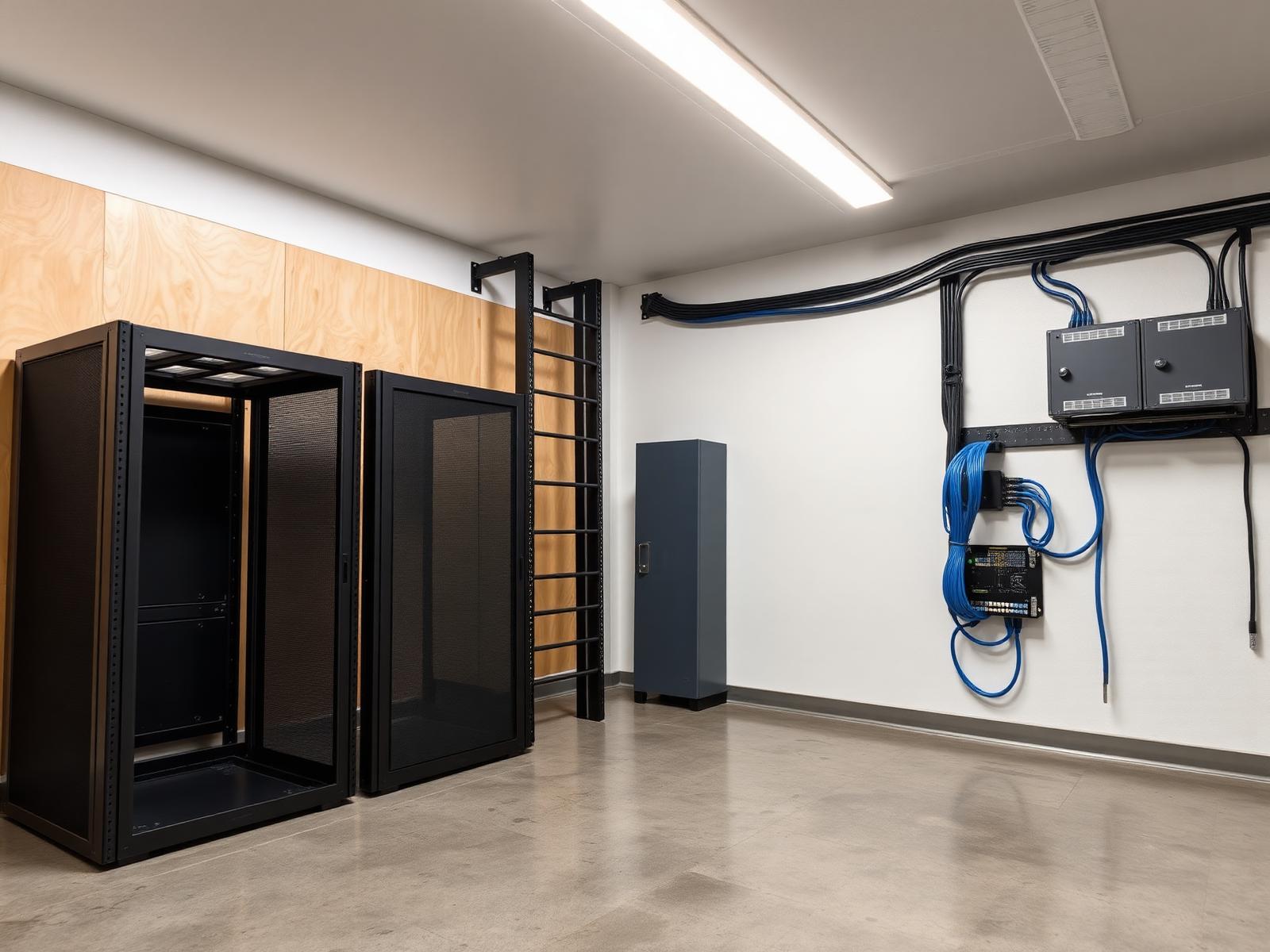
The operational cornerstone of any data center or robust enterprise network infrastructure is its Main Distribution Frame (MDF). As a central point for consolidating and distributing telecommunications cabling, the MDF dictates network performance, scalability, and resilience. Access Cabling specializes in the design, engineering, and installation of high-density MDF systems tailored for mission-critical environments. We understand that a poorly constructed MDF leads to constant troubleshooting, signal degradation, and operational downtime. Our approach moves beyond mere cable termination; we integrate meticulous planning, adherence to TIA/EIA and BICSI standards, and a deep understanding of data center airflow and power considerations to deliver an MDF that serves as a future-proof foundation, not a bottleneck. We leverage 28+ years of C-10/C-7 low-voltage expertise to ensure your MDF installation is executed with precision, minimizing disruption and maximizing long-term reliability for your most demanding applications.
Defining the Main Distribution Frame and its Standards
The Main Distribution Frame (MDF) serves as the primary cross-connect point for an organization's internal and external telecommunications infrastructure. Within a data center context, it's the critical interface where service provider circuits (e.g., telco, fiber optic) are handed off and distributed to the Intermediate Distribution Frames (IDFs) or directly to active equipment in the server halls. Proper MDF installation is governed by a stringent framework of industry standards to ensure performance, safety, and interoperability. Key among these are TIA-568 (Commercial Building Telecommunications Cabling Standard), TIA-942 (Telecommunications Infrastructure Standard for Data Centers), and BICSI TDMM (Telecommunications Distribution Methods Manual). We meticulously adhere to these guidelines, ensuring appropriate cable pathways, bend radius compliance, effective grounding and bonding strategies per TIA-607, and proper firestopping for all penetrations as mandated by local AHJ and NEC Article 800. Our designs account for both copper (twisted-pair, coaxial) and fiber optic cabling, providing robust infrastructure capable of supporting current and future bandwidth demands, such as 100 Gigabit Ethernet and beyond, by specifying appropriate category cabling (Cat 6A, Cat 8) and fiber types (OS2 singlemode, OM4/OM5 multimode).
Strategic Design and Engineering for Optimal MDF Performance
Effective MDF design is a complex engineering task that goes beyond simply allocating space. Our design process begins with a comprehensive site survey and a thorough analysis of current and projected network requirements, including port density, bandwidth needs, redundancy objectives, and future expansion plans. We consider environmental factors specific to data centers, such as thermal management and cabinet airflow, ensuring that our MDF implementations do not impede cooling efficiency. This involves selecting appropriate rack and cabinet solutions – often high-density, open-frame racks or structurally reinforced cabinets for heavier loads – that allow for proper cable management, airflow, and accessibility. Our engineers specify optimal cable pathways, including overhead cable trays (ladder rack, basket tray) or raised floor systems, ensuring segregation of power and data cabling (TIA-569), and designing for proper cable fill ratios to prevent congestion and facilitate MACs (Moves, Adds, Changes). We also integrate scalable distribution frames and patching fields, using solutions from manufacturers like CommScope, Panduit, or Corning, to minimize signal degradation and reduce latency, crucial for supporting high-performance computing and low-latency storage area networks.
Materials and Components: Building a Resilient Backbone
The longevity and performance of an MDF are directly tied to the quality of its components. Access Cabling exclusively utilizes high-grade, enterprise-class materials from trusted manufacturers recognized for their adherence to industry standards and proven reliability. For copper infrastructure, this includes specifying Category 6A or higher-rated cabling (e.g., Belden, CommScope, Panduit) to support 10 Gigabit Ethernet over longer distances, paired with robust patch panels and connectivity solutions from brands like Leviton or Panduit. For fiber optic backbones, we deploy OS2 singlemode and OM4/OM5 multimode fiber optic cables, connectors, and high-density fiber enclosures (e.g., Corning OptiTap or Panduit OptiCom) to support current multi-gigabit and future terabit speeds. We prioritize components with excellent insertion loss and return loss characteristics to minimize signal degradation. Crucially, all specified components are chosen not only for individual performance but also for their interoperability and compliance with TIA component performance standards, ensuring a truly synergistic and high-performing system. This includes proper grounding and bonding components, fire-rated sleeves and sealants, and robust rack and cabinet systems designed for seismic bracing where applicable, ensuring physical integrity and regulatory compliance.
Precision Installation Methodology and Execution
Our MDF installation methodology is characterized by meticulous planning and execution, reflecting our C-10/C-7 licensing and 28 years of experience. We adhere to a structured process, commencing with a detailed project plan that includes staging, safety protocols, and a comprehensive schedule to minimize disruption to live environments within data centers. Our certified technicians employ manufacturer-specific termination procedures, such as TIA-568-C.2 color coding and punch-down techniques for copper, and fusion splicing or specific pre-terminated solutions for fiber optics, ensuring optimal signal integrity. Cable management within the MDF is paramount; we implement best practices for dressing, bundling, and labeling all cables according to BICSI best practices (e.g., use of Velcro ties over plastic zip ties) to maintain clear pathways, facilitate troubleshooting, and support future infrastructure expansion. All rack and cabinet installations are precise, Level-controlled, and seismically anchored where required. Every step, from cable pathway installation (conduit, tray systems) to patch panel installation and cross-connect wiring, is executed with an unwavering commitment to quality and adherence to design specifications and safety regulations (OSHA, NEC).
Rigorous Testing, Documentation, and Certification
Post-installation, Access Cabling employs a comprehensive and rigorous testing and certification process to validate the performance and reliability of the MDF infrastructure. For copper cabling, we utilize industry-leading certifiers like Fluke Networks DSX-8000 Versiv Cable Analyzers to perform Level III/IV certification testing, ensuring compliance with TIA-568-C.2 standards for insertion loss, return loss, NEXT, PSNEXT, ACRF, PSACRF, and propagation delay. For fiber optic cabling, we perform Power Meter and Light Source (Tier 1) testing for insertion loss, and Optical Time Domain Reflectometer (OTDR) (Tier 2) testing to characterize optical fiber links, identify splice/connector loss, and detect potential faults, adhering to TIA-526-7 and TIA-526-14 standards. All test results are compiled into detailed, manufacturer-compatible reports and provided to the client for their records, serving as a 'birth certificate' for the cabling system. Comprehensive labeling (TIA-606-C compliant) and as-built documentation, including rack elevation diagrams, patching schedules, and floor plans, are also provided, ensuring traceability and simplifying future maintenance and upgrades. This meticulous documentation is crucial for data center compliance and operational efficiency.
Ensuring Compliance, Safety, and Future Scalability
Compliance and safety are non-negotiable pillars of our MDF installation services, especially within high-stakes data center environments. Access Cabling operates under CSLB License 992009 and strictly adheres to the National Electrical Code (NEC), specifically Article 800 (Communications Circuits) and Article 770 (Optical Fiber Cables), ensuring all electrical safety and fire protection requirements are met. We implement appropriate grounding and bonding per TIA-607-C to mitigate electrical hazards and maintain signal integrity. Firestopping all penetrations through fire-rated walls and floors is standard practice, employing UL-classified materials and methods to prevent fire propagation. Beyond immediate safety, our designs inherently incorporate scalability by selecting modular, high-density components and planning for clear expansion pathways. This foresight ensures that the installed MDF can accommodate increased port density, higher bandwidth requirements, and technological advancements without requiring a complete overhaul, thereby protecting your long-term infrastructure investment. Our commitment extends to securing the physical plant through proper rack and cabinet selection that can integrate with existing data center security protocols.
Access Cabling's Differentiated Approach to MDF Projects
What sets Access Cabling apart in the specialized field of data center MDF installation is our holistic, vendor-agnostic approach combined with unparalleled technical proficiency. We don't push proprietary solutions; instead, we engineer optimal systems utilizing best-in-class components from industry leaders like Panduit, CommScope, Corning, or Belden, selecting based on your specific requirements rather than pre-set preferences. Our 28 years of experience as a licensed C-10/C-7 contractor (CSLB 992009) means we possess an in-depth understanding of not just telecommunications standards, but also the broader electrical and structural considerations critical to data center reliability. We provide dedicated project management from conception through certification, ensuring seamless communication and adherence to strict timelines. Our nationwide reach, combined with an agile, experienced technician base, enables us to execute complex MDF rollouts across distributed data center footprints. We emphasize proactive problem-solving, meticulous documentation, and a commitment to long-term client partnerships, delivering an MDF infrastructure that is not just installed, but engineered for peak performance and sustained operational excellence.
Integrating MDF with Data Center Infrastructure Design
The Main Distribution Frame (MDF) does not operate in isolation; its efficacy is intrinsically linked to its integration within the broader data center infrastructure, encompassing power distribution, cooling systems, and physical security. A deep-dive into this integration necessitates a nuanced understanding of environmental constraints and operational synergies. For instance, the physical placement of the MDF must consider proximity to Mechanical, Electrical, and Plumbing (MEP) pathways to avoid interference, specifically electromagnetic interference (EMI) from high-voltage conduit runs, which can degrade signal integrity in sensitive copper or fiber optic cabling. We meticulously plan and coordinate with MEP trades during the design phase, utilizing Building Information Modeling (BIM) platforms to prevent clashes and optimize cable routing pathways that respect power separation requirements (e.g., NFPA 70 Article 800 standards). This concurrent engineering approach minimizes post-installation remedial work and ensures that cooling airflow is not impeded by densely packed cable trays, maintaining optimal operating temperatures for active equipment and preventing hotspots within the MDF space. Furthermore, fire suppression systems, including clean agent systems like FM-200 or Novec 1230, must be designed to accommodate the MDF's unique layout, ensuring full spatial coverage without compromising cable integrity or personnel safety during deployment or discharge. The integration strategy extends to understanding future expansion, designing modular MDF elements that can scale without requiring full system overhauls, thereby reducing total cost of ownership (TCO) and operational disruption in subsequent phases.
Advanced Fiber Optic & Copper Cable Management Strategies
Effective cable management within the MDF is paramount for maintainability, airflow, and long-term reliability, particularly with the proliferation of high-density fiber optic and Category 6A/7 copper cabling. Our approach incorporates advanced cable management strategies that go beyond basic segregation. For fiber optics, we implement high-density MPO/MTP cassette solutions and structured cabling systems designed to maintain minimum bend radii, typically 10-15 times the cable's outer diameter for single-mode fiber (e.g., Corning SMF-28e+ or similar low-loss fiber), preventing macrobending and microbending losses. Vertical and horizontal cable managers are specified with hinged covers and integrated slack management spools to protect delicate fibers from physical stress and facilitate future moves, adds, and changes (MACs). For copper cabling, especially Category 6A required for 10GBASE-T, we utilize high-fill cable trays with appropriate depth and width to support the increased gauge and bundle sizes, effectively managing alien crosstalk through proper separation and termination practices. Pathways are designed to accommodate a minimum of 20% future growth capacity, preventing immediate congestion and ensuring unobstructed access to patch panels and active equipment. We leverage specialized tools like Panduit's QuickNet pre-terminated solutions or CommScope's SYSTIMAX platforms for optimized density and reduced installation time, while strictly adhering to TIA/EIA-568-C standards for cable pathways and spaces. The selection of flame-retardant (OFNP/OFNR or LSZH) cable jacket materials is also critical, aligning with local fire codes and overall data center safety protocols.
Migration and Cutover Planning for Legacy MDF Systems
Migrating from an existing, often chaotic, legacy MDF to a new, structured framework presents significant technical challenges and requires meticulous planning to minimize downtime and mitigate operational risks. Our migration methodology involves a phased approach, starting with a comprehensive audit of the existing infrastructure, documenting every active circuit, its patch points, and dependencies – a process often revealing undocumented or mislabeled connections. We employ specialized diagnostic tools, such as Fluke Networks' DSX CableAnalyzer for copper and OptiFiber Pro for fiber, to verify the functionality and performance of existing circuits slated for migration. The cutover strategy itself is developed in close collaboration with the client's operations team, often leveraging 'dark fiber' or redundant copper pairs to establish parallel pathways before the actual switchover. This 'rip and replace' is rarely an option in active data centers; instead, 'hot cuts' or 'flash cuts' are enacted during maintenance windows, requiring precise coordination to transfer services one-by-one or in predefined service groups. Detailed rollback plans are always engineered, outlining specific procedures and resources to revert to the legacy system in the event of unforeseen issues. This includes pre-staging all necessary patch cords, converters, and test equipment, and assigning clear roles and responsibilities to the migration team, often utilizing a 'war room' environment for real-time problem-solving and communication. The goal is a seamless transition, ensuring business continuity with verifiable circuit integrity post-migration.
Long-Term Maintainability, Security, and Operational Efficiency
Beyond initial installation, the long-term maintainability, security, and operational efficiency of the MDF are critical factors influencing its total lifecycle cost and performance. Our designs inherently support these aspects through robust labeling schemes, intelligent infrastructure management (IIM) integration, and physical security measures. A comprehensive labeling system, adhering to TIA/EIA-606-B administration standards, assigns unique identifiers to every port, cable, and pathway, facilitating rapid troubleshooting and reducing Mean Time To Repair (MTTR). This includes detailed 'as-built' documentation, often delivered digitally, enabling immediate access to circuit information. For enhanced operational efficiency, we explore the integration of IIM systems such as CommScope's imVision or Panduit's PanView iQ, which provide real-time visibility into physical layer connectivity, automating documentation updates and detecting unauthorized changes. From a security perspective, physical access to the MDF is restricted through layered controls, including biometric authentication or card access systems and surveillance cameras (e.g., Axis or Avigilon IP cameras), reducing the risk of accidental or malicious tampering. Furthermore, the selection of robust, fire-rated enclosures and adherence to grounding and bonding standards (e.g., TIA/EIA-607-C) are foundational for both safety and preventing data breaches through electromagnetic eavesdropping. Our approach considers not just immediate project deliverables, but the entire operational lifespan, ensuring the MDF remains a reliable, secure, and easily manageable asset for decades to come.