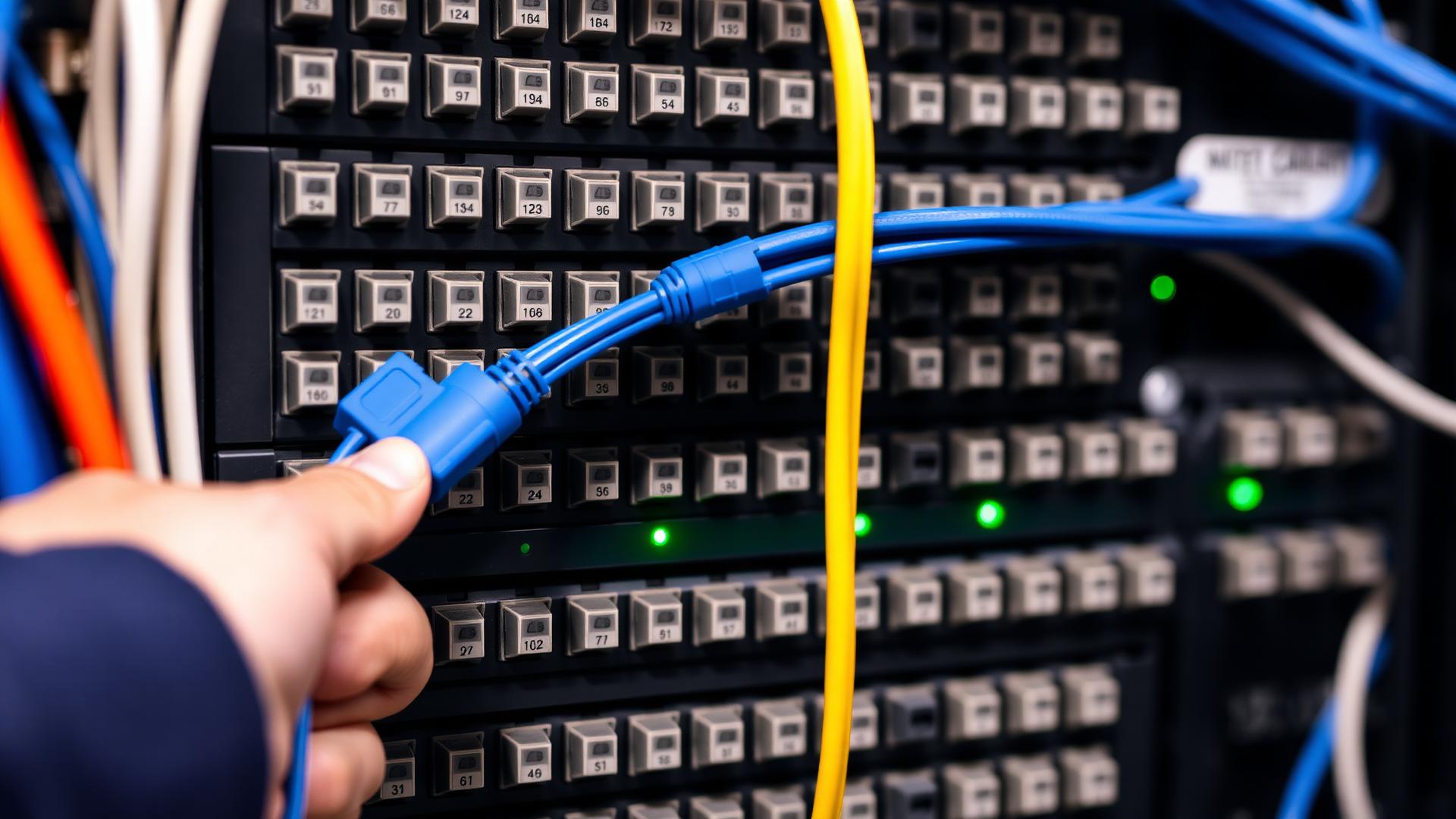
For data center managers and IT directors, inefficient cable management directly translates to increased operational expenditure, extended troubleshooting times, and heightened risk of network downtime. Patch panel installation, when executed with precision and forethought, forms the foundational layer for a resilient and scalable data center network. Access Cabling specializes in the meticulous design, build-out, and certification of high-density, low-latency patch panel infrastructures. Our approach transcends simple termination; we integrate TIA-942-B and ANSI/BICSI 002-2021 standards from conception, leveraging our 28 years of experience to deliver robust, future-proof physical layers. We utilize industry-leading components from manufacturers like Panduit, CommScope, and Corning, ensuring each patch panel installation provides optimal performance, streamlined MACs (Moves, Adds, Changes), and a verifiable pathway to sustained network integrity within mission-critical environments.
Precision Patch Panel Installation within Data Center Context
A patch panel serves as an organized, passive connectivity point, consolidating multiple network cables into a single, manageable interface. In data center environments, the criticality of this component is elevated due to the sheer volume of connections and the demand for uninterrupted performance. Our patch panel installation services for data centers encompass initial planning, cable routing, termination, and detailed labeling. We address diverse media types, including Category 6A, Category 8, OM4, and OS2 fiber optics. Adherence to TIA-606-C for administration and TIA-1005-A for telecommunications infrastructure in industrial premises ensures that all installations support high-density aggregation. The focus remains on establishing a clear demarcation point between horizontal cabling and active network equipment or cross-connects, facilitating rapid diagnostics and minimizing disruption during infrastructure modifications. Our technicians are specialized in handling the challenges inherent to high-density environments, including airflow management and heat dissipation considerations during component integration.
Strategic Design & Engineering for Data Center Infrastructure
Effective patch panel deployment within a data center begins with comprehensive, vendor-agnostic infrastructure design. Our engineering team meticulously plans panel placement within racks and cabinets, considering equipment density, future growth projections, and existing power and cooling pathways. We assess the appropriate patch panel types – whether copper (RJ45, 110-style, keystone) or fiber optic (MPO/MTP, LC, SC) – based on specific channel requirements and bandwidth objectives. Design considerations extend to port density, cable bend radius management, and the integration of structured cabling best practices as outlined by ANSI/BICSI 002-2021 and TIA-942-B standards for data center infrastructure. This strategic design phase mitigates signal degradation, reduces cable bulk, and establishes logical cable pathways that are easily navigable, significantly reducing Mean Time To Repair (MTTR) and improving overall operational efficiency. We produce detailed CAD drawings and rack elevations, providing a 'digital twin' of the physical installation before deployment.
Optimum Components & Materials for High-Performance Networks
The selection of patch panels and associated components is paramount in achieving the required performance and longevity in data center environments. Access Cabling exclusively sources materials from verifiable, reputable manufacturers like Panduit, CommScope, Corning, Leviton, and Belden. For copper installations, this includes Category 6A, Category 8, and shielded options, utilizing 110-type or IDC (Insulation Displacement Connector) termination blocks which offer superior gas-tight connections. In fiber optics, we deploy high-density MPO/MTP cassettes, fiber adapter panels (FAPs), and pre-terminated fiber trunks optimized for OS2 singlemode and OM4/OM5 multimode applications. Every component, from the patch cords to the tie wraps, is chosen to meet or exceed TIA/EIA specifications for insertion loss, return loss, and crosstalk performance. Our material selection process prioritizes long-term reliability and compatibility with advanced network equipment, ensuring the physical layer can support 100GbE, 400GbE, and emerging ultra-high bandwidth technologies without becoming a bottleneck.
Precise Installation and Termination Methodologies
Our installation methodology for patch panels adheres strictly to manufacturer guidelines and BICSI best practices, focusing on meticulous termination, proper strain relief, and organized cable routing. For copper patch panels, technicians utilize specialized termination tools to ensure consistent and reliable punch-downs, verifying correct wire mapping (T568A or T568B) at every port. Fiber optic patch panels require even greater precision; dust caps are maintained until final connection, fiber strands are fusion spliced or pre-terminated with MPO/MTP connectors, and bend radius is meticulously managed to prevent attenuative losses. All terminations are performed in accordance with manufacturer-specified tolerances for each cable type and connector. We implement robust cable management solutions, including horizontal and vertical cable managers, to maintain airflow, separate copper from fiber where necessary, and ensure that patch cords can be added or removed without disrupting adjacent connections. This structured approach is critical for maintaining signal integrity and facilitating future network modifications within the dense confines of a data center.
Advanced Testing, Certification, and Documentation
Post-installation, Access Cabling performs comprehensive testing and certification of every patch panel port to guarantee compliance with industry standards and specified performance parameters. For copper, we utilize Fluke Versiv DSX-8000 Cable Analyzers to perform Level 2G or 2G Advanced certification, testing for continuity, wire map, length, insertion loss, return loss, Near-End Crosstalk (NEXT), Power Sum NEXT (PSNEXT), Alien Crosstalk (AXT) for Category 6A and higher, and Delay Skew. Fiber optic installations are tested with Fluke OTDRs and power meters/light sources (OLTS) to measure insertion loss, return loss, and optical link length, ensuring compliance with TIA-568.3-D and ISO/IEC 11801 standards. Each certified link generates detailed performance reports, which are compiled into a comprehensive documentation package, including rack elevations, port maps, and as-built drawings. This documentation package is critical for ongoing network management, troubleshooting, and future infrastructure upgrades, providing an irrefutable record of performance and adherence to design specifications.
Ensuring Regulatory Compliance and Data Center Safety
Data center environments are subject to stringent regulatory requirements and safety protocols. Access Cabling's patch panel installation practices integrate these considerations from the outset. All cabling installations conform to applicable sections of the National Electrical Code (NEC), particularly Article 800 for Communications Circuits and Article 770 for Optical Fiber Cables and Raceways, ensuring fire safety and proper grounding. Our work adheres to TIA-942-B for Data Center Telecommunications Infrastructure, covering aspects from environmental controls to pathway and space requirements. Furthermore, our technicians are trained in data center-specific safety procedures, including Lockout/Tagout (LOTO) protocols, proper handling of static-sensitive equipment, and working at heights. The use of plenum-rated cables where required by building codes, robust grounding and bonding practices, and clear labeling systems contributes to both operational safety and regulatory compliance, ensuring that the physical layer installation poses no risk to personnel or critical data center equipment.
Access Cabling's Differentiated Patch Panel Expertise
What distinguishes Access Cabling's patch panel installation service in the data center arena is our holistic approach driven by decades of specialized experience. We do not merely terminate cables; we architect connectivity solutions. Unlike general contractors, our deep expertise in low-voltage systems allows us to foresee and mitigate potential conflicts with power, cooling, and security systems. Our C-10/C-7 licensing (CSLB 992009) underpins our technical capabilities, ensuring all work is performed to the highest industry and code standards. We offer a true consultative partnership, guiding clients through complex infrastructure decisions, such as the advantages of pre-terminated fiber vs. field termination, or the optimal port density for specific application demands. Our commitment to using only certified technicians, high-grade materials, and stringent quality control processes, backed by comprehensive Fluke certification, delivers a robust and reliable physical layer that supports maximum uptime and scalability for your critical data center operations.
Streamlined Project Management & Multi-Trade Coordination
Effective patch panel installation within a dynamic data center environment necessitates a robust project management framework that extends beyond mere cabling. Our approach integrates a meticulously planned coordination strategy, recognizing that patch panel deployment is seldom an isolated event. We proactively liaise with Facilities Management, MEP (Mechanical, Electrical, and Plumbing) trades, and HVAC specialists to ensure seamless operational continuity and avoid conflicts with critical infrastructure. For instance, rack elevations and cabinet layouts are not solely dictated by cabling pathways but must account for power distribution units (PDUs), cooling airflow, and fire suppression systems. This requires early engagement in the design phase, utilizing tools like BIM (Building Information Modeling) where applicable, to visualize potential clashes and optimize space utilization. Our project managers employ PERT (Program Evaluation and Review Technique) charts and critical path analyses to identify dependencies and allocate resources efficiently, thereby mitigating delays and cost overruns. Furthermore, cutover strategies for active data center environments are developed in close consultation with IT operations teams, establishing precise maintenance windows, rollback plans, and communication protocols to minimize service disruption. This comprehensive coordination minimizes the frequently encountered pitfalls of scope creep and inter-trade disputes, which can significantly derail project timelines and inflate budgets, ultimately impacting the Total Cost of Ownership (TCO) for the data center operator. Our documentation deliverables include detailed coordination logs, issue resolution matrices, and stakeholder communication plans, providing a transparent and auditable record of the project lifecycle. This integrated approach ensures that the patch panel infrastructure is not merely installed but is strategically woven into the broader operational fabric of the data center, future-proofing against common infrastructure clashes and enabling scalable growth.
Advanced Migration and Cutover Strategies for Live Environments
Migrating to a new patch panel infrastructure or performing significant upgrades in an active data center demands an exceptionally detailed and risk-averse cutover strategy. Our methodologies prioritize uninterrupted service delivery, employing techniques such as phased migration, 'leapfrog' replacement, or 'swing-space' deployments depending on the client's risk tolerance, available redundancy, and operational requirements. For instance, in a phased migration, individual circuits are meticulously identified, documented, and transitioned one-by-one or in small, manageable batches during pre-approved maintenance windows. This often involves the use of specialized circuit tracing tools like Fluke Networks IntelliTone Pro or cable certifiers with tone generation capabilities to unequivocally identify the source and destination of each circuit within the legacy and new patch panels. 'Leapfrog' replacement, conversely, involves deploying the new infrastructure adjacent to the old, porting circuits over in a parallel fashion, and only decomissioning the legacy system after full verification of the new one. This often necessitates temporary network extenders or fiber patch cables to bridge longer distances during the transition period. We develop comprehensive Method of Procedure (MOP) documents that detail every step, including pre-cutover verification, post-cutover testing protocols using devices like LinkWare Live for standardized reporting, and explicit rollback plans. Crucially, client IT operations teams are deeply integrated into the planning and execution, with dedicated communication channels established for real-time status updates and issue resolution. This meticulous attention to detail minimizes the common failure modes associated with live environment cutovers, such as mis-patched circuits, lost connectivity, and data corruption, thereby safeguarding critical business operations and ensuring a smooth transition to enhanced network performance.
Life Cycle Cost Optimization & Technology Roadmap Integration
Optimizing the Total Cost of Ownership (TCO) for data center patch panel infrastructure extends far beyond initial installation costs; it encompasses long-term operational efficiency, scalability, and adaptability to evolving technology standards. Our design philosophy incorporates a forward-looking perspective, considering the life cycle costs associated with power consumption, cooling requirements, and future upgrade pathways. For instance, by strategically selecting high-density patch panels with modular components, such as MPO/MTP cassettes for fiber or keystone jack systems for copper, data centers can achieve significant space savings and simplify future expansions or reconfigurations. This modularity reduces the labor intensity of subsequent upgrades, translating directly into reduced operational expenditure (OpEx). We integrate the chosen patch panel solution into the client's broader technology roadmap, assessing compatibility with anticipated future bandwidth demands (e.g., migration from 10G to 25G/50G/100G Ethernet, or potential adoption of PCIe over fabric), emerging optical technologies (e.g., parallel optics vs. serial optics), and evolving cabling standards (e.g., OM5 fiber for SWDM4). Our recommendations often include intelligent patch panels with integrated asset management capabilities, utilizing RFID or optical scanning to provide real-time port utilization data and streamline MACD (Moves, Adds, Changes, Deletions) processes. This proactive approach helps avoid costly rip-and-replace scenarios by selecting infrastructure that can scale economically, minimizing disruptions and maximizing the return on investment over the entire operational lifespan of the data center. Considerations for sustainability are also paramount, prioritizing products with lower embodied energy and end-of-life recycling programs, further contributing to a reduced environmental footprint and improved TCO.
Ensuring Data Security and Regulatory Compliance within Cabling Infrastructure
Beyond performance and reliability, patch panel installations within a data center must rigorously adhere to stringent data security protocols and regulatory compliance frameworks. Our methodologies incorporate physical security measures and best practices designed to prevent unauthorized access and tampering. This includes the strategic placement of patch panels within secured server rooms or designated cabinet zones, often utilizing lockable cabinets or enclosures that restrict access to authorized personnel only. Furthermore, our installation professionals are trained on client-specific security policies, including strict chain-of-custody procedures for all cabling components, especially those handling sensitive data. For environments requiring heightened security, we implement features like tamper-evident seals on patch panel ports or even employ fiber optic cables with integrated security features that detect physical intrusion. From a regulatory standpoint, our deployments are designed to comply with industry-specific mandates such as HIPAA (Health Insurance Portability and Accountability Act) for healthcare data, PCI DSS (Payment Card Industry Data Security Standard) for financial transactions, and SOC 2 (System and Organization Controls 2) for service organizations. This involves meticulous documentation of cable routing, logical-to-physical mapping, and access controls to demonstrate compliance during audits. We provide detailed as-built documentation that clearly identifies the physical location and connectivity of all critical data pathways, which is essential for audit trails and incident response. The correct labeling and segregation of different network segments (e.g., public vs. private, production vs. development) at the patch panel level are fundamental to maintaining logical security boundaries. By integrating these security and compliance considerations from the initial design phase through to final installation and documentation, we ensure that the patch panel infrastructure not only meets performance requirements but also forms a robust, auditable foundation for secure data operations.