LED screen installation for commercial buildings, venues and campuses — Access Cabling handles the structural mount, dedicated power coordination, signal cabling, processor setup, calibration and commissioning for indoor and outdoor LED screens. As an authorized SBC LED dealer (sbcledusa.com) and a licensed C-10/C-7 low-voltage contractor (CSLB #992009), we supply the screen and build the infrastructure behind it under one contract, one schedule and one warranty conversation.
A complete LED screen installation scope
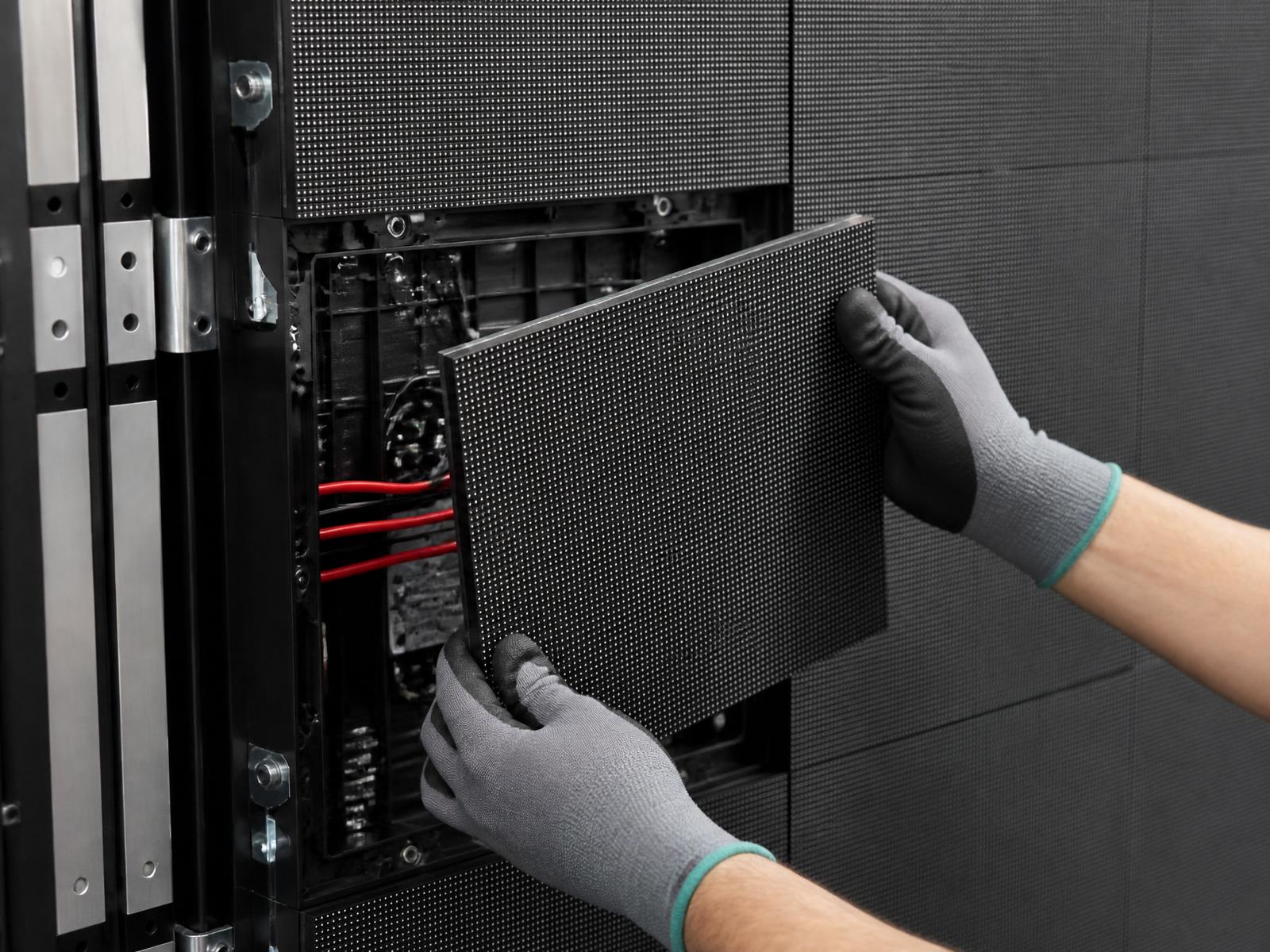
Every install starts with a site survey covering sightlines, ambient light, wall or structure capacity, available power, signal path and service access. From there the scope is: engineered mounting structure, dedicated circuits and disconnects, conduit and pathway, shielded Cat6A and fiber signal runs, cabinet hanging and laser levelling, module population and seam alignment, processor and sender-card configuration, source integration, brightness and color calibration, burn-in, control programming, user training and an as-built documentation package.
Mounting: wall, floor-standing, hanging and mobile
Wall-mounted screens use a unistrut or steel subframe anchored to structure — never to drywall studs alone on anything above a few cabinets. Floor-standing screens sit on a fabricated base with ballast or floor anchors and a service gap behind. Hanging screens use rated rigging hardware with a structural engineer's sign-off, which we coordinate on venue work. Mobile and rental-style screens use quick-lock cabinets on wheeled carts. We size and detail the structure for the actual cabinet weight, wind load if outdoors, and seismic requirements in California.
Power, circuits and electrical coordination
LED screens draw far more at peak white than at typical content levels, and undersized circuits are the most common cause of flicker and power-supply failures. We calculate peak draw per cabinet column, specify dedicated 20A or 30A circuits with a local disconnect, add surge protection, and coordinate the panel work under our C-10 license or with your electrician. Head-end equipment goes on a UPS so a brief outage does not require a full re-boot and re-sync of the wall.
Signal cabling and the head-end rack
Each receiving card is fed from the sender by shielded Cat6A within its distance limit, or over fiber for long runs and outdoor structures. Sources — media player, codec, matrix, laptop inputs, camera feeds — land in a ventilated head-end rack with the processor, control system and network switch. Everything is home-run, labeled at both ends to TIA-606-B, Fluke DSX certified and drawn into the as-builts.
Calibration and picture quality
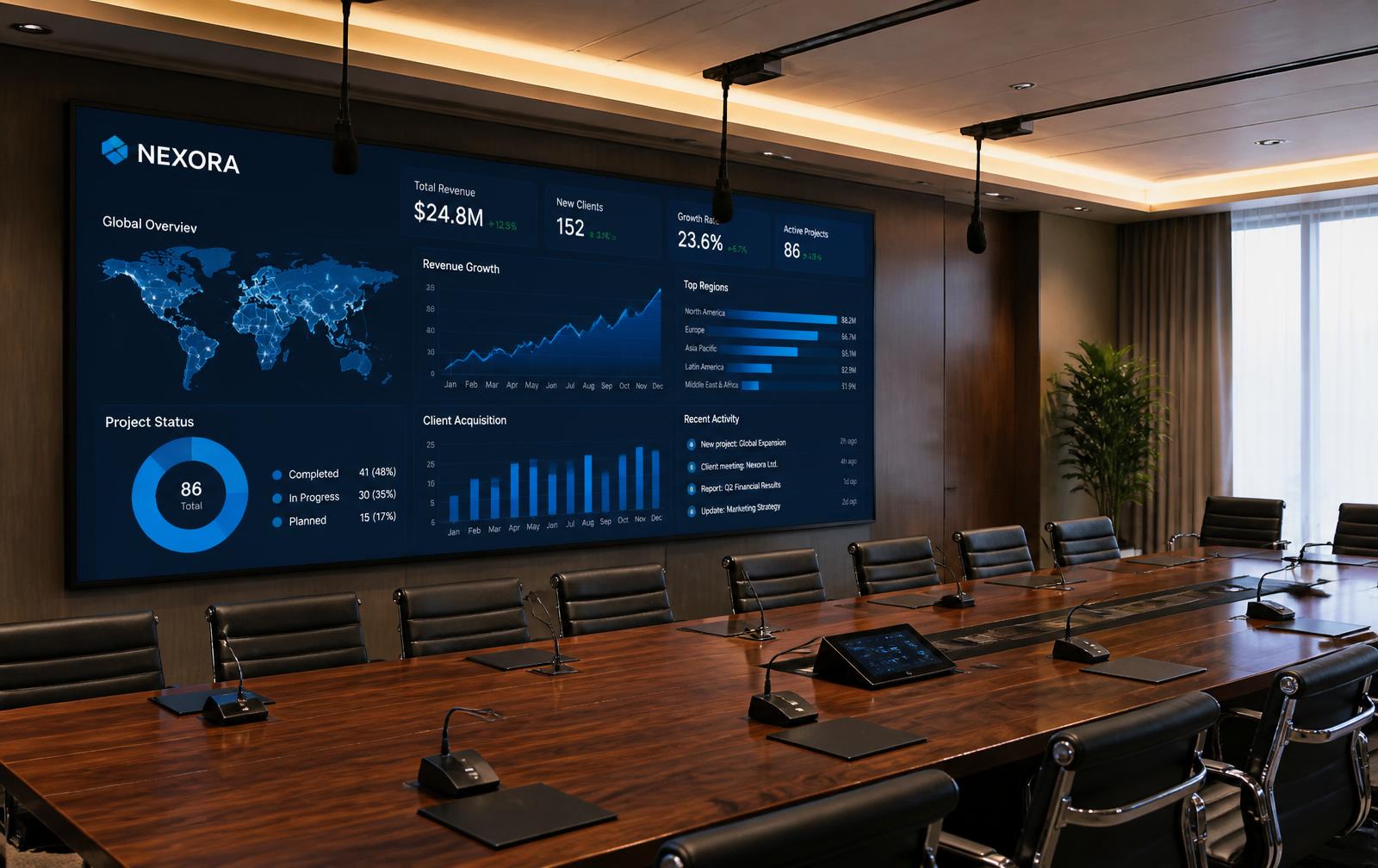
A brand-new LED screen out of the box is not calibrated for your room. We run module-level brightness and chroma correction across the canvas, tune target nits to the ambient light (a lobby with a glass curtain wall needs far more output than a boardroom), set gamma and low-grayscale performance so dark content does not band, correct any visible seams, and verify uniformity from every seat. Calibration files are saved and re-applied at every service visit.
Indoor vs. outdoor installations
Indoor screens prioritise pixel pitch and contrast at 600-1,500 nits. Outdoor screens prioritise brightness (5,000-10,000 nits), IP65/IP66 sealing, ambient light sensors for automatic dimming, wind and seismic-rated structure, condensation management and lightning/surge protection. Permitting and sign codes also apply outdoors — we coordinate the AHJ submittal and structural drawings as part of the project.
Ongoing support
We stock spare modules, power supplies and receiving cards on every install, offer preventative-maintenance visits that recalibrate and inspect thermal and moisture paths, and provide service response agreements. Because we also own the structured cabling and the network drops feeding the screen, a fault is diagnosed end-to-end by one team.