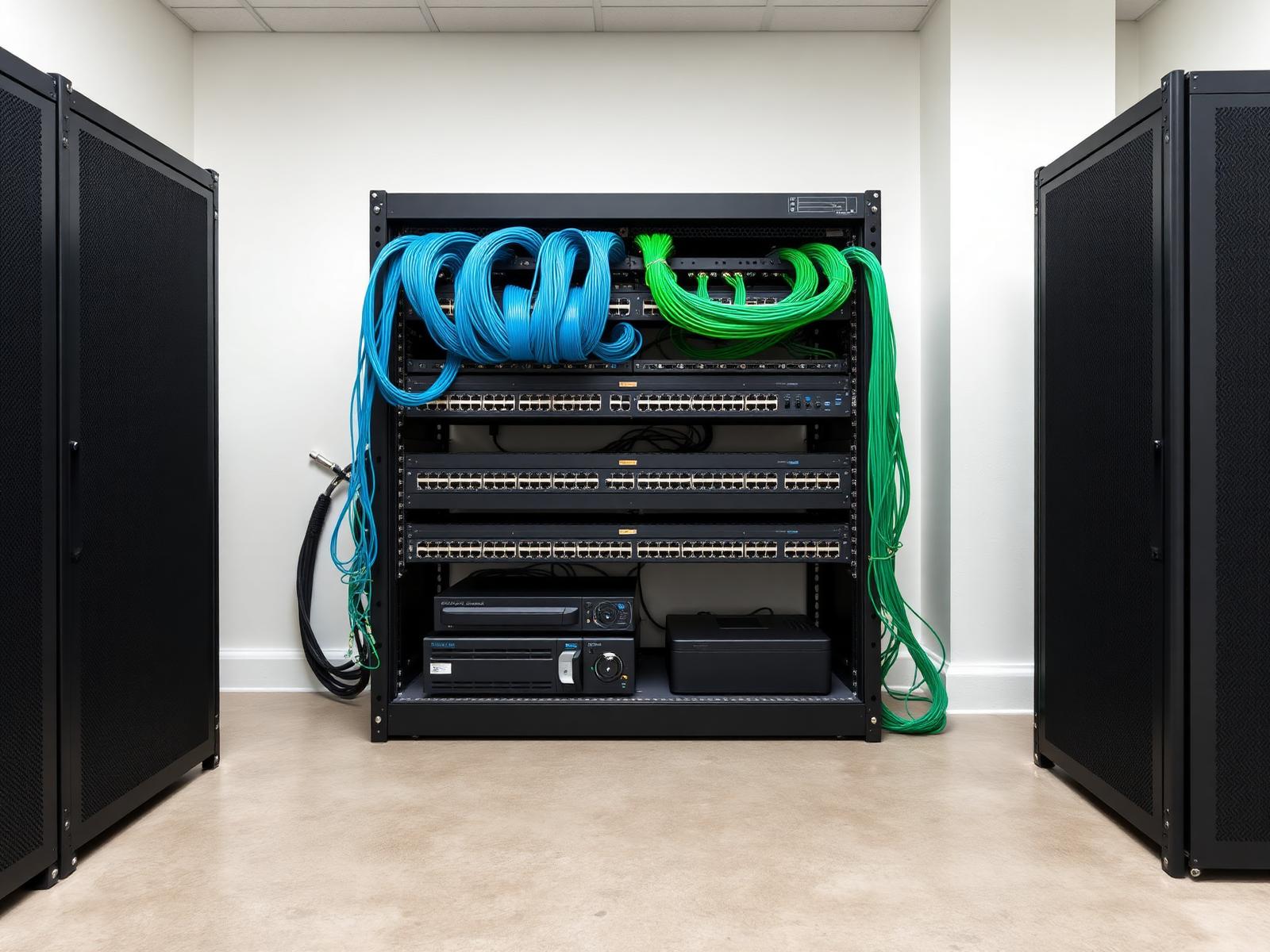
For organizations expanding their operational footprint or undergoing rapid branch deployments, managing the technical intricacies of cabling infrastructure across multiple geographically dispersed sites presents a formidable challenge. Inconsistent standards, disparate vendor management, and a lack of centralized oversight often lead to project delays, cost overruns, and a compromised network foundation. Access Cabling specializes in comprehensive multi-site cabling programs, providing a singular point of accountability and a standardized deployment methodology that eliminates these inherent complexities. Our approach leverages decades of experience in large-scale enterprise rollouts, ensuring uniformity, interoperability, and long-term network resilience from the core data center to every satellite office, retail location, or distribution center. We engineer multi-site solutions that align with your strategic growth, incorporating advanced planning and a vendor-agnostic posture to deliver robust, scalable, and future-ready infrastructure.
Standardized Multi-Site Cabling Program Development
Establishing a unified cabling strategy across multiple enterprise locations is paramount for operational consistency and network integrity. Our multi-site cabling programs commence with a comprehensive assessment of the client's current and projected infrastructure needs, encompassing site types, data density requirements, and application dependencies. We then develop a master specification document that dictates all aspects of the structured cabling system, adhering rigorously to TIA/EIA-568 series standards for commercial building cabling and international equivalents where applicable. This includes uniform media type selection (e.g., OM4/OM5 fiber for backbone links, Category 6A F/UTP for horizontal runs), termination methods, labeling schemes (e.g., TIA-606-C compliant), and pathway design. The objective is to eliminate site-specific variations that complicate troubleshooting, MACs (Moves, Adds, Changes), and future upgrades, ensuring that an IT team can approach any new or retrofitted site with a predictable infrastructure blueprint. Our program design also incorporates BICSI best practices for campus and high-rise pathway design, considering diverse environmental conditions across geographies.
Integrated Design and Engineering for Scalability
Effective multi-site deployment relies on meticulous design and engineering that accounts for current requirements and anticipates future expansion. Our engineering process integrates CAD/BIM services to generate detailed floor plans, equipment layouts, and riser diagrams for each site, ensuring architectural and spatial compatibility. For fiber optic backbones connecting MDFs (Main Distribution Frames) and IDFs (Intermediate Distribution Frames), we specify appropriate fiber counts, attenuation budgets, and splice methodologies in accordance with TIA-568.3-E. For copper infrastructure, channel and permanent link lengths are calculated precisely to maintain performance margins as defined by TIA-568.2-D, especially critical for 10GBASE-T and beyond. We consider factors like power over Ethernet (PoE) demands for IoT devices and access points, designing pathways and cable types to mitigate heat buildup and ensure optimal performance. This integrated design approach ensures that every component, from patch panels to fiber distribution units (FDUs), is specified for interoperability and future scalability, irrespective of the individual site's existing condition.
Premium Materials and Component Selection for Durability
The longevity and performance of a multi-site cabling infrastructure are directly tied to the quality of its components. Access Cabling specifies and deploys only industry-leading structured cabling solutions from manufacturers such as Panduit, CommScope, Leviton, Belden, and Corning. For high-speed data transmission, this often includes Category 6A shielded and unshielded twisted pair copper cabling, ensuring compliance with ISO/IEC 11801 and IEEE 802.3an for 10 Gigabit Ethernet. Fiber optic deployments utilize OS2 single-mode fiber for longer backbone runs and multi-mode options like OM4 or OM5 for intra-building risers and data center interconnects, selected based on distance and bandwidth requirements. We standardize on robust connectivity hardware, including modular patch panels, outlet jacks, and fiber optic connectors (LC, SC, MPO), prioritizing products with extended warranty provisions and proven reliability. All chosen components adhere to UL and ETL ratings, ensuring fire safety and performance verification, particularly critical in multi-building environments governed by varying local codes.
Coordinated Multi-Site Installation and Logistics
Executing simultaneous or phased cabling rollouts across numerous locations demands precise logistical coordination and consistent installation practices. Our project management methodology ensures that all field technicians, whether directly employed or part of our vetted nationwide partner network, adhere to the same master specification and quality control protocols. This includes standardized cable routing, dressing, labeling, and termination techniques. For example, cable slack loops are uniformly managed, bend radius compliance is strictly enforced (referencing TIA-569-D for pathways and spaces), and termination processes follow manufacturer-specific guidelines for optimal performance, such as proper pair untwist for Category 6A. Our experienced project managers oversee all aspects, from material procurement and just-in-time delivery to each site, to scheduling and deployment, mitigating potential delays. Safety protocols are paramount, with all installers trained in OSHA compliance and site-specific hazard mitigation, crucial when operating in diverse commercial, retail, or industrial environments.
Comprehensive Testing, Certification, and Documentation
Post-installation, rigorous testing and certification are non-negotiable for every single link in a multi-site deployment to guarantee adherence to performance specifications. Access Cabling utilizes industry-leading certification tools, primarily Fluke Networks DSX-8000 CableAnalyzers, to perform comprehensive Level 2G / Level 3 testing for copper and fiber optic links. For copper cabling (e.g., Cat6A), tests include permanent link and channel certification for parameters such as insertion loss, return loss, near-end crosstalk (NEXT), power sum NEXT, attenuation-to-crosstalk ratio (ACR-F, ACR-N), and propagation delay, ensuring all results meet or exceed TIA-568.2-D limits. Fiber optic links are tested for insertion loss with an Optical Loss Test Set (OLTS) and can undergo Optical Time Domain Reflectometer (OTDR) testing for detailed fault location and splice loss analysis, per TIA-568.3-E. Upon completion, clients receive a comprehensive documentation package including detailed test reports (Fluke LinkWare files), as-built drawings, labeling schematics, component manifests, and warranty certificates, providing an auditable record of their infrastructure.
Addressing Regulatory Compliance and Building Codes
Navigating the varied regulatory landscape across multiple jurisdictions is a critical component of successful multi-site cabling deployments. Access Cabling ensures all installations comply with the latest National Electrical Code (NEC) articles, specifically Articles 770 (Optical Fiber Cables), 800 (Communications Circuits), and 725 (Class 1, Class 2, and Class 3 Remote-Control, Signaling, and Power-Limited Circuits), which dictate cable types, fire ratings (e.g., Plenum, Riser, General Purpose), and installation methods within buildings. We also adhere to local building codes and specific AHJ (Authority Having Jurisdiction) requirements for permitting and inspection. Our deep understanding of these codes, coupled with our CSLB 992009 licensing, ensures that every aspect of the physical infrastructure, from conduit fill ratios to grounding and bonding practices (per TIA-607-D), meets all safety and performance mandates. This proactive compliance mitigates risks of project delays or rework due to non-conformance, safeguarding the client's investment and operational continuity across all locations.
Access Cabling's Unified Project Management Advantage
The distinctive advantage of partnering with Access Cabling for multi-site cabling projects lies in our unified project management structure. Unlike managing multiple local vendors, our clients benefit from a single, dedicated Project Manager (PM) who serves as the central point of contact and accountability for the entire multi-site rollout. This PM orchestrates all activities, from initial scope definition and budget allocation to site readiness surveys, material procurement, resource deployment (including our nationwide network of qualified technicians), and final commissioning. This streamlined approach minimizes communication overhead, ensures consistent application of the master specification across all sites, and proactively resolves issues before they escalate. Our PMs leverage robust communication tools and progress tracking systems to provide real-time updates and maintain transparency throughout the project lifecycle, guaranteeing that all locations are delivered on time, within budget, and to the exact same high standards of quality and performance, regardless of geographic dispersion.
Advanced Physical Layer Security for Distributed Environments
Securing multi-site networks extends beyond logical firewalls to the physical layer, a critical vulnerability often overlooked. Access Cabling implements advanced physical security protocols tailored for distributed enterprise environments. This includes deploying specialized tamper-evident pathway systems, such as HellermannTyton's RapidNet pre-terminated solutions within armored conduit or Panduit's PanZone wall-mount enclosures with integrated intrusion detection. For high-security zones, we utilize fiber optic cable with embedded acoustic or vibrational anomaly detection, interfaced with building management systems (BMS) via BACnet IP or Modbus TCP/IP for real-time alerts. Our designs incorporate segmented pathways, ensuring critical infrastructure, like data center interconnects or industrial control system (ICS) networks, is geographically and physically isolated from general office cabling. We specify robust access control measures for telecommunications rooms (TRs) and main distribution frames (MDFs), including biometric scanners or multi-factor authentication systems integrated with enterprise identity management platforms. Furthermore, our installation teams are trained in 'clean room' cabling practices to prevent the introduction of foreign objects or unauthorized devices, a common vector for physical layer breaches. We also address electromagnetic interference (EMI) and radio frequency interference (RFI) shielding requirements using shielded twisted pair (STP) solutions like Siemon TERA or CommScope SYSTIMAX Z-MAX for copper, and appropriate grounding and bonding in accordance with ANSI/NECA/BICSI 607 and IEEE Std 1100, crucial not just for performance but also for preventing signals from being intercepted or disrupted. Our documentation packages detail these physical security measures, including component specifications, installation schematics, and testing protocols for continuous assurance.
Optimizing Total Cost of Ownership Through Lifecycle Management
Access Cabling's multi-site solutions are engineered for an optimized Total Cost of Ownership (TCO), focusing on initial capital expenditure, operational expenses, and future scalability. We achieve this by meticulously evaluating cable plant longevity, advocating for standards-compliant infrastructure that exceeds minimum requirements, such as deploying Category 6A or even Category 8 copper where future 10GBASE-T, 25GBASE-T, or 40GBASE-T requirements are anticipated, extending upgrade cycles significantly. For fiber backbones, we often specify OS2 single-mode fiber over OM3/OM4 multi-mode to future-proof bandwidth for distances up to 10 kilometers without costly re-cabling as speeds increase to 100GbE, 400GbE, and beyond, per IEEE 802.3 standards. Our designs incorporate modularity and flexibility using distribution area (DA) cabling approaches or zone cabling architectures (e.g., TIA-942-B, TIA-862-A) to facilitate adds, moves, and changes (MACs) with minimal disruption and cost, reducing technician time and material waste. We leverage advanced cable management systems, like vertical and horizontal cable managers from Legrand or Eaton's B-Line series, to improve airflow, facilitate maintenance, and prevent costly downtime associated with disorganization. Moreover, our structured cabling systems are designed for energy efficiency, utilizing low-loss components to minimize power dissipation and supporting Power over Ethernet (PoE) deployments with appropriate cable gauges (e.g., 22 AWG or 23 AWG for longer distances and higher PoE++ power deliveries) to reduce the need for localized AC outlets and associated electrical infrastructure, driving down both installation and ongoing utility costs across multiple locations. Comprehensive documentation, including as-built drawings and test results using Fluke DSX-8000 Versiv Cable Analyzers, further reduces TCO by streamlining troubleshooting and future expansion planning.
Seamless Integration with HVAC, Electrical, and Fire Suppression Systems
Effective multi-site cabling deployments necessitate profound coordination with other building systems, a specialty of Access Cabling. Our project managers possess extensive experience interfacing with mechanical, electrical, and plumbing (MEP) contractors to ensure optimal cable routing, pathway installation, and environmental control within telecommunications infrastructure spaces. This involves collaborative design reviews to prevent conflicts with HVAC ductwork, sprinkler systems, and electrical conduits, adhering strictly to NEC (NFPA 70) and local building codes for clearances and separation. For instance, we specify plenum-rated (CMP) or riser-rated (CMR) cabling depending on the specific building's fire safety compartmentalization, preventing the propagation of fire or smoke via cable pathways, as outlined in NFPA 75 (Standard for the Fire Protection of Information Technology Equipment). We coordinate grounding and bonding requirements with the electrical contractor, ensuring all telecommunications components are properly bonded to the building's main grounding electrode system to prevent transient voltage damage and ensure worker safety, per ANSI/TIA-607-D. Our designs account for heat dissipation from high-density patching fields and active equipment, advising on appropriate CRAC/CRAH unit placement and airflow management strategies within data centers and TRs. This includes specifying cold aisle/hot aisle containment or employing intelligent rack-level cooling solutions when necessary. Furthermore, we ensure that cable pathways do not impede access to fire suppression systems, and where necessary, integrate cabling through fire-rated walls and floors using approved penetration sealants and devices (e.g., Hilti or 3M firestopping solutions) that maintain the fire rating of the structure, avoiding costly re-work and ensuring compliance with life safety regulations across all sites.
Robust Migration Strategies and Phased Cutover Planning
Executing a flawless multi-site network migration demands a meticulously planned and robust cutover strategy to minimize downtime and business disruption. Access Cabling specializes in developing phased migration plans that account for operational continuity, risk mitigation, and rollback procedures. Our approach begins with a comprehensive assessment of existing infrastructure, identifying interdependencies and potential single points of failure. We then design parallel infrastructure, allowing for 'side-by-side' operation during the transition phase, which significantly reduces the cutover window. This often involves deploying new structured cabling and active network equipment in advance, physically separate from the legacy environment, leveraging advanced pre-termination techniques for rapid deployment. For example, during a data center relocation or network upgrade across multiple branch offices, we utilize pre-measured and pre-terminated fiber optic trunks and copper bundles (e.g., MPO/MTP cassettes for fiber, or multi-pair copper assemblies) to accelerate installation. The cutover itself is executed during predetermined, low-impact maintenance windows, often overnight or weekends, with a detailed step-by-step checklist and dedicated support teams for each site. We employ robust labeling and asset management systems, such as Brady or Panduit industrial labels, and integrate with DCIM (Data Center Infrastructure Management) tools to track every connection during the transition. Post-cutover, comprehensive testing protocols are performed, including end-to-end network connectivity tests (e.g., ping, traceroute, throughput tests using Ixia or Spirent tools) and power budget verification for PoE devices, to ensure complete functionality and adherence to performance specifications. Our plans also include explicit rollback procedures and a designated 'go/no-go' decision point, ensuring that in the event of unforeseen issues, the legacy system can be quickly reinstated, safeguarding client operations across all geographically dispersed locations.