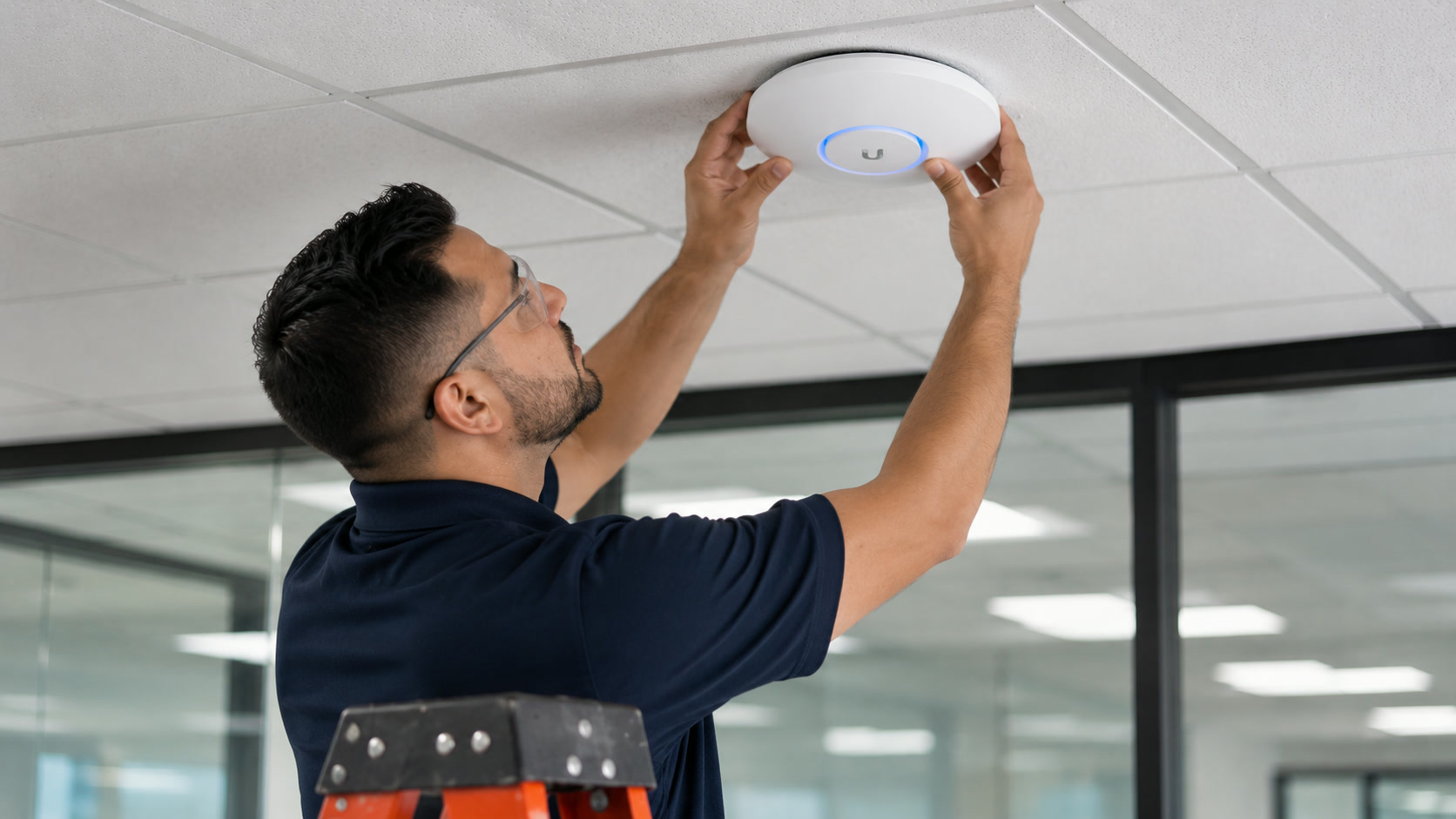
Developing and maintaining robust, high-performance network infrastructure within the hospitality sector presents unique challenges that generic commercial cabling solutions often fail to address. Access Cabling specializes in comprehensive hotel cabling services, designing and deploying integrated low-voltage systems that underpin mission-critical operations such as High-Speed Internet Access (HSIA), Property Management Systems (PMS), and Internet Protocol Television (IPTV). Our approach differs by meticulously planning for the dynamic demands of guest connectivity, operational efficiency, and future technology integration. We cater specifically to hotel owners, IT directors, facility managers, and general contractors who require a partner with deep expertise in hospitality environments, ensuring systems are both code-compliant and built for long-term reliability and scalability. This includes understanding the nuances of older building retrofits versus new constructions, guest privacy considerations, and the 24/7 operational nature of hotels.
Integrated Hospitality Network Architecture and Standards
Hotel cabling mandates a departure from typical office layouts, focusing on high-density connectivity, power over Ethernet (PoE) strategies for devices like Wi-Fi access points and IP phones, and robust fault-tolerance. The architecture must accommodate not only guest Wi-Fi and in-room entertainment but also back-of-house operations including PMS, Point-of-Sale (POS), building automation, and security systems. Industry standards like TIA-568.0-E, TIA-568.1-E, and TIA-1005 (Telecommunications Infrastructure Standard for Remote Annunciators) provide foundational guidelines, but specialized considerations for hotels extend to ensuring adequate bandwidth per guest room, robust backbone infrastructure, and distributed antenna systems (DAS) for cellular coverage. We integrate these wired and wireless elements, often employing a converged IP network design where voice, video, and data traverse a single, well-managed infrastructure, frequently leveraging solutions from manufacturers like CommScope or Panduit to ensure interoperability and performance. This holistic view prevents isolated system failures and simplifies management.
Design Considerations for Guest Experience and Operational Efficiency
Effective hotel cabling design prioritizes both guest experience and operational efficiency. For guest rooms, this involves strategic placement of data outlets for HSIA, IP phones, and IPTV, often concealed yet accessible. Fiber optic cabling, typically OS2 single-mode or OM3/OM4 multi-mode, forms the backbone from the main distribution frame (MDF) to intermediate distribution frames (IDFs) on each floor, providing the necessary bandwidth for high-definition streaming and multiple concurrent guest devices. Within guest rooms, shielded Category 6A (F/UTP or S/FTP) cabling is frequently specified to mitigate electromagnetic interference (EMI) from appliances and ensure consistent 10 Gigabit Ethernet performance to wall plates where Wi-Fi access points or wired connections are made. For back-of-house, redundancy and resilience are paramount, with diverse path routing for critical systems like PMS servers and security cameras. Our design accounts for future technology adoption, such as IoT devices for smart rooms or advanced analytics, by pre-cabling with headroom for increased bandwidth and power requirements. This proactive approach minimizes disruption during upgrades and extends the useful life of the infrastructure.
Specialized Materials and Components for Hospitality Environments
The choice of materials and components in hotel cabling is critical for longevity, performance, and aesthetic integration. We specify low-smoke, zero-halogen (LSZH) rated cables in plenum spaces to enhance fire safety, particularly in guest areas and egress paths, adhering to NEC Articles 770 and 800. For copper cabling, Belden or Leviton Category 6A F/UTP is common for horizontal runs to resist noise and support PoE+, often powering Cisco or Aruba wireless access points. Fiber optic cables, such as Corning OptiTip or CommScope InstaPATCH pre-terminated assemblies, are utilized for high-speed backbone connections to accelerate deployment and ensure low loss performance. Connectivity hardware, including patch panels, jacks, and faceplates, is selected for durability and discrete appearance, often recessed within furniture or walls. Environmental controls, such as rack-mounted fan trays and thermal management accessories from Chatsworth or Eaton, are integrated into IDF closets to ensure optimal operating temperatures for active equipment, preventing premature component failure and maintaining network uptime. Attention to detail extends to color-coding and labeling standards (e.g., TIA/EIA-606-C) for simplified maintenance and troubleshooting.
Strategic Installation and Minimizing Guest Disruption
Executing hotel cabling installations requires a meticulous approach to minimize disruption, especially in active hotels or during phased construction. Our process begins with detailed site surveys and coordination with hotel management or general contractors to schedule work during off-peak hours or in unoccupied areas. For retrofits, this means strategic access decisions, often involving careful wall penetration and pathway creation to conceal cabling. New construction allows for more streamlined deployment, following architectural plans precisely. Crews are trained on BICSI methodologies for proper cable handling, termination, and dressing, ensuring neat, organized pathways, and adherence to bend radius specifications for fiber and copper. Conduit fill ratios are strictly observed to prevent cable damage and facilitate future additions. For guest rooms, in-room devices like Wi-Fi access points, IP phones, and smart TV mounts are installed with precision, tested against network performance benchmarks, and visually integrated to maintain the hotel's aesthetic standards. Safety protocols are paramount, including proper use of personal protective equipment (PPE) and implementing dust and noise mitigation strategies.
Rigorous Testing, Certification, and Documentation
Post-installation, comprehensive testing and certification are non-negotiable for hotel cabling systems. We utilize Fluke Networks DSX-8000 Versiv Cable Analyzers for all copper cabling (Category 6A and above) to run Level 2G or Level 3E certification tests, verifying compliance with TIA-568-C.2-1 standards for parameters such as insertion loss, return loss, near-end crosstalk (NEXT), and power sum alien crosstalk (PSANEXT). For fiber optic backbone links, we employ specialized optical loss test sets (OLTS) and optical time domain reflectometers (OTDRs) to measure end-to-end attenuation, link length, and identify any anomalies like micro-bends or bad splices, ensuring compliance with TIA-568.3-D. Every certified link receives a unique identification number. Complete 'as-built' documentation, including detailed floor plans indicating cable runs, outlet locations, and patch panel assignments, along with test results, is provided. This documentation package is crucial for ongoing network management, troubleshooting, and future upgrades, serving as a definitive record of the installed infrastructure and critical for demonstrating compliance to the owner.
Ensuring Compliance, Safety, and Future Adaptability
Compliance and safety are fundamental to hotel cabling projects. Beyond TIA/EIA standards, all installations adhere strictly to local building codes, electrical codes (NEC), and fire safety regulations. This includes proper grounding and bonding, secure cable support, and observing clearance requirements from power lines. For PoE-powered devices, we ensure proper cable sizing and bundle management to prevent excessive heat buildup, a known issue with high-density PoE applications, in accordance with TIA TSB-184-A guidelines. Furthermore, guest safety and privacy are integrated into our design philosophy. This involves securing network closets, segmenting guest networks from operational networks via VLANs and firewalls, and ensuring physical security for all network infrastructure components. Our forward-thinking designs also consider emerging hospitality technologies, such as advanced IoT platforms for predictive maintenance, personalized guest experiences, and AI-driven security, by provisioning expandable pathways and flexible patching architectures. This ensures the installed cabling infrastructure remains a valuable asset, adaptable to the inevitable evolution of hospitality technology for the next 15-20 years.
Advanced Wi-Fi 6E Deployments and Guest Device Integration
Implementing robust Wi-Fi 6E (802.11ax/6GHz) networks within a hospitality environment demands meticulous planning beyond mere access point placement. Unlike traditional enterprise deployments, guest environments exhibit highly dynamic client loads, diverse device types ranging from personal laptops and smartphones to IoT smart room controls, and an expectation of ubiquitous, high-bandwidth connectivity for streaming, gaming, and business applications. Our approach rigorously models signal propagation characteristics within various construction materials—concrete, steel, glass, and even unique architectural elements—using specialized RF planning software like Ekahau Pro or iBwave. This includes performing pre-deployment site surveys to identify potential interference sources from adjacent properties, existing hotel infrastructure (e.g., microwave ovens in staff areas, legacy DECT phones), and common building materials. We specify and configure multi-channel, multi-user MIMO (MU-MIMO) capable access points (APs) from leading vendors such as Cisco Meraki, Aruba Networks, or Ruckus Wireless, strategically positioning them to minimize channel overlap and maximize spectral efficiency. Particular attention is paid to uplink aggregation back to core switches, ensuring sufficient backbone capacity (e.g., 10GbE or 25GbE fiber) to prevent bottlenecks, especially in high-density areas like conference centers or lobby spaces. Furthermore, guest device integration requires robust network segmentation (VLANs) for security and performance isolation, alongside comprehensive guest onboarding portals that are intuitive, scalable, and capable of integrating with property management systems (PMS) for personalized access, providing a seamless user experience while maintaining stringent network security protocols against unauthorized access or lateral movement across guest devices. This also encompasses the deployment of advanced analytics tools to monitor network performance, identify potential issues proactively, and provide actionable insights for continuous optimization and capacity planning, ensuring consistent service levels even during peak occupancy.
Leveraging PoE for Smart Room Technologies and Energy Efficiency
The pervasive deployment of Power over Ethernet (PoE) within hotel cabling infrastructure is no longer a luxury but a fundamental enabling technology for a myriad of smart room features and operational efficiencies. We design and implement PoE and high-power PoE++ (802.3bt Type 3/4) solutions to power devices such as Internet Protocol (IP) TVs, Voice over IP (VoIP) phones, smart thermostats, electronic door locks, occupancy sensors, lighting controls, and miniature in-room Wi-Fi access points directly from network switches. This significantly reduces installation complexity, material costs (eliminating the need for separate electrical outlets for each device), and ongoing energy consumption by centralizing power management. Our selection of PoE-capable network switches from vendors like CommScope Ruckus or Juniper Networks prioritizes models with high power budgets per port and overall, ensuring reliable power delivery even for power-hungry devices like 4K IP displays. Crucially, we incorporate intelligent PoE management features that allow for remote power cycling of devices, scheduled power-downs during unoccupied periods, and real-time monitoring of power consumption, directly contributing to the hotel’s sustainability initiatives and reducing operational expenditures. Beyond power delivery, PoE facilitates centralized management and remote diagnostics of these smart room devices, minimizing the need for on-site troubleshooting and streamlining maintenance workflows via SNMP or dedicated management platforms. This integrated approach ensures that the cabling infrastructure not only transmits data but also serves as the resilient power backbone for the entire 'smart room' ecosystem, promoting guest comfort, convenience, and contributing positively to the hotel’s LEED or similar green building certifications.
Converged Network Infrastructure for Unified Communications and IPTV
Modern hotel operations demand a converged network infrastructure capable of reliably supporting diverse communication and entertainment services over a single, robust IP backbone. This includes Voice over IP (VoIP) for guest rooms and administrative offices, high-definition Internet Protocol Television (IPTV) and video-on-demand (VoD) services, building management systems (BMS), and security camera (CCTV) feeds. Our design strategy consolidates these disparate systems onto a standards-based, fault-tolerant network using advanced IP routing and switching protocols. For IPTV distribution, this involves meticulous planning for multicast traffic management (e.g., IGMP Snooping, PIM-SM/DM) to ensure efficient delivery of high-bandwidth video streams without flooding the network or impacting other critical services. We implement carrier-grade network switches with sufficient port density and throughput, often leveraging Layer 3 switching capabilities to segment traffic effectively and provide Quality of Service (QoS) guarantees for latency-sensitive applications like VoIP and live IPTV. Redundancy is a paramount consideration, employing technologies such as Spanning Tree Protocol (STP) variants, Link Aggregation Control Protocol (LACP), and redundant power supplies to ensure continuous service availability; for core network components, we implement active-passive or active-active failover mechanisms, including redundant fiber optic links between distribution and access layers. The cabling plant, typically Category 6A or even fiber to the room (FTTR/GPON), must reliably support the aggregated bandwidth requirements of all these services, including future expansion. This converged approach simplifies infrastructure management, reduces capital expenditure by leveraging a single physical plant, and minimizes operational costs associated with maintaining multiple parallel networks, all while delivering a superior and consistent experience for guests and hotel staff alike.
Cybersecurity Hardening of Network Infrastructure and IoT Endpoints
In the hotel environment, the convergence of operational technology (OT) and information technology (IT) systems, coupled with a transient user base, presents unique and significant cybersecurity challenges. Our cabling infrastructure designs are intrinsically linked to robust network security hardening efforts. This begins with physical security measures for network closets, data centers, and cabling pathways, ensuring unauthorized access is prevented. Logically, we implement granular network segmentation using VLANs (Virtual Local Area Networks) and VRFs (Virtual Routing and Forwarding) to isolate guest networks, administrative networks, Point-of-Sale (POS) systems, building management systems (BMS), and IoT devices from each other. This limits the blast radius of any potential breach, preventing lateral movement across sensitive systems. Next-generation firewalls (NGFW) with deep packet inspection (DPI), intrusion prevention systems (IPS), and application control capabilities are deployed at network perimeters and strategic internal points to filter malicious traffic and enforce access policies. For IoT endpoints, often less secure by design, we implement device authentication through 802.1X, MAC address authentication, or certificate-based security prior to granting network access, placing them in dedicated, tightly controlled network segments with minimal outbound connectivity. Furthermore, secure remote access is provided via Virtual Private Networks (VPNs) with multi-factor authentication (MFA) for authorized staff and vendors. Regular vulnerability assessments and penetration testing of the deployed network and its connected devices, including the cabling infrastructure's exposure points, are standard practice to identify and mitigate potential weaknesses before they can be exploited. This comprehensive cybersecurity posture, embedded within the cabling and network design, protects guest data, maintains operational continuity, and preserves the hotel's reputation against increasingly sophisticated cyber threats.