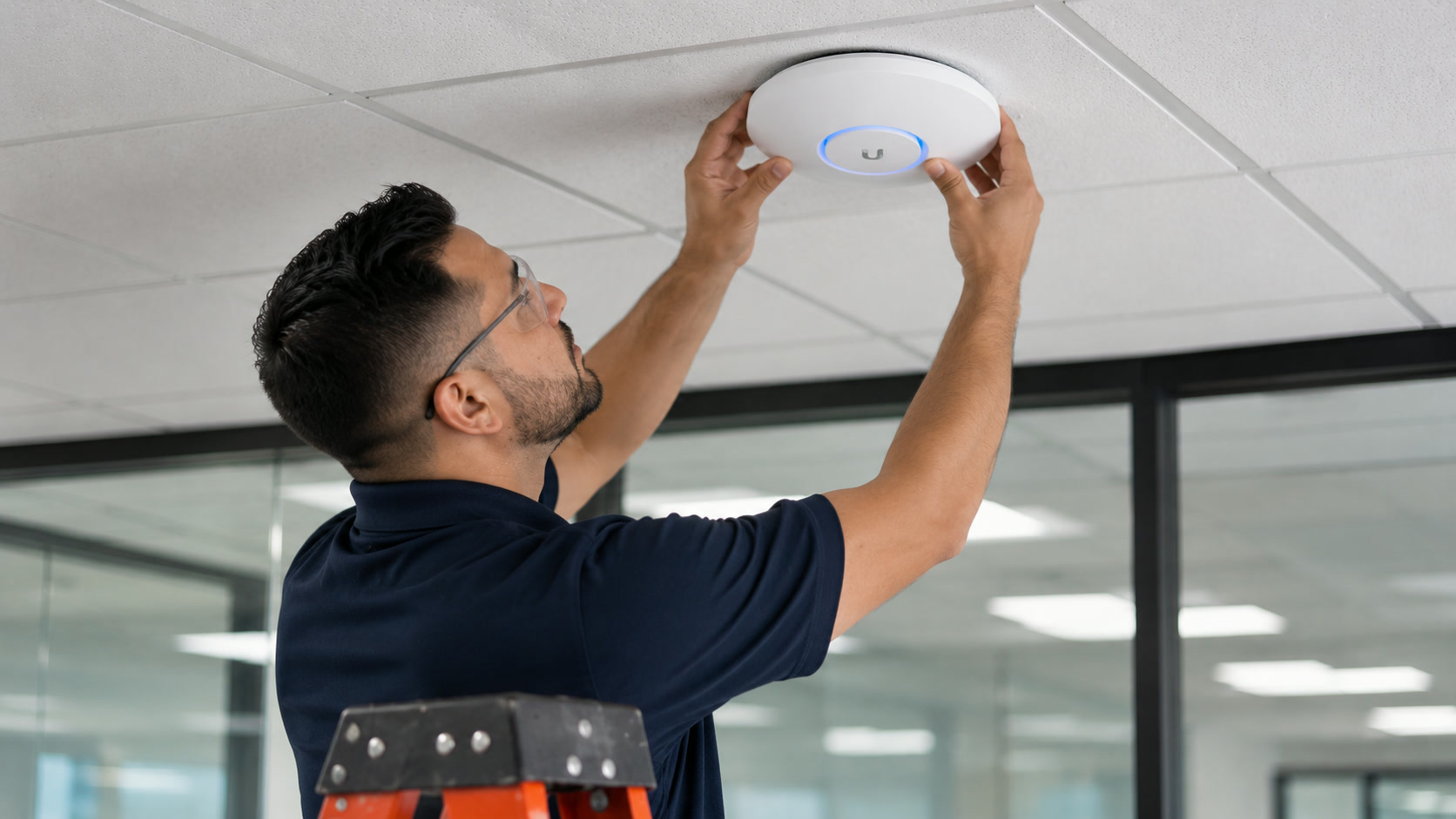
Developing a robust and reliable cabling infrastructure for restaurant operations is critical for seamless service delivery, efficient point-of-sale transactions, and an uninterrupted guest experience. Modern restaurants rely heavily on integrated technologies, from sophisticated POS systems and digital kitchen displays (KDS) to pervasive guest Wi-Fi and intricate drive-thru solutions. Poorly designed or installed cabling can lead to costly downtime, transaction failures, and compromised operational efficiency. Access Cabling specializes in engineering and deploying purpose-built low-voltage systems that meet the unique demands of the hospitality sector. Our C-10/C-7 licensing and 28+ years of experience provide the technical acumen to design pathways, select appropriate media, and terminate connections that ensure optimal performance and adherence to industry standards, supporting everything from high-bandwidth KDS traffic to secure payment processing. We understand the need for systems that can withstand dynamic restaurant environments, adapt to future technological advancements, and maintain aesthetic integrity.
Restaurant Cabling Fundamentals and Industry Standards Compliance
The backbone of any modern restaurant's technology ecosystem is its structured cabling system, which must support a diverse array of mission-critical applications. This includes Category 6A or higher for high-bandwidth applications like digital menu boards and KDS, fiber optic cabling for backbone connections between IDF/MDFs or building-to-building links in multi-structure properties, and Category 5e/6 for standard POS terminals, VoIP phones, and security cameras. Our designs meticulously adhere to TIA-568 series standards for commercial building telecommunications cabling, ensuring proper cable pathways, bend radius compliance, and termination practices. Furthermore, all installations are performed in accordance with NEC (National Electrical Code) Article 800 for Communications Circuits and applicable local building codes. This foundational approach guarantees not only reliable performance but also regulatory compliance, minimizing liabilities and ensuring system longevity. We also consider specific manufacturer guidelines for equipment like NCR Aloha, Toast, Shift4, or Oracle MICROS, ensuring compatibility and optimal interfacing for their respective hardware.
Strategic Design and Engineering for Restaurant Operational Flow
Effective restaurant cabling design extends beyond mere connectivity; it integrates seamlessly with operational workflows and spatial constraints. Our engineering process considers unique restaurant dynamics, such as high foot traffic areas, kitchen heat and moisture, and the need for discreet cable routing in dining areas. We perform detailed site surveys to identify optimal locations for equipment racks (MDF/IDF), wireless access points (WAPs), and cable termination points, minimizing interference and maximizing signal integrity. Our designs often incorporate zoning for different operational areas—e.g., front-of-house (FOH), back-of-house (BOH), and drive-thru—to isolate potential issues and simplify troubleshooting. For FOH, aesthetic considerations are paramount, often requiring invisible cable runs and wall plates matched to interior decor. In BOH, durability and resistance to environmental factors guide cable selection and pathway protection, such as conduit or tray. Drive-thru systems demand robust outdoor-rated cabling and specialized enclosures for extreme weather conditions, ensuring uninterrupted communication and transaction processing.
Robust Materials and Components for Demanding Environments
Selecting the appropriate cabling and connectivity hardware is paramount for durability and performance within the harsh restaurant environment. For kitchen areas, plenum-rated (CMP) or riser-rated (CMR) jackets, often with robust PVC or FEP insulations, are specified to meet fire safety codes and resist moisture or temperature fluctuations. We utilize shielded Category 6A (F/UTP or U/FTP) or even Category 7A cabling in areas prone to electromagnetic interference (EMI) from kitchen equipment, ensuring data integrity for KDS and high-speed network connections. Connectivity components are sourced from industry leaders like Panduit, CommScope, Leviton, and Belden, including patch panels, jacks, and patch cords, all rated for commercial-grade usage and specified to maintain channel performance. For outdoor drive-thru applications, UV-rated, direct-burial or conduit-protected outdoor plant (OSP) fiber optic and copper cabling is deployed, often with gel-filled jackets and industrial-grade connectivity to withstand temperature extremes and moisture ingress.
Specialized Installation Techniques for Restaurant Environments
The installation of restaurant cabling requires specialized techniques to minimize disruption, ensure safety, and adhere to strict hygiene standards. Our crews are trained to work efficiently in active or pre-operational restaurant settings, often coordinating off-hours deployments to avoid impacting business. Cable pathways are carefully planned to avoid existing utilities and HVAC systems, utilizing conduit, J-hooks, and cable trays to secure runs and prevent damage. Special attention is given to firestopping penetrations through fire-rated walls and floors using approved materials as per NEC Article 800 standards, maintaining compartmentalization. In BOH areas, cables are routed away from hot surfaces, steam, and potential contaminants, often within sealed conduit or protective enclosures. For drive-thru systems, meticulous trenching practices, proper depth, and specific backfill materials are used for direct burial cables, alongside appropriate demarcation points and weatherproofing for outdoor enclosures and equipment such as intercoms and order confirmation units. All terminations are performed with precision, ensuring proper twist maintenance and strain relief, which is critical for long-term network stability.
Comprehensive Testing and Certification for Network Assurance
Post-installation, rigorous testing and certification are crucial steps to validate the physical layer performance and ensure compliance with TIA/ISO standards. Access Cabling utilizes industry-leading certifications tools, such as the Fluke DSX CableAnalyzer series, to perform link and channel testing for all copper cabling, including Category 5e, 6, and 6A. This comprehensive testing verifies parameters such as insertion loss, return loss, near-end crosstalk (NEXT), far-end crosstalk (FEXT), propagation delay, and delay skew against specified limits. Each tested cable run receives a pass/fail certificate, providing an objective record of performance. For fiber optic cabling, we conduct Tier 1 testing (power loss, length) and often Tier 2 testing (OTDR trace analysis) to ensure optimal light budget and identify any anomalies. This thorough certification process provides the restaurant operator with documented assurance that their cabling infrastructure meets or exceeds performance requirements, ready to support all critical network traffic from POS transactions to KDS displays and guest Wi-Fi.
Optimizing Drive-Thru Performance and Wireless Connectivity
Drive-thru operations are a critical revenue stream for many quick-service and fast-casual restaurants, demanding specialized cabling to support clear audio, accurate order entry, and rapid transaction processing. This often involves robust outdoor-rated copper cabling for speaker systems, microphones, and data transmission, along with dedicated fiber optic links for high-speed connectivity back to the main network. Proper grounding and surge protection are essential to safeguard outdoor equipment. For wireless connectivity, a well-engineered Wi-Fi deployment is vital for both guest access and internal operations. Our wireless site surveys use professional tools to map RF coverage, identify potential interference sources (e.g., from kitchen equipment or neighboring businesses), and determine optimal placement and power settings for access points. We design zoned wireless networks that segregate guest Wi-Fi from internal POS/KDS networks, enhancing security and ensuring dedicated bandwidth for critical applications, preventing guest traffic from impacting operational systems. This multi-SSID, VLAN-segmented approach aligns with PCI DDS requirements for secure payment processing environments.
Regulatory Compliance, Safety, and System Durability
Ensuring regulatory compliance and system safety is non-negotiable in restaurant cabling. Our installations strictly adhere to NEC Article 800, which governs Communications Circuits, covering aspects like grounding, bonding, and protection from electrical hazards. We also comply with local fire codes regarding plenum spaces and firestopping. The use of plenum-rated (CMP) or riser-rated (CMR) cabling is determined based on the building structure and code requirements, reducing flame spread and smoke generation in critical air-handling spaces. Beyond code, durability is built into every design. This includes specifying robust cable types, using appropriate conduit and cable trays to protect against physical damage from impacts or rodents, and selecting industrial-grade connectivity components that can withstand frequent connections/disconnections or environmental stressors. Proper labeling at all termination points (patch panels, outlets) is implemented in accordance with TIA-606-C standards, providing a clear, logical roadmap for future maintenance, troubleshooting, and system upgrades, inherently extending the system's operational lifespan and reducing management overhead.
Access Cabling's Differentiated Expertise in Restaurant Infrastructure
Access Cabling’s 28+ years of experience and C-10/C-7 licensing provide a distinct advantage in designing and implementing resilient restaurant cabling infrastructures. We are not just cable pullers; we are low-voltage system integrators who understand the interconnectedness of POS, KDS, inventory management, guest Wi-Fi, and security systems. Our deep technical knowledge of TIA/EIA, BICSI, and NEC standards ensures that every installation is not only code-compliant but also optimized for performance and future scalability. We partner with leading manufacturers like Corning, Panduit, and CommScope, guaranteeing high-quality components that deliver reliable service in demanding restaurant environments. Our project management approach emphasizes minimizing disruption, coordinating seamlessly with general contractors, IT teams, and restaurant operations management. By focusing on detailed planning, precision installation, and comprehensive certification, Access Cabling delivers an infrastructure that empowers restaurants to operate efficiently, securely, and without interruption, directly impacting profitability and customer satisfaction.
Integrating POS Systems and Digital Menu Boards
The modern restaurant relies heavily on its Point-of-Sale (POS) systems and digital menu boards for efficient operations and customer engagement. Our cabling solutions for these critical components prioritize both high-speed data transmission and robust power delivery. For POS terminals, we implement Cat6A or fiber optic cabling, depending on the network topology and distance, ensuring uncompromised data integrity and minimal latency for transaction processing and kitchen display systems (KDS). This mitigates common failure points such as dropped transactions or slow order routing, which directly impact customer satisfaction and revenue. We meticulously plan for power-over-ethernet (PoE++) where applicable, consolidating power and data delivery over a single cable, reducing conduit fill and simplifying infrastructure. For digital menu boards, often operating at 4K resolution or higher, our designs incorporate HDMI over Cat6 extenders, HDBaseT technology, or specialized fiber optic distribution systems to guarantee pristine visual fidelity over extended runs, resisting electromagnetic interference (EMI) prevalent in kitchens and near high-power appliances. We account for mounting strategies, ensuring minimal visual impact while providing easy access for future upgrades or maintenance, adhering to NEC Article 725 and 800 for low-voltage wiring and Article 760 for fire alarms, particularly in conduit fill and plenum ratings (UL 2024, NFPA 262) where required. Our project managers coordinate extensively with digital signage vendors and POS software providers to ensure seamless hardware and software integration during the cabling phase, proactively addressing compatibility issues that often arise in complex restaurant technology rollouts. This includes dedicated conduit runs and distinct labeling conventions to differentiate between various network segments, bolstering security and simplifying fault isolation.
Advanced Security Surveillance and Access Control Cabling
Security is paramount in the restaurant industry, encompassing both asset protection and employee safety. Our cabling infrastructure for advanced security surveillance (CCTV) and access control systems is engineered for unwavering reliability and future scalability. For IP cameras, we deploy shielded Cat6 or Cat6A cabling, often utilizing plenum-rated jackets in air handling spaces (NEC Article 300.22) to meet fire safety codes. Each camera location is meticulously planned to optimize field of view while minimizing cable exposure and vulnerability to tampering. We incorporate PoE+ or PoE++ to power these devices, reducing the need for localized power outlets and simplifying installation, while safeguarding against power fluctuations with UPS-backed network switches. Access control systems, from card readers to biometric scanners, require dedicated, secure cabling (typically 18/2 or 22/4 shielded copper) with direct runs to control panels, ensuring uninterrupted operation even in the event of local power outages. Our designs account for environmental factors such as grease, moisture, and temperature extremes in kitchen or patio areas, specifying industrial-grade connectors and weather-sealed enclosures (IP66/NEMA 4X rated) for external installations. All cabling channels are segregated from high-voltage power lines to prevent interference and comply with TIA/EIA-568 standards for structured cabling. Furthermore, we implement robust labeling and detailed documentation for every security endpoint, facilitating rapid identification and troubleshooting during security incidents or system maintenance. This proactive approach to security cabling significantly reduces common vulnerabilities, such as compromised footage or access system failures, which could lead to significant financial losses or security breaches for the establishment.
Structured Cabling for Back-Office Operations and Guest Wi-Fi
Beyond the immediate customer-facing areas, efficient back-office operations and reliable guest Wi-Fi are critical for a restaurant's sustained success. Our structured cabling designs provide a robust foundation for administrative workstations, inventory management systems, and high-performance wireless access points (WAPs). For back-office data drops, we standardize on Cat6 cabling, providing ample bandwidth for everyday tasks such as payroll processing, menu updates, and vendor communications. Each data outlet is clearly labeled and terminated in a centralized telecom closet (TR), adhering to TIA/EIA-569-C Pathway and Spaces standards, ensuring a clean, organized, and easily maintainable infrastructure. For guest Wi-Fi, the strategic placement of WAPs is crucial, requiring a detailed site survey to identify potential interference sources and guarantee ubiquitous coverage throughout the dining area, restrooms, and outdoor patios. We utilize Cat6A cabling for WAP backhauls, exploiting its 10Gbps capability to support high client density and bandwidth-intensive applications, even during peak service hours. PoE+ or PoE++ powers these WAPs, simplifying deployment and management. We carefully plan for channel separation and SSIDs, ensuring a dedicated, secure network for internal operations distinct from the guest network, safeguarding sensitive business data. All cabling is concealed within conduit or cable trays (NEC Article 300) to maintain aesthetic integrity and prevent accidental damage, especially in high-traffic areas. Our documentation includes comprehensive floor plans detailing cable runs, outlet locations, and WAP placements, alongside detailed patch panel schematics, significantly streamlining future network expansions, troubleshooting efforts, and ensuring a lower total cost of ownership (TCO) through reduced maintenance complexity and enhanced network longevity.
Preventative Measures and Future-Proofing for Longevity
A restaurant's cabling infrastructure must be built for the long haul, resisting degradation from environmental factors and accommodating future technological advancements. Our approach emphasizes preventative measures and future-proofing strategies to ensure exceptional longevity and adaptability. This includes specifying conduit and raceways (metallic or non-metallic, Schedule 40 or 80 PVC, EMT) that exceed minimum code requirements in kitchens and high-moisture areas, protecting cables from grease, heat, and physical impact. We employ specialized jacket materials such as oil-resistant PVC for kitchen environments and UV-resistant outdoor-rated jackets (e.g., direct burial, aerial) for exterior runs, preventing premature material breakdown. Proper ventilation within telecom closets and equipment racks (e.g., using active cooling solutions like fans or precision AC units, adhering to ASHRAE thermal guidelines) is critical to prevent overheating of active network equipment and ensure optimal performance and lifespan of switches, routers, and servers. Our designs always incorporate spare conduit runs and additional cable capacity (typically 20-30% over initial requirements) for anticipated expansions in POS terminals, security cameras, or new IoT devices, minimizing the need for disruptive and costly re-cabling projects down the line. We also standardize on modular components, such as keystone jacks and patch panels, which facilitate easier upgrades and modifications without requiring complete system overhauls. Furthermore, our comprehensive documentation package includes detailed 'as-built' drawings, cable schedules, and component specifications, which are invaluable for future maintenance, fault isolation, and technology refreshes. This meticulous planning and use of high-quality, durable materials significantly reduces the total cost of ownership over the lifecycle of the restaurant, by mitigating common failure modes and enabling seamless technology integration as business needs evolve, thereby safeguarding the initial infrastructure investment against rapid obsolescence.