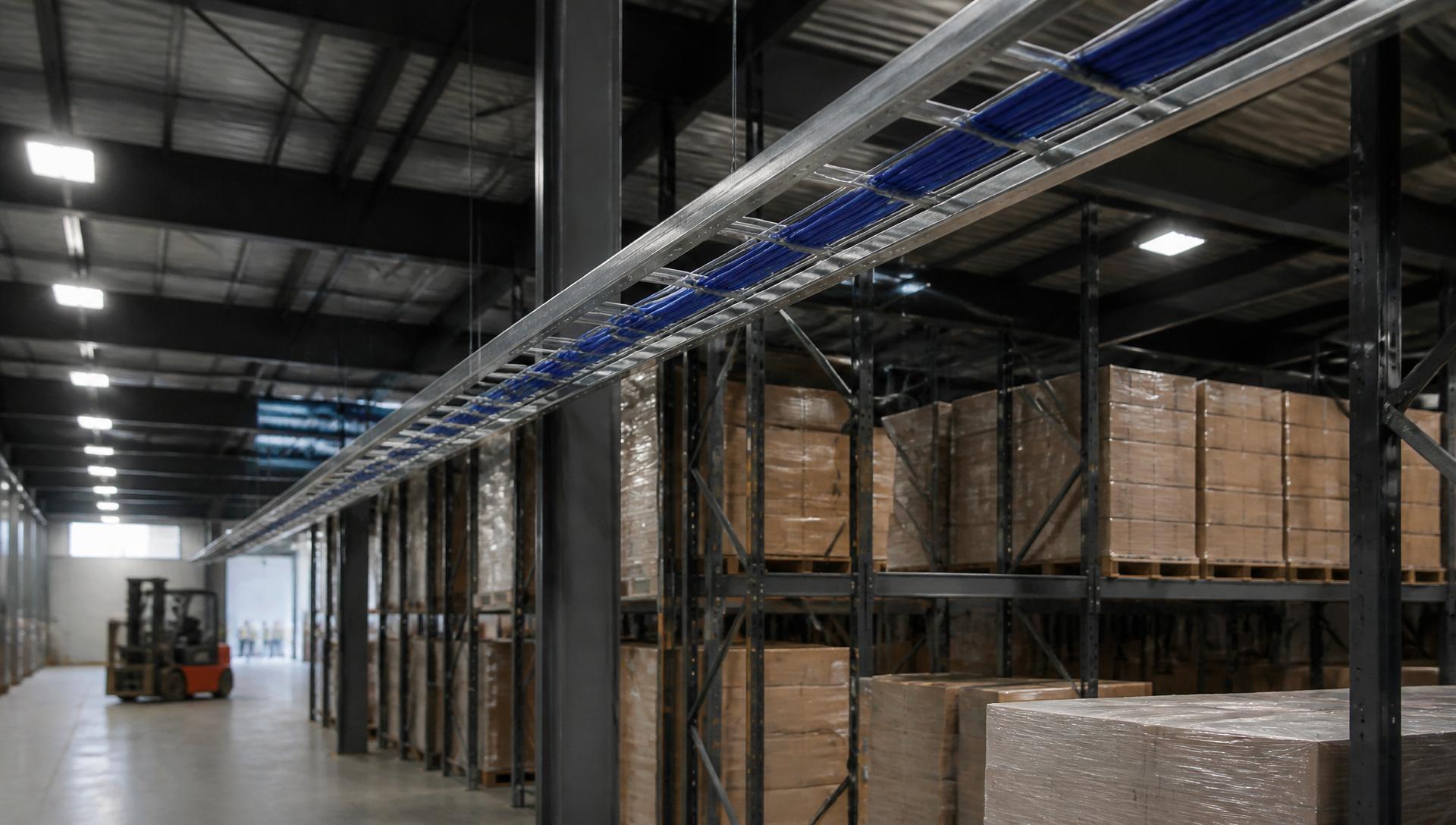
Access Cabling technician on a scissor lift running Cat6A cable near the roof deck of an industrial distribution warehouse.
Commercial · Applications

Warehouse Cabling Services

Warehouse and DC cabling including WiFi and scanner networks.

28+ Years Experience
C-10 / C-7 Contractor
CSLB: 992009
Licensed Commercial Contractor
5 California Offices
California & Nationwide Service

Request a Warehouse Cabling site survey

Free, no-obligation walkthrough. Licensed C-10 / C-7 (CSLB #992009). 28+ years, California & nationwide.

Request a site survey
Commercial Service Overview

Enterprise-grade warehouse cabling engineered for commercial buildings.

Warehouse Cabling from Access Cabling delivers enterprise-grade warehouse cabling engineered by a licensed low-voltage contractor with 28+ years serving California and nationwide clients. Our BICSI-trained technicians design, install, terminate, test and certify every run to TIA/EIA standards so your infrastructure supports current bandwidth demands and future growth.

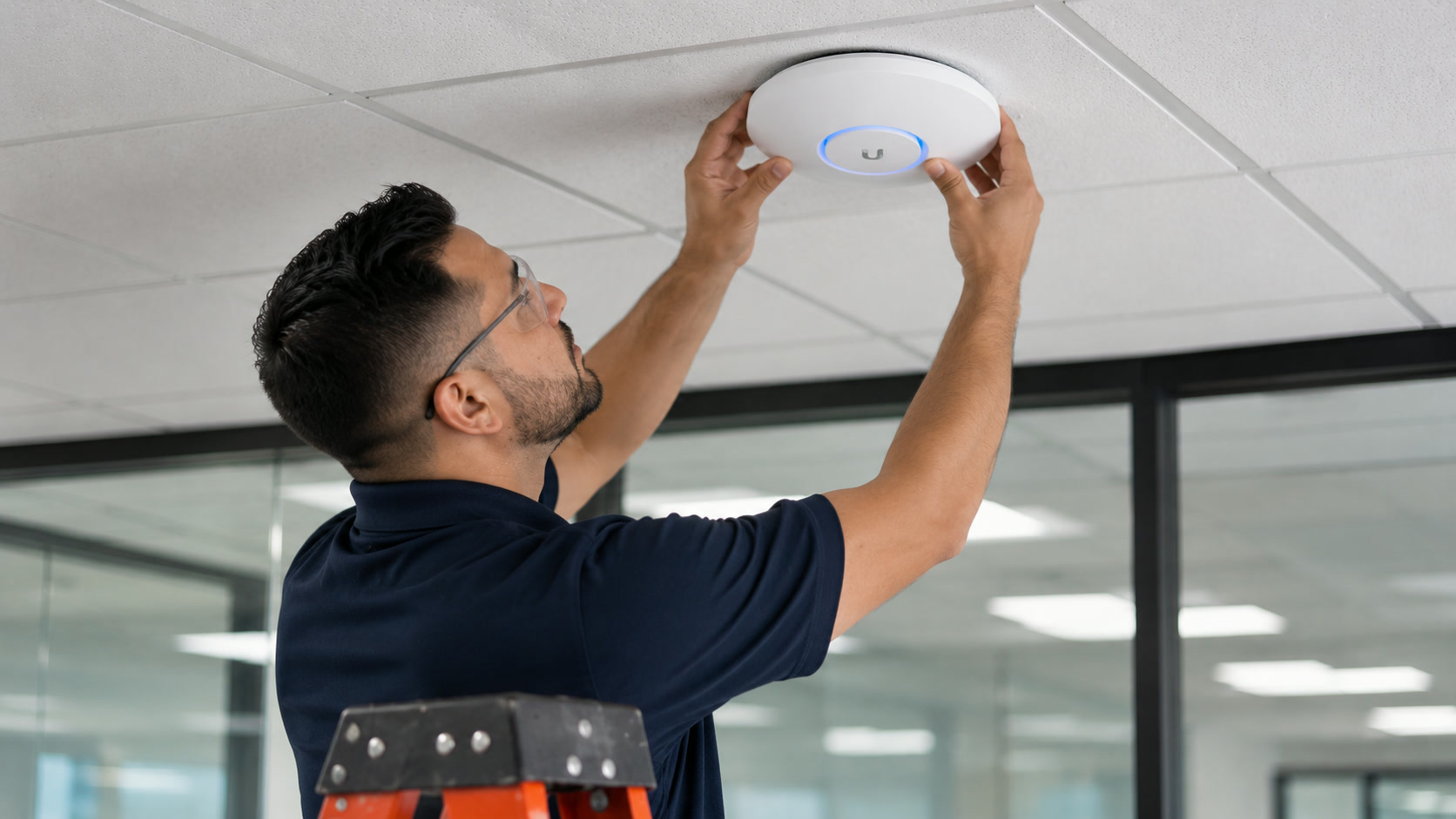
Technician on a scissor lift installing a ceiling access point during a warehouse cabling job.
Key Benefits

Why warehouse cabling from Access Cabling

Commercial-grade installation, certified performance, and infrastructure built to last 25+ years.

Certified installation by BICSI-trained technicians
Manufacturer warranties up to 25 years on structured cabling
Fluke DSX certification reports on every project
Licensed C-10 / C-7 low-voltage contractor
24/7 emergency response and MAC services
Nationwide coverage with California headquarters
Installation Process

Our proven commercial cabling process

A repeatable, engineered process — refined over 28 years and thousands of sites.

  1. Step 1

    Free on-site survey and needs assessment

  2. Step 2

    Engineered design with rack elevations and pathway plans

  3. Step 3

    Scheduled installation with minimal business disruption

  4. Step 4

    Termination, testing, labeling and documentation

  5. Step 5

    Fluke certification and as-built drawings delivered

Technical Standards & Testing

TIA-compliant. Fluke-certified. Fully documented.

Every warehouse cabling installation follows TIA-568, TIA-606 labeling, NEC 800 and applicable manufacturer specifications. Fluke DSX Versiv certification and full as-built documentation are delivered at project close.

  • TIA-568 structured cabling standards
  • TIA-606 labeling and administration
  • TIA-942 data center infrastructure
  • Fluke DSX-8000 channel and link certification
  • Manufacturer certified installer for Panduit, CommScope, Leviton
Access Cabling technician on a scissor lift running Cat6A cable near the roof deck of an industrial distribution warehouse.
Industries Served

Warehouse Cabling for every commercial environment

28+
Years
5
CA Offices
50
States
12M+
Feet Installed
Local Service Area

Warehouse Cabling across California & nationwide

Local crews dispatched daily from five California offices. Multi-site rollouts across all 50 states.

In Depth

A closer look at warehouse cabling

Optimizing operational efficiency within modern warehouses and distribution centers (DCs) hinges critically on a robust, scalable, and resilient network infrastructure. Access Cabling provides specialized warehouse cabling solutions designed to support high-density wireless deployments, automated material handling systems (AMHS), voice-over-IP (VoIP) communications, and diverse scanning technologies (RFID, barcode, vision systems). Our C-10/C-7 licensed technicians possess 28+ years of experience engineering and deploying structured cabling systems that withstand the unique environmental and operational demands of these industrial environments. We collaborate with IT directors, facilities managers, and general contractors to design and implement forward-looking network foundations, ensuring reliable connectivity from the initial rack build-out to the final access point deployment, minimizing downtime and maximizing throughput across expansive logistical footprints. Our expertise encompasses everything from ruggedized fiber optic backbones to advanced Wi-Fi and scanner network optimization, delivering turnkey solutions compliant with industry best practices and regulatory mandates.

Foundational Design Principles for Warehouse Cabling Systems

Warehouse cabling system design begins with a comprehensive site assessment, evaluating the facility's physical dimensions, operational workflows, projected network traffic, and future expansion plans. Unlike typical office environments, warehouses exhibit unique characteristics such as high ceilings, dynamic movement of heavy equipment, extreme temperature fluctuations, and significant electromagnetic interference (EMI) from machinery. Our design engineers adhere rigorously to TIA-568 (Commercial Building Telecommunications Cabling Standard), TIA-1005 (Telecommunications Infrastructure Standard for Industrial Premises), and BICSI standards, ensuring a robust, future-proof infrastructure. This involves strategic placement of telecommunications rooms (TRs) or enclosures, often utilizing distributed backbone topologies, to minimize horizontal cable lengths and support modular growth. Consideration is given to pathways and spaces, often requiring conduit or cable tray systems rated for industrial use, safeguarding against physical damage and maintaining proper bend radii for both copper and fiber optic cables. Furthermore, power distribution and grounding are integral to preventing performance degradation and ensuring equipment longevity in these demanding settings.

Selecting Optimal Cable Types and Connectivity for Industrial Environments

The choice of cabling and connectivity components is paramount in warehouse applications. For horizontal runs supporting Wi-Fi access points, IP cameras, and remote sensors, shielded Category 6A (F/UTP or S/FTP) or Category 7A cabling is often specified to mitigate EMI and support 10 Gigabit Ethernet (GbE) and higher speeds over greater distances. For backbone infrastructure connecting TRs and data centers, multimode (e.g., OM3, OM4, OM5) or singlemode fiber optic cabling is essential, providing high bandwidth, extended reach, and immunity to electrical noise. Single-mode fiber is particularly favored for inter-building connections or when future 400GbE+ upgrades are anticipated. All cabling and connectivity (jacks, patch panels, connectors) are selected for their durability and environmental ratings, often requiring industrial-grade components from manufacturers like Panduit, CommScope, Belden, or Leviton, which offer protection against dust, moisture, and corrosive elements. Furthermore, Power over Ethernet (PoE) requirements for devices like Wi-Fi APs and IP cameras necessitate careful consideration of cable gauge and heat dissipation within bundles, especially with PoE++ (Type 4) applications delivering up to 90W per port.

Advanced Wireless (WiFi & Scanner) Network Infrastructure

Reliable wireless connectivity is the lifeblood of modern warehouse operations, enabling mobile inventory management, voice picking, and automated guided vehicles (AGVs). Our approach includes detailed RF (Radio Frequency) site surveys using tools like Ekahau or iBwave to identify optimal access point (AP) placement, channel planning, and mitigate potential interference sources from industrial machinery or neighboring networks. We deploy enterprise-grade Wi-Fi 6/6E or Wi-Fi 7 access points, ensuring high density, low latency, and robust roaming capabilities across expansive areas with fluctuating signal attenuation due to moving metal racks or inventory. Additionally, specialized wireless infrastructure for barcode scanners, RFID readers, and other IoT devices requires distinct network segmentation and Quality of Service (QoS) configurations to prioritize mission-critical data. We ensure that the underlying wired infrastructure (structured cabling) provides redundant, high-speed uplink capacity to each AP, preventing bottlenecks and guaranteeing consistent wireless performance. Proper antenna selection and orientation are critical, often involving directional or sector antennas to focus coverage in specific aisles or areas, maximizing signal strength and minimizing interference.

Robust Pathways and Protection for Industrial Environments

The physical protection of cabling in warehouses is a primary concern due to the constant movement of forklifts, automated pallet jacks, and heavy machinery. Our installations prioritize robust pathways, commonly employing galvanized steel conduit, ladder tray, or wire basket tray systems for overhead routing. These pathways are strategically mounted to ceiling structures, adhering to NEC (National Electrical Code) and local building codes for safety and support. For areas susceptible to direct impact, such as floor-level device connections or cross-aisle runs, we utilize heavy-duty flex conduit, armored cable, or strategically placed bollards to create physical barriers. Furthermore, considerations for environmental factors necessitate specialized jacketing for outdoor or unconditioned spaces (e.g., riser-rated or plenum-rated cables based on fire code requirements within specific zones), and careful sealing of penetrations to prevent ingress of dust, moisture, and pests. All components, including patch panels and enclosures, are specified with appropriate IP (Ingress Protection) ratings to withstand the facility's ambient conditions, ranging from IP54 for basic protection against dust and splashing water to IP67 for submersion resistance in wash-down areas.

Precision Installation and End-to-End Certification

Access Cabling's installation methodology for warehouses emphasizes precision, reliability, and adherence to industry best practices. Our C-10/C-7 licensed technicians are trained in elevated work platforms and safety protocols specific to industrial environments. All cable runs are carefully routed, dressed, and secured, maintaining proper bend radii and avoiding pinch points. We employ manufacturer-specific termination tools and techniques to ensure optimal performance, whether it's fusion splicing singlemode fiber or precise termination of Category 6A shielded copper. Post-installation, every single cable link undergoes rigorous testing and certification using Fluke DSX CableAnalyzers. This includes testing for insertion loss, return loss, near-end crosstalk (NEXT), power sum NEXT, attenuation-to-crosstalk ratio (ACR), and propagation delay on copper, and attenuation, length, and polarity on fiber optic links. We provide comprehensive test reports, guaranteeing compliance with TIA-568 and TIA-1005 performance standards, offering full warranty backing, and providing baseline data for future troubleshooting and performance monitoring. This certification is critical for validating the network's ability to support high-speed data, PoE, and demanding industrial applications.

Scalability and Future-Proofing for Evolving Operations

A well-designed warehouse cabling system must accommodate rapid technological advancements and fluctuating operational demands. Our solutions prioritize scalability and future-proofing from the outset. This includes implementing modular patching strategies (e.g., Panduit QuickNet, CommScope SYSTIMAX InstaPATCH) and utilizing high-density fiber optic cable management systems that simplify upgrades and expansions. We design for excess capacity in conduit pathways and cable trays, allowing for the addition of future cabling without disruption. Furthermore, adopting structured cabling standards ensures interoperability and simplifies migration to higher bandwidth technologies as they emerge. By deploying a robust Cat6A or fiber backbone today, we facilitate seamless transitions to Wi-Fi 7, 25GbE, 40GbE, and beyond, supporting the integration of emerging technologies such as augmented reality (AR) for picking, advanced robotics, and real-time sensor networks for environmental monitoring. Our approach is to build a core infrastructure that can adapt to evolving business needs, minimizing costly re-cabling projects down the line.

Compliance, Safety, and Project Management Excellence

Compliance with regulatory standards and stringent safety protocols is non-negotiable in warehouse cabling projects. Access Cabling adheres to all relevant NEC articles, including those pertaining to communications circuits, grounding, and wiring methods (e.g., Article 800). Our safety programs are robust, covering everything from Lockout/Tagout procedures to elevated work training and fall protection, ensuring a secure work environment for our personnel and your staff. Permitting and code inspections are expertly managed as part of our comprehensive project lifecycle. Throughout the project, dedicated project managers serve as a single point of contact, coordinating closely with general contractors, facilities managers, and IT teams. This ensures seamless integration with other construction trades, adherence to timelines, and minimal disruption to ongoing warehouse operations. Our commitment to transparent communication, meticulous planning, and rigorous quality control underscores our ability to deliver complex warehouse cabling projects on time, within budget, and to the highest standards of safety and performance.

Integrating Environmental Controls and Sensor Networks

Modern warehouse operations increasingly rely on sensor-driven automation and environmental monitoring, demanding specialized cabling infrastructure beyond traditional data and power. This includes robust pathways for industrial Ethernet, such as PROFINET or EtherCAT, connecting programmable logic controllers (PLCs), robotic systems, and high-speed vision systems that necessitate low-latency, resilient cabling. Furthermore, the integration of environmental sensors for temperature, humidity, air quality, and access control requires appropriate sensor cabling, often deploying shielded twisted pair (STP) for electromagnetic interference (EMI) mitigation or fiber optic solutions in areas with high electrical noise or long transmission distances. Considerations extend to specific cable jacket materials, such as LSZH (Low Smoke Zero Halogen) for fire safety in enclosed spaces or UV-resistant polyethylene (PE) for outdoor or semi-exposed routes, ensuring operational continuity under varying conditions. The power delivery for these distributed sensor networks and IoT devices is paramount, frequently employing Power over Ethernet (PoE/PoE+) for simpler deployment, which mandates Cat5e/6/6A/8 cabling with sufficient gauge (typically 23 AWG) to minimize voltage drop over distance and support higher power budgets for devices like pan-tilt-zoom (PTZ) cameras or intelligent lighting systems. Strategic placement and protection of these diverse cable types within conduit (EMT/rigid galvanized steel), cable trays, or armored fiber optic cables are critical to prevent physical damage from forklift traffic, airborne particulates, or chemical exposure, guaranteeing the longevity and reliability of the sensor ecosystem. Access Cabling's expertise ensures these complex sensor and control networks are meticulously planned and executed, from endpoint device specifications to power injector selection and back-end integration with Building Management Systems (BMS) or Warehouse Management Systems (WMS), providing a truly intelligent and responsive warehouse environment.

Advanced Security and Surveillance System Cabling

The security landscape of a contemporary warehouse necessitates a meticulously planned and robust cabling infrastructure for advanced surveillance and access control systems. This involves high-bandwidth cabling for IP cameras, often deploying Cat6A or fiber optic solutions to support high-resolution streaming (4K/8K) and future-proofing for analytics-heavy applications like object recognition and facial detection, ensuring minimal latency and packet loss across extensive monitoring perimeters. PoE+ and UPoE (Universal Power over Ethernet) standards are frequently utilized to power these cameras, reducing the complexity and cost of deploying separate power outlets, but requiring careful consideration of cable gauge and maximum run lengths to prevent voltage drop and ensure consistent power delivery. For specialized cameras, such as thermal imaging or explosion-proof units in hazardous material zones, specific cabling – often armored or conduit-protected – is essential to meet stringent environmental and safety regulations. Access control systems, comprising card readers, biometric scanners, and electronic locks, demand equally resilient cabling, typically utilizing shielded twisted pair (e.g., Belden 8760, 8761) for signal integrity or dedicated RS-485 serial communication lines in multi-drop configurations, integrating seamlessly with central security panels. The routing of these security cables must prioritize concealment and protection against tampering or accidental damage, often involving dedicated conduit runs, locked cabinets, and strategic pathways that avoid high-traffic areas or areas susceptible to RF interference. Furthermore, robust Network Video Recorders (NVRs) and Security Information and Event Management (SIEM) systems necessitate high-capacity network links – often 10 Gigabit Ethernet or higher – to process and store the voluminous data generated by modern surveillance systems, requiring carefully planned and executed fiber optic backbone cabling (e.g., OM3/OM4 multimode or OS2 singlemode) to ensure unimpeded data flow from the edge to the core. Access Cabling designs and implements these mission-critical security infrastructures, ensuring adherence to industry best practices and standards such as TIA/EIA-568, and providing comprehensive documentation for vulnerability assessments and compliance audits.

Detailed Cable Management and Pathway Optimization

Effective cable management is not merely an aesthetic consideration but a critical engineering discipline impacting system performance, maintenance, and long-term operational costs in a warehouse environment. Overcoming the unique challenges of dynamic industrial spaces, such as large spatial areas, frequent equipment movement (e.g., forklifts, automated guided vehicles), and potential for chemical or particulate exposure, requires a highly optimized pathway strategy. This begins with selecting appropriate physical pathways: closed conduit (EMT, IMC, RMC) provides maximum protection against impact, dust, and moisture in high-risk areas, while basket tray, ladder rack, or J-hooks offer flexibility and accessibility in less volatile zones. The choice is dictated by the specific environment, cable type (e.g., copper vs. fiber), and regulatory compliance (e.g., NEC Article 770 for optical fiber cables, Article 800 for communications circuits). Within these pathways, meticulous planning for routing and segregation is paramount. Power and data cables must be separated to prevent electromagnetic interference (EMI), adhering to specific clearance requirements. Fiber optic cables, despite their immunity to EMI, still require careful consideration regarding bend radius and protection from crushing, frequently necessitating dedicated fiber raceways or armored constructions. Cable fill ratios in conduits or trays must never exceed industry standards (e.g., NEC 300.17 for conductors in conduit) to prevent overheating and facilitate future additions or maintenance, utilizing specialized calculation tools. Proper cable labeling at both ends, including unique identifier codes (e.g., TIA/EIA 606-B standard), ensures rapid identification and troubleshooting, minimizing downtime. Furthermore, seismic bracing of overhead pathways is a critical component in regions prone to seismic activity, preventing catastrophic failures during an event. Access Cabling's approach integrates advanced CAD/BIM modeling to pre-plan pathway routes, anticipating obstructions and ensuring efficient utilization of vertical and horizontal space, thereby reducing installation time, material waste, and guaranteeing long-term system reliability and ease of future expansion or modification.

Resilient Redundancy and Disaster Recovery Planning

Ensuring continuous operation in a high-demand warehouse environment necessitates a robust strategy for cabling redundancy and disaster recovery, extending beyond simple failover mechanisms to comprehensive infrastructure resilience. This involves implementing diverse routing paths for critical backbone fiber optic and copper cabling, physically separating primary and secondary links to prevent a single point of failure (SPOF) from affecting both. For instance, duplicating core network links with geographically distinct pathways, perhaps on opposite sides of the building or utilizing different entry points, safeguards against localized damage from equipment impact or environmental hazards. Redundant power over Ethernet (PoE) infrastructure, leveraging dual power sources and redundant network switches, ensures that critical devices like IP cameras, wireless access points, and barcode scanners remain operational even if a primary power or network path is compromised. The use of self-healing ring topologies for fiber optic backbones (e.g., spanning-tree protocol configurations) automatically re-routes data traffic in the event of a cable cut or equipment failure, minimizing service disruption to milliseconds. Beyond physical redundancy, robust documentation is a cornerstone of disaster recovery, providing precise schematics, cable manifests, and restoration procedures for rapid identification and repair of damaged infrastructure. This includes detailed floor plans highlighting cable routes, patch panel configurations, and equipment locations, facilitating efficient fault isolation and component replacement. Furthermore, maintaining an inventory of pre-terminated fiber optic cables, patch cords, and repair kits significantly reduces mean time to recovery (MTTR). Access Cabling's methodology incorporates FMEA (Failure Mode and Effects Analysis) during the design phase to identify potential single points of failure within the cabling plant and proactively engineer mitigation strategies, ensuring that mission-critical warehouse automation, communication, and security systems are protected against unforeseen disruptions and can swiftly recover from any infrastructure-related incident, safeguarding uptime and operational continuity.

Related Topics
  • Industrial Ethernet Connectivity
  • High-Density Wi-Fi Deployment
  • Automated Material Handling System (AMHS) Networks
  • Fiber Optic Backbone Solutions
  • IoT Sensor Integration
  • Network Infrastructure for Robotics
  • PoE for Industrial Applications
  • Data Center Interconnects
FAQ

Frequently asked questions

What are the common challenges specific to warehouse cabling that aren't typically seen in office environments?+

Warehouse environments present unique challenges including extreme temperature variations, high ceilings requiring specialized lift equipment for installation, significant EMI from industrial machinery and motors, and the constant movement of heavy equipment requiring robust cable protection. Dust, moisture, and potential for physical impact necessitate industrial-grade, often armored or plenum-rated, components. Maintaining consistent Wi-Fi signal strength in dynamic environments with moving inventory and metallic structures is also a major concern, requiring detailed RF planning and strategic AP placement far beyond typical office densities.

How does Access Cabling address potential electromagnetic interference (EMI) in a warehouse setting?+

We address EMI through a multi-faceted approach. This includes specifying shielded cabling (e.g., Category 6A F/UTP or S/FTP) for copper runs, which offers superior noise rejection compared to unshielded twisted pair. Fiber optic cabling is inherently immune to EMI and is used extensively for backbone connections. Additionally, strategic cable routing minimizes proximity to major electrical conduits or machinery, and proper grounding and bonding practices are implemented for all network equipment and pathways, following NEC guidelines to dissipate stray currents and reduce interference sources.

What type of wireless network design approach does Access Cabling take for large warehouse spaces?+

For large warehouse spaces, we employ an iterative wireless design process. This begins with an in-depth predictive RF plan based on floor plans and estimated rack heights, followed by an active site survey to validate the model's accuracy. We focus on high-density Wi-Fi deployments with enterprise-grade Wi-Fi 6/6E/7 access points and often utilize smart antennas or external directional/sector antennas to optimize coverage in aisles while minimizing interference in open areas. Channel planning, power adjustments, and QoS settings are meticulously configured to ensure seamless roaming for mobile devices and prioritize critical warehouse applications like scanning and voice picking.

What are the advantages of using fiber optics for a warehouse backbone versus copper?+

Fiber optics offer significant advantages for warehouse backbones, primarily immunity to EMI, vastly extended transmission distances (up to kilometers compared to copper's 100-meter limit for horizontal runs), and future-proof bandwidth capacity. While copper can support 10GbE, fiber readily supports 40GbE, 100GbE, and even 400GbE, making it ideal for interconnecting multiple TRs, data centers, or remote buildings in a large campus. It reduces the need for intermediate repeaters and provides a more reliable, high-performance foundation for demanding industrial networks.

How do you ensure proper cable management and physical protection for cables in high-traffic warehouse areas?+

In high-traffic warehouse areas, careful planning for cable management and protection is critical. We utilize robust overhead pathways such as galvanized steel conduit, ladder rack, or wire basket tray systems securely fastened to structural elements, keeping cables well above forklift travel paths. Where cables must descend, they are encased in rigid conduit or industrial-grade flexible conduit, and strategically placed bollards or cable guards are used at ground level to shield exposed connections from accidental impacts. All installations adhere to TIA-1005 for industrial premises.

What considerations are there for integrating automated systems (e.g., AMHS, AGVs) into the network?+

Integrating automated systems requires a highly reliable, low-latency network. We ensure the underlying structured cabling infrastructure provides dedicated, high-bandwidth connections to AMHS control units and AGV charging stations. For AGVs utilizing wireless communication, the Wi-Fi network is designed for seamless roaming and robust signal integrity, often requiring specific QoS configurations to prioritize their traffic. Network segmentation (VLANs) is frequently employed to isolate control network traffic from general IT traffic, enhancing security and preventing operational disruptions.

How does Access Cabling approach multi-site warehouse cabling rollouts for national companies?+

For multi-site rollouts, Access Cabling provides centralized project management, ensuring consistency in design, installation standards, and documentation across all locations. We leverage our nationwide network of qualified technicians, overseen by our project managers, to maintain uniform adherence to corporate IT standards and local building codes. This approach streamlines procurement, simplifies support, and ensures a predictable outcome for each facility, whether it's a new build or an upgrade. We provide a single point of contact and consolidated reporting for the entire program.

What is the typical timeline for a comprehensive warehouse cabling project, and what factors influence it?+

Project timelines vary significantly based on warehouse size, existing infrastructure, cabling density, and the complexity of integrated systems. A small, straightforward project might take a few weeks, while a large, multi-story distribution center with extensive fiber, wireless, and security requirements could span several months. Key influencing factors include material lead times, site accessibility during operational hours, coordination with other trades (e.g., electrical, racking installers), the need for specialized equipment (lifts), and the scope of testing and documentation required. Pre-project planning and detailed phasing can help minimize impact on ongoing operations.

How much does warehouse cabling cost?+

Warehouse Cabling pricing depends on drop count, cable type, pathway complexity, and building conditions. Most commercial projects range from $150 to $350 per drop installed. Request a free site survey for an itemized quote.

Do you provide warehouse cabling nationwide?+

Yes. Access Cabling is headquartered in California with a nationwide technician network for multi-site rollouts across all 50 states.

Is warehouse cabling certified and warrantied?+

Every installation is Fluke-tested and certified. Structured cabling installs carry manufacturer warranties of up to 25 years through our Panduit, CommScope, Leviton and Belden partner relationships.

Related Services

Related commercial cabling services

Get Started

Build the commercial network your business actually deserves.

28 years, thousands of sites, one accountable contractor. Get a free site survey and an itemized quote in 48 hours.

Call Local Office(650) 212-1544