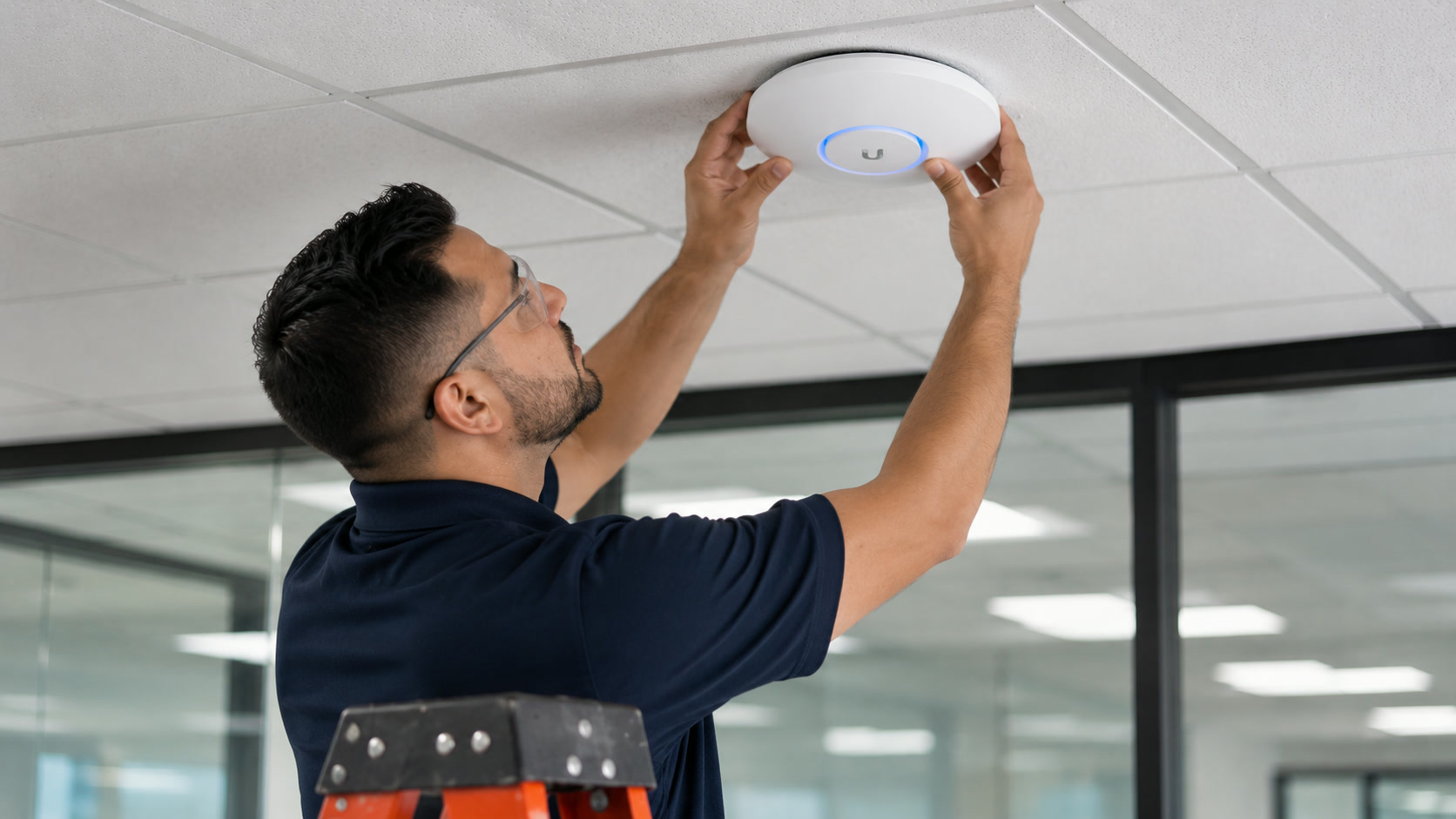
Retail environments demand robust and reliable cabling infrastructure to support critical operations ranging from point-of-sale (POS) systems and high-density Wi-Fi to advanced surveillance and interactive digital signage. Unlike office or industrial settings, retail cabling schemes must account for high aesthetic demands, flexible floor layouts, frequent reconfigurations, and stringent security protocols, all while minimizing disruption to ongoing business. Access Cabling, leveraging 28+ years of expertise as a licensed C-10/C-7 low-voltage contractor, specializes in designing, installing, and certifying tailored network infrastructure solutions for retail clients across California and nationwide. Our approach prioritizes future-proofing, operational continuity, and seamless integration of diverse technologies, ensuring your retail enterprise maintains always-on connectivity and a superior customer experience.
Foundational Cabling Requirements for Retail Operations
Modern retail relies on a converged IP network to support a myriad of devices and applications. This necessitates a structured cabling system that adheres to TIA/EIA standards, specifically TIA-568.4 for customer-owned outside plant and TIA-568.0/1/2/3 for premises cabling. For retail, this translates to supporting high-bandwidth demands for transactional data, real-time inventory management, and immersive customer experiences. For point-of-sale (POS) systems, whether traditional or tablet-based, reliable Category 6A or fiber optic cabling (OM3/OM4) is often specified to ensure low latency and high data integrity. This is crucial for rapid transaction processing and preventing connectivity bottlenecks that directly impact sales. Our methodology involves identifying the data rate requirements of each retail application, then specifying the appropriate cabling media and topology, considering potential electromagnetic interference (EMI) in high-traffic zones or near electronic article surveillance (EAS) gates. The physical layer robustness directly correlates with the reliability of retail operations, making proper specification and installation paramount.
Strategic Design and Engineering for Retail Environments
Effective retail cabling design extends beyond mere connectivity; it integrates aesthetics, operational flexibility, and scalability. Our design engineers utilize BICSI methodologies to develop comprehensive blueprints that factor in store layout, merchandise displays, customer traffic patterns, and HVAC considerations. For digital signage and interactive kiosks, plenum-rated Category 6A or shielded fiber optic cabling (e.g., Corning ClearCurve) is frequently specified to meet NFPA 70 (NEC) requirements and minimize signal degradation over extended runs. Pathways, including conduit systems, cable trays (e.g., Panduit Fiber-Duct), and j-hooks, must be strategically planned to accommodate current and future capacity without disrupting the retail aesthetic. Special attention is given to hidden cable routes, in-wall raceways, and aesthetically pleasing termination points, ensuring that the network infrastructure remains unobtrusive while supporting high-demand applications. This proactive design mitigates costly future retrofits and ensures a clean, professional retail space.
Advanced Materials and Components for Retail Durability
The selection of cabling materials and network components for retail environments is critical for ensuring long-term performance and minimizing downtime. We specify high-quality manufacturers like CommScope, Leviton, Belden, and Panduit for copper and fiber optic cabling, patch panels, and connectivity hardware. For high-density Wi-Fi deployments, such as those catering to customer-facing applications or inventory management, plenum-rated Category 6A (e.g., Belden 10GX) is often employed to support 10 Gigabit Ethernet to access points, ensuring robust performance even in busy shopping periods. Outdoor-rated cabling (e.g., UV-resistant jacketed fiber) and weather-hardened enclosures are used for external surveillance cameras or outdoor digital displays, complying with NEC Article 800 standards for communications circuits. This meticulous material selection ensures the infrastructure withstands the rigors of a dynamic retail setting, from frequent equipment changes to environmental factors, maintaining signal integrity and system longevity.
Precision Installation Techniques and Process Flow
Retail cabling installation demands meticulous attention to detail and a profound understanding of operational impact. Our certified technicians adhere to stringent installation protocols, including proper cable dressing, bend radius maintenance, and segregation of power and data cables (as per TIA-569-C) to prevent crosstalk and EMI. For active retail stores, installations are often scheduled during off-hours to minimize disruption to sales and customer experience. We employ low-impact techniques for pathway creation, utilizing specialized tools for in-wall fishing or floor-trenching, ensuring minimal aesthetic damage. Termination procedures for both copper (T568A/B) and fiber (Fusion Splicing, UniCam connectors) are executed with precision, often using manufacturer-specific tools (e.g., CommScope Systimax termination kits, Corning UniCam High-Performance Tool Kit) to guarantee signal integrity and optimize performance. Every installation phase is documented thoroughly, providing an accurate as-built record for future maintenance and expansions.
Comprehensive Testing and Certification for Performance Assurance
Post-installation, every installed cable run undergoes rigorous testing and certification to guarantee adherence to TIA/EIA performance standards. Our technicians utilize industry-leading test equipment such as Fluke DSX-8000 CableAnalyzers for copper infrastructure and Fluke OptiFiber Pro or OTDRs for fiber optic links. For copper, this includes verifying insertion loss, return loss, near-end crosstalk (NEXT), power sum NEXT, attenuation-to-crosstalk ratio (ACR), and propagation delay, ensuring each channel meets Category 6A or higher specifications. For fiber, we test for loss, length, and polarity, and conduct OTDR traces to identify splice and connector losses along the entire link. Full test results are compiled into detailed certification reports, providing auditable proof of performance. This comprehensive testing ensures the retail network infrastructure is fault-free, operates at peak performance, and supports bandwidth-intensive applications without compromise, crucial for PCI DSS compliance in POS systems.
Tailored Solutions for Diverse Retail Applications
Retail environments encompass a wide array of specialized applications, each with unique cabling demands. For high-definition surveillance systems (IP cameras), Category 6 or 6A cabling supporting Power over Ethernet (PoE/PoE+) is typically deployed, adhering to IEEE 802.3af/at/bt standards, ensuring both data and power delivery over a single cable. Digital signage infrastructure often requires HDBaseT or IP-based video distribution over Category 6A, necessitating robust bandwidth for dynamic content delivery. Inventory management systems, leveraging barcode scanners or RFID, depend on resilient Wi-Fi backbones, requiring precise placement of access points and dedicated high-speed copper or fiber links for backhaul. Guest Wi-Fi networks demand careful channel planning to prevent interference and sufficient bandwidth allocation. Our expertise lies in engineering a unified network that seamlessly integrates these disparate systems, ensuring each application receives the dedicated resources it requires without impacting overall network performance, critical for maintaining operational efficiency and enhancing customer engagement.
Regulatory Compliance and Safety Protocols
Adherence to regulatory compliance and safety protocols is non-negotiable in retail cabling installations. All our work is performed in strict compliance with the National Electrical Code (NFPA 70), particularly Articles 770 (Optical Fiber Cables), 800 (Communications Circuits), and 725 (Class 1, Class 2, and Class 3 Remote-Control, Signaling, and Power-Limited Circuits). For plenum spaces, all cabling and components must be plenum-rated to meet fire safety standards. Additionally, our methodologies align with OSHA safety regulations and local building codes. In retail, where public access is inherent, firestopping (UL-listed penetration seals) for cable pathways is critical to maintain fire ratings of walls and floors. Furthermore, for POS systems, foundational network security elements related to PCI DSS compliance often begin with a physically secure and robust cabling infrastructure. Access Cabling's CSLB 992009 license stands as a testament to our commitment to legal and safe operational practices, providing retail clients with peace of mind.
Access Cabling's Differentiated Retail Infrastructure Approach
What sets Access Cabling apart in the retail market is our combination of deep technical acumen, manufacturer-agnostic recommendations, and a client-centric, long-term perspective. With 28+ years of experience and a licensed C-10/C-7 status, we bring unparalleled insight into the unique challenges of retail environments. We don't offer boilerplate solutions; instead, we engineer bespoke structured cabling systems that consider your specific retail footprint, present technology stack, and projected growth. Our expertise in working with leading equipment manufacturers like Cisco Meraki, Aruba, and UniFi ensures our cabling designs are optimized for their respective wireless access points and network devices. We provide comprehensive project management, from initial site survey and design to final certification and documentation, ensuring minimal disruption and superior outcomes for single stores or multi-site rollouts nationwide. Our commitment is to deliver a resilient, scalable, and high-performance network foundation that directly supports your retail success.
Integrating Retail Cabling with MEP Coordination and Phased Deployment
Effective retail cabling deployment necessitates intricate coordination with Mechanical, Electrical, and Plumbing (MEP) trades, especially within active retail environments or during rapid build-outs. Our approach emphasizes pre-construction collaboration, leveraging Building Information Modeling (BIM) where available, to identify and resolve potential conduit conflicts, pathway obstructions, and power requirements before physical installation commences. For example, accommodating specialized refrigeration units or high-density point-of-sale (POS) systems requires precise electrical drops and dedicated data circuits that must be harmonized with HVAC ducting and water lines. We delineate clear phasing strategies, often requiring off-hours work, to minimize disruption to retail operations. This includes sequential zone deployments, where backbone fiber optic runs are established first, followed by horizontal copper drops to data outlets and wireless access points (WAPs) in a section-by-section manner. Specific attention is given to firestopping details at all penetration points through fire-rated walls and floor slabs, ensuring compliance with local building codes, such as NFPA 70 (National Electrical Code) Article 770 for fiber optic cables and Article 800 for communication circuits. Our project managers maintain detailed logistical plans, documenting access restrictions, power shutdown schedules, and critical path dependencies to assure seamless integration and on-time delivery despite the inherent complexities of multi-trade coordination in a live retail setting. This proactive conflict resolution through synchronized planning avoids costly rework and mitigates operational downtime, which is paramount in the retail sector.
Ensuring Data Security and Network Resilience in Retail Environments
The modern retail landscape is increasingly reliant on robust, secure, and resilient network infrastructure to support everything from POS transactions to inventory management and customer analytics. Our cabling solutions are designed with cybersecurity and operational continuity as primary considerations. This involves implementing physically secure pathways, such as locked telecommunications closets (TRs) and armored conduit in high-traffic or publicly accessible areas, to prevent unauthorized physical access to critical network segments. We segregate network traffic for various functions, such as PCI DSS compliant payment networks, corporate WLAN, and guest Wi-Fi, often employing dedicated VLANs and separate physical cabling paths where architecture allows, to minimize attack surfaces and contain potential breaches. For mission-critical applications like centralized inventory databases or real-time sales reporting, we design for redundancy, incorporating dual-homed optical fiber uplinks to core network switches or diverse pathway routing to prevent single points of failure. The selection of plenum-rated cables adhering to NEC Article 770-P and 800-P standards is fundamental for fire safety and maintaining network integrity during emergency scenarios. Furthermore, we consider electromagnetic interference (EMI) mitigation, particularly in environments with high motor loads or RF noise, by utilizing shielded twisted-pair (STP) cabling or appropriate grounding and bonding techniques to maintain signal integrity and enhance overall network resilience against environmental factors. This holistic approach ensures not only connectivity but also the confidentiality, integrity, and availability of critical retail data.
Advanced Power over Ethernet (PoE) Deployments for Retail IoT and Edge Devices
The proliferation of Internet of Things (IoT) devices in retail, including IP cameras, digital signage, intelligent lighting, electronic shelf labels (ESLs), and Wi-Fi 6/7 access points, necessitates advanced Power over Ethernet (PoE) cabling strategies. Our expertise extends to designing and deploying infrastructures capable of supporting high-power PoE standards, specifically IEEE 802.3bt Type 3 (PoE++) and Type 4 (PoE+++), often referred to as UPoE or 4PPoE, which deliver up to 60W and 90W respectively per port. This requires careful consideration of cable gauge (typically 23 AWG for Cat6A to minimize heat generation and voltage drop over distance) and bundle size within conduits and cable trays to prevent overheating – a critical factor for maintaining data throughput and cable longevity, as specified by TIA TSB-184-A. We meticulously calculate power budgets for PoE switches, accounting for device consumption, cable length, and potential future expansions. For instance, a linear array of high-resolution IP cameras requiring 30W each over 70 meters would demand a specific PoE-enabled switch capacity and thermal management strategy for the cable bundles. Our deployments utilize hybrid fiber-copper solutions for extended reach applications, such as large format digital displays positioned far from a telecommunications closet, combining the power delivery of copper with the data bandwidth of fiber. This approach optimizes infrastructure costs by reducing the need for numerous AC outlets and electricians, streamlining device deployments, and simplifying power management for the growing ecosystem of retail edge devices. Strategic placement of midspan injectors or PoE extenders is also considered for unique power distribution challenges, ensuring consistent, reliable power delivery across the entire retail footprint.
Future-Proofing Retail Cabling: Scalability and Technology Roadmapping
Anticipating the rapid evolution of retail technology requires a cabling infrastructure designed for future scalability and adaptability. We develop technology roadmaps that account for projected bandwidth demands, emerging standards, and an increased density of networked devices. For instance, while current POS systems might be satisfied with Gigabit Ethernet (GbE), supporting future applications like immersive augmented reality (AR) shopping experiences or high-definition video analytics necessitates multi-gigabit pathways (2.5GbE, 5GbE, 10GbE) and often, 40GbE or 100GbE fiber optic backbones. Our standard practice recommends Category 6A (Cat6A) unshielded twisted pair (UTP) for horizontal runs to future-proof for 10 Gigabit Ethernet over up to 100 meters, which significantly extends the life cycle of the installed copper plant compared to legacy Cat5e or Cat6. For inter-cabinet connections and backbone elements, we deploy OM4 or OS2 single-mode fiber optic cabling, providing headroom for 40/100GbE and beyond, accommodating future virtualization and cloud integration requirements. Moreover, our designs consider modularity, utilizing patch panels that allow for easy reconfigurations and additions without disrupting core infrastructure. We analyze client technology refresh cycles and business growth forecasts to propose an initial infrastructure that balances upfront investment with long-term total cost of ownership (TCO), avoiding expensive rip-and-replace scenarios. This includes planning for redundant conduit pathways in critical areas, allowing for easy pull-through of new cables for unforeseen future technologies or increased capacity demands. Our documentation deliverables explicitly detail maximum allowable bundle sizes and bend radii for various cable types, ensuring that future upgrades can be performed efficiently and without compromising the integrity of the existing infrastructure.